Key takeaways
- A cobot cell pays when wire cycles are long enough that overnight loading beats paying for idle spindle time.
- Fixture access and part drying matter as much as reach because wire EDM runs in a flooded tank.
- Door interlocks, in-process checks, and a narrow SKU mix turn ghost shifts from a gamble into a routine.
When does a cobot beat manual wire EDM loading?
A collaborative robot earns its place on wire EDM when the machine would otherwise sit idle while an operator waits out a long burn, or when your toolroom closes while the cut still has hours left. Wire electrical discharge machining is slow by nature on hardened tooling and tight slots, so the tending task is repetitive even when each part is high value. If your bottleneck is spindle hours rather than programming talent, automating load and unload is the lever.
The fit weakens when every job uses a one-off fixture, when lot sizes are single digits with daily engineering changes, or when the shop cannot keep a stable infeed tray staged. Standardize pallets or vise jaws first. According to the International Federation of Robotics World Robotics 2025 industrial report, collaborative robot installations continued double-digit growth at about 12 percent, which reflects how many small and mid-size plants add tending without fencing off the whole cell.
Monthly cobot rental or lease programs let a toolroom pilot one wire machine before you commit capital across the floor. Pair that with auto-threading and reliable slug management on the EDM side so the robot is not babysitting wire breaks every twenty minutes.
How should parts present to the wire EDM door?
Present parts the way the operator already does, just with repeatable datums. Nest blanks in a tray with hardened locators, or mount a subplate on a cart that docks to the machine the same way every cycle. The cobot should pick from a dry staging zone even if the cut happens underwater, because splashing tank fluid into a gripper or vision field causes false picks.
Keep finished and raw sides separated in the layout. A simple two-bin shuttle or angled gravity nest beats a complex ASRS in most toolrooms. Label slots in plain language on the teach pendant map so maintenance can recover after a misload without calling integrator support.
Orientation matters on taper cuts and multi-axis setups. If the wire EDM uses a rotary axis, teach the cobot to present the part with the same clocking the CAM post expects. One degree of twist shows up as scrap on tight punch tooling.
What fixture access does the cobot need?
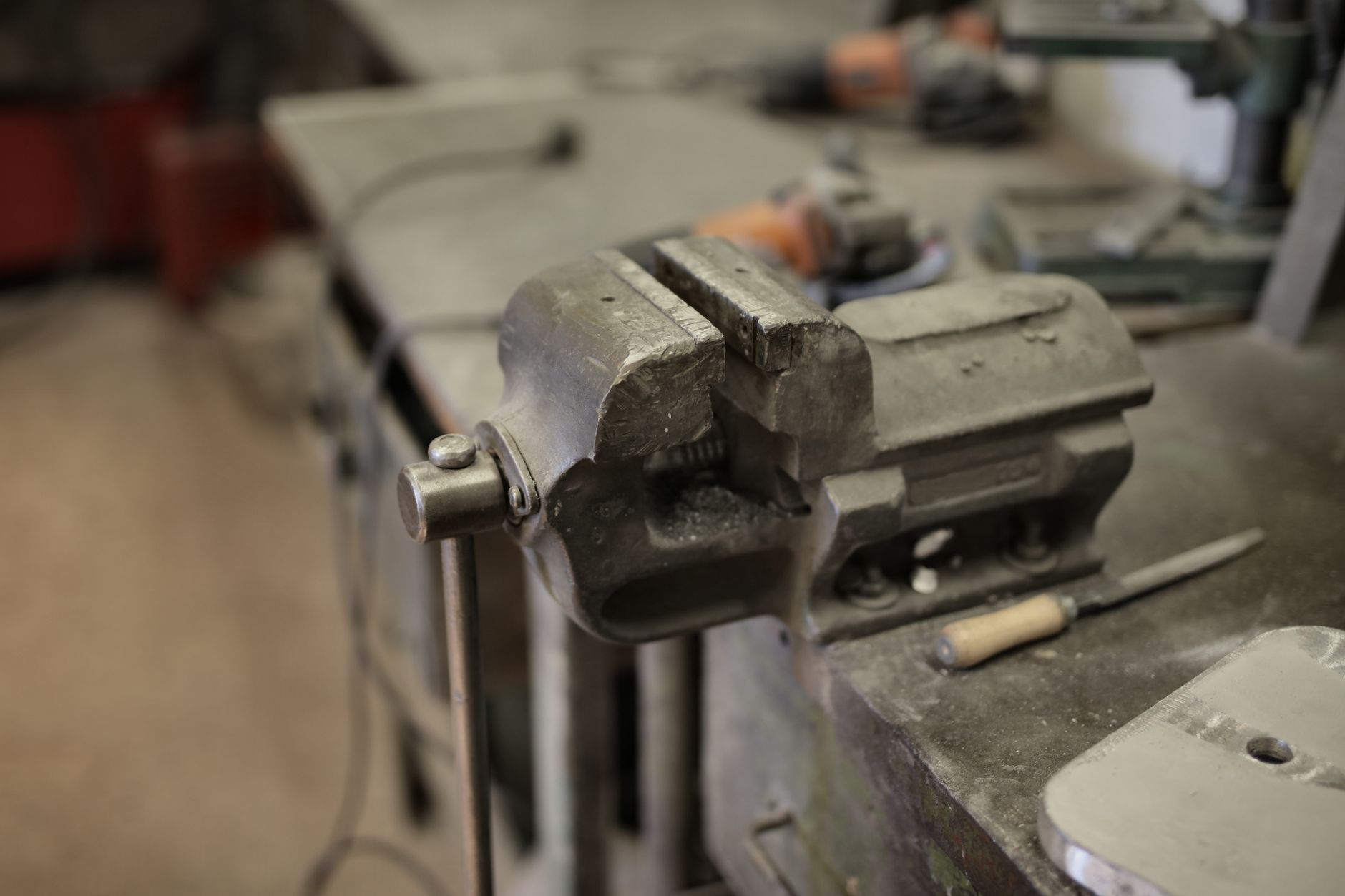
The robot must reach the vise handle, chuck lever, or pneumatic clamp without fighting the machine enclosure. Side-mount collaborative arms with an extra joint often reach around the door line instead of blocking the operator during setup. Leave clearance for manual intervention during the first article without removing the arm.
Fixture access also means the cobot can release a finished part without dragging it across a freshly cut surface. Use soft jaws or vacuum on flat plate work, and pin locators on round inserts. Heavy slugs may need a short dwell for drain before the gripper lifts the part out of the tank area.
Document maximum payload with the wet part weight included. A soaked steel block weighs more than the drawing says, and wire EDM shops often underestimate coolant carryout.
How do you handle wet or oily workpieces?
Wire EDM cuts submerged, so every unload carries process water, dielectric, and fine sludge. Plan a blow-off or rinse station between the machine and the outfeed tray if tarnish or rust is a risk on tool steel. Some cells route parts through a short air knife tunnel before the cobot places them in a finished nest.
Gripper choice drives reliability. Finger grips with sealed bearings, vacuum cups with drain paths, and disposable jaw covers all appear in successful cells. Avoid foam that soaks fluid and drops particles on the next load.
Housekeeping around the cell is part of automation. Mats, squeegee paths, and a scheduled tank filter check keep the robot from tracking slippery film across the floor. That is also when a machine tending robot rental with maintenance included pays off, because wear items get replaced on a plan rather than after a crash.

How does machine-door integration work safely?
Treat the EDM door like any other CNC interlock. The cobot program should not enter the envelope until the door is fully open and the tank level is stable. Hardwire permissives from the machine PLC or use an integration module the EDM builder documents for external automation.
Speed and force limits on the collaborative arm stay active during teach and production. Light curtains are optional when the arm stays inside the machine during the cut, but many shops still mark a floor tape box for human entry during setup. Train operators to reset the cell in a fixed sequence after a wire break.
Fire and E-stop behavior must be tested, not assumed. On alarm, the robot should retract clear of the door travel and hold position until maintenance clears the fault. Log every door cycle in the cell controller so you can trace a crash to a specific program step.
What inspection belongs in the cell?
Wire EDM already produces precise geometry, so inspection is about confirming the right part came out intact, not replacing CMM layout on every piece. First-article checks stay manual. Production runs use go/no-go gauges, visual under a bench light, or a simple height check on slug removal.
Add a camera only if it removes a real bottleneck. A fixed camera pointing at the outfeed nest catches missing slugs or a part left half seated in the vise. Skip vision projects that duplicate what the operator can see in ten seconds.
Record traceability fields if you serve aerospace or medical tooling: machine ID, program number, start and end timestamp, and operator or cell ID. The cobot controller can write those to a CSV or MES hook without custom IT.
What production mix justifies the cell?
Build a honest table before you buy. List average cut time, parts per pallet, shifts you will run unattended, and loaded labor for the person who would otherwise load the machine. Compare that to cobot lease cost, integration, and service spread across twelve to twenty-four months.
Cells win on repeat jobs with cycle times above roughly ninety minutes, or on families that share one fixture plate. Mixed prototype work rarely fills a weekend unattended unless you batch by material and wire diameter on Friday afternoon.
Ghost shifts only work when upstream supplies staged blanks and downstream accepts finished parts without a clerk present. If your customer picks up at noon on Saturday, automate Thursday night instead and use the robot to compress WIP, not to chase impossible logistics.
Where does Service Robot Co. fit?
Service Robot Co. runs vendor-neutral site assessments for toolrooms, maps door interlocks and part presentation, and pilots cobot rental with training and nationwide service on one contract. We integrate the arm to your wire EDM permissives without locking you to a single machine OEM.
Start with one machine, prove unattended hours on a stable job, then clone the fixture standard to a second wire sink. That phased deployment matches how most shops adopt machine tending without shutting down the floor for a month.