
Key takeaways
- Automate stable connector, test, and handling steps before attempting the entire harness build.
- Force control must detect abnormal seating, not merely push until the connector stops.
- Purpose-built fixtures often determine cell reliability more than nominal robot accuracy.
- Continuity testing needs controlled mating adapters, recipe control, and serial-level traceability.
- Collaborative operation requires a task-based risk assessment of the complete application.
Where should a cobot enter the harness process?
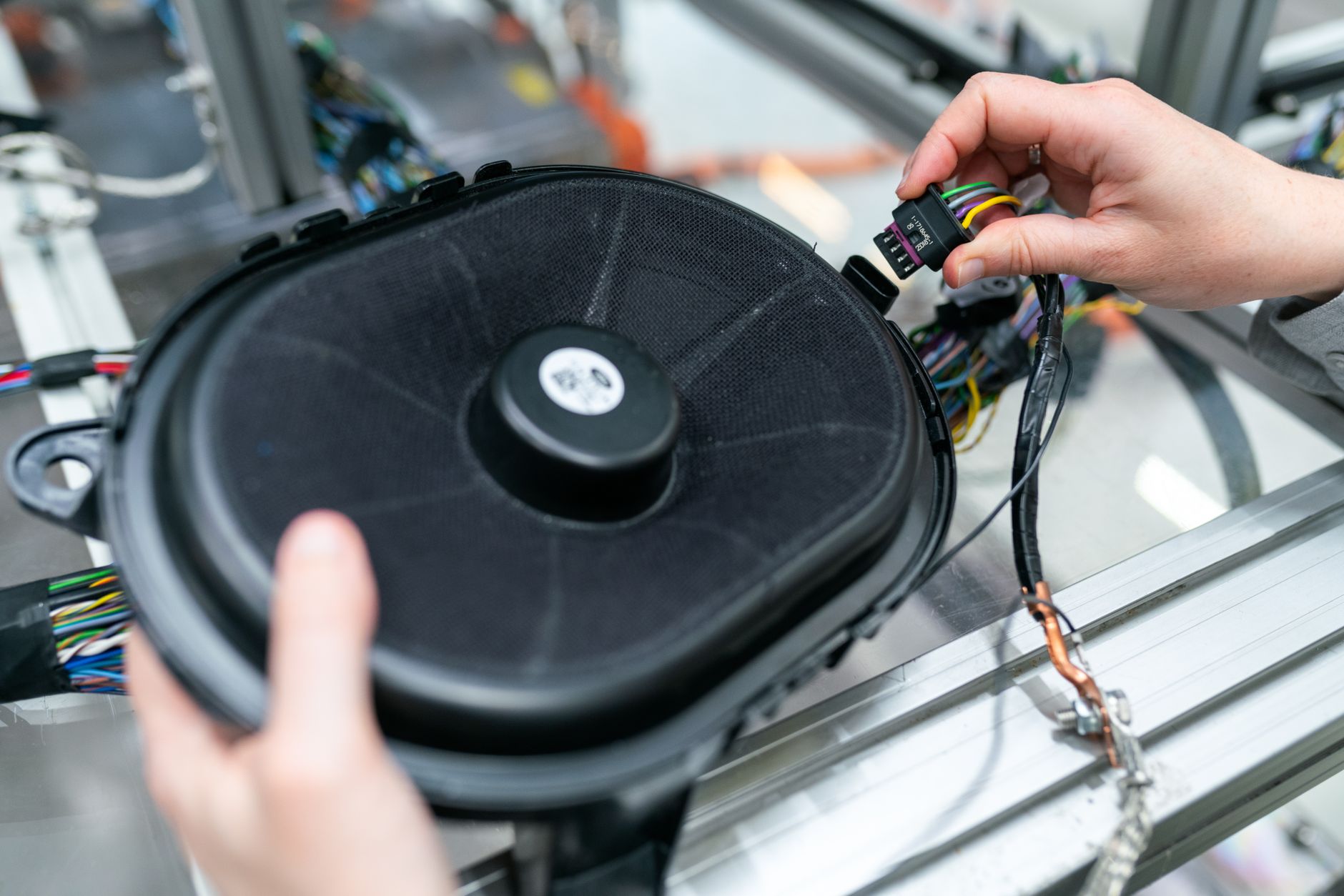
Cobots fit wire-harness assembly best as selective automation. A worker can interpret drawings, dress branches, resolve tangled conductors, and inspect workmanship while the cobot performs stable connector insertions, presents components, moves the harness between stations, or loads a continuity tester.
This boundary avoids forcing flexible wires, changing breakouts, clips, tape, and connector families into one brittle automated sequence. Start with the operation that has repeatable geometry, measurable acceptance criteria, and enough volume to justify dedicated tooling.
The National Institute of Standards and Technology reinforces this task-by-task view. Its four assembly task boards place electrical connector insertion on Board 1, loose-cable manipulation on Board 3, and full harness routing and grouping on Board 4. Those are separate competencies, not one indivisible automation problem.
How does force-controlled insertion work?
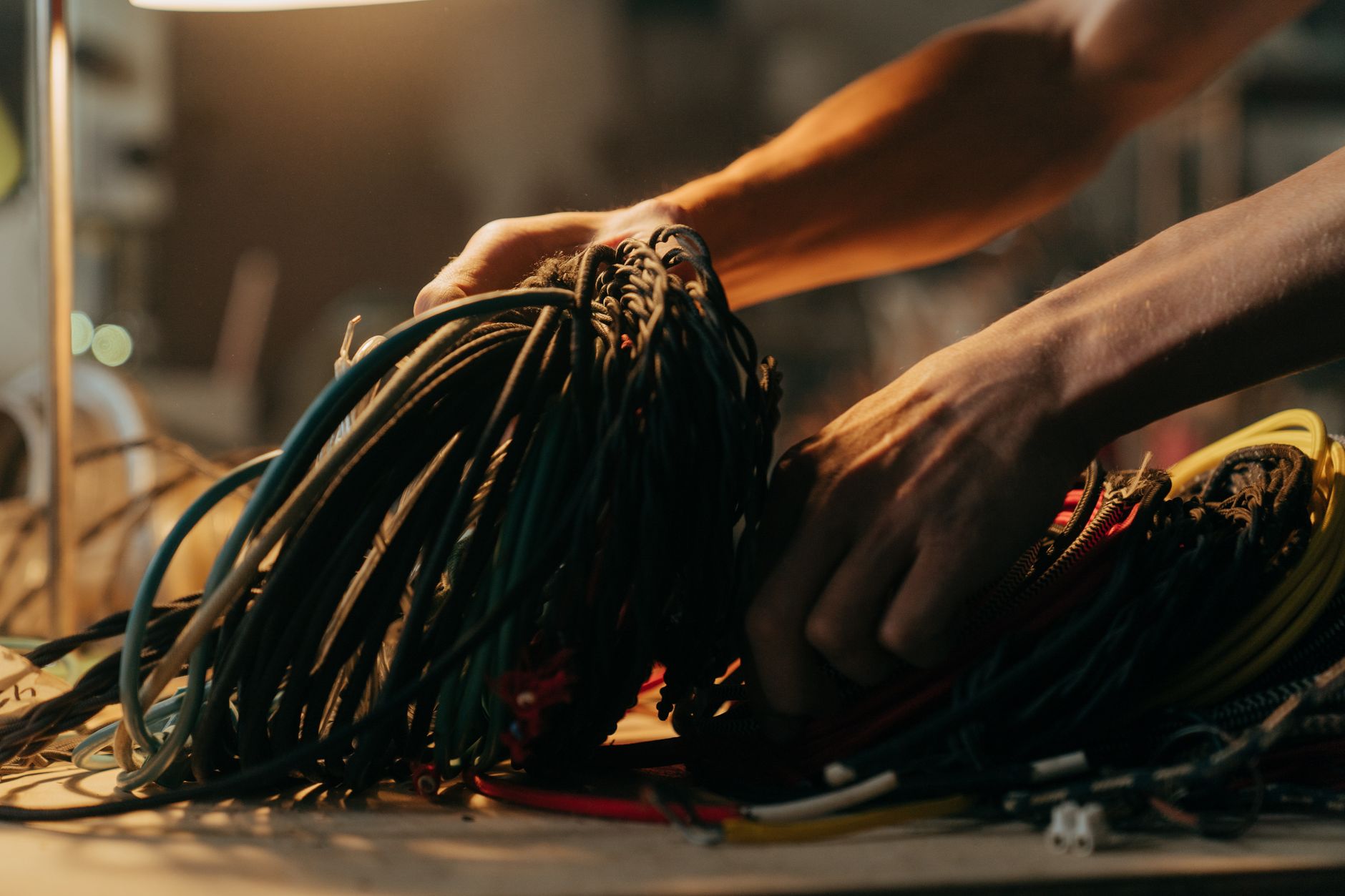
Connector mating is a contact-rich operation. The arm approaches a known pre-insertion pose, detects contact through force and torque feedback, performs a small compliant search when permitted, and advances along the connector axis. The control recipe should distinguish normal alignment resistance, terminal engagement, latch engagement, and hard bottoming.
A good cell evaluates the complete force-versus-position signature. It stops and rejects an abnormal attempt instead of applying extra force that could bend a terminal, spread a contact, crack a housing, or conceal a partial seat. Final position, latch presence, vision, and an electrical result can provide separate confirmation.
- Set force and travel limits from the connector specification and validated samples, never from guesswork.
- Use a floating mount or passive compliance device when small angular errors are expected.
- Grip the housing or approved backshell feature, not an unsupported wire bundle.
- Define recovery rules for jams, missing locks, wrong keys, and repeated failed attempts.
Why does fixture design decide reliability?
Robot repeatability cannot compensate for a connector that drifts inside a loose nest. Fixture the rigid housing from functional datums, support the reaction load close to the mating face, and control the free cable loop so its spring force does not twist the connector during insertion.
Interchangeable nest plates can serve multiple variants, but each plate needs positive identification and mistake-proof loading. Add clearance for the operator's hands, rounded contact surfaces, replaceable wear parts, and access for cleaning. The fixture should also make a wrong orientation physically difficult before software has to detect it.
Quality requirements still come from the product drawing and applicable workmanship standard. IPC states that IPC/WHMA-A-620E, released in December 2022, covers materials, methods, tests, and acceptance criteria for cable and wire-harness assemblies. Robot tooling should preserve those requirements rather than create new stress points.
What can the cobot do at continuity test?
The cobot can pick a completed harness from a known presentation, mate it with dedicated test adapters, close any retention hardware, select the approved test recipe, and unload it after a pass or fail result. This removes repetitive connector cycling while leaving electrical limits and disposition authority in the validated tester and quality system.
The active NASA cable-and-harness workmanship standard, updated with Change 4 on April 13, 2022, offers a useful high-reliability reference. Within its mission-hardware scope, cable assemblies undergo three acceptance tests in order: continuity, dielectric-withstanding voltage, and insulation resistance. It also prohibits inserting hand probes directly into harness connectors, which supports the use of controlled mating adapters.
Continuity alone finds opens, shorts, and many miswires, but it does not prove strain relief, terminal retention, or complete latch engagement. IEC 60512-2-1 defines a method for measuring resistance across mated contacts using direct or alternating current. The production test plan must still specify its own limits, calibration, test voltage, adapter life, and retest policy.
Which repetitive handling tasks are worth automating?
Good candidates include presenting connector housings, transferring a harness between insertion and test fixtures, placing protective caps, feeding completed assemblies into labeled trays, and sorting pass and fail units. These moves are repetitive, geometrically bounded, and easier to validate than free-form routing across a large form board.
The ergonomic case should be measured at the actual workstation. The National Institute for Occupational Safety and Health identifies repetition, force, awkward posture, and combinations of force with repetition as upper-limb risk factors. A cobot can absorb repeated mating force and long reaches while operators retain inspection, repair, and dexterous routing work.
How should the cell handle product variation?
Build a variant matrix before programming. Record connector family, keying, insertion direction, allowed gripping surfaces, expected force profile, fixture plate, tester adapter, and recipe revision for every harness number. This exposes variants that genuinely share a process and those that only look similar on a drawing.
Barcode or traveler-based recipe selection reduces manual setup errors. Vision can confirm part presence, orientation, color, or a keying feature, but it should not compensate for uncontrolled presentation. For frequent changeovers, use keyed quick-change tooling, automatic fixture identification, and a first-piece verification routine before production resumes.
Keep the operator in charge of exceptions. A damaged seal, distorted clip, unexpected branch memory, or engineering deviation is better routed to a review station than buried under increasingly elaborate recovery code. That division preserves flexibility as the product mix changes.
What makes operator collaboration safe?
A cobot arm does not make an application inherently safe. The end effector, connector edges, fixture pinch points, stored cable tension, test voltage, payload, speed, and foreseeable misuse all belong in the task-based risk assessment. ISO describes collaborative operation as a property of the robot application, not a particular machine label.
ISO 10218-2:2025 was published as its second edition in February 2025. It addresses integration, commissioning, operation, maintenance, decommissioning, and disposal of industrial robot applications and cells. The assessment may call for power-and-force limiting, speed and separation monitoring, a monitored stop, guarding, or a combination based on each task.
OSHA advises involving affected workers in the risk assessment and completing site acceptance testing before initial startup. It also calls for continued checks of stopping performance, safety distances, and safety-function settings. Train operators on normal loading, rejected parts, safe restart, lockout procedures, and the exact conditions that require maintenance support.
How should a plant pilot and procure the cell?
Choose one stable connector family and collect baseline data for cycle time, insertion failures, damaged components, test retests, operator touches, and changeover effort. During the robot pilot program, run normal lot variation, planned misalignment, missing parts, incorrect recipes, and realistic operator interruptions. Acceptance should depend on sustained production evidence, not a polished commercial robot demo.
Service Robot Co. acts as an OEM-neutral, full-service commercial robot integrator for U.S. businesses. The team selects equipment across manufacturers, then finances, deploys, integrates, trains, and services each unit through a nationwide engineer network. That gives a plant one vendor for the whole lifecycle and one partner, one number when controls, tooling, testing, and service intersect.
Procurement can include purchase, robot financing for small business, or a collaborative robot arm lease structure when operational and accounting needs support it. For cobot leasing for manufacturing, define what is included: fixture ownership, application code, validation, training, RoboCare™ service, remote triage, on-site dispatch, spare-part response, and go-live support. The contract should protect the process after launch, not merely deliver an arm.
Frequently asked questions
Sources
- NIST Assembly Performance Metrics and Test Methods
- NASA Cable and Harness Workmanship Standard
- NASA Workmanship Standard PDF
- OSHA Industrial Robot Systems Safety Manual
- ISO 10218-2:2025 Robot Application Safety
- ISO Collaborative Robot Guidance
- IPC Wire-Harness Standard Revision E Release
- NIOSH Ergonomic Risk Factors