
Key takeaways
- Recycling earns its keep when water stops, not battery life or route constraints, limit productive cleaning time.
- Fine dust and routine traffic film are easier to filter than grease, food residue, fibers, sand, and reactive chemicals.
- A recycling loop adds filters, pumps, sensors, seals, cleaning labor, and odor risk that must be included in the operating case.
- Disinfectant labels, approved chemistry, and fresh-water requirements take priority over water-saving goals.
- Prove the choice with measured refill time, recovered-water quality, filter labor, and floor results during a site pilot.
The short answer: only when water stops limit the route
Most commercial cleaning robots do not automatically need onboard water recycling. It is valuable when refilling the clean-water tank and draining recovered water repeatedly interrupt a long route, particularly when the refill point is distant, access is restricted, or the machine is expected to work through an unattended shift.
Recycling is less compelling when a robot finishes its assigned area on one tank, its battery or debris capacity runs out first, or the recovered water carries grease, food solids, fibers, sand, biological residue, or incompatible chemicals. In those settings, a larger conventional tank or a better refill workflow can be simpler and more dependable.
The buying question is therefore not, ‘Does recycling save water?’ It usually does. The useful question is, ‘Does it recover enough productive cleaning time to outweigh filter care, tank sanitation, chemical restrictions, odor control, and added failure points?’ That is the standard a commercial cleaning robot lease or purchase should meet.
- Choose recycling when logged refill and dump events materially shorten autonomous routes.
- Prefer a conventional system when the planned area already fits comfortably inside one water cycle.
- Treat healthcare, food handling, and contamination-sensitive work as special cases requiring written approval of the complete cleaning method.
How does recycling change productive cleaning time?
A conventional scrubber carries fresh detergent mix to the floor and sends recovered liquid into a separate tank. Its usable water interval ends when the fresh tank is empty, the recovery tank is full, or another constraint stops the machine. An onboard filtration loop removes selected contaminants and returns part of the recovered liquid to active use, delaying both water-related limits.
That extension matters most in large facility coverage. A floor scrubber for warehouses may lose more time traveling to a distant janitor room than it spends on the actual fill. A night shift autonomous scrubber can also sit idle if no trained employee is present to service it. In those cases, more water endurance can make overnight cleaning with no operator practical across a larger route.
Do not judge the feature from tank capacity alone. Compare completed floor area per attended labor minute. Log cleaning time, travel to the service point, filling, draining, filter handling, tank rinsing, exception recovery, and any recleaning caused by poor water quality. A shorter nominal runtime with quick, predictable service may beat a longer cycle followed by a difficult teardown.
- Water-limited runtime: time until fresh-water depletion or recovery-tank capacity stops work.
- Productive ratio: active scrubbing time divided by the full shift, including water service and filter care.
- Recovered-water yield: usable liquid returned to the scrub deck compared with liquid picked up.
- Quality hold: the point at which haze, foam, odor, streaking, or soil redeposition requires fresh water.
Which soils are good candidates for reuse?
Water recycling performs best on predictable, moderate soil loads: fine dust, light traffic film, and routine tracked dirt on sealed hard floors. These loads can often be separated without rapidly coating the filter or changing the detergent mix beyond usefulness. Consistent sweeping before scrubbing improves the odds because hair, labels, pallet splinters, and grit never enter the wet circuit.
Heavy and variable soils are harder. Grease can emulsify instead of separating cleanly. Food particles and organic residue can feed odor. Fibers can mat across screens. Sand and metal fines can abrade pumps, valves, and seals. A recycling claim based on clean demonstration water says little about a production floor carrying these contaminants.
The filtration challenge also extends below visible particle size. A 2024 peer-reviewed study indexed by the National Library of Medicine found that automatic dishwashing at food-service sites produced up to 80.4 percent of measured grease-bearing particles at 45 micrometers or smaller. That study concerned grease interceptors, not floor robots, but it illustrates the engineering problem: removing large debris does not mean the returned water is free of fine emulsified contamination.
Facilities considering a warehouse cleaning robot lease should sample the actual recovered water after representative routes. Inspect filter loading, foam, color, odor, and the finished floor. Loading docks, kitchens, machine areas, and winter entrances may need separate routes or fresh-water-only rules even if the main warehouse qualifies for recycling.
What maintenance does the extra water loop require?
Recycling adds wet components that a basic two-tank machine does not need: staged screens or filters, return plumbing, another pump path, level or quality sensors, and more seals and fittings. Each component can collect residue. Filters that look acceptable may still restrict flow enough to reduce brush wetting or trigger faults.
Tank access matters as much as filter rating. The CDC has noted in guidance about water-containing equipment that disinfection alone may not remove established biofilm and that physical tank cleaning may be necessary. For floor equipment, that makes wide openings, removable screens, drainable hoses, smooth tank geometry, and accessible recovery channels valuable design features.
The operating procedure should assign filter inspection, tank rinse, squeegee and pickup-path cleaning, drying, and periodic deeper sanitation to named roles. If those duties are left to whoever notices a smell, the recycling feature will eventually trade refill time for maintenance emergencies.
Ask a commercial robot repair service what technicians actually replace in the water loop and what can be cleared through remote triage. For unattended sites, confirm on-site dispatch coverage, stocked consumables, and the safe fallback mode if filtration fails. RoboCare™ service in a floor scrubber monthly lease is useful only when the agreement defines filters, labor, response, and damage caused by unapproved chemistry.
Will existing cleaning chemicals work?
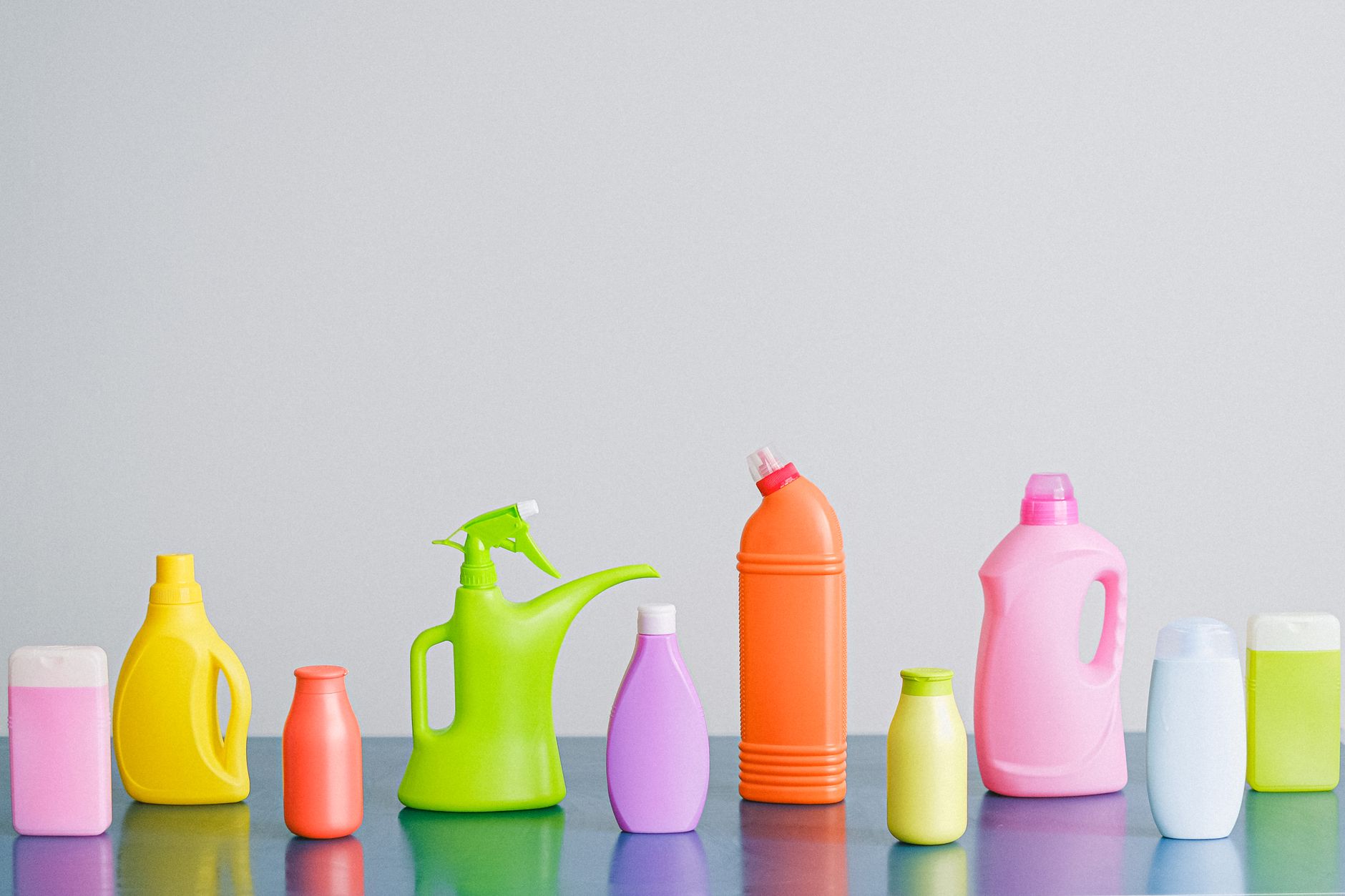
Never assume they will. Detergents, degreasers, disinfectants, defoamers, and floor-care products can attack seals, swell hoses, corrode metals, create persistent foam, foul filter media, or lose performance as soil accumulates. Approval must cover the chemical, dilution, floor finish, filtration media, and every wetted component in the machine.
OSHA tells employers to maintain Safety Data Sheets, train workers on correct dilution, and never mix different cleaning chemicals. It specifically warns that combining bleach and ammonia can cause severe lung damage or death. A recycling loop raises the stakes because residues can remain in plumbing and meet the next product unless the circuit is fully drained and rinsed.
Disinfection is a separate requirement from soil removal. EPA directions for registered disinfectants govern approved use sites, dilution, and contact time. EPA gives the example that a product labeled for a 10-minute contact time must keep the surface visibly wet for the full 10 minutes. Passing previously recovered liquid through a filter does not prove that the active ingredient remains at its labeled concentration or that the required wet time is achieved.
If a site requires an antimicrobial claim, obtain written confirmation that the proposed application method follows the product label and facility protocol. Otherwise, treat the robot as a cleaner and use an independently validated disinfection step where required.
How do operators prevent tank odor?
Odor is usually an operating signal, not a fragrance problem. Organic material, stagnant liquid, residue trapped behind baffles, and damp filters create conditions in which microorganisms can persist. Masking the smell does not remove the source and may introduce another incompatible product.
CDC environmental-cleaning guidance says diluted detergent or disinfectant mixtures can become microbial reservoirs when prepared in dirty containers, stored too long, or mixed incorrectly. It recommends making enough fresh liquid for daily cleaning, discarding what remains, and drying the container. Although a scrubber tank is not a mop bucket, the same contamination pathway supports a conservative rule: do not park a recycling machine full of recovered water.
End-of-shift care should empty both tanks, remove captured solids, rinse all reachable surfaces, flush the approved circuit, and leave components open to dry when the equipment design permits. Persistent odor, slime, unusual foam, or discoloration should take the robot out of reuse mode until the cause is corrected. In sensitive facilities, the sanitation procedure should be documented and auditable.
Do water savings justify the added complexity?
Water conservation has genuine operational value. EPA reports that commercial and institutional facilities account for 17 percent of withdrawals from U.S. public water supplies. EPA also advises that reused water must be matched to the quality required by its end use, with appropriate treatment. That principle applies neatly to floor care: saving water does not excuse a poorer floor result or an unsuitable hygiene practice.
Still, water cost alone rarely tells the whole story. Include incoming water, sewer charges, detergent consumption, labor for every fill and dump, travel to the service point, filter consumables, sanitation labor, fault recovery, and lost cleaning time. Use the site’s current utility tariff and measured consumption rather than a national average.
EPA recommends gathering and analyzing facility water data monthly before a major efficiency program. Its tracking resources note that utility data have been entered for more than 50,000 buildings and can be assessed across more than 150 metrics. For a robot project, meter or log the actual gallons used by the cleaning process and compare them with route completion. The economic prize may be labor availability and route continuity, not the water bill.
This is also where robot leasing for business can support a controlled test. Structure a commercial robot pilot program around measured water stops and filter labor before choosing a leasing contract, autonomous floor scrubber lease or purchase. A monthly payment program does not rescue a water system that is wrong for the soil.
How should a facility validate the right system?
Start with the route, not the feature sheet. Record floor area, soil zones, cleaning frequency, distance to approved fill and drain points, allowable chemicals, staffing windows, and the longest useful unattended interval. Then test conventional and recycling configurations on comparable shifts using the same acceptance criteria.
A good trial deliberately includes difficult sections and observes the water loop near the end of its cycle. Check floor appearance, pickup, slip risk, filter loading, foam, odor, tank cleanout time, alarms, and operator exposure. Stop criteria should be written before the pilot so a disappointing result cannot be explained away after the fact.
Service Robot Co. approaches this as a water-system selection problem inside the larger robot deployment and integration process. As an OEM-neutral, vendor-neutral robot integrator for U.S. businesses, we compare machines across manufacturers, conduct site assessment mapping, arrange financing, deploy and train teams, and service each unit through a nationwide U.S. engineer network.
That one-partner model matters because water performance touches equipment choice, chemistry, operating procedures, staff training, and field service. A free site assessment can establish if recycling materially extends the route, if a larger conventional tank is the cleaner answer, or if routes should be divided by soil type. The goal is not the most elaborate machine. It is the robot that fits your floor and keeps cleaning predictably.