Key takeaways
- US food and beverage robot installations rose 30% to 2,900 units in 2025, according to IFR data.
- The segment grew faster than the wider US market, which rose about 11% to 12% depending on the source.
- The sources reviewed do not say which food plant tasks drove the growth.
- Measure your own baseline before you compare your plant to the national figure.
- Start a pilot with one leased unit and written go or no-go criteria.
Did food plants keep pace with the 2025 robot boom?
Yes, if you measure by the number most industry readers quote. According to the International Federation of Robotics (IFR), US food and beverage robot installations rose 30% to 2,900 units in 2025. Manufacturing Digital reports the same IFR figure, and it is the number a plant manager should set beside their floor.
Keeping pace is not the same as matching the percentage. A 30% rise shows that the segment is growing quickly. It does not tell you whether your line needs a robot this year, which tasks are behind the count, or what a pilot will return on your equipment. Use the figure as a benchmark, not a verdict.
How does food compare with the wider US market?
Totals vary by source, so cite the one you read. The IFR's preliminary release puts US installations at about 38,000 in 2025, up 11%. Coverage of the IFR data by Manufacturing Digital gives 38,400 units, up 12%, and reports that the US overtook Japan for second place. We could not confirm the 38,400 figure against the IFR's own release, so use the IFR's preliminary number when you need an official anchor.
Inside that total, automotive remained the largest US customer with about 13,500 installations, down 1%, as reported by Manufacturing Dive. Metal and machinery fell 15% to about 3,000 units. Food and beverage, at 2,900 units up 30%, started from a much smaller base than automotive but grew faster than either.
Why did food stand out outside the auto plant?
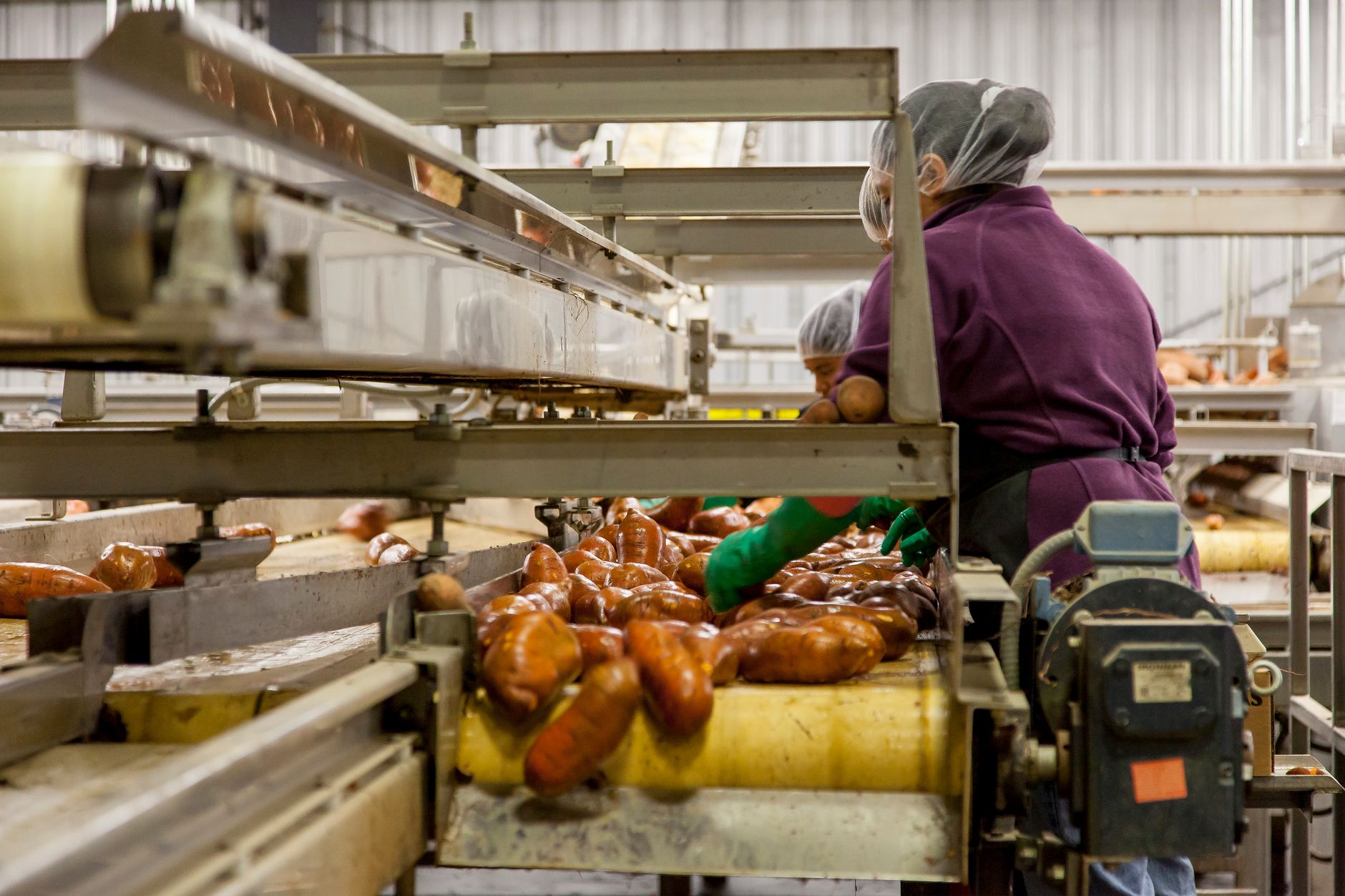
Trade coverage links the food sector to much of the 2025 US robot growth. Potato Business reports that potato processors are accelerating automation, which may explain some of the attention the segment is getting.
The coverage we reviewed does not quantify how much of the 2,900 units came from potato lines or any other food subsector. Treat the potato link as a clue about where interest is concentrated, not as a breakdown of the count.
Which food plant tasks are behind the 2,900 units?
None of the sources reviewed says which tasks drove the 2025 count. Palletizing, packaging, machine tending and washdown areas are where many food plants look first, but tying the 2,900 units to any one of them would go beyond the evidence. Map your cells before you assume a fit.
Use these checks on the line you are considering:
- Palletizing: count the SKUs and pattern changes a shift runs, and how often the pattern changes.
- Packaging: list the film, carton and label changeovers, and the time each one takes today.
- Machine tending: measure the idle gaps in each machine cycle that a robot could fill.
- Washdown zones: identify which cells are hosed down and which cleaning chemicals reach the robot.
What should a plant check before a pilot?
Start with the baseline. Record throughput, changeover time, scrap and labor hours on the cell you plan to change, across several representative shifts. Without that record, any pilot result is an anecdote.
Then check the physical and sanitary fit. Confirm the robot's rating against your washdown routine, the floor slope and drains, power and network access, and how the cell connects to your existing controls and safety layout. Ask who approves food safety changes at your site before the unit arrives.
Plan for people as well. Operators need training on stops, restarts and fault codes, and maintenance needs a clear response path. A robot pilot program that works on day shift but stalls on nights has not proven much.
How can a plant pilot robots without overcommitting?
Scope the pilot to one cell and one measurable goal, then decide go or no-go from the data. Many plants find that a single unit answers the core questions. Service Robot Co. is a full-service commercial robot integrator for US businesses, and robot leasing is how we place units on sites.
We are OEM-neutral. We select the robot for the task across manufacturers, then arrange a 3-year lease with one fixed lease payment quoted after a site assessment. Our US engineer network handles deployment, integration, training and service, so the plant works with one vendor across the lifecycle. Start with one leased unit, measure it, and expand only if the numbers hold.
What should you expect from the benchmark next year?
IFR expects US installations to keep growing, though trade tensions could slow the pace in the short term, according to IFR press coverage. That outlook makes the 2025 food figure a starting reference rather than a finish line.
Re-run your own comparison each year, and keep the source and date beside every number you quote.
Frequently asked questions
Want a robot working for you?
Tell us the job and the site. We will recommend the robot, quote the lease, and keep it serviced.
Sources
- Manufacturing Digital: IFR food and logistics pushed US robot automation past Japan
- IFR press release: US robot industry (September 2026)
- IFR: US robot industry returns to double-digit growth (preliminary)
- IFR press release: US robot industry returns to double-digit growth
- Manufacturing Dive: US robotics rebounded in 2025
- Potato Business: Food sector drives US robot growth as potato processors accelerate automation