
Key takeaways
- An August 2026 Australian survey reports staffing is the top problem for turf managers.
- Golf courses reported a 41% top staffing concern, close to the 45% reported by council parks.
- US superintendents rank qualified or skilled labor as their leading concern, per USGA Green Section reporting.
- Plan mowing and bunker hours around the crew you can staff, not the crew on paper.
- Check vendor survey samples before letting them set your hiring budget.
Are golf grounds crews short of people?
Yes, and the gap is not limited to the United States. An Australian national survey released in August 2026 reports that staffing is the top problem for turf managers across sportsgrounds and golf courses. The State of Australian Turf 2026 survey, run by turf supplier Greenway Turf Solutions, drew 404 responses from managers in every state and territory.
Within that group, 38% of respondents called hiring very difficult or critical. The survey is vendor-reported, so its method and sample may not represent every facility. Treat it as a strong directional signal, not a census of the industry.
For US course planners, the practical lesson is simple. Build the season around the crew you can actually staff, measure the gap instead of guessing at it, and decide early which tasks a robot should carry.
Why golf sits near the top of the gap
The same release breaks staffing concern down by segment. Council parks reported the highest share at 45%, golf courses followed at 41%, and sports fields and stadiums came in at 33%.
Golf sits close to the council figure, which suggests the squeeze is not confined to public parkland. The sport also carries a particular exposure. Greens, tees, fairways, bunkers and irrigation draw on the same small pool of skilled people, so a missing mower operator can hold up several jobs at once.
The tradeoff is sharper on a golf course than on many other turf sites. Superintendents tend to protect greens hours first, which pushes fairway and rough work into whatever time is left. When a crew runs short, mowing schedules are often the first thing to bend, and that shows up on the playing surface.
The US picture: qualified labor is the leading worry
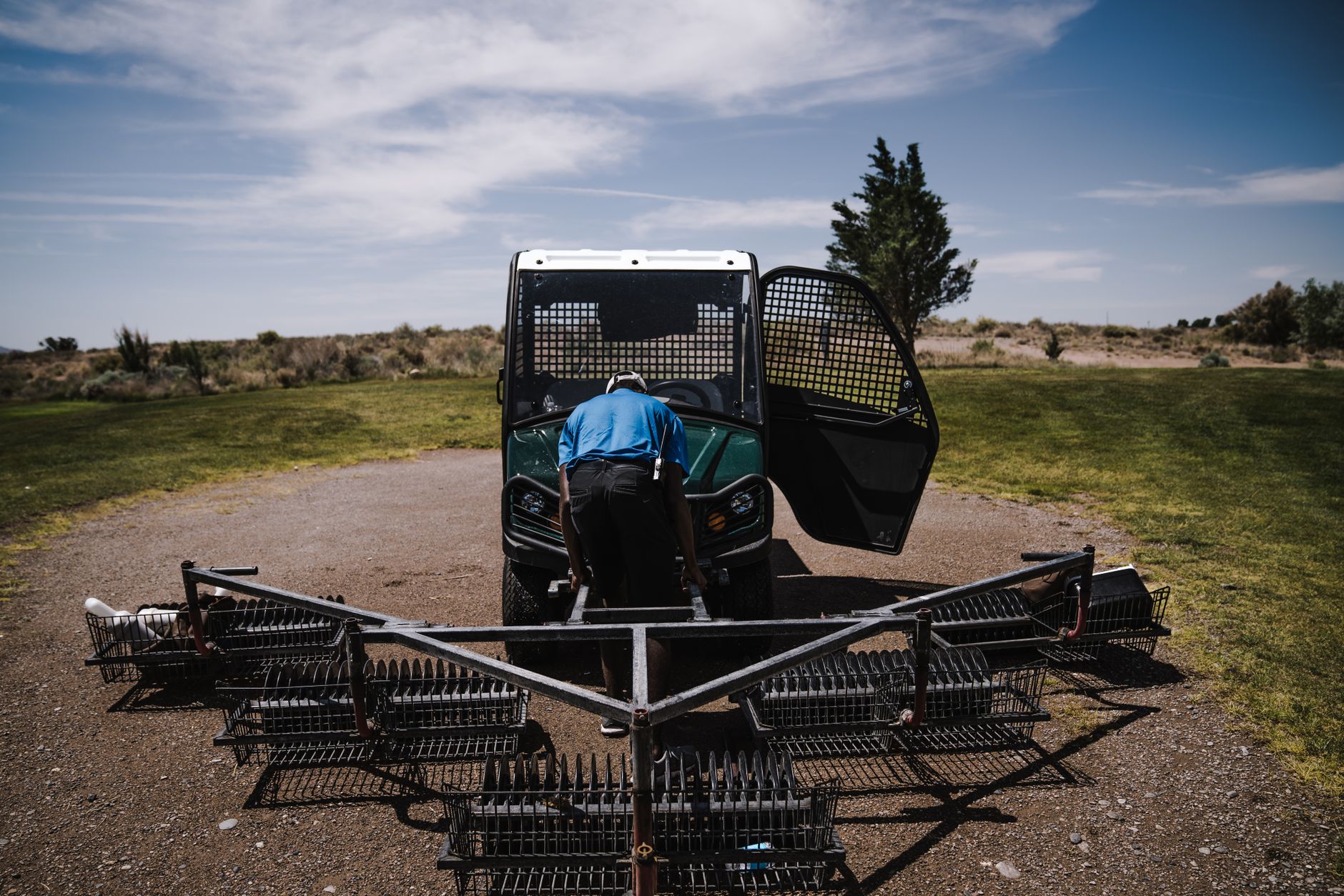
US superintendents describe the same pressure. USGA Green Section reporting says a recent survey found that lack of qualified or skilled labor is superintendents' top concern.
The newest US labor survey confirmed for this piece is a 2022 GCSAA study, four years earlier than the Australian release. No 2026 national count turned up, so US planners should pull their own figures before leaning on any national average.
Associations are also working on supply, not just reporting the problem. GCSAA has partnered with The Warrior Alliance on a skills program meant to supply trained maintenance workers, according to Golf Course Management.
What course planners should change this season
The Australian and US data point to the same moves, even though the two markets differ in size, climate and labor rules. Start with the crew you can staff this month, not the crew on the original plan.
- Rank tasks by how much they depend on a scarce skill, and protect those hours first.
- Set mowing windows around staffed hours, and leave a buffer for an unplanned absence.
- Log crew hours by task for one full season before adding headcount.
- Name a backup for the mower operator role so one resignation does not stop fairway work.

Where robot mowing fits a short-staffed crew
Service Robot Co. is a full-service commercial robot integrator for US businesses. We are OEM-neutral, so we select robots across manufacturers that match the work, then finance, deploy, integrate, train and service every unit through a nationwide US engineer network. One vendor covers the whole lifecycle.
Our offer is a lease. Customers take a 3-year lease with one fixed payment quoted after a site assessment, so the budget conversation happens against a specific site rather than a generic price.
On a course, the assessment is where the layout gets mapped, slow zones and cart paths get marked, and the hours a robot could take over get measured against the staff you actually have. The goal is to take repetitive passes off scarce operators, so people stay on greens, bunkers and work that needs judgment.
How to test a staffing claim before acting
Vendor surveys help frame a problem but rarely size yours. Check the sample, look at who answered, and check if respondents resemble your course. The 404 Australian responses are a useful starting point, not a benchmark for a single facility.
A simple test works. Compare one season of logged crew hours against the tasks you completed and the openings you carried. If the gap is real, it will show in the hours, and those numbers will tell you what to fix first.
Ask any vendor how its figures were produced, and what it would need from your site to produce a comparable estimate. Training time also belongs in the plan, since a new operator is not productive on day one.
Frequently asked questions
Want a robot working for you?
Tell us the job and the site. We will recommend the robot, quote the lease, and keep it serviced.