

Key takeaways
- Robots should carry sealed minibar totes to controlled floor staging points, while hotel employees retain responsibility for entering and servicing guest rooms.
- Scheduled batches suit predictable daily demand; on-demand missions should cover shortages, unusual occupancy patterns, and urgent exceptions.
- Elevator capacity is the main constraint in tower hotels, so dispatch rules must protect guest traffic and critical service periods.
- Scanned handoffs and exception records matter more than raw trip counts when measuring inventory performance.
- A pilot should test the complete storeroom, elevator, staging, return, and reconciliation loop before a wider rollout.
Where should a delivery robot fit in the minibar workflow?
A hotel delivery robot should move sealed, floor-specific minibar totes from a central storeroom to designated housekeeping staging points. It should not enter occupied guest rooms or perform the final refill. A trained employee accepts the tote, replenishes each minibar, records consumption and returns discrepancies through the hotel's established process.
This division of work removes repetitive back-of-house travel without changing room-access policy. The robot becomes a transport layer between controlled locations, while housekeepers or minibar attendants keep custody of keys, verify room status and handle guest-facing work.
The best operating model combines scheduled batch replenishment for forecast demand with a limited on-demand queue for exceptions. Elevator trips are governed by time windows, priority rules and congestion signals, preventing a productive storeroom process from becoming a new source of lobby or service-corridor friction.
How does the tote loop work from storeroom to floor?
The loop begins with demand preparation, not robot dispatch. Inventory staff assemble each tote against a floor, room block or attendant route. The label should identify its destination, contents, preparation time and accountable receiver without exposing guest information on the outside.
At dispatch, the tote is scanned and secured inside an enclosed payload compartment or on a latching carrier. The robot travels through approved back-of-house corridors, calls the permitted elevator and stops only at a mapped staging point. Staff acknowledge receipt before the compartment opens or the tote is released.
Returns are part of the same design. Unused stock, damaged packaging, expired items and empty totes need their own scan and disposition. If the return path is omitted, staging rooms slowly accumulate orphaned inventory and the hotel's system loses confidence in what is actually available.
- Pick and scan stock into a floor-specific tote.
- Seal the tote and assign its destination and receiver.
- Dispatch through an approved corridor and elevator window.
- Require a positive handoff at the staging point.
- Reconcile unused, damaged and expired items on return.
What makes a minibar tote robot-ready?

A suitable tote protects both merchandise and the inventory record. It needs a secure lid, stable footprint, cleanable surfaces and dividers that stop bottles from shifting during turns or threshold crossings. Tamper evidence is useful when alcohol or premium products move through shared service areas.
Weight limits should follow a site-specific ergonomic assessment. The National Institute for Occupational Safety and Health uses 51 pounds as the load constant in its lifting equation, but only under ideal conditions. Reach distance, lift frequency, twisting, tote grip and shelf height reduce the recommended limit, so 51 pounds is not a universal packing target.
Food handling rules still apply to the workflow. The FDA Food Code generally places packaged food at least 6 inches above the floor, subject to stated exceptions. If a minibar assortment includes time and temperature control for safety food, the Food Code uses 41 degrees Fahrenheit or below for cold holding. Local code and the hotel's food-safety plan govern the final procedure.
Scheduled batches or on-demand missions?
Scheduled batching is the better default when demand is predictable. The storeroom can prepare several floor totes together, inventory can be counted once, and elevator trips can be placed outside checkout, housekeeping release and guest arrival surges. The tradeoff is forecast error: a floor may receive excess stock while another runs short.
On-demand missions react to real consumption, a missing item or an unexpectedly heavy arrival pattern. They reduce floor stock and can rescue service failures, but frequent single-tote calls consume elevator capacity and create more handoffs. Treating every request as urgent usually produces motion without better availability.
A practical policy gives planned batches ordinary priority and reserves on-demand dispatch for defined exceptions. The request should state the item, quantity, destination, latest acceptable arrival and responsible receiver. Requests lacking a receiver should wait, since unattended delivery merely relocates the bottleneck.
How can hotels prevent elevator congestion?
Elevator traffic is the pivotal design constraint in a multi floor delivery robot deployment. ISO 8100-32:2020 specifically covers passenger-lift planning for hotels and says planning should account for luggage and other nonpersonal items. That is a useful reminder that nominal cab capacity does not describe real hotel traffic.
Start with observed demand by time and bank: guest calls, housekeeping carts, banquet moves, engineering work and linen traffic. Dispatch batches through quieter windows, cap the number of robot missions allowed in a bank, and hold new releases when cars are repeatedly full. A robot waiting safely in a service alcove is preferable to one cycling calls at a crowded landing.
Priority must be explicit. Guests, accessibility needs, emergency operation and designated hotel services should outrank routine minibar stock. Urgent on-demand missions can receive a higher operational priority, but they still must yield when the elevator system enters fire service, inspection, maintenance or another restricted mode.
Any delivery robot for elevators must work through approved interfaces and the elevator contractor's rules. ASME describes A17.1/CSA B44 as the accepted North American guide for elevator design, operation, inspection, testing, maintenance, alteration and repair. Robot deployment should never bypass protected controls or substitute improvised button-pushing hardware for an authorized integration.
How should staging points protect guests and staff?
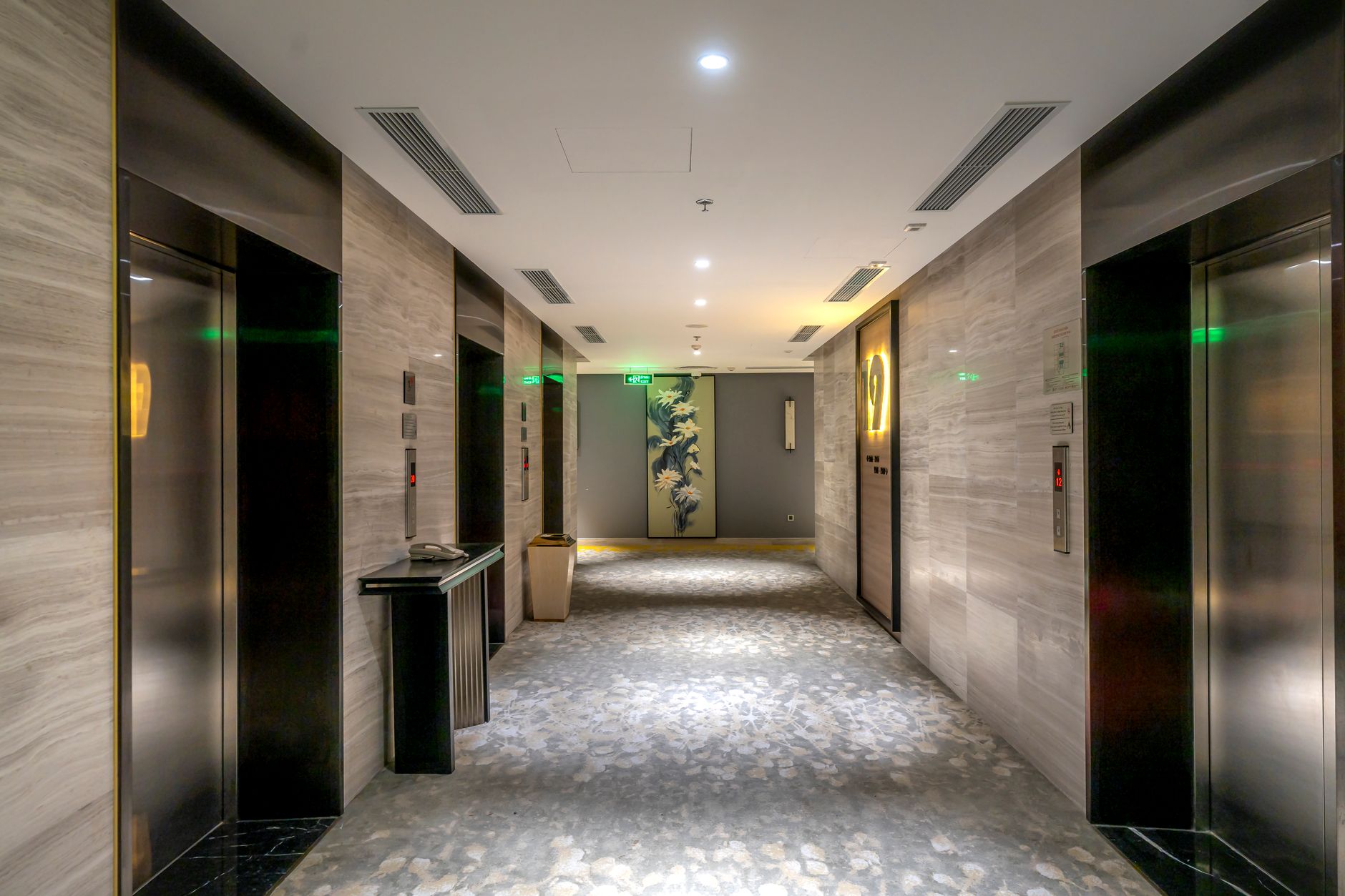
A staging point needs more than an available wall. It should sit outside the guest-room threshold, within the receiving team's normal route, and away from fire equipment, door swings, housekeeping-cart parking and blind corners. The receiver needs room to approach, authenticate and lift without twisting around another cart.
OSHA regulation 1910.176 requires sufficient safe clearance where mechanical handling equipment moves through aisles, doorways, turns and passageways. It also requires aisles and passageways to remain clear and in good repair. A robot parking position therefore belongs on the floor plan, not wherever space happens to remain that morning.
Guest-facing paths also require an accessibility review. The 2010 ADA Standards generally call for a 36-inch minimum clear width on accessible walking surfaces. When an accessible route is less than 60 inches wide, qualifying passing spaces are required at intervals no greater than 200 feet. Those figures are regulatory baselines, not permission to fill every remaining inch with equipment.
The robot should fail safely if the receiver is absent. After a defined wait, it can keep the compartment locked, move to an approved holding point or return to the storeroom. Leaving a tote in a corridor breaks custody, obstructs circulation and invites inventory disputes.
What should a minibar transport pilot measure?
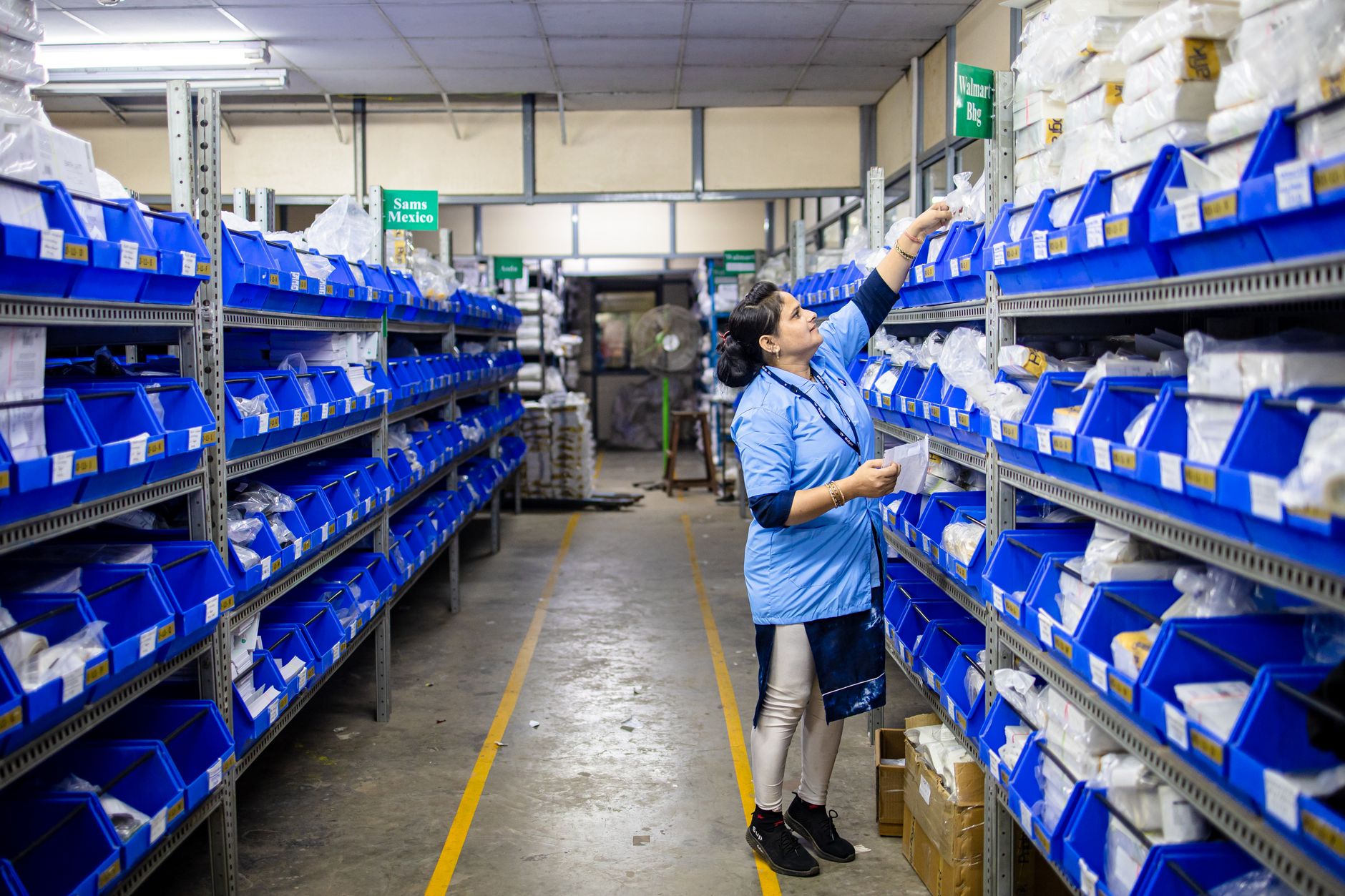
A robot pilot program should test the complete operating day, including elevator peaks and exception handling. A quiet demonstration proves navigation, but it does not prove that the workflow can survive checkout traffic, late room releases, blocked staging areas or an absent receiver.
Measure inventory outcomes alongside robot activity. Completed trips are useful, yet they say little about the right stock reaching the right floor at the right time. The stronger measures connect dispatch records with tote accuracy, acknowledged handoffs, shortages, damaged goods and completed returns.
Baseline the same measures during the manual process before go-live. That comparison reveals where repetitive transport automation actually changes work and where delays still originate in picking, room status, replenishment or reconciliation.
- Order-to-staging elapsed time by mission type.
- Percentage of totes received within their service window.
- Pick accuracy and shortage exceptions per tote.
- Elevator wait time, rejected boardings and missions deferred for congestion.
- Unattended handoffs, route interventions and blocked staging events.
- Employee travel removed from storeroom-to-floor transport.
- Returned stock reconciled to the inventory record.
How should a hotel select and support the system?
The right platform depends on tote dimensions, payload, thresholds, corridor geometry, elevator interfaces, fire and access-control behavior, and the hotel's service windows. Procurement should evaluate the complete route and operating policy rather than choosing a machine from a payload specification alone.
Service Robot Co. acts as a full-service, OEM-neutral commercial robot integrator for U.S. businesses. The team can select equipment across manufacturers, arrange purchase or lease, perform robot deployment and integration, train hotel staff and support units through a nationwide U.S. engineer network. That gives the operator one vendor for the lifecycle instead of separate contacts for hardware, financing and field service.
For hotels comparing hotel delivery robot leasing, autonomous mobile robot leasing or longer-term financing, the contract should match the operating test. Define acceptance criteria, elevator responsibilities, remote triage, on-site dispatch, RoboCare™ service in the program and the remedy for prolonged downtime. Commercial robot leasing terms cannot compensate for an undefined tote process.
A vendor neutral robot integrator should also be willing to conclude that a particular floor, elevator bank or staging arrangement is not ready. Correcting those constraints before deployment protects guest circulation and produces a far more credible inventory operation.