
Key takeaways
- AMRs belong after tires are stabilized into carts, pallets, cages, or other restrained carriers.
- Replenishment is usually the strongest first workflow because routes are repetitive and endpoints are known.
- Fire-code aisles, rack geometry, and egress rules often shape the fleet more than robot specs do.
- Conveyor and manual-cart handoffs need restrained transfers, fixed geometry, and clear recovery procedures.
Can AMRs work in a tire distribution center at all?
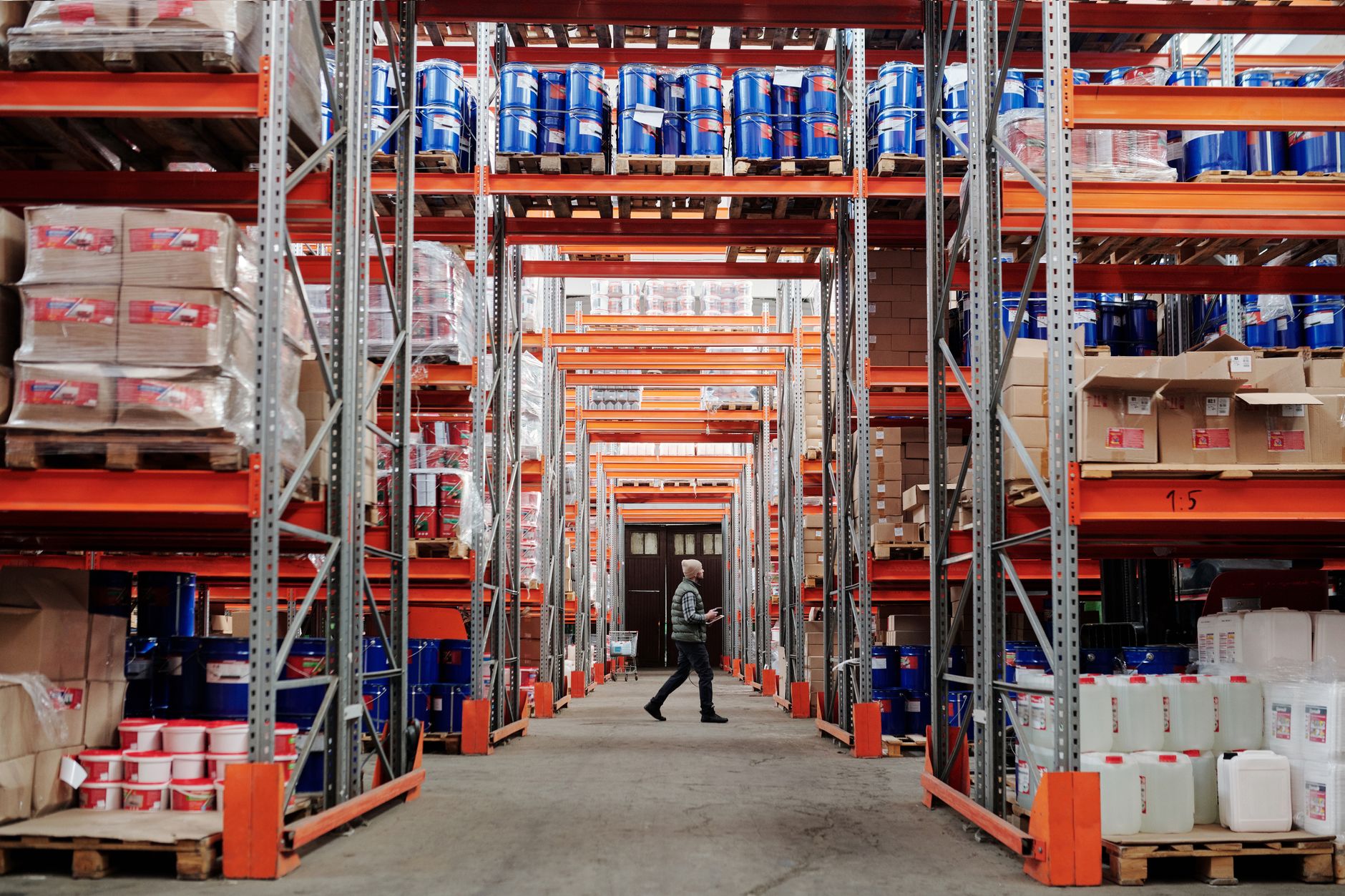
Yes, but only if the workflow respects what tires are. AMRs fit best in the middle of the move, after tires have been stabilized into carts, pallets, cages, or another restrained carrier, and before people break the load down again for picking or final verification. In practice, that means buffer to reserve, reserve to forward pick, and forward pick to staging are far better candidates than loose unloads straight off a trailer.
They are weak at the ugliest moments. Floor-loaded inbound trailers, mixed loose tires, odd diameters, and hand-built stacks ask the robot to manage a shifting ring-shaped load that can bounce, telescope, or snag. Treating tires like ordinary cartons is the planning error that causes trouble.
The volume is real enough to justify careful automation. USTMA's March 4, 2026 forecast projects 338.9 million total U.S. tire shipments in 2026, including 223.3 million replacement passenger tires, 38.0 million replacement light truck tires, and 24.7 million replacement truck tires. Replacement flow dominates, so the real question is not whether tires move through distribution. It is where repetitive horizontal transport can be mechanized without destabilizing the load.
Why do tires break the ordinary-carton playbook?
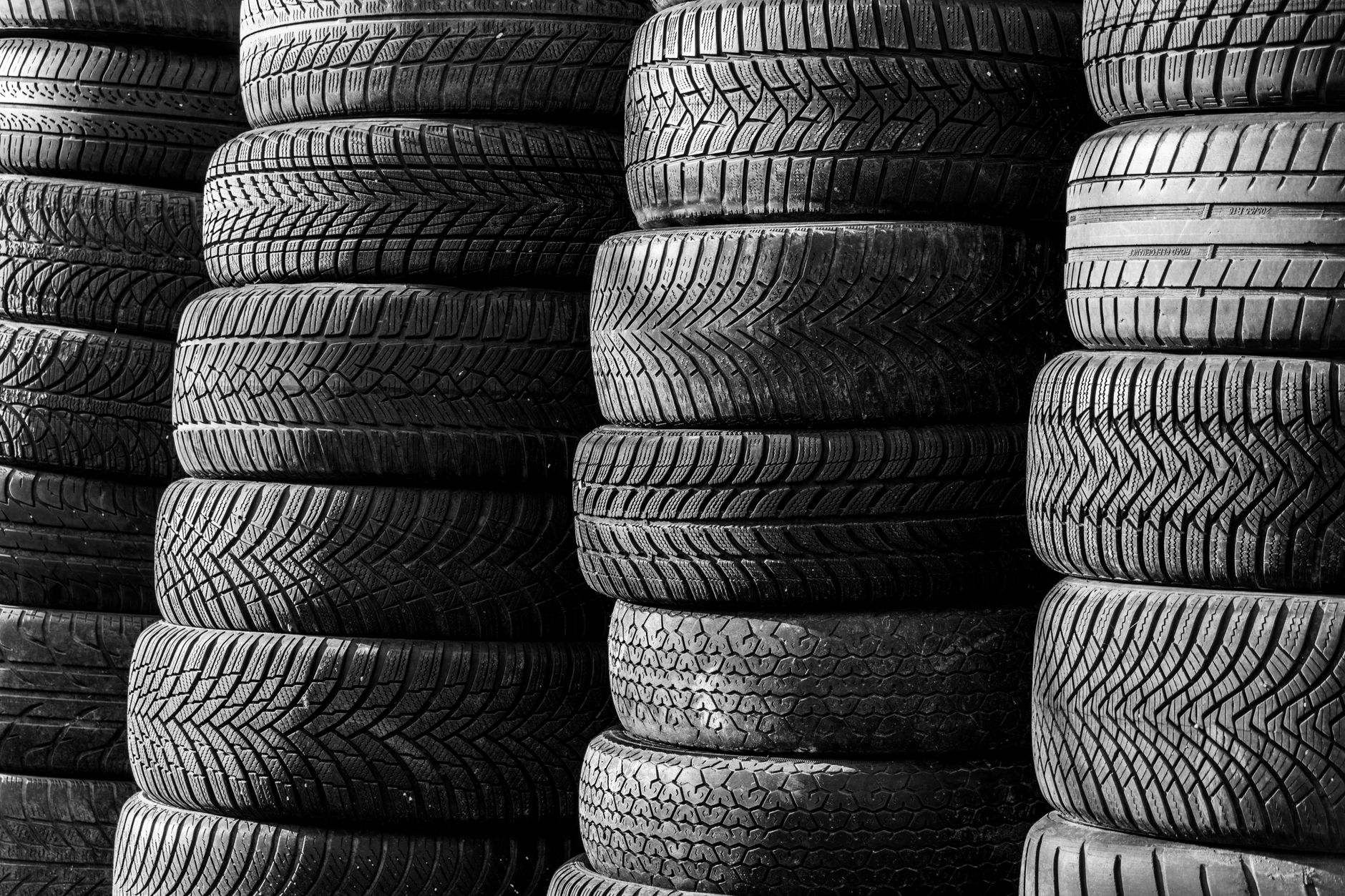
A tire is easy enough to grab alone and awkward in aggregate. Stacked flat, it can telescope. Stacked on-tread, it wants side restraint. Mixed diameters shift the center of mass. Rubber on rubber also has an odd mix of grip and slip, so a load can seem settled until a turn, dock plate, or slab joint makes the top layers creep.
OSHA's warehousing guidance keeps coming back to stable storage, clear aisles, smooth floors, and protected rack structures. Those rules matter more with tires because the load itself absorbs shock and then gives some of it back. A carton stack mostly rides the floor. A cart full of mixed tires flexes, twists, and tests its own containment every time it starts, stops, or corners.
- Floor-loaded inbound trailers are the least robot-friendly starting point because the product has not been stabilized yet.
- Mixed-SKU replenishment carts are safer for AMRs than loose tires, but they still behave less predictably than wrapped pallet loads.
- Open rack positions magnify side-snag risk when large-diameter tires overhang the carrier.
- Trailer lips, dock plates, expansion joints, and cracked slab edges look minor on a map and act major when the load is springy.
Where should automation start in receiving?
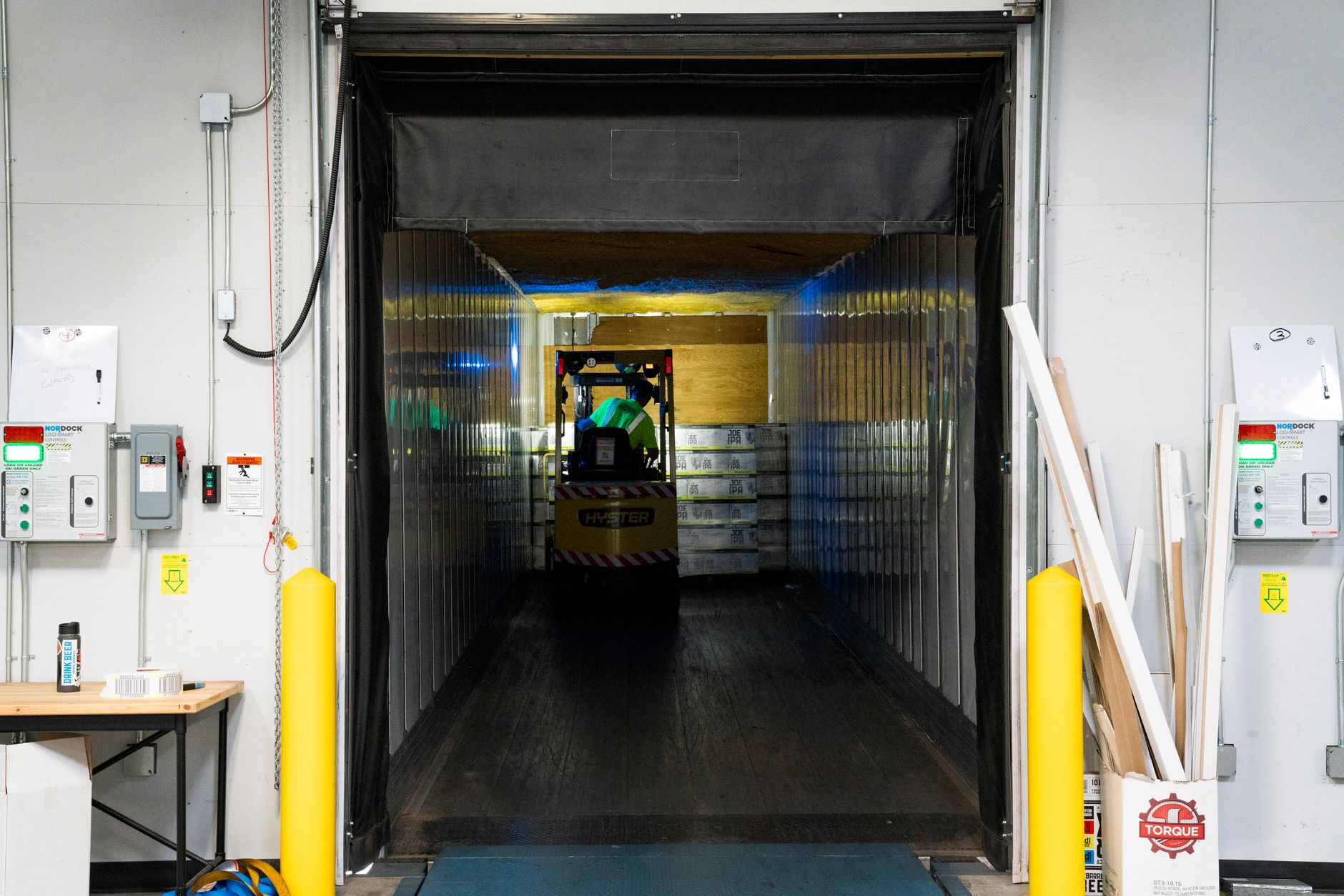
In tire receiving, the robot should usually enter after the unstable moment, not during it. OSHA notes that receiving unit loads is sensitive to uneven trailer transitions and dock shock, which is a concise way of saying the first few feet off the trailer are often rougher than the route plan suggests. That is the wrong stretch to ask a lightly constrained tire load to behave perfectly.
The better pattern is straightforward. People or conventional dock equipment unload first. Tires are corralled immediately into steel carts, nestable pallets, cages, or another restrained transport unit. Then an AMR takes over the repetitive horizontal run to inspection, reserve staging, or putaway.
If inbound already arrives on well-built pallets, slipsheets, or rackable carts, lift or under-cart AMRs can sometimes enter earlier. If inbound is floor-loaded, SKU-mixed, and built on human improvisation, do not automate the chaos. Automate the step right after the chaos.
Why replenishment is usually the best first workflow
Replenishment is where tire AMRs most often earn their keep. The path is repetitive, the endpoints are known, and the carrier can be standardized before the robot moves. That is very different from broken-case picking or any process that depends on constant human judgment at the source location.
The move might be reserve rack to forward pick, bulk lane to route lane, or overflow storage to an active pick module. In each case, the robot is doing dense horizontal transport while people still handle exception logic, final SKU checks, and any touches above comfortable hand zones. That division of labor is practical, not timid.
The safety case is also substantial. The U.S. Bureau of Labor Statistics reported a 2024 total recordable incidence rate of 4.8 for warehousing and storage and 4.9 for general warehousing and storage. Tire replenishment mixes push-pull force, low lifts, reaches into carts, and turns around rack ends. AMRs can remove a lot of that travel without pretending to automate every single touch.
What changes in order staging?
Outbound staging in a tire building is not a race for top speed. It is a discipline problem. Completed loads need to stay square, visible, and pull-ready without eating into egress, inspection space, or adjacent lane access. In many buildings, the last 50 feet matter more than the first 500.
AMRs help when they feed clearly defined staging lanes, sequence carts by wave or route, and avoid double-handling by parking the same restrained carrier that will later be hitched or rolled to the dock. They hurt when they trickle partly stable loads into overcrowded staging and force associates to reshuffle everything by hand.
This is also where the manual-cart handoff has to stay honest. If the final pull to the trailer is still manual, the robot should present the cart nose-out, centered, and with enough clearance for a person to take over without twisting or side-stepping around another parked load. The handoff is part of the system, not leftover detail.
Aisles, racks, and fire code set the map
Tire automation lives inside a code envelope. The 2024 International Fire Code keeps tire storage in Chapter 34, and OSHA's renewed warehousing emphasis program dated July 31, 2026 puts material handling, means of egress, ergonomic risks, and fire protection squarely in scope for inspections. That means robot routing has to respect more than shortest-path logic.
The exact numbers vary by state and local adoption, so the authority having jurisdiction gets the final say. Still, the pattern is plain. The 2022 California Fire Code sets sprinklered high-piled storage aisles at not less than 44 inches, and a 2021 IFC-based fire code published by the City of O'Fallon limits on-tread tire piles to 50 feet in the wheel-hole direction and 25 feet from a wall. Those are not robot specifications, but they are layout constraints every robot program inherits.
Practically, this rules out lazy planning. No dock station should sit in an egress pinch point. No parked carrier cart should nibble away at an inspection aisle. No fleet map should assume racks can be pushed tighter after go-live. If the storage plan is already living on its margins, adding AMRs exposes the weakness fast.
How should robots meet conveyors and manual carts?
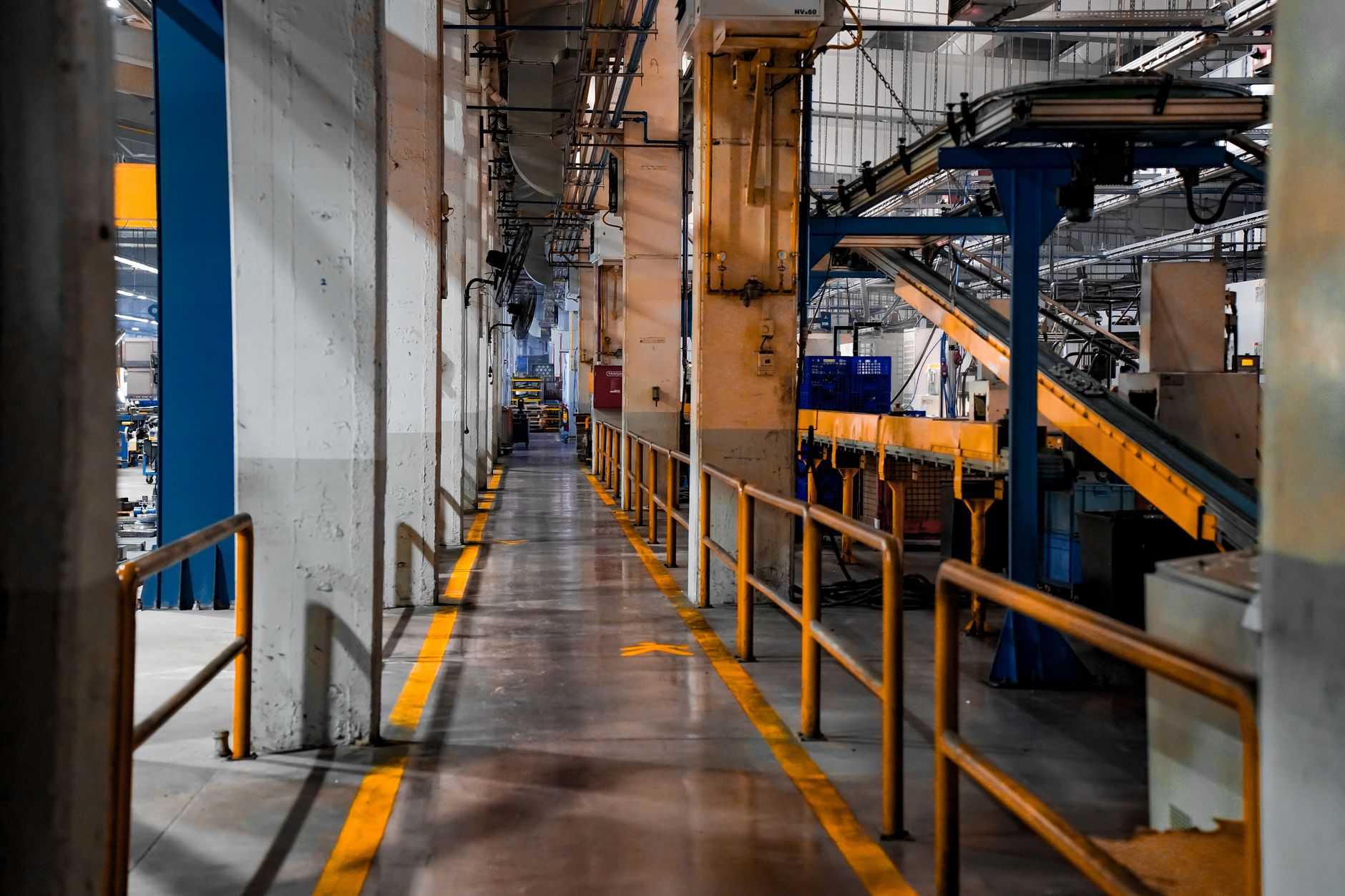
Conveyor interfaces are workable in tire distribution, but only when the transfer is restrained and repeatable. OSHA's warehousing guidance calls for guarded pinch points, lockout procedures around jams, and clear working space near conveyors. OSHA's Materials Handling and Storage publication also recommends readily accessible emergency stops and keeping loading and unloading areas clear of obstructions. That is the floor, not the ceiling.
For tires, the design implication is blunt. Do not let individual loose tires bounce across multiple surfaces unless side guides, stop gates, and transfer geometry control orientation. In most tire DCs, moving whole carts or restrained batches is safer and simpler than metering free tires one by one through several handoffs.
- Keep transfer height constant between conveyor discharge and the robot deck or cart bed.
- Use hard stops or nests so the load lands in the same place every cycle.
- Leave human reach space for jam clearing without stepping into the robot path.
- Give manual-cart operators a straight extraction path, not a diagonal yank out of a tight lane.
- Treat e-stop location, guardrails, and recovery procedures as commissioning items, not post-go-live cleanup.
What does a deployable program look like?
The cleanest first deployment usually starts with one narrow family of moves, not a grand rewrite of the building. Inbound buffer to reserve, reserve to forward, or forward to staging are common starting points. Standardize the carrier first. A cart fleet with bent casters, mismatched handle heights, and inconsistent wheel drag will beat the robot every time.
That is where a vendor neutral robot integrator matters. Service Robot Co. can evaluate whether the site is better served by tugging existing carts, lifting standardized dollies, or handing off to conveyors at a few disciplined nodes, then finance, deploy, integrate, train, and service the fleet through a nationwide US engineer network. If an operator wants to start with autonomous mobile robot leasing or a distribution center robot lease pilot, the same workflow-first logic still applies.
Good tire automation is not flashy. It is carrier engineering, route discipline, code-fit layout, and clean interfaces with the people still doing the awkward touches. Get those pieces right and AMRs belong in the building. Get them wrong and the fleet becomes expensive traffic.