
Key takeaways
- A compact autonomous scrubber works best on repeatable hard-floor routes, while employees retain immediate spill response and edge work.
- Measure the full operating envelope at shelving, endcaps, turns, counters, and displays before choosing a machine.
- Daily robotic passes can cover high-traffic zones more consistently than occasional whole-store mopping.
- Judge a pilot by verified area cleaned, interventions, water recovery, edge gaps, and impact on customers.
Where does a compact scrubber fit best?
Auto parts stores can automate floor care by assigning a compact autonomous scrubber to repeatable hard-floor routes through main aisles, around fixed shelving, and across the entrance and counter zone. The best machine is narrow enough for the real store layout, recovers its cleaning water well, and can pause safely when customers, carts, or freight block its path.
A small autonomous scrubber offers better coverage than occasional manual mopping when soil returns every day and the open floor can be mapped into dependable routes. It can run scheduled passes before opening, after receiving, or during quieter trading periods. Staff still handle fresh oil spills, broken containers, tight corners, and any area that must be guarded until dry.
The point is not to remove people from floor care. It is to move predictable square footage to a machine so employees can respond to exceptions. That division produces a steadier cleaning cadence without asking a counter associate to abandon customers for a full-store mop.
Why are parts-store floors unusually demanding?
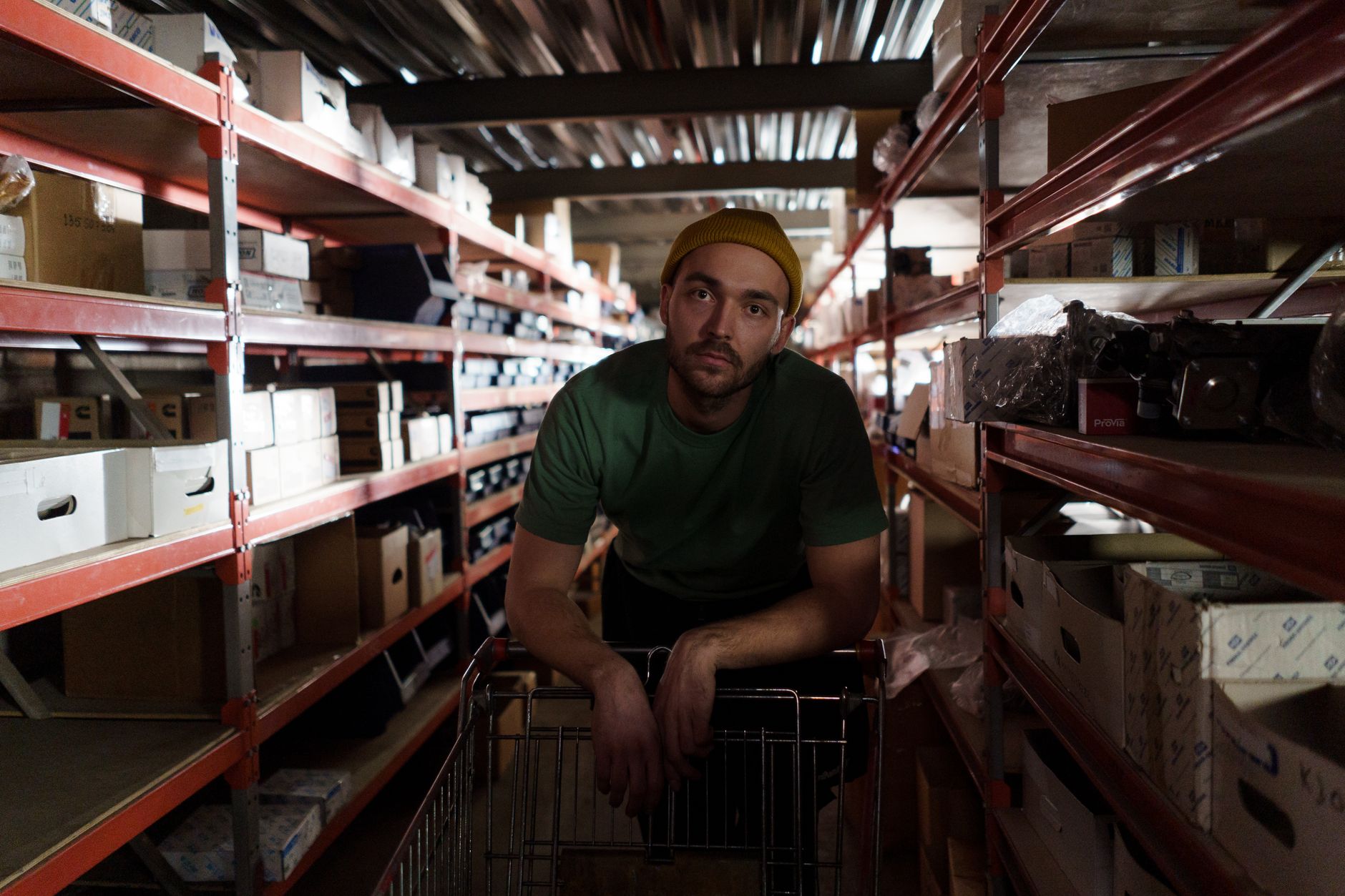
An auto parts floor collects a peculiar mixture of street grit, tire residue, cardboard fibers, rainwater, and occasional drips from oil or chemical containers. Heavy shelving creates long channels with limited turning room. Endcaps migrate, promotional stacks appear, and delivery totes can turn a clean map into an obstacle course within minutes.
The counter is different from the aisles. Foot traffic bunches there, customers pivot while carrying awkward parts, and employees cross repeatedly between registers and the back room. That makes the zone important to clean, but a poor place for an autonomous run during a rush.
Safety obligations reinforce the need for a condition-based program. OSHA rule 1910.22 requires walking-working surfaces to be kept clean, orderly, sanitary, and, to the extent feasible, dry. It also requires regular inspection and correction of leaks, spills, and other hazards. A scheduled robot helps with routine soil, but it does not replace immediate spill control.
Can a robot clean genuinely narrow aisles?
Yes, but machine width is only the first measurement. Record the narrowest shelf-to-shelf point, brush deck width, squeegee width, safety clearance, turning radius, and the space consumed by cones or temporary barriers. Then test the route with the displays, ladders, carts, and stocking activity that exist on an ordinary day.
Accessibility cannot become collateral damage. The U.S. Access Board says an accessible route generally needs 36 inches of clear width. A reduction to 32 inches is allowed only for a segment no longer than 24 inches, with qualifying wider segments around it. Those dimensions describe accessible routes, not a robot specification, but they are a vital constraint when mapping public retail space.
Turns deserve their own survey. A machine that travels comfortably down a straight aisle may need more room at an endcap, oil display, or counter queue. Map fixed no-go zones around accessible clear floor space, emergency equipment, exits, unstable displays, and any shelf where low overhangs can interfere with sensors.
- Measure the tightest point at floor level and at sensor height.
- Test turning clearance with real endcaps and promotional stacks in place.
- Keep docks, signs, and parked machines outside accessible customer space.
- Create a manual-clean zone where the robot cannot reach without crowding merchandise.
What should stay manual?
Fresh oil, coolant, washer fluid, and battery-related contamination need a person to identify the material, isolate the area, follow the safety data sheet, and use the correct absorbent and disposal procedure. Sending a scrubber through an unknown spill can spread contamination, load the recovery system, and enlarge the slippery area.
NIOSH guidance for wholesale and retail workplaces recommends keeping cleanup materials and wet-floor signs convenient, cleaning floors as soon as they become wet, and removing signs only after the surface is dry. It also advises keeping aisles clear and using cleaning agents that do not leave a slippery residue. Those are staff responsibilities even in a highly automated store.
Manual detail work also remains sensible along toe kicks, under shelving lips, behind counter fixtures, around floor mats, and in cramped vestibules. The robot should own the broad repeatable lane. A mop, absorbent kit, or compact hand tool should own the irregular edge and urgent exception.
When does automation beat occasional mopping?
Occasional mopping is reactive. It tends to happen when the floor already looks dirty, when a shift has spare time, or when closing tasks finally permit it. An autonomous scrubber can execute the planned route at the chosen frequency and record where it traveled, which gives a manager a clearer view of coverage and missed areas.
A useful benchmark comes from the U.S. General Services Administration's January 2026 custodial specification. It calls for daily care of hard floors in high-traffic entrances, lobbies, aisles, and hallways, while low-traffic secondary areas receive weekly care, adjusted for seasonal conditions. That is a federal facility specification, not a retail mandate, but its traffic-based logic fits parts stores well.
The labor case is about allocation, not a claim that every machine removes a position. The U.S. Bureau of Labor Statistics reports a May 2025 median wage of $17.71 per hour for janitors and building cleaners. Stores should compare the machine's verified productive cleaning time with the fully burdened time now spent pushing a mop, setting signs, changing water, and repeating incomplete areas.
Automation is less compelling when the floor plan changes constantly, nearly every aisle is blocked, the route is mostly carpet, or the team lacks a reliable person to refill, drain, inspect, and recover the unit. In those conditions, improve housekeeping and route discipline before committing to a fleet.
How should routes follow store traffic?
Start with a base route for the entrance, main racetrack, and long shelf aisles. Run it before opening or after the last major stocking movement. Give the counter zone a separate task so it can be cleaned during a quiet window instead of forcing the machine to negotiate a live queue.
Add condition-triggered work after rain, snow, a dusty delivery, or a merchandising reset. Entrance matting should remain part of the plan because it captures moisture and grit before the scrubber sees them. High-soil areas may need a slower pass or a second treatment, but the pilot must prove that on the store's actual finish.
An overnight cleaning no operator workflow means no employee walks behind the unit. It does not mean nobody owns the run. Assign a shift role to inspect brushes and squeegees, confirm tanks and chemistry, launch or schedule the task, review alerts, and verify the floor before customers enter.
What should a store prove in a pilot?
A commercial robot demo should begin with a measured map and a written cleaning standard. Use ordinary trading days, delivery activity, and genuine counter traffic. A polished demonstration on an empty floor says little about the machine's ability to wait, reroute, resume, and finish when the store behaves normally.
Compare robotic results with the current manual process on the same zones. Inspect for residue, streaking, missed edges, standing water, and soil left beside displays. Review the route record rather than relying only on scheduled area, because planned square footage and verified cleaning coverage are not the same.
A credible robot pilot program also tests exception handling. Block an aisle safely, shift an approved movable display, and confirm that the machine pauses or reroutes without narrowing an accessible path. Staff should practice spill escalation, safe stopping, restart rules, daily care, and the call path for remote triage or on-site dispatch.
- Verified area completed and time spent actively cleaning
- Number and cause of interventions or stranded events
- Water pickup, residue, edge gaps, and visible soil after the run
- Customer or employee conflicts at aisles, turns, and the counter
- Daily care time, consumable use, alert response, and route completion
Choose the machine and lifecycle together
Compact does not automatically mean capable. The correct robot must match aisle geometry, floor finish, soil load, slope, thresholds, drainage routine, chemical policy, and daily coverage target. Procurement should also address training, preventive maintenance, remote support, replacement parts, and response when a unit cannot complete its route.
Service Robot Co. is an OEM-neutral commercial robot integrator for U.S. businesses. We assess the site, select across manufacturers, finance or sell the equipment, map and integrate it, train the team, and service every unit through a nationwide U.S. engineer network. The store gets one partner and one number across the lifecycle.
That structure supports several acquisition paths, including commercial cleaning robot leasing, a floor scrubber monthly lease, monthly payment programs, and robot financing for small business. Terms such as RoboCare™ service or no long term contract should be verified in the actual proposal, along with usage limits, consumables, service response, insurance, and end-of-term options.
The final decision should rest on coverage evidence from the store, not a catalog claim. A robot that fits the floor, finishes the assigned route, stays out of customer space, and receives dependable service is more valuable than a larger machine with impressive theoretical capacity but poor access.