Key takeaways
- Unplanned robot downtime can cost a business hundreds of thousands of dollars per hour, disrupting entire operations.
- Preventative maintenance is the most effective strategy to maximize a robot's operational life and prevent costly failures.
- A service partner with a nationwide network of engineers is critical for rapid on-site response, especially for multi-site businesses.
- A detailed Service Level Agreement (SLA) provides concrete guarantees for response times, repairs, and access to loaner units.
- Working with an OEM-neutral robot integrator simplifies service for a diverse fleet, providing one point of contact for all maintenance needs.
Why Uptime Is the Most Important Metric for Your Robot Fleet
When you invest in commercial robots, you are buying a specific outcome: work accomplished. Whether it is a floor scrubber cleaning a warehouse, an AMR transporting pallets, or a cobot tending a machine, its value is realized only when it is operating. This makes uptime, the period a robot is functional and productive, the single most important metric for calculating your return on investment. Every minute a robot is down is a minute of lost productivity and a direct hit to your bottom line.
Even the most durable autonomous mobile robots will eventually require service. Components wear out, sensors need calibration, and software requires updates. While some issues can be resolved remotely, many require a trained technician on-site. The critical difference between a successful automation program and a failed one often comes down to the speed and effectiveness of that on-site service and maintenance structure. A robot that sits idle for days waiting for a repair is not just a parked asset; it is an active drain on resources.
What is the Real Financial Impact of Robot Downtime?
The cost of a non-operational robot goes far beyond the price of a replacement part. According to Aberdeen Research, unplanned downtime in the manufacturing sector can cost a company an average of $260,000 per hour. While that figure varies by industry, the cascade effect is universal. A downed autonomous floor scrubber in a large distribution center means dirty, unsafe floors or pulling human staff from other critical tasks to perform the cleaning.
This ripple effect creates numerous hidden costs. These include paying employees overtime to cover the work the robot was supposed to do, potential disruptions to logistics and production schedules, and the administrative burden of managing an unexpected failure. A study from Siemens noted that for Fortune Global 500 companies, these interruptions can account for losses equivalent to 11% of their total revenues. Minimizing unplanned downtime is not just a maintenance goal; it is a core business imperative.
How Does Preventative Maintenance Stop Problems Before They Start?
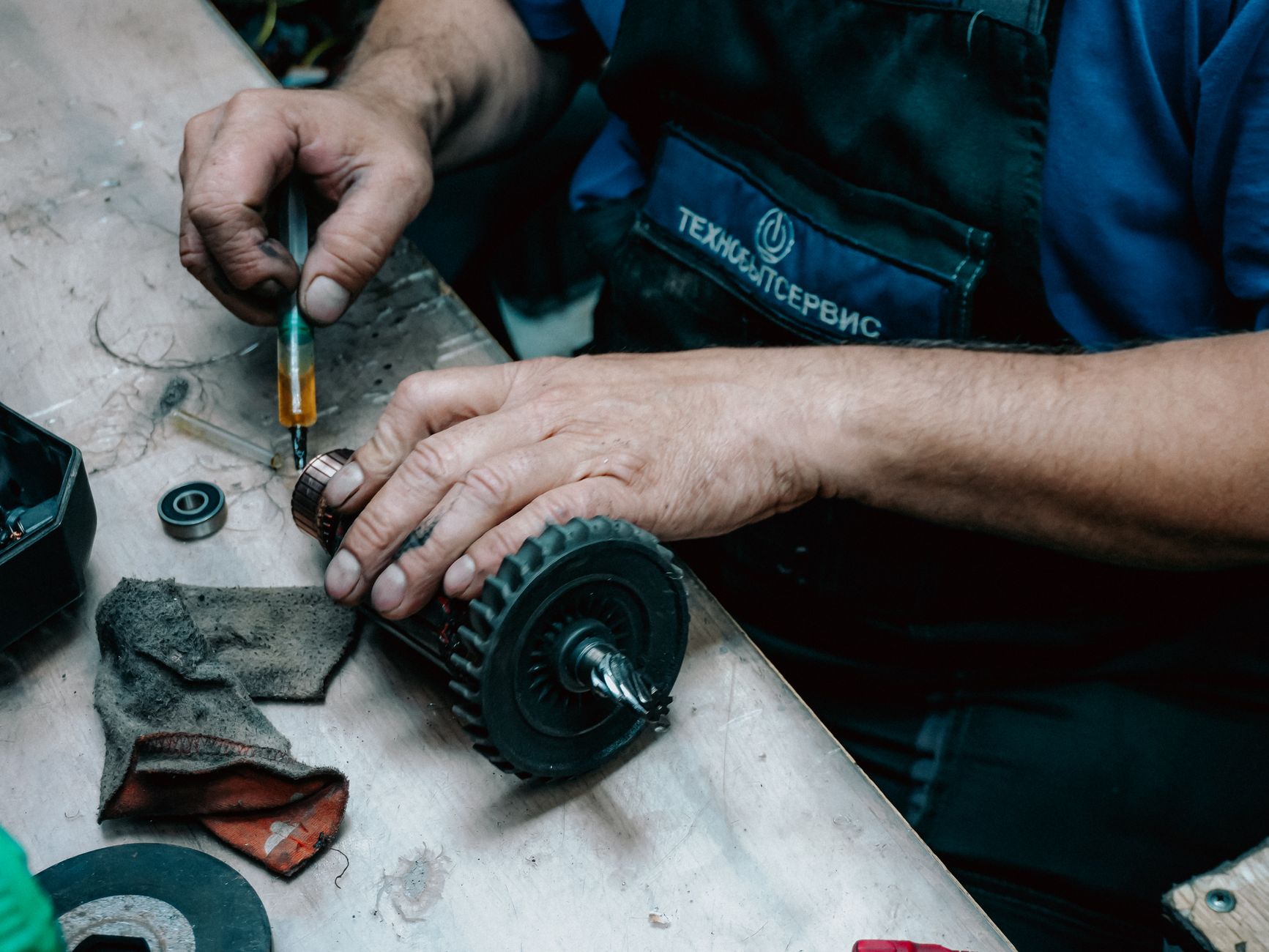
The most effective way to maximize uptime is to prevent downtime in the first place. This is the principle behind a scheduled preventative maintenance plan. Rather than waiting for a component to fail unexpectedly, technicians perform routine inspections, diagnostics, and tune-ups to keep each unit operating within its ideal parameters.
This proactive approach involves checking the health of batteries, cleaning and calibrating sensors, inspecting motors and drivetrains for wear, and ensuring all software is up to date. According to one industry analysis, a predictive maintenance strategy can reduce robot downtime by up to 50%. It transforms maintenance from a reactive emergency into a predictable, scheduled event that can be planned during off-hours, ensuring the robot is always ready for its primary shift.
What Is the Difference Between Remote Triage and On-Site Dispatch?
When a robot does experience an issue, the service response follows a clear two-stage process. The first step is remote triage. The moment a robot flags an error, a notification is sent to a support team. These technicians can often connect to the robot remotely to diagnose the problem.
Many issues, particularly those related to software, can be resolved right then and there. This could involve a system reboot, a configuration adjustment, or a software patch. However, if the remote triage identifies a hardware failure, a faulty sensor, or an issue requiring physical intervention, the next step is to initiate an on-site dispatch. This is where a service provider's physical presence becomes essential.
Why a Nationwide Engineer Network Is a Game Changer
For a business operating in a single location, a local service provider might suffice. But for companies with facilities spread across a state, a region, or the entire country, the logic of a nationwide service network becomes undeniable. The time it takes for a technician to arrive on-site is a major factor in the total downtime of a machine. Waiting for a specialist to fly across the country is both slow and prohibitively expensive.
A distributed network of field engineers ensures that a qualified technician is always within a reasonable driving distance of your facility. This geographical coverage is the foundation of a rapid emergency response nationwide. It drastically reduces travel time and associated costs, getting your operation back online faster. For organizations managing a fleet of AMRs in multiple distribution centers or deploying restaurant delivery robots across a national chain, this capability is not a luxury, it is a necessity.
The Integrator's Role: One Partner for Your Entire Fleet
Managing the service contracts for a diverse fleet of robots from different manufacturers can become a logistical nightmare. Each manufacturer has its own warranty process, its own support number, and its own service protocols. This is where the value of a vendor-neutral robot integrator like Service Robot Co. becomes clear. We provide a single point of contact for the deployment, integration, and ongoing maintenance of every robot in your fleet, regardless of who made it.
This 'one partner, one number' approach removes the complexity from your plate. When a unit needs service, your team makes a single call. We handle the rest. From remote triage to on-site dispatch from our nationwide US engineer network, we manage the entire service lifecycle. This unified support structure, often governed by a single robot maintenance service plan, ensures consistent service quality and response times across your entire operation, allowing your staff to focus on their core responsibilities.
What Belongs in a High-Quality Robot Service Level Agreement (SLA)?
A Service Level Agreement, or SLA, is the document that formalizes a service provider's commitment to you. It turns vague promises about support into specific, measurable guarantees. A strong SLA is a critical part of any robot deployment and should clearly define several key performance indicators.
Look for concrete numbers detailing guaranteed response times. This specifies how quickly a technician will acknowledge an issue and begin working on it. It should also define resolution targets, which set goals for how quickly the issue will be fully resolved. A comprehensive SLA will also outline the terms of a backup robot program or the availability of loaner units to ensure your operation can continue even while a primary unit is being repaired. This document is your assurance of minimal disruption and a key part of guaranteeing robot ROI.