Key takeaways
- In most collision centers, after-hours floor care is the first robot job that pencils out.
- Closed-loop parts runs can work, but only on stable routes separated from active repair bays.
- Spray booths, sanding zones, and constantly reconfigured work areas are usually poor first targets for automation.
- Shop layout, floor condition, airflow, and traffic discipline matter more than brochure specs.
- An OEM-neutral integrator matters in collision repair because deployment, service, and retraining usually decide the result.
Start with floors and fixed routes, not the messiest work
If you run a collision repair shop, the right first robot is usually not a flashy machine in the middle of production. It is usually an after-hours floor-care robot, and sometimes a transport robot on a short, repeatable parts route. Those are the jobs with stable paths, visible labor drag, and the fewest collisions with dust, overspray, filler residue, and vehicles that move unpredictably through the day.
That matters because collision repair is not a polished showroom business. According to OSHA, autobody shops expose workers to volatile organics from paints, fillers, and solvents, plus sanding dust, metal fumes, and oil and grease on walking surfaces. EPA also treats autobody refinishing paint shops as a hazardous air pollutant source category. In plain English, this is a tougher environment than most buyers expect. Automate the controlled, repetitive work first. Leave the dirty, variable edge cases for later.
- Best first fit: autonomous floor scrubber rental for after-hours hard-floor cleaning in production-adjacent aisles, delivery areas, and front-of-house space
- Good second fit: autonomous mobile robot rental for repetitive transport automation on short, closed-loop parts runs
- Usually poor first fit: anything operating inside spray areas, near active sanding dust, or in bays that change shape every hour
What makes a collision center harder than a dealership or warehouse?
A collision center has two kinds of variability at once. The floor changes constantly, because cars, carts, cords, stands, and drain hoses move all day. The air changes too, because sanding dust, primer haze, and overspray residue can foul sensors, degrade traction, and turn a tidy map into a bad one. That combination is why a robot that looks fine in a demo can struggle in a live body shop.
The scale of the market makes that worth getting right. U.S. Census data shows 35,029 employer establishments in NAICS 811121, automotive body, paint, and interior repair and maintenance, in 2023. BLS says automotive body and glass repairers accounted for 193,000 jobs in 2024, with about 16,000 openings projected each year over the next decade. Collision shops are not a niche curiosity. They are a large, labor-dependent operating environment, and that is exactly why buyers should be strict about where automation fits and where it still does not.
Which robot jobs are realistic first?
The safest first buy is usually floor care. A commercial cleaning robot rental, robot floor cleaner rental, or floor scrubber monthly lease can handle broad, repeatable cleaning on sealed concrete, tile, and similar hard surfaces after close. That is especially useful when your night crew is thin or your production team is burning time on low-value cleanup. The job is bounded, the success metric is obvious, and overnight cleaning no operator is a real operating model when traffic is off the floor.
Transport can be the second move, but only if the route is disciplined. A hospital delivery robot rental works because hospitals have corridor logic. Collision shops usually do not. Parts runs can still pay off when you are moving boxed parts, small tools, paperwork, or consumables between receiving, parts storage, estimating, and a few fixed staging points. The moment the route starts cutting through active frame work, open repair bays, or cars being shuffled every 15 minutes, the economics usually weaken.
- After-hours floor scrubbing in production-adjacent lanes, hallways, offices, and customer-facing areas
- Early-morning touch-up cleaning before vehicles start moving through the shop
- Closed-loop parts delivery between receiving, storage, and fixed staging points
- Document transport or small-item runs between front office, estimator stations, and parts counters
Where do floor-care robots pay off in a body shop?
They pay off where the floor condition is predictable enough to map and repeat. Think main aisles, mix-room approaches outside hazardous spray zones, front office transitions, delivery corridors, and broad open areas that collect dust and tire residue overnight. OSHA requires walking-working surfaces to be kept clean, orderly, and, to the extent feasible, dry. That makes floor care a direct operations issue, not a cosmetic one.
They do not pay off as well on floors coated with fresh overspray, standing water, heavy filler dust, loose masking, or hardware that shows up in different places every night. EPA notes that autobody refinishing rules are aimed at reducing hazardous air pollutants, particulate matter, and VOC emissions, and OSHA requires spray booths and spraying areas to control combustible residues and ignition risks. So the right floor robot for a collision center is not a spray-booth robot. It is a robotic floor cleaning machine assigned to the stable edges of the operation, scheduled when the shop is quiet, and backed by a maintenance included service plan so brushes, squeegees, filters, and mapping drift get handled fast.

Which areas should stay manual for now?
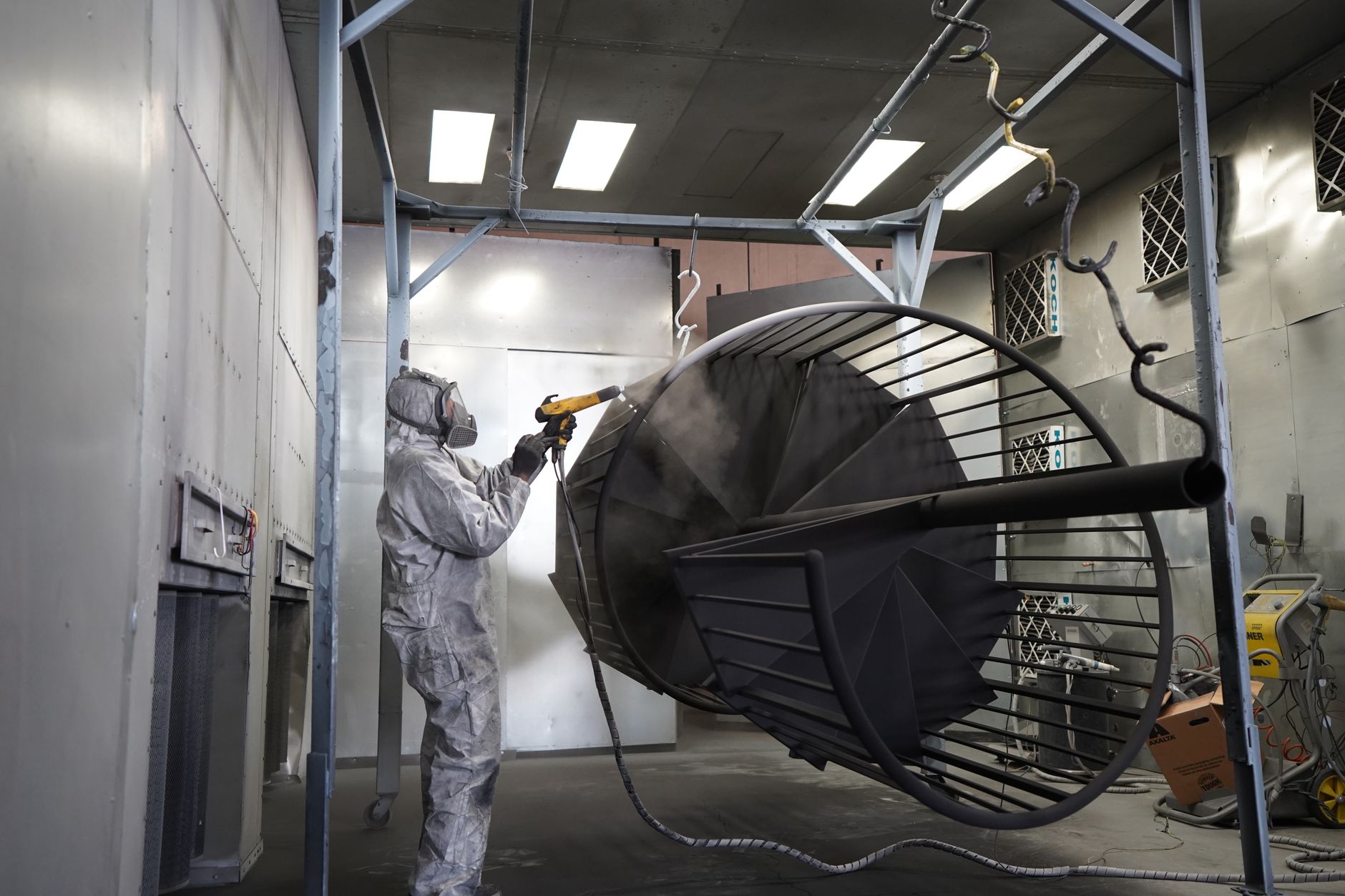
Active spray areas, booths, and the space immediately around them are the clearest no-go zone for a first deployment. OSHA defines a spraying area as a place where dangerous quantities of flammable vapors or mists, or combustible residues, dusts, or deposits are present. Its spray-finishing standard also requires ignition control, separation, ventilation, and, in many cases, explosion-proof electrical equipment. That alone should make buyers skeptical of casual automation claims around refinishing operations.
Sanding-heavy zones are another common miss. OSHA lists dusts from sanding and silica from sandblasting among autobody hazards, and CDC notes that isocyanates used in auto body repair can cause or worsen asthma through breathing exposure or even skin contact. In those zones, the problem is not just navigation. It is contamination, safety, and constant change. For most shops in 2026, tasks tied to live refinishing, open prep, masking, teardown clutter, and irregular bay-by-bay movement remain better candidates for disciplined manual work than for a first robot program.
What facility traits matter more than the robot brochure?
Buyers often focus on speed, battery life, or maximum coverage. In collision repair, those are secondary. What matters first is the route geometry and housekeeping discipline around the route. A slower robot on a clean, protected path usually beats a faster robot in a chaotic bay. Map stability, charging location, network reliability, drainage, floor slope, dust loading, and where vehicles sit overnight will shape the result more than spec-sheet superlatives.
This is also where a commercial robot demo needs to be grounded in your actual site, not a polished test lane. A proper site assessment mapping exercise should include night traffic patterns, where portable stands are parked, how often lanes get blocked, and which zones are still dirty after the last technician leaves. If a robot cannot finish its work without asking your team to reorganize the whole shop every night, it is the wrong first deployment.
- Clear lane width that stays clear after close
- Predictable vehicle parking and overnight staging
- Low enough dust and debris load for sensors and brushes to stay effective
- Charging space outside hazardous spray areas
- Supervisors willing to enforce route discipline and exception handling
Lease, rental, or purchase depends on how much uncertainty is left
If you already know the route is stable and the task is daily, a lease purchase program or robot leasing for business can make sense. If the shop layout is still changing, or you want to compare a cleaning route with a small transport route before committing, service robot rental is usually the cleaner move. It lowers the penalty for being wrong. In collision repair, that matters because the environment is unforgiving and the fit is highly site-specific.
This is where lease rental or sale options, monthly payment programs, and robot as a service can help the buyer sequence risk. A floor scrubber monthly lease or autonomous floor scrubber rental lets you validate route stability, labor savings, and cleaning quality before locking into a longer horizon. The smart question is not buy versus rent in the abstract. It is how much operational uncertainty is left in your building, and who carries the service burden if uptime slips.
Why the integrator matters more in collision repair
Collision centers are rarely a clean one-vendor environment. One shop may need a commercial cleaning robot rental first, another may need an AMR rental for repetitive transport automation, and a third may discover that neither will pay off until floor discipline improves. That is why an OEM-neutral, vendor neutral robot integrator is valuable here. The buyer needs the robot that fits the floor and route, not the robot a single manufacturer happens to sell.
Service Robot Co. is built for that role. For U.S. businesses, the company handles robot deployment and integration across manufacturers, then supports lease rental or sale, monthly payment programs, training, fleet rollout, commercial robot repair service, remote triage, on-site dispatch, and service through a nationwide U.S. engineer network. In a collision repair setting, that one partner one number model is practical. A robot that works only when nothing goes wrong is not enough. The lifecycle support is part of the buy decision from day one.
A sensible buying sequence for collision repair owners
Start with one route and one job. In most shops, that means after-hours floor care outside hazardous spray zones. Prove that the map holds, the charging routine sticks, and the morning floor looks better without adding supervision. Then look at a narrow transport loop for boxed parts or paperwork. Only after those basics work should you consider anything closer to live production.
That sequence is less exciting than talking about full-shop autonomy. It is also how buyers avoid expensive disappointment. Collision centers are dusty, changeable, and full of moving obstacles. Robots can still earn their place there. Just not everywhere at once, and not in the messiest corners first.
Frequently asked questions
Sources
- EPA autobody refinishing NESHAP overview
- OSHA autobody repair and refinishing overview
- OSHA spray finishing standard 1910.107
- OSHA walking-working surfaces standard 1910.22
- BLS Occupational Outlook for automotive body and glass repairers
- U.S. Census profile for NAICS 811121
- CDC NIOSH isocyanates topic page