
Key takeaways
- Blind intersections need a site rule set, not default robot navigation.
- Pedestrians should own the crossing, and AMRs should usually yield to forklifts at obstructed approaches.
- Virtual stop points belong before the occlusion line, with audible and visual warnings layered on top.
- Validate during live shifts with pedestrians, loaded forklifts, and multiple AMRs before calling the crossing safe.
What should happen before any AMR enters a blind crossing?
At a blind intersection, do not let the robot improvise. Set an approach speed limit, a mandatory virtual stop point, a right-of-way rule, and a warning sequence that fires before the machine noses into the conflict zone. Then prove the whole package under live traffic, not in an empty aisle after hours.
OSHA already gives you the floor for mixed industrial traffic. Its powered industrial truck standard requires drivers to slow down and sound the horn at cross aisles and other places where vision is obstructed, and its pedestrian guidance says forklifts should yield to pedestrians and use spotters when blind spots demand it. Your AMR traffic logic should be stricter than that minimum, not looser.
The hazard is not abstract. The latest BLS warehousing figures available as of August 29, 2026 show a total recordable case rate of 4.8 per 100 full-time workers in warehousing and storage, with 32 fatalities in that industry in 2024. OSHA said in June 2026, citing the latest BLS data, that 84 workers died in incidents involving forklifts and other powered industrial trucks in 2024. That is why blind-intersection governance deserves engineering attention.
Which crossings need custom rules instead of default navigation?
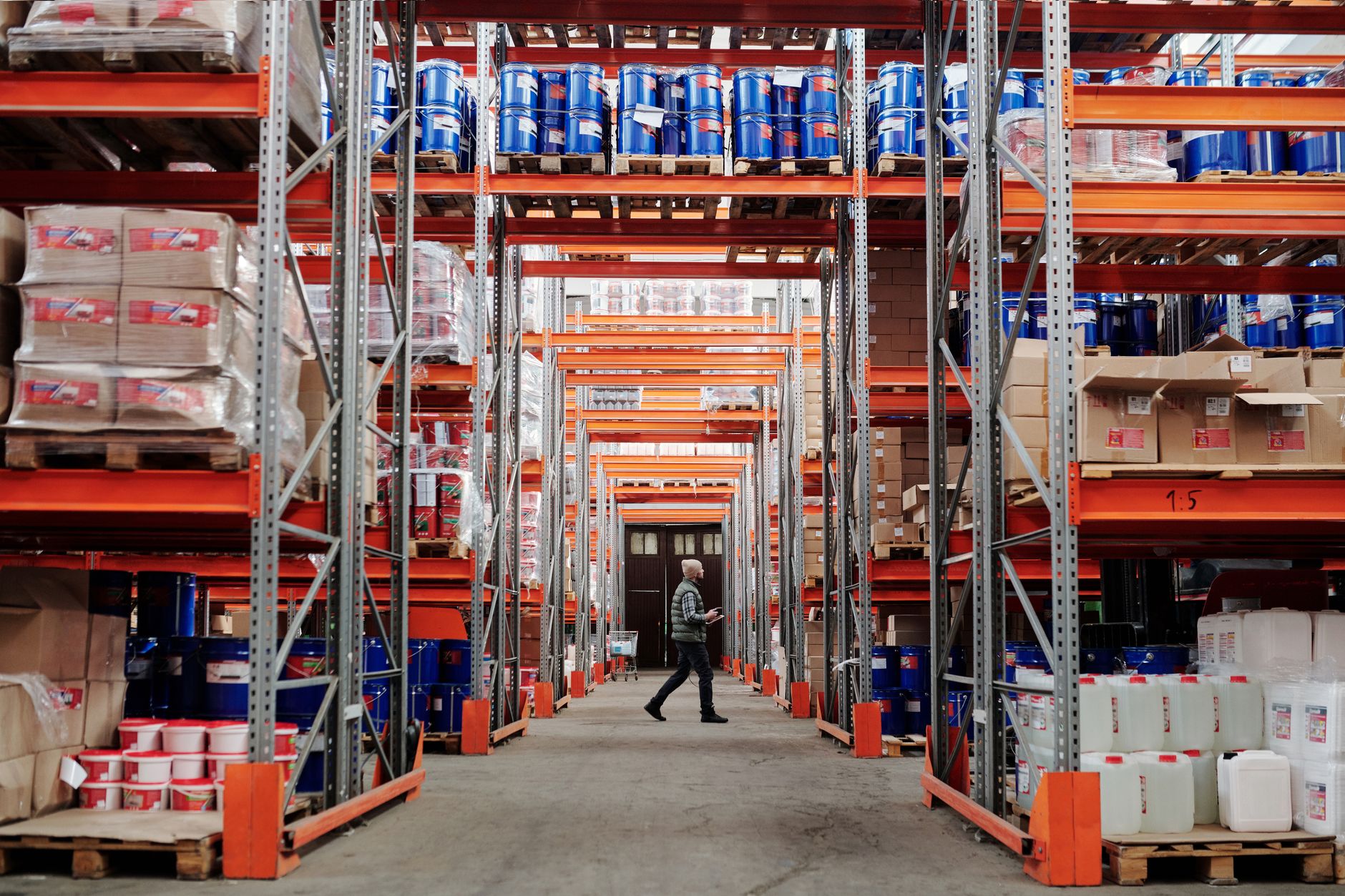
Treat blind intersections as a separate traffic class. A simple ninety degree aisle crossing with clean sightlines does not need the same controls as a rack end where stacked pallets, shrink wrap glare, swinging doors, and pedestrians all collapse the operator's view. Rank each crossing by how much visibility is lost and by who actually uses it on a normal shift.
A practical adaptation of the NIOSH blind-area method is to examine each crossing from the perspective of what can be seen at ground level, at 900 mm, and at 1500 mm. NIOSH uses those heights when mapping mobile-equipment blind areas. In a warehouse, that gives you a disciplined way to ask three separate questions: can we see floor hazards, can we see low carts or pallet edges, and can we see an approaching person early enough to stop?
- Mark a crossing as high risk if a loaded forklift can reach it with the load trailing the operator's clear view.
- Escalate it if pedestrians regularly cross there to reach packing, staging, break areas, or exits.
- Escalate it again if doors, strip curtains, or rack ends hide the first seconds of approach.
- Treat it as a live-control intersection if more than one AMR route can reserve the same box at the same time.
- Reclassify the crossing after any layout change, seasonal slotting shift, or new pallet stack pattern.
How do you set speed limits without guessing?
A useful speed limit is not a generic site number painted on every aisle. It is the highest approach speed that still allows a full stop before the conflict zone, on that floor, with that payload, in that lighting, with that traffic mix. OSHA's rule is plain: the truck must operate at a speed that permits a safe stop under the travel conditions. Use the same principle for every autonomous mobile robot approach.
That usually means two speeds, not one. Set a corridor travel speed for open sightlines, then a slower intersection approach speed that starts early enough for the robot to brake, announce itself, and wait without projecting into the crossing. If the floor is wet, dusty, polished, or prone to debris, lower the cap again. OSHA also requires clean and, to the extent feasible, dry floors for walking-working surfaces. Your traffic rules should assume real floor conditions, not a perfect map.
Think about queueing too. OSHA's forklift eTool says operators should maintain approximately three truck lengths from the truck ahead. That rule of thumb matters near blind intersections because stacked traffic can erase the space an AMR needs to stop and wait. If a queue can spill back into the robot's stop zone, the zone is too short or the routing is wrong.
Who gets right of way when sightlines disappear?
Write the hierarchy down and make it mechanical. Pedestrians come first. They are the least protected and the least predictable traffic class in the aisle. OSHA's pedestrian guidance tells forklift operators to yield to pedestrians, and blind-intersection rules for AMRs should preserve that same principle with no exceptions hidden in software.
For vehicle-to-vehicle conflicts, do not rely on courtesy. Give each crossing a primary flow and a yielding flow. In mixed manual and autonomous traffic, it is usually safer to make the AMR yield to forklifts at obstructed approaches because the robot will obey every time, while forklift stopping distance, load visibility, and human judgment vary from moment to moment. If you want forklifts to yield instead, separate the approach physically and train to it hard.
Between multiple AMRs, reserve the intersection as a box, not as a center point. Only one robot should own the box at a time. If the sensor view or traffic feed is uncertain, the robot waits. No simultaneous entry, no optimistic creep, and no tie-breaking by whichever machine got there a fraction earlier.
- Pedestrian enters or is about to enter the crossing: all vehicles yield.
- Forklift on the designated mainline approach: AMR stops and waits for full clear.
- Two AMRs arrive together: the fleet manager or local rule engine grants one reservation and holds the other.
- Loss of localization, blocked sensor view, or unexpected pallet overhang: fail safe to stop and call for review if repeats occur.
- Emergency egress or fire lane conflict: keep the intersection clear and suspend the route until the lane is restored.
Where should virtual stop points and warning devices go?
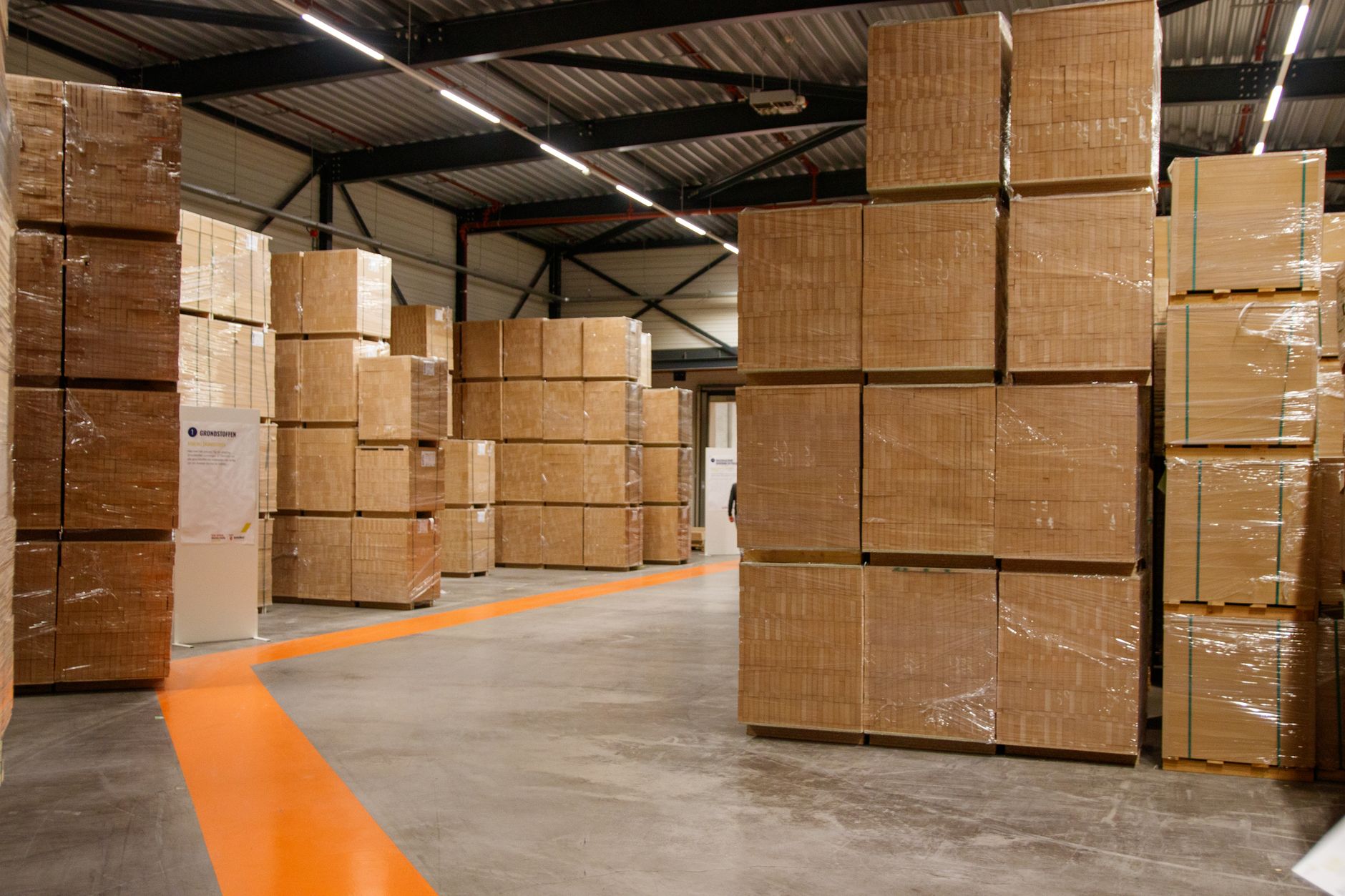
Put the virtual stop point before the robot's body intrudes into the hazard envelope, not at the geometric center of the crossing. The goal is simple. When the AMR stops, a pedestrian should still have an unobstructed walking line and a forklift should still have its turning arc. If the stop is too close, the machine becomes the obstruction it was supposed to avoid.
Warning devices work best as layers. Use visual lane markings, overhead or high-mounted signs, and a distinct approach signal from the robot such as a beacon, projected light, or audible tone. OSHA's warehousing guidance says permanent aisles and passages used by handling equipment should be marked to ensure proper clearance. That is a sound baseline for blind intersections too.
Do not let a mirror or a flashing light become an excuse for weak traffic logic. Mirrors get dirty, lights fade into daylight, and people tune out repetitive alarms. The stop point and right-of-way rule carry the real safety burden. Devices help people understand what the rule is doing.
- Place lane markings far enough upstream that people know they are entering a crossing, not after they are already in it.
- Use a different visual cue for pedestrian lanes than for vehicle paths so the floor does not turn into noise.
- Choose an audible alert that is noticeable in production noise but not so constant that crews ignore it.
- Keep signs above typical pallet height if stacked inventory regularly blocks wall-mounted messaging.
- Inspect mirrors, markings, and beacons as routine traffic controls, not as decorative add-ons.
How do you validate with pedestrians, forklifts, and multiple AMRs?
Validation starts when the building is busy. Run the crossing during real operating conditions, with the actual shift mix, the real pallet profiles, the normal pedestrian shortcuts, and the floor state you truly live with. A sterile demo proves very little. You need to know what happens when production pressure, noise, and traffic density all show up together.
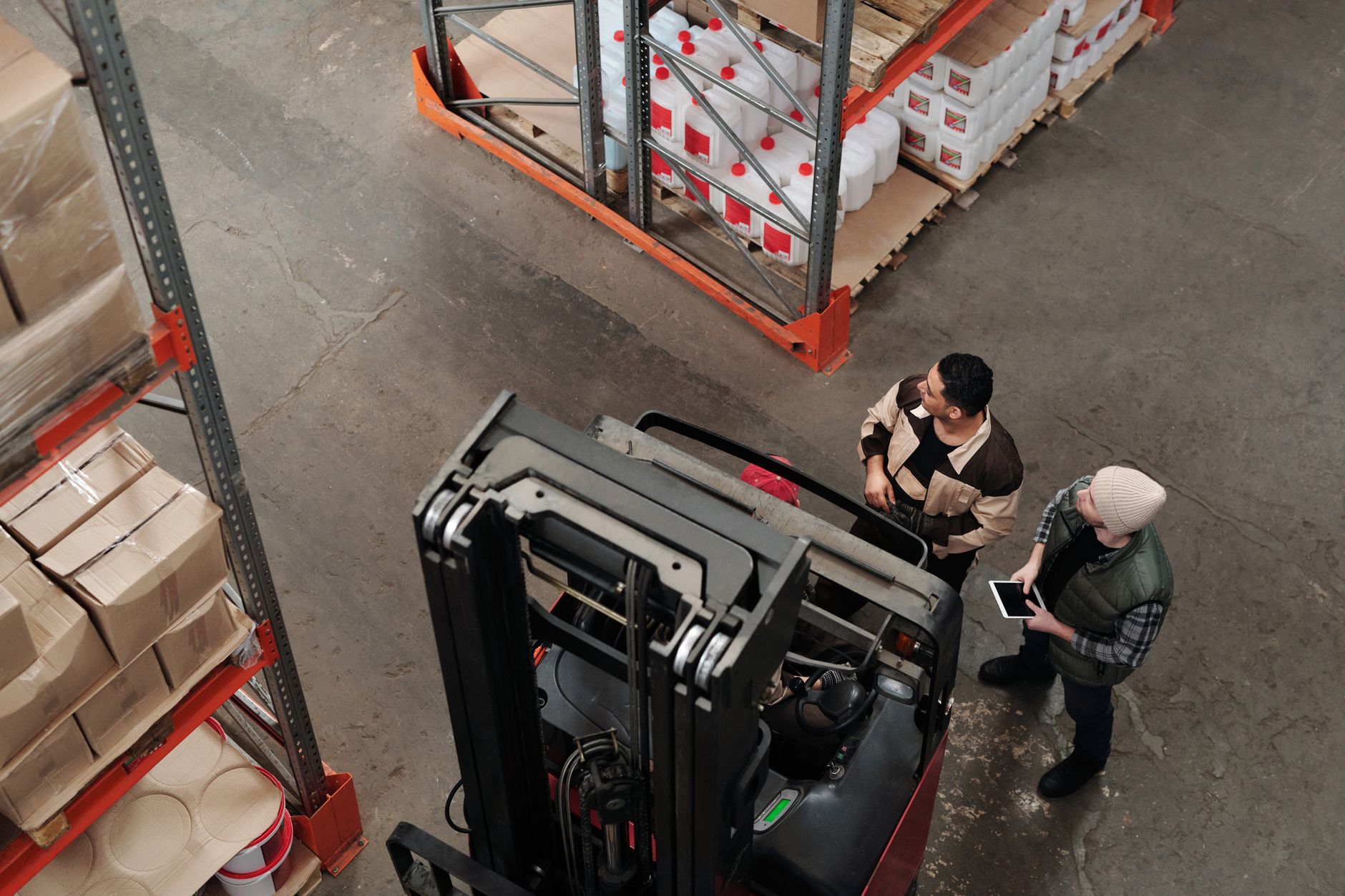
Include forklift cases that actually create the blind condition. Test empty forks, loaded forks, reverse travel where allowed, and approaches with trailing loads that cut off line of sight. For pedestrian checks, borrow the NIOSH visibility logic and verify what the crossing reveals at ground level, 900 mm, and 1500 mm. That helps you catch the low pallet corner, the cart handle, and the person, not just the easiest thing to see.
Then add fleet interactions. A blind intersection that behaves with one robot can unravel with three if reservations overlap or waiting robots back into adjacent aisles. This is where amr fleet deployment rises above single-unit commissioning. You are validating traffic choreography, not a single machine's obstacle avoidance.
- Pedestrian approaching while the AMR is already braking into the stop point.
- Forklift arriving first on the mainline with a visibility-blocking load.
- Forklift and AMR arriving almost together from perpendicular approaches.
- Two AMRs approaching from different aisles while a pedestrian is waiting at the corner.
- Wet or dusty floor conditions that lengthen stopping behavior.
- A staged pallet or trash cart parked near the corner, simulating the clutter that appears on real shifts.
- Loss of wireless connectivity or delayed fleet message timing, to verify the local fail-safe behavior.
What metrics tell you the rules are holding up?
Watch for hard evidence, not just the absence of an accident. The first numbers to track are full-stop compliance at the virtual stop point, unauthorized encroachment into the box, right-of-way violations, and manual interventions by operators or supervisors. If those are drifting, the crossing is already telling you the rule set is brittle.
Also measure operational side effects. If waiting robots block secondary aisles, if forklift queues push into the crossing, or if crews keep taking unofficial pedestrian shortcuts around the markings, the rule set is not fitted to the work. Good traffic control protects people without quietly strangling flow.
Near misses deserve the same seriousness as contact. In a sector where the latest BLS warehousing data still shows a 4.8 recordable-case rate per 100 full-time workers, a close call at a blind intersection is not background noise. It is a design review request. Fix the geometry, the routing, the speed, or the training before the next shift turns it into an injury.
Why integration discipline matters more than robot brand
Blind-intersection safety is not solved by buying a cleverer machine. It comes from site assessment mapping, traffic-rule design, worker training, and repeated validation after go live support begins. That is true if you bought the robots outright, started with autonomous mobile robot leasing, or began with a warehouse robot lease or material handling robot leasing pilot. The crossing does not care how the unit was financed.
This is where Service Robot Co. fits. We are a full-service commercial robot integrator for US businesses and an OEM-neutral, vendor neutral robot integrator. We pick the right robots across manufacturers, then handle robot deployment and integration, training, service, and robot fleet management through a nationwide US engineer network. For a robot integrator for warehouses, blind intersections are day-one infrastructure, not a patch after the first scare.
That matters even more in phased deployment no shutdown rollouts. The first AMR route may look fine until the second wave of traffic arrives, a forklift lane shifts, or pedestrian habits change with peak season. One partner, one number, and one rulebook across the full lifecycle keeps those crossings governed instead of improvised.
Frequently asked questions
Sources
- OSHA 1910.178 Powered industrial trucks
- OSHA Forklift pedestrian traffic guidance
- OSHA Forklift traveling and maneuvering guidance
- OSHA Warehousing hazards and solutions
- OSHA 1910.22 Walking-working surfaces
- BLS Warehousing and Storage industry data
- OSHA National Forklift Safety Day remarks, June 9, 2026
- CDC NIOSH blind area diagram manual method