Key takeaways
- In a funeral home, quiet behavior and visual discretion matter as much as cleaning width or battery life.
- Ask first about thresholds, carpet edge trim, and water recovery. Those details decide daily usability.
- Polished stone, VCT, and entry transitions demand traction and dry-floor performance, not just map accuracy.
- The best deployment is usually an after-hours program that leaves the robot out of sight during services and visitations.
- A pilot should prove low-noise operation, safe residual moisture levels, and clean handoff to staff before a wider rollout.
What should a buyer prioritize first?
For a funeral home or chapel, spec the robot around tone before you spec it around headline autonomy. The right machine is one that cleans thoroughly, crosses carpet and hard-floor transitions without drama, leaves polished floors dry enough for dress shoes, and is effectively absent during services, family arrivals, and visitation hours.
That usually points buyers toward an after-hours commercial cleaning robot rental or floor scrubber monthly lease program, not a daytime novelty play. In this setting, overnight cleaning no operator coverage is useful because it protects the building's emotional atmosphere. Daytime visibility should be treated as a failure mode unless the site has a clearly separated back-of-house run.
The practical buying order is simple. Start with noise, then floor transitions, then polished-floor traction and water recovery, then operating schedule, then service support. If those five items are right, the rest of the comparison gets much easier.
Why is a funeral home a special facility type for automation?
A funeral home is not just another small commercial building with nice floors. It is a place where people arrive under strain, often moving slowly, speaking quietly, and noticing every operational detail. A loud brush motor, a flashing status light, or a machine parked beside a chapel door can feel out of place even if the cleaning result is technically good.
The operating pattern also differs from retail or office space. According to the U.S. Bureau of Labor Statistics, funeral service workers are often on call, irregular hours are common, and many ceremonies must be arranged within 24 to 72 hours of a death. That means the building can swing from quiet prep time to highly sensitive public use with little warning.
The service mix is changing too. The National Funeral Directors Association said in its 2025 Cremation and Burial Report that the U.S. cremation rate is projected to reach 63.4 percent in 2025. More memorial formats and more varied scheduling put a premium on flexible cleaning windows and a robot program that can disappear during the day without leaving the floors half-finished.
How quiet is quiet enough in this setting?
Buyers should think about quiet in two layers. First is the robot's steady operating sound when it is actually scrubbing or vacuuming. Second is the nuisance layer: startup beeps, voice prompts, charger fans, and alert tones. In a sensitive site, those nuisance sounds are often more disruptive than the cleaning motor itself.
The U.S. Environmental Protection Agency's Levels Document identifies 45 dB indoors as a level that permits virtually 100 percent sentence intelligibility. A funeral home is not a hospital or a residence, but the principle carries cleanly. If a robot raises background noise to the point that hushed conversation or prayer feels interrupted, it is the wrong fit for chapel-adjacent use.
That is why the spec should ask for measured operating sound at working speed, not marketing adjectives like quiet. It should also require silent or near-silent charging behavior in occupied wings, control over chimes and indicator brightness, and route plans that keep the machine off public corridors during family-facing hours. Daytime invisibility is partly scheduling, but it is also acoustic discipline.
In practice, many buyers end up using the robot for overnight hard-floor care and keeping any daytime activity confined to unoccupied prep corridors or administrative zones. That split is not timid. It is good site design.

What do carpet transitions and thresholds really require?
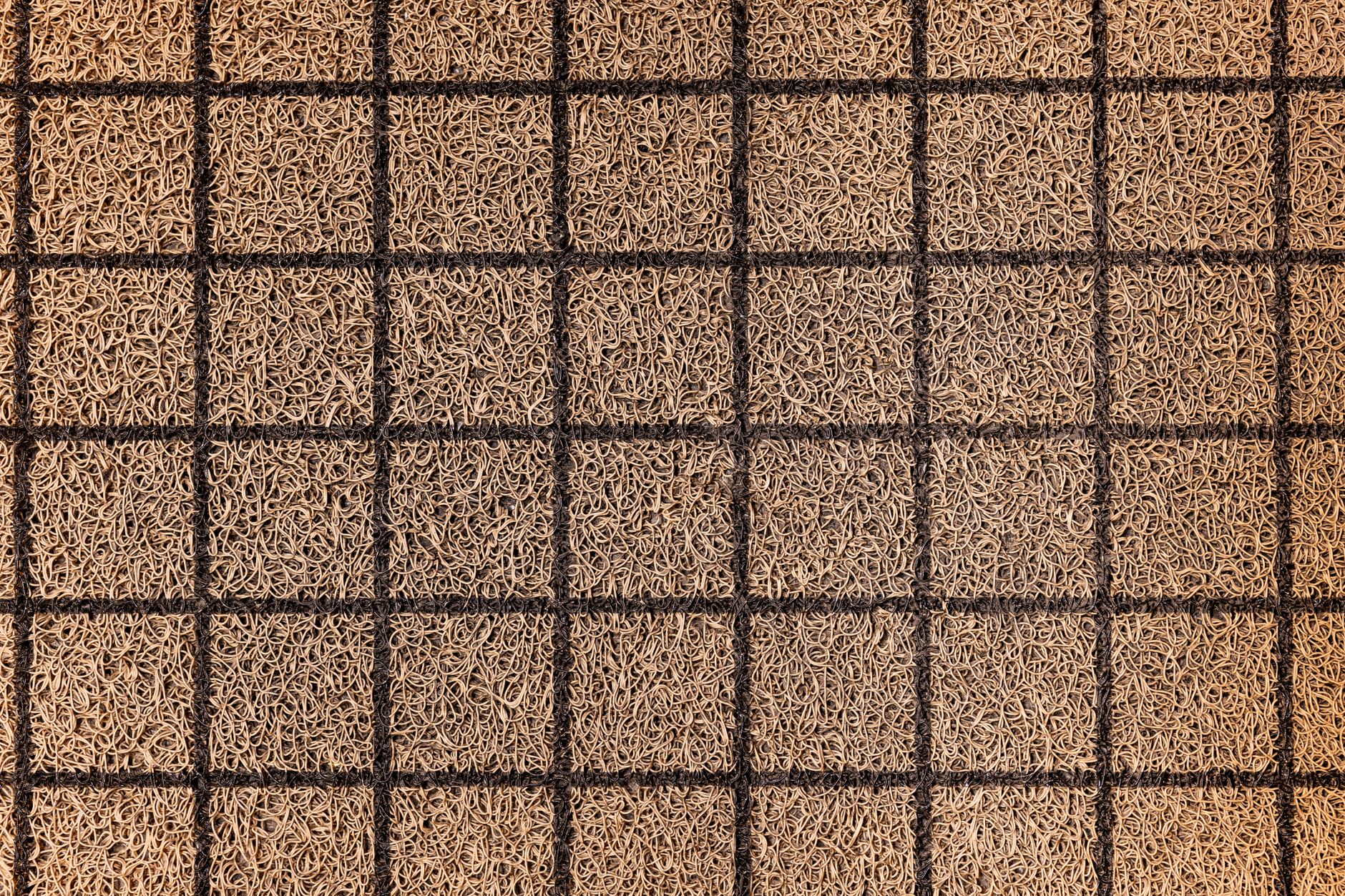
This is where many pilots succeed in the demo and fail in the building. Funeral homes often combine broadloom carpet, walk-off mats, polished stone, tile, and resilient flooring within a short path from lobby to chapel. If the robot hesitates, rides up awkwardly, or leaves a wet edge at each transition, staff will stop trusting it fast.
The ADA's 2010 Standards for Accessible Design give buyers a useful physical benchmark. Carpet pile height is limited to 1/2 inch maximum. Vertical changes in level up to 1/4 inch are permitted, changes from 1/4 inch to 1/2 inch must be beveled no steeper than 1:2, and anything over 1/2 inch must be ramped. Those are accessibility numbers, but they are also excellent robot-readiness numbers.
For the spec, that means measuring every public threshold and every permanently affixed mat edge on the intended route. Do not accept a broad claim that the machine handles mixed flooring. Ask which transition heights were tested, how the machine behaves when the carpet edge is slightly worn, and what happens to water recovery right after it steps down onto hard surface.
If the building has meaningful soft-surface square footage, keep the buying logic clean. A commercial carpet cleaning robot may belong in the discussion, but many funeral homes are better served by one autonomous floor scrubber rental for the hard-floor loop and conventional carpet extraction on a separate cadence.
What makes polished floors risky for the wrong machine?
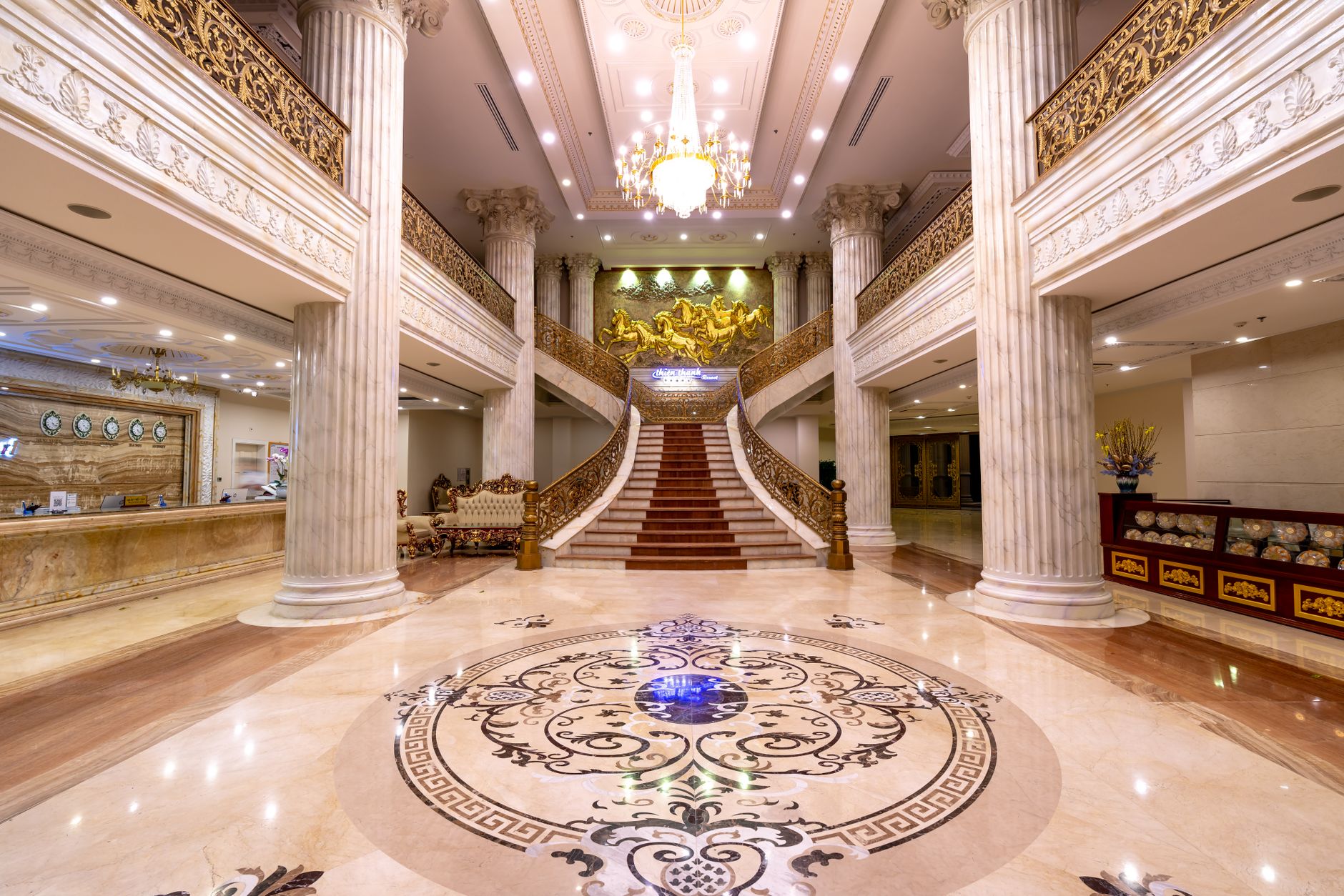
Polished stone, terrazzo, and high-gloss VCT ask for a different kind of honesty. They make a robot look impressive in a brochure, but they also expose every mistake. A weak squeegee path, poor dirty-water pickup, or aggressive turning pattern can leave haze, streaks, or residual moisture in exactly the places where guests are wearing leather soles and moving slowly in formal footwear.
OSHA's walking-working surfaces rule requires floors to be kept clean and, to the extent feasible, in a dry condition. OSHA also recommends immediate cleanup of spills and, in slippery areas such as toilet and shower areas, use of no-skid waxes and non-slip surfaces. For funeral homes, the lesson is plain. Spec water recovery and traction first, especially near vestibules, flower-drop areas, refreshment rooms, and restroom approaches.
A good test run is not the center of the lobby on a dry afternoon. It is the polished entry after rain, the turn into the chapel corridor, and the edge where matting gives way to stone. Buyers should inspect the floor on foot right after the pass, not ten minutes later. If the robot leaves a film that a person notices through dress shoes, the spec is wrong.
This is also why robot that fits your floor is more than a slogan. In sensitive sites, floor chemistry, pad choice, down-pressure, and recovery setup matter more than broad claims about square footage per hour.
How do you make the robot disappear during the day?
Daytime invisibility should be written into the operating plan. The docking position should be out of family sightlines. The route schedule should end well before first arrivals. Recovery tanks should be emptied and the machine parked before visitation starts, not left to finish a loop because the map says ten more minutes.
That usually favors robot as a service, robot leasing for business, or a commercial cleaning robot rental structure that includes deployment planning and schedule tuning. A buyer is not just procuring hardware. The buyer is procuring a cleaning program whose visible footprint must be tightly controlled.
The simplest framework is to divide the building into three zones. Public ceremonial space should be overnight only. Semi-public support space can be cleaned in narrow off-hour windows. Back-of-house corridors can carry limited daytime work if the route never crosses family traffic. If the machine cannot stay inside those boundaries, it does not fit the site.
Service Robot Co. approaches this as a full-service, OEM-neutral commercial robot integrator for U.S. businesses. That matters here because the right answer is rarely just a unit on a dock. It is mapping, scheduling, staff training, and a route plan shaped around the building's emotional cadence as much as its floor plan.
What should a pilot prove before you commit?
A serious pilot in a funeral home should prove five things. It should prove that the robot runs quietly enough for adjacent office use, crosses every intended threshold cleanly, leaves polished floors acceptably dry, completes its route inside the site's true overnight window, and can be parked fully out of view before the day begins.
It should also prove operational recovery. What happens after a chair moves, a floral stand is repositioned, or a rug is shifted for a service? Sensitive sites need a machine that fails gracefully, not one that turns a small furnishing change into a stalled morning routine.
This is where turnkey robot deployment and service depth matter. A good vendor neutral robot integrator will run a commercial robot demo on the actual transitions and polished surfaces that define the building, then refine the program around those results. Service Robot Co. can finance, deploy, integrate, train, and service every unit through a nationwide U.S. engineer network, which is useful for multi-site funeral groups that want one partner for the whole lifecycle.
Ask the pilot team for plain evidence, not theater. Measured sound. Photos of the wettest floor edge right after a pass. A threshold map. Start and finish times. A recovery plan for exceptions. In this category, modest proof beats glossy promise every time.
- Measured operating sound in the actual building
- Threshold and mat-edge performance on every planned route
- Residual moisture check on polished floors immediately after a pass
- Verified start and finish window that clears the site before first arrivals
- Support plan with remote triage, on-site dispatch, and maintenance included
What does a sensible final spec look like?
For most funeral homes and chapels, the sensible spec is narrower than buyers first expect. It usually centers on a quiet hard-floor cleaning robot programmed for overnight use, with conservative routing, strong water recovery, and explicit exclusion from family-facing hours. Carpet treatment is either secondary or separate unless the building has unusually large soft-surface corridors.
That means buyers should rank features in this order: low noise profile, threshold handling, polished-floor traction and recovery, discreet docking, route reliability, and service response. Only after those are settled should they compare battery size, dashboard features, or financing structure such as no long term contract, monthly payment programs, or lease rental or sale terms.
If the robot protects the tone of the site while keeping the floors consistently presentable, it is doing its job. In a funeral home, that is the bar. Cleaning power matters. Quiet confidence matters more.