Key takeaways
- Cooling towers and chiller rooms are prime candidates for inspection robots because heat, noise, moisture, and tight access make routine walkthroughs costly and fatiguing.
- The best early use cases are repetitive visual checks, thermal scans, leak detection rounds, and condition documentation around hard-to-reach equipment.
- Verified HVAC risk controls already demand disciplined monitoring. Robots help teams gather that evidence more often without sending people into the space every time.
- Interior mechanical spaces often produce recurring value faster than one-off roof checks because they need frequent inspection and trend tracking.
- An OEM-neutral integrator matters when payloads, service, and reporting have to fit the site instead of forcing the site to fit one robot.
Where do inspection robots actually help inside building mechanical spaces?
Inspection robots can reduce risky walkthroughs in cooling towers and chiller rooms by taking over the dull, repeatable rounds that expose staff to heat, noise, wet surfaces, and awkward access. In practice, that means routine visual checks, thermal imaging, gauge and display capture, leak patrols, and photo documentation around equipment that still needs attention even when nothing is obviously broken.
That matters because these spaces are not occasional curiosities. They are recurring operational territory. A roof membrane might get a scheduled look every so often, but plant rooms, condenser water loops, tower basins, fan decks, strainers, pumps, and valve lines need eyes on them again and again. If you can shift even part of that repetitive inspection load to a robot, you reduce exposure hours without reducing oversight.
The strongest fit is not replacing technicians. It is moving technicians up the value chain. Let the robot collect the routine evidence, then send the mechanic or controls lead only when the data shows drift, heat, vibration, fouling, standing water, or a suspected leak.
Why are cooling towers and chiller rooms tougher than they look on paper?
These environments stack hazards. Cooling towers combine wet surfaces, biofilm risk, wind exposure, ladders, and dispersed components. Chiller rooms add machine noise, high ambient heat, dense piping, and the possibility of refrigerant issues. Even a simple round can become slow because the inspector is working around live equipment, limited sightlines, and poor conversational audibility.
The regulatory backdrop is not abstract. OSHA requires a hearing conservation program when worker noise exposure reaches 85 dBA as an 8 hour time weighted average, according to OSHA's occupational noise overview. In a loud plant room, that threshold is close enough to matter operationally even before you get into task-specific spikes near machinery.
Heat is equally practical. CDC guidance updated on March 3, 2026 says acclimatization should build over 7 to 14 days, with new workers starting at no more than 20 percent of usual heat exposure on day 1. That guidance was written for worker protection, not robotics, but it underlines the point. Hot spaces demand control, pacing, and discipline. Fewer unnecessary walkthroughs is a sound operating principle.
Which inspection tasks are the best first candidates for a robot?
Start with tasks that are frequent, observable, and easy to compare over time. A robot earns its keep fastest when it can follow a repeatable route and gather the same evidence at the same vantage points each run. That creates a usable baseline instead of a pile of random images.
Cooling towers usually reward exterior and near-basin observation first. Chiller rooms usually reward route-based patrols first. In both cases, the robot should be treated as a documentation instrument as much as a mobile platform.
- Cooling tower fan deck, casing, louvers, drift eliminator access points, visible fill condition, basin water appearance, standing debris, scale, corrosion, and overflow evidence
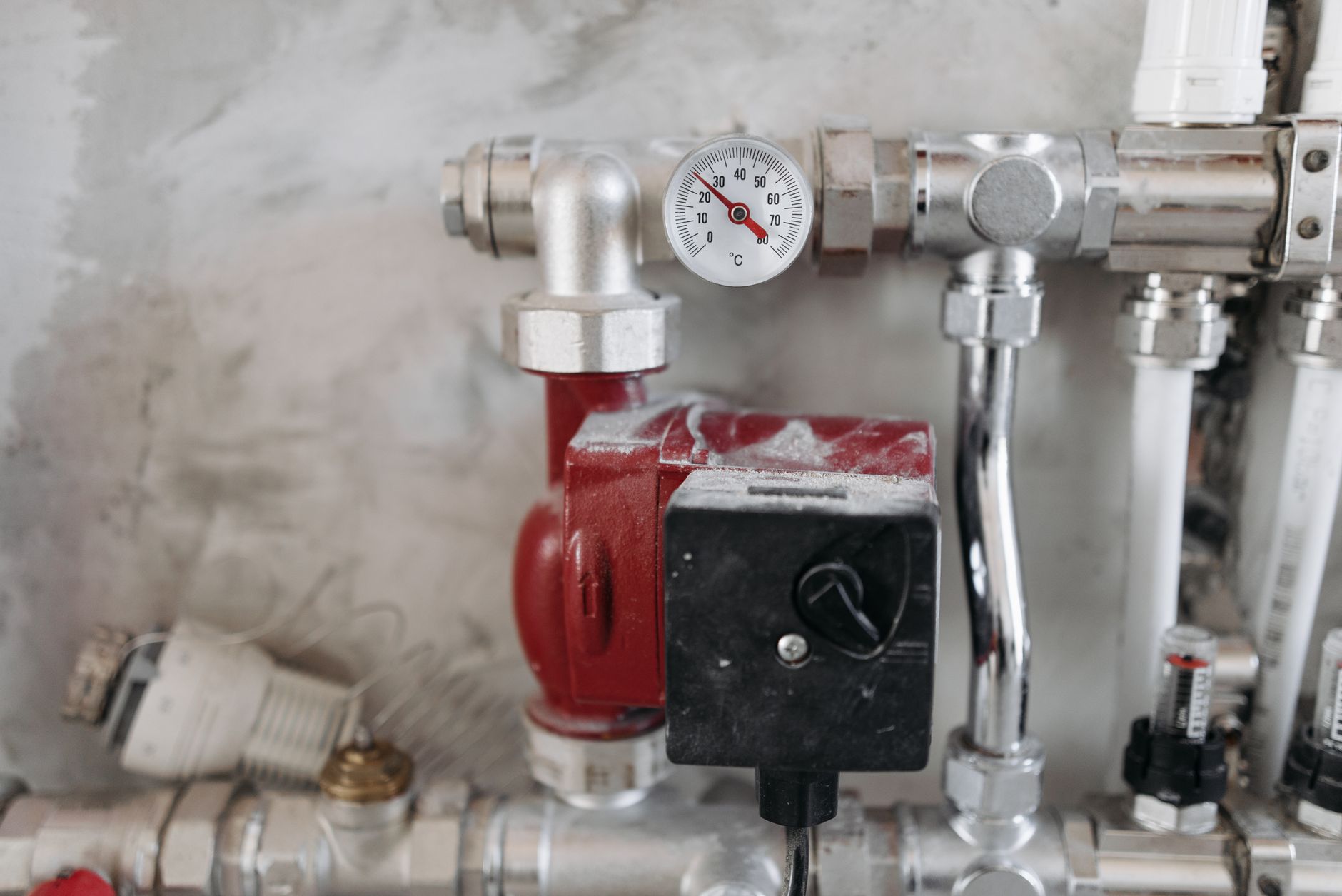
- Pump skids, valve stations, strainers, pipe supports, insulation damage, flange staining, and recurring drip points along condenser and chilled water piping
- Chiller room display capture for local HMIs, pressure gauges, alarm lights, sump conditions, housekeeping drift, and blocked access around emergency equipment
- Thermal scans of motors, bearings, electrical panels, and piping surfaces to flag abnormal heat signatures before a human diagnostic visit
- Leak patrols using visual, thermal, or environmental payloads where the site has a clear response protocol for alarms or abnormal readings
What does current guidance say about the tower side of the risk?
Cooling towers are not just another rooftop asset. They sit at the intersection of HVAC reliability and water hygiene. CDC's cooling tower guidance, updated January 3, 2025, says sediment, corrosion, scale control, and system cleaning are critical for operations and Legionnaires' disease prevention. The same guidance recommends locating cooling towers at least 25 feet from building air intakes, flushing low-flow pipe runs and dead legs at least weekly, circulating certain standby systems three times a week, and performing offline disinfection and cleaning at least annually.
ASHRAE states that Standard 188-2021 establishes minimum legionellosis risk management requirements for building water systems. That is the operational frame. Towers need evidence of condition and control, not just good intentions. Robots can help collect dated imagery of basin cleanliness, visible fouling, drift issues, access condition, and water treatment equipment areas between manual maintenance visits.
They do not replace the water management program. They make that program easier to verify. When a facility team can compare image sets week over week, it becomes easier to spot the slow creep of sediment, damaged components, or neglected housekeeping before it turns into an urgent intervention.
What makes chiller rooms a recurring inspection opportunity instead of a niche use case?
Because the energy concentration is enormous and the inspection burden never really stops. According to the U.S. Energy Information Administration, electricity accounted for 98 percent of the 589 trillion Btu of major fuels consumed for cooling in U.S. commercial buildings in 2018. The same EIA analysis found cooling energy intensity in hot and very hot climates was more than six times that of cold and very cold climates, at 14.2 versus 2.3 thousand Btu per square foot.
When that much cooling work sits behind a plant, small mechanical issues matter. A bit of insulation damage, a recurring drip at a valve body, debris near a sump, unusual motor temperature, or a neglected housekeeping issue in an equipment room can all snowball into wasted labor, poor reliability, or deferred maintenance that gets more expensive later.
There is also the refrigerant piece. EPA guidance updated in 2026 notes that refrigerant leak detectors and monitoring systems can identify and warn technicians of concentration increases. A mobile inspection robot is not a substitute for code-required safeguards, but it can supplement them by shortening the time between rounds and by documenting exactly what the room looked like when a detector event or comfort complaint occurred.
How should facility teams decide between a crawler, wheeled unit, or other format?
The answer starts with terrain and payload, not novelty. A smooth chiller room with broad aisles, ramps, and clear turning radii often favors a wheeled platform because route repeatability and battery efficiency matter more than obstacle theatrics. A cooling tower zone with grating, thresholds, hose crossings, puddles, and irregular access may justify a more specialized format if the inspection path truly demands it.
Payload selection is just as important. For some sites, a high quality visual camera and thermal sensor cover most of the value. Others need environmental sensing, zoom optics, two-way audio, or integration with maintenance workflows so captured anomalies become actionable work, not forgotten media.
This is where Service Robot Co. fits naturally. As a vendor neutral robot integrator, the company does not need every site to fit one robot. It can select the inspection robot rental or purchase path that fits the floor, the access pattern, the payload requirement, and the service expectation. For building owners in the U.S., that matters because deployment, training, financing, and support are usually what slow projects down, not the robot itself.
What does a good pilot look like in a live building plant?
A good pilot is narrow, scheduled, and measurable. Pick one cooling tower route or one chiller room route, define the inspection points, and decide in advance what counts as a useful catch. That might be one avoided manual round per shift, faster escalation on visible leaks, better documentation for tower cleaning decisions, or more consistent thermal records on motors and pumps.
Keep the first route short. Thirty strong inspection points beat a sprawling route that nobody reviews. The goal is to prove repeatability, image quality, comms reliability, and handoff to maintenance, not to map every inch of the mechanical plant in week one.
Service Robot Co. is built for that lifecycle work. If a facility wants one partner for robot deployment and integration, training, service coverage, and financing instead of stitching together separate vendors, that full-service model removes friction. It is particularly useful for inspection programs because the work only produces value when the robot stays in service and the reporting stays usable.

What changes after the pilot succeeds?
The shift is subtle but important. The robot stops being a gadget and becomes part of the building systems inspection rhythm. Operators begin comparing routes over time, not just reviewing single runs. Maintenance teams get earlier warning on recurring defects. Supervisors spend less time asking what the room looked like last week because the answer is already timestamped.
That is why interior mechanical spaces deserve more attention in automation planning. Roof and facade inspection is visible and easy to explain. Cooling towers and chiller rooms are quieter value. They create repeat inspection demand, they sit close to safety and uptime risk, and they reward consistency. In many buildings, that is the better first proving ground for inspection robotics.