
Key takeaways
- Planned cooldowns are the practical window for kiln and furnace robots because live process zones can run around 1510 C.
- Useful payloads usually start with visible cameras, strong lighting, temperature sensing, and targeted NDE where it answers a specific repair question.
- Communications and opening geometry often decide the robot class before drive system, speed, or autonomy matter.
- Better internal data shortens outages by narrowing demolition, staging the right materials, and cutting repeat confined-space entries.
What can robots actually do in a furnace outage?
Yes. In planned cooldowns, a well-matched inspection robot can enter a kiln or furnace ahead of full manual entry and capture the evidence maintenance teams actually need: refractory loss, open joints, burner block damage, crack patterns, slag or soot deposits, and signs that geometry has shifted. The payoff is not the robot by itself. The payoff is faster repair decisions, tighter outage scope, and fewer blind entries into a hot confined asset.
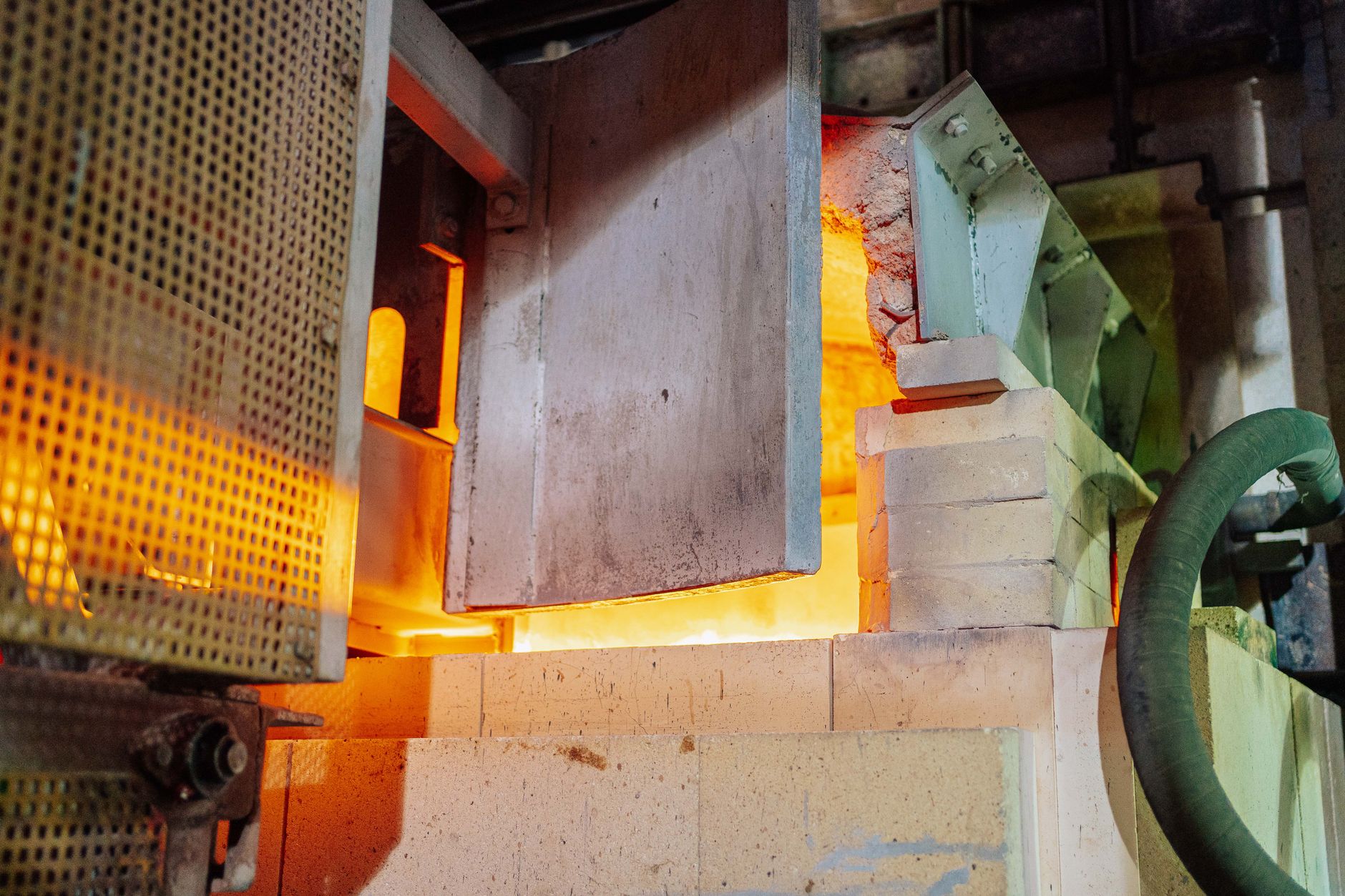
The timing matters. According to the U.S. EPA's Portland cement process documentation, the burning zone of a rotary kiln runs at about 1510 C, or 2750 F, and some wet-process kilns reach 210 meters, or 700 feet, in length. That is why most practical high-heat asset inspection happens during controlled cooldowns, not at full operating temperature. The engineering goal is to match the robot to the cooldown window, the hot spots that remain, and the route in and out.
OSHA's documentation of a boiler combustion-chamber inspection shows what that window can look like in practice: a two-day cooldown, ventilation, and continuous carbon monoxide and temperature monitoring, later extended to three days with triple ventilation, cut particulate exposure by about 65 percent and reduced the cleanup to a single one-hour entry. Robots fit before and beside that human-entry process. They do not cancel it.
Why planned cooldowns are the sweet spot
A planned cooldown is the sweet spot because the asset is quiet enough for access but still intact enough to show failure modes before crews disturb them. First-look robot passes are good at finding where refractory has slumped, where burner tiles have chipped or shifted, where soot and fused deposits are hiding surfaces, and where cracks are concentrated around transitions, penetrations, and joints.
That first pass changes the repair conversation. Instead of opening every suspect area, the team can mark only the zones that need brick replacement, burner work, deposit removal, or shell follow-up. In high-heat shutdowns, saving even one repeat entry matters because every extra hour compounds scaffold time, confined-space controls, and waiting on refractory materials.
- Isolate fuel, combustion air, draft, hydraulics, and any moving drives before the first look.
- Ventilate and verify atmosphere before any person follows the robot inside.
- Document the asset before chipping, washing, or pulling parts, so the original condition is preserved.
- Use the robot pass to decide no-entry, limited-entry, or full scaffold scope.

How much heat can a robot tolerate?
Temperature tolerance is not a single headline number. You need the allowable ambient temperature, the short-term radiant load, the maximum contact temperature at tracks or wheels, and the dwell time at each of those conditions. A platform that survives a brief pass through a hot vestibule may still fail if its camera window, seals, tether jacket, or batteries soak a little longer than planned.
For kiln and furnace work, a better question is not what is the robot's maximum temperature. It is at what point in the cooldown curve can this platform travel, stop, illuminate, and return with clean data. That framing follows the reality described by EPA and OSHA. Process temperature, entry temperature, and component temperature are different problems.
That is why high-heat inspection programs often separate tasks. One tool handles the earliest reconnaissance near residual heat. Another handles later, slower detail capture or NDE once the atmosphere and surfaces have settled. Trying to make one machine cover the entire cooldown usually drives cost up and reliability down.
Which payloads produce repair decisions instead of pretty video?
The most useful payload almost always starts with visible cameras and aggressive lighting. DOE reported a harsh-asset crawler deployment that used two visual cameras, integrated lighting, temperature sensing, and a companion ultrasonic testing platform. That mix translates well to kiln and furnace shutdowns because most repair decisions begin with a clear visual record and a way to confirm where heat is still trapped.
Burner zones need their own attention. EPA boiler guidance calls for checking burner throat refractory, burner parts, deposits, and inspection ports, because combustion trouble often shows up first as damaged throat refractory, plugged passages, bad flame shape, or fouled surfaces. A robot that can hold a steady view on burner tiles, nozzles, and nearby refractory earns its keep quickly.
One limit is deformation. Internal video is excellent for displaced brick lines and gapped joints, but true ovality or shell bulging usually needs a separate measurement method such as profiling or an external shell survey. That is an engineering inference from what the cited camera and ultrasonic payloads can and cannot directly measure.
- Visible cameras and lighting reveal open joints, spalls, crack networks, fallen anchors, warped burner tiles, and deposit patterns.
- Temperature sensing helps flag residual hot pockets and verifies where a longer dwell is unsafe.
- Ultrasonic or thickness NDE can confirm suspected metal loss when contact is practical during shutdown.
Why communications and openings usually decide the platform
Communications inside a kiln or furnace are often harder than locomotion. NIST's industrial wireless research says harsh environments hinder RF propagation through heat, vibration, reflection, interference, and shielding, and that factory signal behavior is very different from a home or office. In a refractory-lined steel shell, that warning should be taken literally.
Entry geometry is just as decisive. DOE described a refractory inspection that threaded through 2.5-inch air slots and traveled more than 35 feet to the center of a tank, while EPA kiln schematics show how sight ports and access doors govern the route. On these assets, the opening decides the class of robot before the operator ever compares drive systems.
A tether is often the disciplined answer, not the second-best answer. It can carry deterministic communications, external power, and a physical recovery path in one line. Wireless still has a place for short stand-off sections and nearby camera hops, but the default assumption in metal and refractory cavities should be that comms must be proven, not hoped for.
What retrieval plan should exist before the robot goes in?
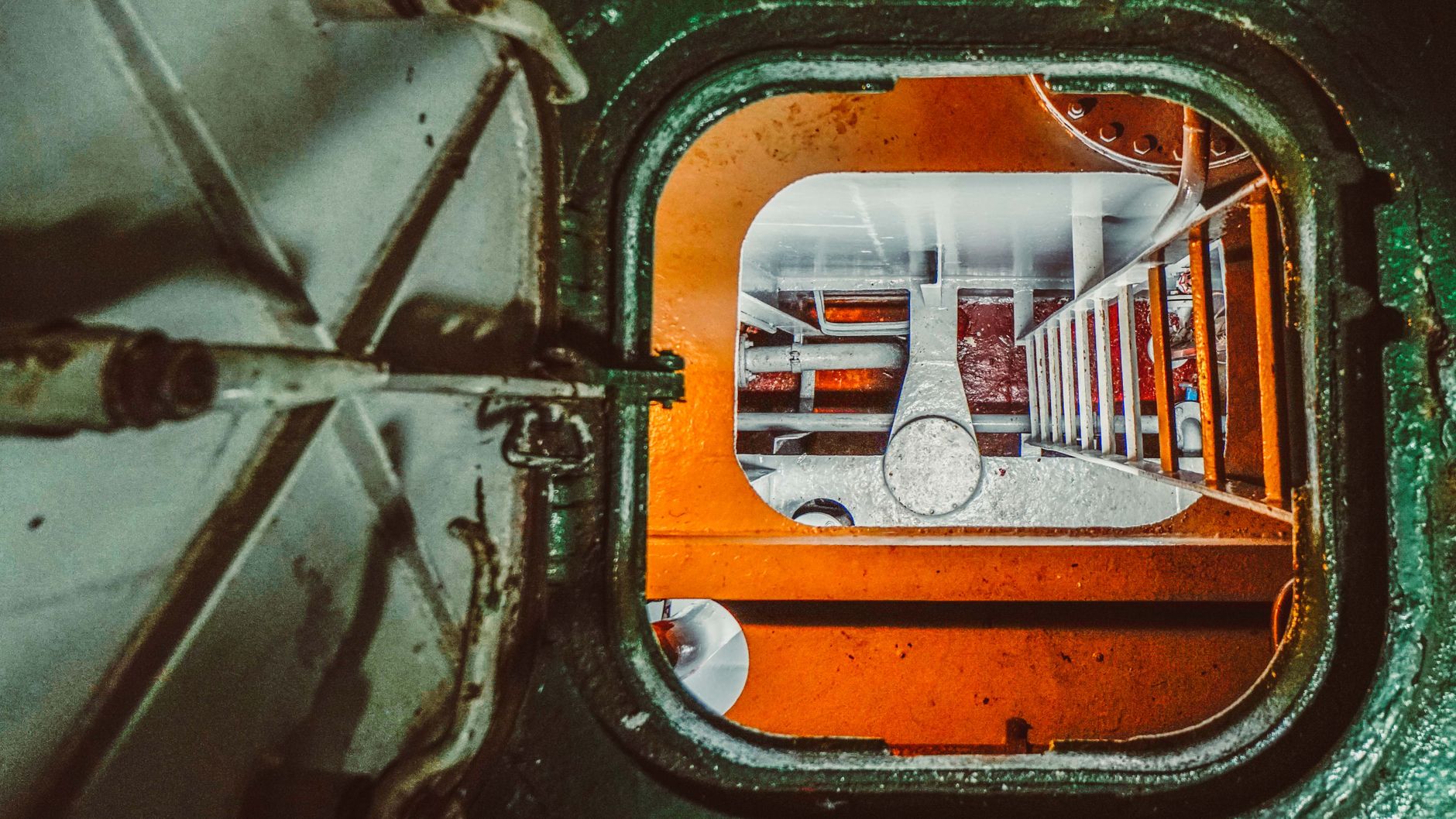
Retrieval planning starts before launch. OSHA's confined-space interpretation says the other end of a retrieval line must be attached outside the space and that vertical permit spaces deeper than 5 feet need a mechanical retrieval device available. Those rules govern people, not robots, but the discipline is exactly right for robot work inside a hot asset.
A usable robot retrieval plan answers boring questions before they become outage killers. Where can the tether snag. Can the machine reverse the whole route without turning around. What happens if debris falls behind it. Can a winch pull it free without tearing loose more refractory. If the robot dies, is safe abandonment until the next opening acceptable.
The best teams run a dry retrieval drill in an analog space before the shutdown. They prove the tether path, the anchor points, the handoff between the robot operator and the entry supervisor, and the threshold for switching from continued inspection to extraction. That rehearsal is cheap compared with losing a machine inside a vessel on the critical path.
How better inspection data shortens the outage
Better inspection data shortens outages in three ways. It narrows demolition to the damaged zones, lets refractory and burner parts be staged against actual conditions, and reduces the number of repeat entries by maintenance, NDE, and supervision crews. The value is highest when the robot record is detailed enough to support a repair map, not just a highlight reel.
That matters because refractory work owns the clock more often than people admit. In a June 22, 2026 case study, Calderys said a traditional dry-out on a 25-ton aluminum melting furnace requires 160-plus hours, and its alternate dry-out approach cut that time by more than 50 percent. When dry-out alone can consume most of a week, finding out late that damage is broader than expected is brutal.
OSHA's boiler case makes the same point from the labor side. After cooldown, ventilation, and work-practice changes, the cleanup fit into a single one-hour entry. Robots do not create that result on their own, but they help plants decide sooner where the real work is, what can wait, and which areas do not justify another confined-space cycle.
Where Service Robot Co. fits in this kind of work
Most U.S. plants do not need a robot vendor. They need an inspection program that survives contact with a real shutdown schedule. That means picking the right platform for the opening size, heat exposure, payload, tethering, retrieval method, and service model, then fitting it into maintenance SOPs and contractor workflow.
That is where Service Robot Co. fits. We are an OEM-neutral, full-service commercial robot integrator for U.S. businesses, so we pick the right machine across manufacturers and handle the rest: robot deployment and integration, training, service, and lifecycle support through a nationwide U.S. engineer network. If the fit is not clear yet, a commercial robot demo, inspection robot leasing, or try before you buy pilot is often the sensible starting point.
For plants that want financing flexibility, the same program can be structured as robot leasing for business, a leasing model, monthly payment programs, or a lease purchase program, with RoboCare™ service and one partner, one number when something fails. That matters more on outage work than on almost any other robotics application because a missed inspection window cannot be reclaimed next week.
Frequently asked questions
Sources
- EPA Portland Cement Manufacturing Final Report
- OSHA Confined Space Boiler Inspection Case
- OSHA Retrieval Lines Interpretation
- NIST Industrial Wireless in Harsh Factories
- EPA Combustion Efficiency Manual for Boilers
- Calderys Aluminum Furnace Relining Case Study
- DOE Hanford Refractory Crawler Inspection
- EPA Kiln Schematic and Access Example