
Key takeaways
- A3 said non-automotive customers represented 56% of North American robot units ordered in Q2 2026.
- Q2 growth was broad, with electronics up 38%, food and consumer goods up 18%, metals up 18%, and life sciences up 9% year over year.
- For smaller manufacturers, the practical first move is a narrow, repeatable task such as machine tending, palletizing, inspection, or short internal transport.
- The buying model matters as much as the robot. Integration, training, service, and financing often decide if the cell stays productive.
What changed in the market this quarter?
The headline is simple. North American robot demand is no longer carried mainly by automotive plants. According to the Association for Advancing Automation, companies ordered 8,940 robots worth $622 million in the second quarter of 2026, up 4.3% in units and 21.3% in order value from a year earlier. The bigger shift sat inside the mix: non-automotive customers represented 56% of robot units ordered.
That matters because it changes the old mental model. For years, many smaller manufacturers treated robotics as something proven in vehicle plants but only loosely relevant elsewhere. The 2026 data says the center of gravity has moved. In the first half of 2026, North American companies ordered 17,995 robots valued at $1.166 billion, and A3 described demand as increasingly diversified across industries.
Which operating sectors are increasing investment?
The strongest second quarter gains came from operating sectors with very different workflows from automotive. A3 reported year over year growth of 38% in semiconductors and electronics, 20% in automotive components, 18% in food and consumer goods, 18% in metals, and 9% in life sciences. That spread matters. It shows the order book widening across plants built around precision handling, packaging, repeatable machine loading, clean processes, and traceable inspection.
The first half numbers reinforce the same pattern. A3 said first half robot orders rose 35% in semiconductors and electronics, 32% in life sciences, 24% in automotive components, 17% in food and consumer goods, 6% in plastics and rubber, 6% in other industries, and 3% in metals, while Automotive OEM orders fell 25%. This is not one niche flaring up. It is a broader buying shift.
- Electronics: delicate part handling, test cell tending, and vision-based inspection.
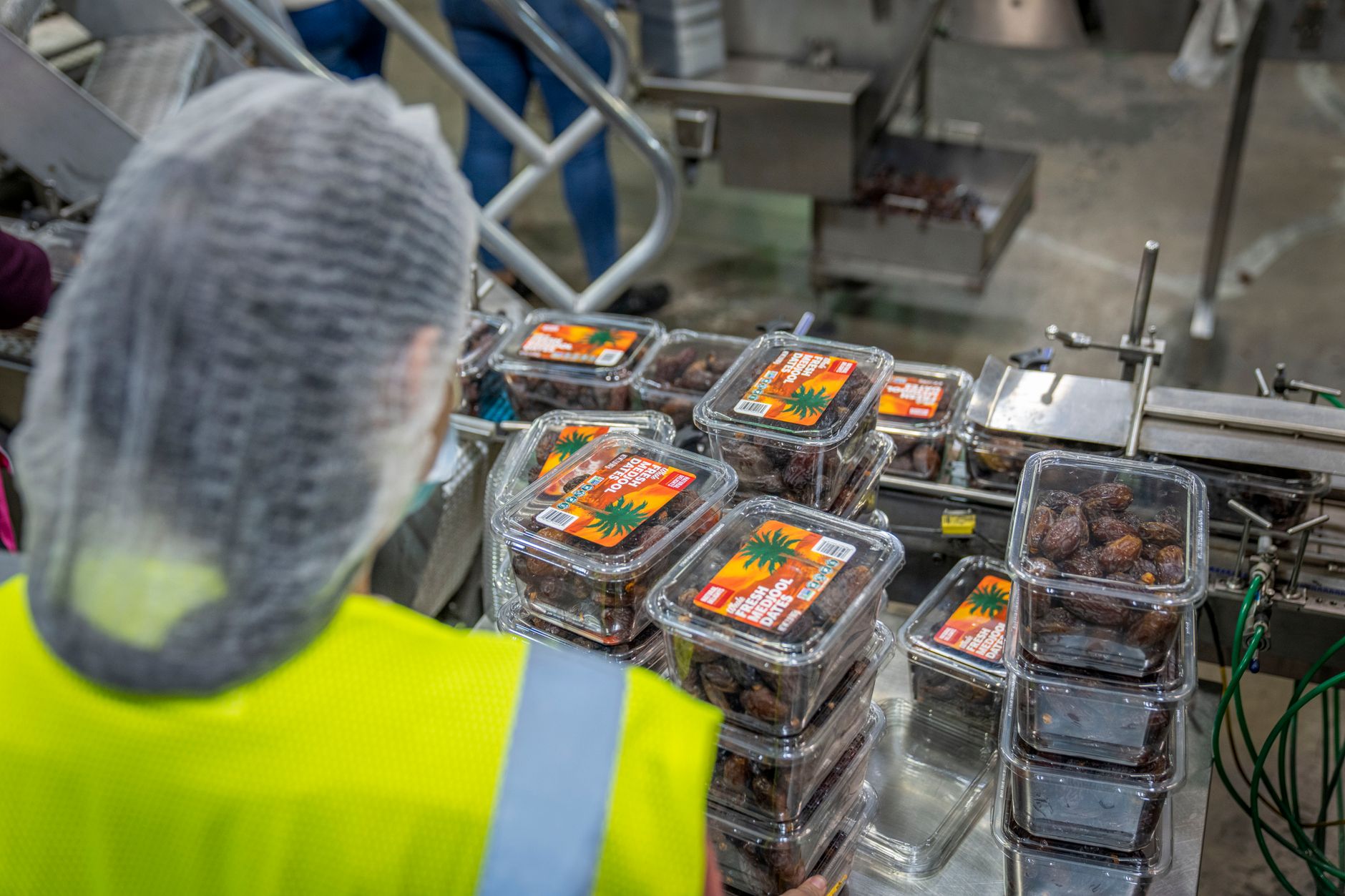
- Food and consumer goods: end of line automation, case packing, and palletizing.
- Metals: machine tending robot cells, part transfer, and repetitive finishing support.
- Life sciences: packaging, kitting, and other controlled, high-repeat motions.
Why is demand broadening beyond automotive?
Because the pressures that once made robotics an automotive story now show up almost everywhere. Plants outside auto still need higher throughput, steadier quality, safer ergonomics, and less dependence on a thin labor market for dull, repeatable work. A3 made that plain in its Q1 2026 release, which tied broader demand to productivity, flexibility, quality, competitiveness, workforce challenges, and operational resilience.
The industrial backdrop also helped. According to the Institute for Supply Management, the U.S. manufacturing sector expanded for a sixth straight month in June 2026 and the Manufacturing PMI registered 53.3, with the New Orders Index at 56. The Federal Reserve said manufacturing output rose at a 4.7% annual rate in the second quarter. Buyers were funding automation as operating capacity, not as a science project.
What does this mean for smaller manufacturers?
First, stop asking the wrong question. The question is not are we enough like an automotive plant to justify a robot. The better question is which recurring task is expensive, hard to staff, hard to hold consistent, or physically punishing. Once robot orders are growing in food, metals, electronics, and life sciences, the case for automation becomes task-specific, not industry tribal.
Second, narrow the scope. A U.S. Census Bureau working paper found robotics adoption and robot intensity are more strongly related to establishment size than age, and plants with robotics also tend to have higher capital expenditures, including IT spending. Smaller plants should not copy a giant factory. They should pick one bottleneck, one cell, and one measurable outcome. That is the practical reading of a market that is broadening, not becoming frictionless.
Where are the best first projects outside automotive?
Most first wins outside automotive sit in tasks with steady cadence, clean handoffs, and obvious before-and-after metrics. That is why collaborative robot arm leasing, cobot leasing for manufacturing, material handling robot leasing, machine tending robot cells, and palletizing robot leasing programs keep showing up in smaller plants. They target labor pinch points that are easy to see on a shift report.
The common thread is boring work, and that is a compliment. The less heroic the task, the better the automation candidate. A small manufacturer usually gets a better result from one well-defined end of line automation cell than from a grand automation program that touches five departments at once.
- Machine tending: stable part presentation, predictable cycle time, and quick labor-hour comparison.
- End of line palletizing: repetitive lifts, straightforward counts, and clear throughput data.
- Simple inspection and part handling: high repeatability, fewer subjective checks, and better traceability.
- Repetitive transport between nearby stations: material handling robot leasing can cut unproductive walking without redesigning the whole plant.
- Packaging and kitting: short motions repeated all day, often on lines where staffing swings hurt output.
What do the cobot numbers suggest about the next wave?
They suggest adoption is getting lighter, faster, and easier to place near existing work. A3 said companies ordered 2,774 collaborative robots valued at $114 million in the first half of 2026. That was 15.4% of all robot units ordered. In the second quarter alone, 1,137 collaborative robots were ordered, worth $44 million and equal to 12.7% of total units. In life sciences and semiconductors, collaborative robots accounted for 43.7% and 36.5% of first-half robot orders.
That does not mean every small plant should default to a cobot. It does mean accessible deployment models are moving beyond fenced, automotive-style cells. For buyers outside auto, the lesson is to match the robot to the task and the changeover pattern, not to an old picture of what factory automation is supposed to look like.
Why does the operating model matter as much as the machine?
Smaller manufacturers rarely fail on the robot itself. They fail on everything around it: guarding, fixtures, part presentation, software handshakes, training, spare parts, and service response. A good robot with weak deployment discipline becomes an expensive workbench ornament. The hard part is not ordering hardware. It is getting a working cell on the floor and keeping it there.
That is where a vendor neutral robot integrator can change the math. Service Robot Co. is OEM-neutral and handles commercial robot leasing, purchase or lease, robot financing for small business, monthly payment programs, robot deployment and integration, training, and ongoing service through a nationwide U.S. engineer network. For a smaller plant, one partner for the lifecycle can be more useful than chasing the cheapest unit, because uptime is built in commissioning, service, and operator adoption.
How should a smaller plant act on this shift?
Treat the buyer-mix data as permission to move, not as proof that every job should be automated. NIST said small and medium-sized manufacturers make up 98% of the U.S. manufacturing base, and its July 2026 funding notice centered advanced technology adoption for that group. The market is finally speaking in a language smaller plants can use. Start with one job, define the success metric before the pilot, and budget the surrounding work, not just the arm or mobile base.
If cash timing is the constraint, structure matters. Many smaller firms now evaluate no upfront capital paths, robot leasing for business, robot leasing monthly plans, or phased deployment instead of a single large purchase. The lesson from A3's August 11, 2026 report is not that automotive is fading. It is that automation has become normal buying behavior across more of manufacturing. For smaller operators, that opens the door to practical first projects that would have been dismissed as not auto enough a few years ago.