
Key takeaways
- Patrol robots can detect visible reefer problems earlier, but humans still diagnose faults and protect cargo.
- Safe deployment depends on traffic rules, conservative routing, and validated stopping performance.
- Thermal images are screening evidence, not proof of cargo temperature or food safety.
- Weather readiness covers traction, sensing, charging, corrosion, condensation, and storm shutdown rules.
What can a patrol robot monitor in a reefer yard?
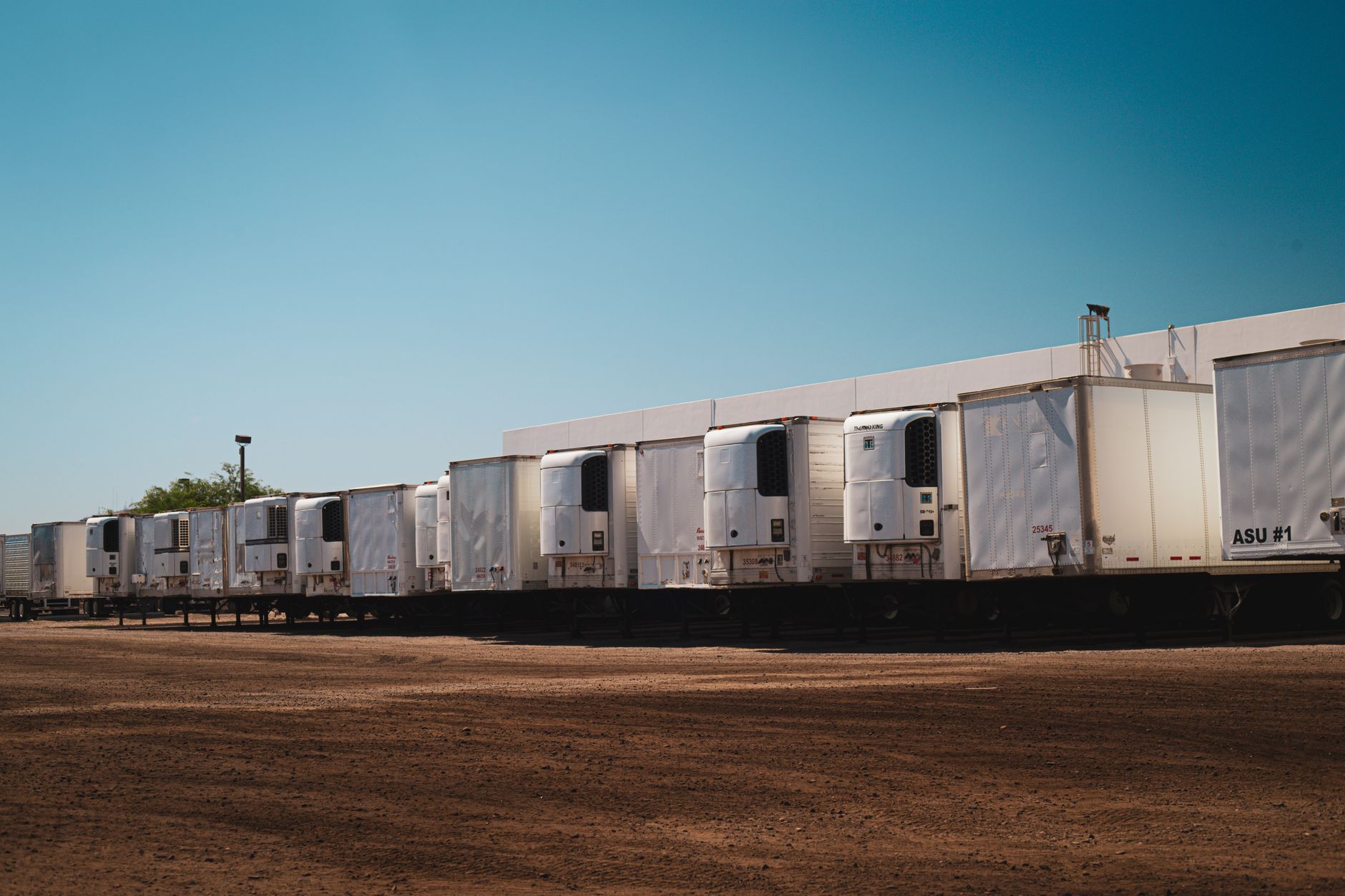
A mobile patrol robot can repeatedly inspect refrigerated trailer rows for disconnected power cables, abnormal controller indications, open or unlatched doors, broken seals, people inside restricted areas, and unusual heat patterns around refrigeration units or electrical pedestals. It records the trailer position, time, imagery, and observed condition so the yard team can respond with evidence instead of searching an entire row.
The robot does not replace reefer telemetry, fixed cameras, guards, yard checks, or qualified electrical work. Its value is mobility. One sensor package can revisit changing trailer positions, look from useful angles, and confirm an alarm before personnel enter a dark, wet, or congested lane.
That matters because refrigerated freight depends on equipment remaining powered and correctly configured while parked. The Environmental Protection Agency says almost all perishable foods and medicines are delivered in vehicles equipped with transport refrigeration units, and it notes that electric plug-in capability can reduce emissions while trailers sit at distribution centers and warehouses.
Which conditions deserve automatic detection?
The best inspection plan starts with observable failure modes, not an impressive sensor catalog. A disconnected plug is different from a connected cable with no current, and a warm electrical connector is different from a refrigeration unit whose exterior is warm during normal operation. Each condition needs its own evidence and response rule.
Door inspection also requires precision. The autonomous patrol robot may classify a door as closed, ajar, open, or visually damaged, then check the latch, seal area, and nearby activity. It cannot determine cargo integrity from an exterior image alone, so uncertain observations should be labeled for review rather than promoted to confirmed losses.
- Plug state: seated, partially seated, disconnected, or connector on the ground
- Cable condition: pinching, abrasion, pooled water, unsafe routing, or vehicle exposure
- Reefer state: controller dark, warning lamp active, displayed setpoint, or abnormal operating indication
- Door state: open gap, unsecured latch, damaged hinge, missing seal, or recent human activity
- Security state: fence-line movement, loitering, climbing, tampering, or an unexpected vehicle
- Thermal state: a new hot spot at a connector, cable, breaker enclosure, motor area, or bearing location
How should robots operate in narrow lanes with moving tractors?
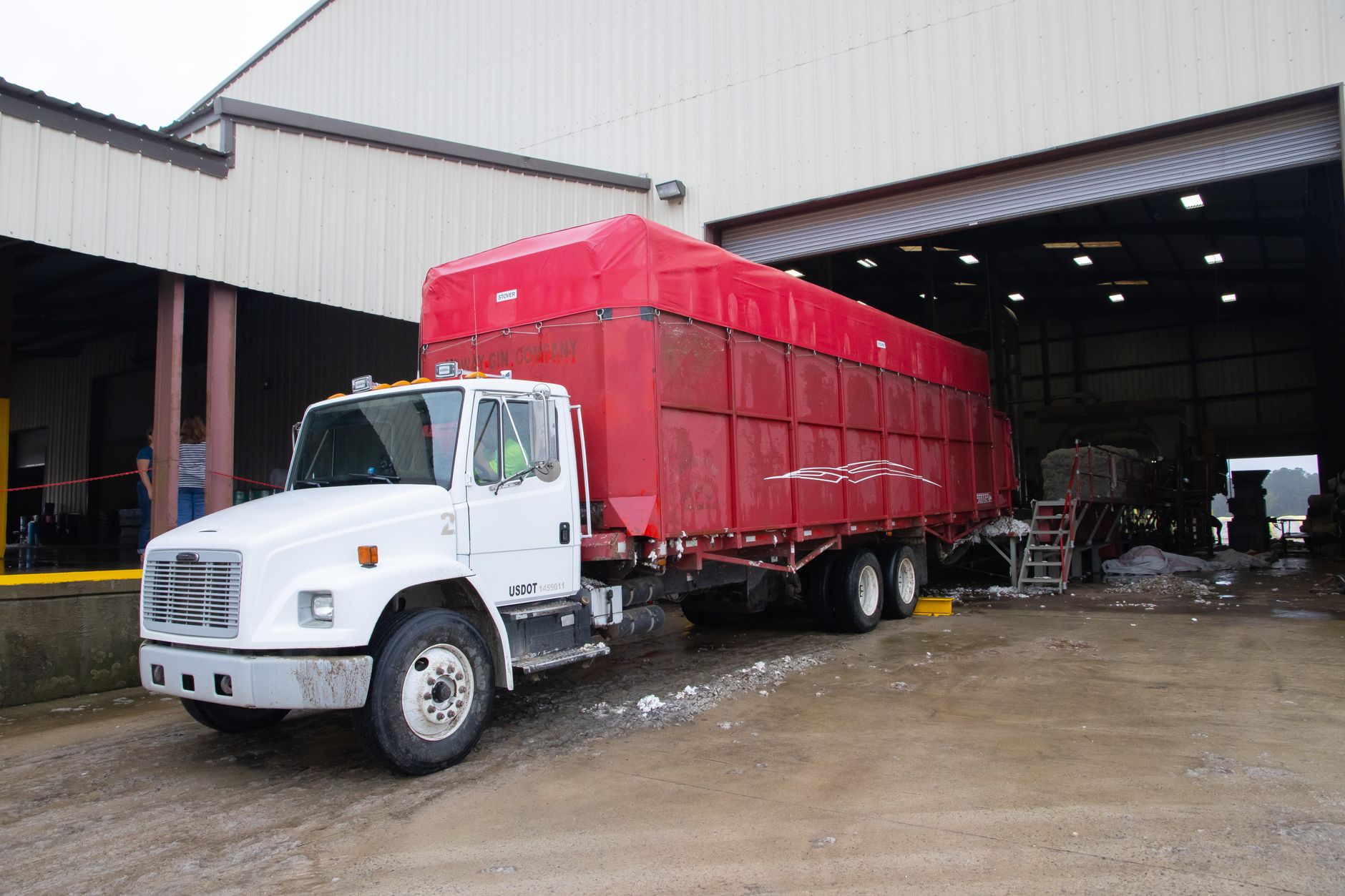
Trailer rows create long visual canyons with protruding landing gear, hanging cables, puddles, wheel chocks, snowbanks, and few places to pass. Site assessment mapping should measure the usable lane after those temporary obstructions appear, not merely copy dimensions from a clean yard drawing. Turning envelopes, sensor sight lines, stopping distance, and recovery space all need field validation.
A robot should occupy a defined role in the yard traffic plan. Useful controls include one-way patrol segments, low-speed zones, geofenced tractor crossings, right-of-way rules, passing pockets, and a safe state when localization confidence drops. During trailer moves, dispatch software can pause the affected lane instead of asking the robot to improvise around a backing tractor.
OSHA requires powered industrial truck training to address visibility, pedestrian traffic, narrow places, surface conditions, and other site-specific hazards. Those principles belong in robot deployment and integration too. The robot is another mobile participant, so its route must complement marked traffic paths rather than create a new conflict point.
What turns a detection into a useful alarm?
A valuable alert answers four questions: which trailer, what changed, how confident is the system, and what should happen next. A single blurry frame or isolated temperature pixel should remain an event. An alarm should represent a condition that needs a timely human response.
Confirmation can combine a second viewing angle, a repeat pass, controller telemetry, pedestal current, and remote visual review. This sharply separates an unplugged cable from a shadow, an open door from a dark hinge line, and an intruder from an authorized driver. Remote triage should also expose uncertainty instead of hiding it behind a binary label.
- Capture trailer identity, mapped stall, timestamp, color image, thermal image, and confidence score
- Repeat the observation after a short interval when delay does not increase risk
- Cross-check controller, pedestal, access-control, or yard-management data when available
- Escalate confirmed hazards to the named responder with a required acknowledgment
- Preserve the original evidence and every operator action for review
Can thermal cameras verify that the cargo stayed cold?
No. A patrol robot sees exterior surface temperatures, not the temperature of the product deep inside a loaded trailer. Thermal readings also depend on emissivity, viewing angle, target size, weather, reflected energy, camera calibration, and motion. NIST research identifies calibration and emissivity among the factors that shape thermal measurement uncertainty.
Thermal sensing is still useful for comparisons. A connector that becomes hotter than its own baseline, one refrigeration unit that differs sharply from neighboring units under similar conditions, or an unexpected warm band around a door can justify inspection. The defensible claim is anomaly screening, not cargo release approval.
FDA places the responsibility for necessary transportation conditions and operating temperature with the parties defined by the shipment. Its sanitary transportation rule also allows temperature-control records to be retained for periods that vary by record type but do not exceed 12 months. Robot evidence should join that chain of records without being mistaken for calibrated product-temperature data.
What does outdoor readiness actually require?
A reefer yard exposes equipment to rain, blowing dust, road salt, condensation, glare, freezing spray, summer pavement heat, and standing water. NEMA says Type 4X enclosures address windblown dust, rain, sleet, snow, splashing water, hose-directed water, corrosion, and external ice. That enclosure label does not prove that wheels, lenses, brakes, batteries, or charging contacts will perform across the same conditions.
Specify the operating envelope subsystem by subsystem. Lens heaters or cleaning provisions may be necessary, while traction must be tested on wet markings and packed snow. The charging location needs drainage, impact protection, and cable management. OSHA separately requires cord-and-plug equipment to be inspected for defects and removed from service when damage could expose an employee to injury.
Weather rules also need a hard stop. NOAA advises people to remain in safe shelter for at least 30 minutes after the last sound of thunder. A robot may continue operating only if the approved equipment, communications, charging design, and site safety policy support it. Human response should never be dispatched into lightning merely because the machine found an alarm.
How should a reefer-yard pilot be designed?
Begin with a robot pilot program covering one representative block of trailers, a complete shift pattern, and the yard’s difficult weather and traffic periods. Establish ground truth through manual checks, then compare robot observations with plug telemetry, access logs, maintenance findings, and actual door states. Measure missed detections and nuisance alerts separately because they create different operational risks.
Acceptance testing should include parked and moving tractors, trailers in unexpected stalls, cable loops across the route, reflective doors, fogged lenses, standing water, darkness, and loss of network connectivity. It should also verify docking, safe shutdown, local obstacle response, remote assistance, and the procedure for retrieving a disabled unit without entering an active traffic lane carelessly.
Service Robot Co. acts as an OEM-neutral, vendor neutral robot integrator for U.S. businesses. The company selects equipment across manufacturers, then handles financing, deployment, integration, training, and service through a nationwide U.S. engineer network. That one-partner model is useful when the project combines mobility, thermal sensing, security workflows, reefer data, and local yard controls.
The commercial model can match the operating case through inspection robot leasing, security patrol robot leasing, commercial robot leasing, purchase, or leasing. Monthly payment programs and a phased pilot can reduce initial commitment, but the contract should still define response coverage, spare-unit policy, data ownership, and the robot maintenance service plan.
Which results prove that the patrol is working?
Coverage alone is a weak measure. A robot can complete every route and still miss the conditions that matter. Track verified detection performance by fault type, confirmation time, responder acknowledgment, repeat failures by stall, manual inspection hours, traffic-related pauses, weather-related downtime, and the share of alerts closed with usable evidence.
Review trends with operations, safety, refrigeration, security, and maintenance teams. A rising count of damaged cords may point to cable placement or tractor behavior rather than a sensing problem. Repeated door alerts in one row may reveal a process defect. The robot earns its place when its records drive corrective action, not when it merely produces more notifications.
Service planning should connect remote triage with on-site dispatch and clearly defined emergency response nationwide. The practical buying question is not which machine has the longest feature list. It is which supported system can patrol the real yard, survive its weather, coexist with tractors, and deliver trustworthy evidence to the person authorized to act.