

Key takeaways
- Patrol robots fit remote compounds best as mobile detection and verification assets, not as replacements for gates, cameras, or responders.
- Terrain, weather, route length, and docking reliability determine useful endurance more accurately than a brochure runtime.
- Dual cellular service is inadequate if both connections share the same tower, power source, backhaul, or core dependency.
- Remote triage can reduce unnecessary maintenance travel by showing crews what happened and what equipment they need before departure.
- A telecom pilot should measure verified detection, false alarms, completed patrols, remote recoveries, and avoided site visits.
Where does autonomous patrol fit?
Autonomous patrol can be practical at remote tower and switching compounds where permanent guard coverage is difficult to justify. The robot repeatedly inspects the fence line, gates, cabinets, generator area, cable routes, and other selected assets, then sends evidence to a remote operator when conditions depart from the baseline.
It should form one layer of the security plan. Fixed cameras watch selected views continuously, access controls delay entry, alarms flag known failure modes, and an autonomous patrol robot closes some of the visual gaps between them. Human personnel still decide when to contact law enforcement, dispatch technicians, or shut down equipment.
The scale makes selective automation compelling. The FCC's December 2024 Communications Marketplace Report counted 432,469 active U.S. cell sites at year-end 2023, up from 414,571 in 2022. The FCC cautions that cell sites include macro sites, small cells, distributed antenna nodes, and other equipment, so that figure is not a tower count.
- Prioritize compounds with long travel times, repeated trespass, valuable exposed materials, or poor fixed-camera coverage.
- Retain scheduled structural, electrical, radio-frequency, and regulatory inspections that require qualified people.
- Define the patrol robot as a detection and verification tool before assigning it any response role.
The compound comes before the robot
A paved switching yard and a gravel tower compound are different mobility problems. Route engineering must account for loose aggregate, ruts, mud, snow, standing water, vegetation, guy-wire anchors, cable trenches, steep transitions, and gate thresholds. A platform that performs well on level concrete may lose traction, ground clearance, or localization outdoors.
NIST's ground-robot test framework evaluates positive and negative obstacles, inclines, gaps, hurdles, confined passages, and varied surfaces. That is the right purchasing mindset. Ask for repeatable evidence on terrain resembling the actual compound, followed by site assessment mapping and a commercial robot demo on the worst credible route.
Weather qualification also belongs at the site level. Shade, wind, precipitation, salt exposure, dust, and temperature can differ sharply across a regional portfolio. The pilot should include degraded conditions and prove that the robot can stop safely, preserve evidence, and return to its dock when the route becomes impassable.
- Map standing-water zones and seasonal washouts, not just the dry-day route.
- Keep patrol paths clear of tower climbing areas, generator exhaust, and technician work envelopes.
- Test localization after vegetation growth, snow cover, moved equipment, and lighting changes.
- Create a safe parking state for blocked routes, lost position, and severe weather.
What should vandalism detection cover?
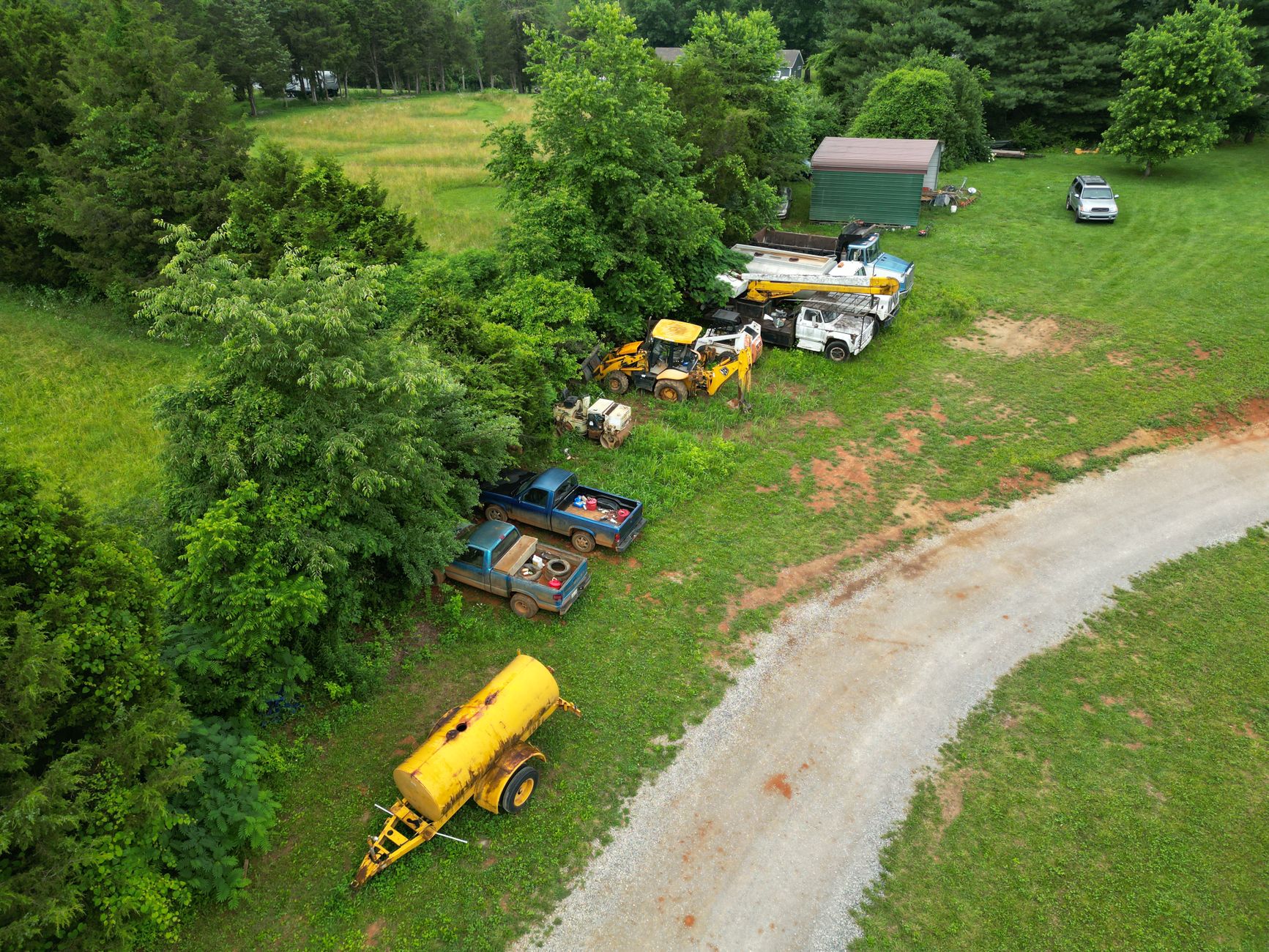
The threat is broader than a person crossing a fence. Useful patrols look for cut mesh, open gates, fresh tire tracks, missing grounding material, disturbed cable runs, cabinet doors left ajar, smoke, heat anomalies, fluid leaks, graffiti, and objects placed near critical equipment. Evidence should include location, time, images, and the robot's confidence or triggering condition.
The urgency is measurable. In a June 2026 address, FCC Commissioner Olivia Trusty cited industry data showing nearly 16,000 reported theft and vandalism incidents from June 2024 through June 2025, with associated outages disrupting service for almost 10 million customers. She said the first half of 2025 produced 9,770 incidents, nearly twice the preceding six months.
Detection alone is not protection. The alert must arrive early enough for gates, locks, fencing, and other delay measures to preserve response time. Operators should tune separate rules for people, vehicles, smoke, thermal changes, and asset tampering rather than funneling every anomaly into one generic alarm queue.
- Use fixed cameras for persistent chokepoints and mobile patrol for changing angles and close inspection.
- Preserve pre-alert and post-alert evidence so reviewers can distinguish approach, contact, and departure.
- Suppress known technicians only through authenticated work orders or access events, not visual guesswork.
Battery endurance is a route-design problem
Published runtime is only a starting point. Useful endurance depends on route distance, surface resistance, grade, stopping frequency, sensor load, communications activity, temperature, payload, and the energy required to reach the dock with reserve. Buyers should demand endurance tests on a representative route instead of extrapolating from an indoor specification.
Cold weather deserves explicit testing. A 2025 National Renewable Energy Laboratory report explains that temperatures below 0 degrees Celsius, or 32 degrees Fahrenheit, increase lithium-ion internal resistance and reduce power output and charging efficiency. The report summarizes one cited result in which usable energy at minus 10 degrees Celsius was 75 percent of usable energy at 25 degrees Celsius. That result demonstrates sensitivity, not a guaranteed derating for every robot.
The dock is part of the security system. Prove approach, electrical contact, charging confirmation, drainage, snow and debris tolerance, and recovery after interrupted power. The robot charger should be included in the compound's backup-power study, but its load must not compromise telecommunications equipment.
- Budget energy for patrol, alert investigation, communications, and a safe return to charge.
- Track battery capacity and failed docking attempts as maintenance signals.
- Shorten routes or patrol frequency during verified low-energy conditions instead of risking a stranded unit.
Cellular redundancy cannot mean one modem
A remote patrol should retain local navigation, obstacle avoidance, event recording, and a safe fallback when connectivity disappears. Live video may drop during the incident that matters most. The robot therefore needs store-and-forward evidence, clear offline behavior, and an automatic attempt to reconnect without abandoning its safety rules.
Dual cellular service helps only when the failure paths are genuinely different. Two subscriptions may still share a tower, commercial power, backhaul route, or core dependency. FCC and communications-sector resilience guidance emphasizes diversity across facilities, routes, and network elements, which is more meaningful than counting SIM cards.
For higher-consequence compounds, evaluate a differently routed or different-technology fallback. Test primary-link loss, degraded bandwidth, total isolation, power failure, and recovery during the robot pilot program. Cybersecurity review should cover device identity, encryption, credential rotation, software updates, access logging, and strict separation from operational telecom networks.
- Keep safety-critical driving decisions on the robot when the wide-area link fails.
- Queue encrypted evidence locally with retention limits and upload priority rules.
- Alarm on loss of communications without treating every brief signal fade as an intrusion.
- Document which tower, backhaul, power source, and operations center each connection depends on.
Remote intervention turns alerts into action
The remote operator needs enough context to classify an event without creating another blind dispatch. A good console presents the triggering observation, recent route history, fixed-camera views, access-control events, site alarms, and the robot's remaining energy. The operator can request another viewpoint, use approved audio warnings, or place the unit in a safe hold.
The FCC described a credible remote-monitoring pattern in a 2015 antenna-structure order: self-diagnostics, continuous links, alarm notification, trained personnel available around the clock, and a backup operations center with transfer procedures. That order addressed tower monitoring rather than patrol robots, but the operational lesson transfers. Remote triage needs staffed ownership and a tested fallback.
Every alert class should have an escalation rule. Suspected trespass may go to security or law enforcement, heat near electrical equipment to network operations, and a blocked patrol route to maintenance. Remote intervention must never encourage the robot to pursue, corner, physically confront, or enter a radio-frequency exclusion area.
- Record who acknowledged the alert, what evidence they reviewed, and what action they authorized.
- Give operators a one-command safe hold and return-to-dock procedure.
- Rehearse loss of the primary operations center and transfer to the backup team.

Maintenance travel changes the business case
The economic value often comes from better trips, not merely fewer trips. A robot can confirm that an alarm is caused by a cut fence, an open cabinet, storm debris, or a charging fault before a technician leaves. Crews arrive with the correct parts, access equipment, skills, and safety plan, while harmless events may be closed through remote triage.
A joint OSHA and FCC tower-safety guide says many communications-tower worksites are remote and urges carriers to account for travel time, minimize long drives, and set drive-time limits to reduce fatigue. Autonomous inspection does not remove qualified maintenance, but it can help reserve travel for work that truly requires hands on site.
Service Robot Co. supports this operating model as an OEM-neutral, vendor neutral robot integrator. The company selects equipment across manufacturers, then handles financing, robot deployment and integration, training, remote triage, and service through a nationwide U.S. engineer network. That creates one partner one number for the lifecycle instead of separate contacts for hardware, software, and field repair.
Procurement can compare purchase, security patrol robot leasing, inspection robot leasing structures. Any monthly payment programs should state what maintenance is included, how on-site dispatch works, who owns connectivity, and what happens when the primary unit cannot patrol.
- Track avoided diagnostic visits separately from required repair and compliance visits.
- Measure repeat failures so remote inspection does not conceal a deteriorating asset.
- Include dock cleaning, sensor care, battery health, software updates, and route revalidation in the robot maintenance service plan.
How should operators pilot and scale?
Start with a compound that is difficult enough to expose the real constraints but accessible enough for engineers to observe failures safely. Establish a baseline for alarms, site visits, patrol coverage, and response workflow before deployment. The pilot must include darkness, poor weather, blocked routes, connectivity loss, and charging interruptions.
Judge the autonomous patrol robot by verified detections, missed test events, false alarms, completed patrols, successful docks, remote recoveries, evidence-upload time, and maintenance travel avoided. Review each failure by cause. Terrain, perception, communications, procedure, and hardware problems require different corrections.
Service Robot Co. can conduct the free site assessment, match the site to an appropriate platform, integrate the alert path, train remote personnel, and provide go-live support. Its nationwide engineer network also matters after scaling because outdoor routes drift, vegetation grows, docks move, batteries age, and compounds change.
Scale only after the operating procedure is stable. Group sites by terrain, climate, connectivity, threat pattern, and service radius rather than assuming one configuration fits the entire portfolio. Robot fleet management should expose each unit's patrol completion, alarm state, battery health, connectivity, and maintenance history without weakening network separation.
- Write acceptance tests before selecting the robot or financing structure.
- Run controlled fence, gate, vehicle, cabinet, smoke, and link-loss scenarios.
- Require documented recovery for every failed patrol and missed dock.
- Expand by site archetype, then compare field performance with the pilot baseline.
Frequently asked questions
Sources
- FCC 2024 Communications Marketplace Report
- FCC 2026 Communications Infrastructure Address
- OSHA and FCC Communication Tower Best Practices
- NIST Mobility Performance for Robotic Systems
- NREL Cold-Weather Battery Report
- FCC Hurricane Helene Backup Power Response
- FCC Antenna Structure Monitoring Order
- FCC Communications Resiliency Guidance