Key takeaways
- A headline forecast is a claim about scope, method and units, not a fact about your hotel.
- The widely quoted $0.76 billion figure for 2026 has not been confirmed at its publisher source.
- Forecasts for hospitality robots, hotel cleaning robots and room service robots measure different markets.
- Check base years, growth rates and endpoints before any figure moves a budget.
- Translate the market into your own corridors, elevator queues and night staffing hours before you commit.
What a hotel robot forecast can tell a budget owner
A hotel robot market forecast is an estimate of spending across a category, drawn by one publisher over a window that publisher chose. It is not a measure of what a robot will save in your building. Read it as a claim to test before it touches a budget.
The safest order is scope first, then method, then the units being counted, and only last the dollar total. Reading in that order keeps one headline from pushing a decision toward committing too early or toward waiting for a market that has already moved.
The figure most often quoted in recent hospitality explainers is about $0.76 billion for 2026. We could not confirm it at the publisher level, as the next section shows.
Is the $0.76 billion figure confirmed?
Not yet. A search summary attributes a figure of about $0.76 billion in 2026, rising to $2.23 billion by 2031 at a 24.10% growth rate, to a hospitality robots report from Mordor Intelligence. We could not open that publisher page in our checks as of November 2026, so the figure stays unconfirmed at the source level.
The explainer's list of major uses, which names corridor vacuuming, public area maintenance and guest room disinfection, also lacks a primary source in our checks. Cleaning specific reports describe similar uses, but similarity is not confirmation.
Treat the figure as a prompt for questions. Put it in a budget memo only after the publisher's own page confirms the number, the year and the scope.
Why one market produces several different totals
Scope explains most of the spread. A hospitality robots report can include front desk units, delivery carts and service robots, while a hotel cleaning report draws a narrower line around floor care and disinfection machines. Room service reports narrow further still.
Base years and growth windows shift each figure again, so a reader who compares totals without matching scope is comparing different markets. These are the figures we could check, as summarized by the publishers or aggregators named:
- Hospitality robots, Business Research Company summary: about $0.7 billion in 2025 and about $0.9 billion in 2026, with a 28.4% growth rate, and $2.13 billion in 2030 at a 24.0% growth rate.
- Hospitality robots, Global Info Research style summary: USD 593 million in 2025, with a 25.5% growth rate for 2026 to 2033.
- Hospitality robots, HTF Market Intelligence: a 12% growth rate, with 3.6B as the starting figure and 8B by 2033, units as published and not stated in our summary.
- Hospitality robots, TechNavio: a 15.8% growth rate and USD 701.4 million of growth from 2025 to 2030, described as the most conservative figure in our set.
- Room service robots: USD 463.0 million in 2025, with a 25.50% growth rate.
- Hotel cleaning robots: USD 325.81 million in 2026, rising to USD 518.44 million by 2035 at a 5.3% growth rate.
- Front Desk Robotics press release of October 23, 2025: about $1 billion by 2030 for hospitality robots, a vendor headline on a wider category.

How do you check a forecast's method?
Start with the endpoints. The Business Research Company summary pairs about $0.9 billion in 2026 with $2.13 billion in 2030. Working those two points gives growth of roughly 24% a year, which matches the 24.0% longer range rate and not the 28.4% headline. The headline probably covers a different window, and a careful reader asks the publisher which one.
Then check who issued the number. The hotel cleaning estimate appears on two listings that carry the same figures, so the second listing adds no independent support. Vendor releases, such as the Front Desk Robotics release of October 23, 2025, are useful for signals, but they are written to promote a category.
Finally, look for unit counts, not only dollars. A dollar forecast shows how much money moves through a category, not how many robots are working. The same cleaning report says that in 2024, more than 58% of large hotel chains globally had integrated at least one autonomous cleaning robot. That is a report claim we could not verify, and it measures adoption breadth, not whether your corridors are covered.
Which questions turn a market number into property facts?
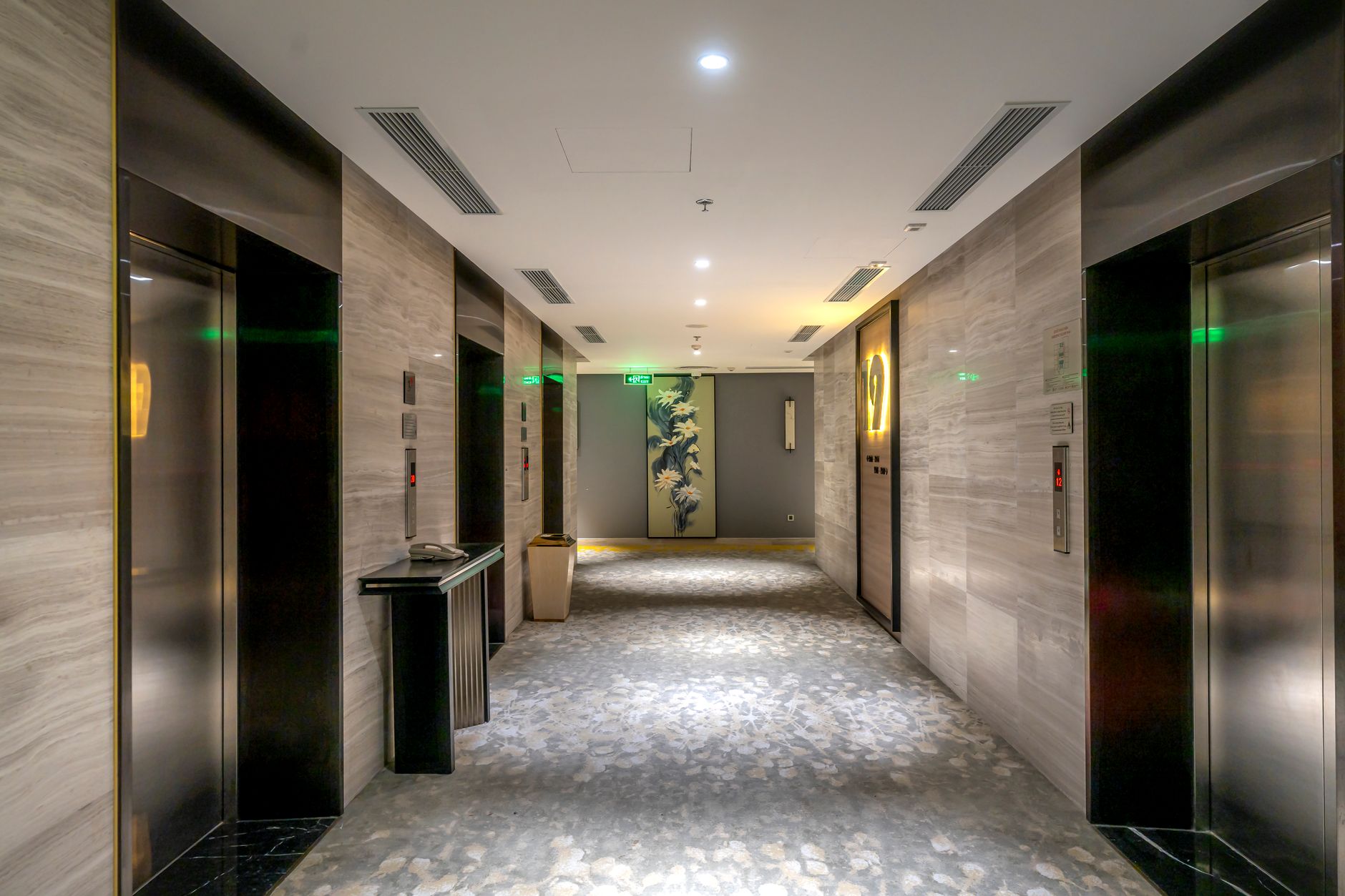
A market figure becomes useful once it turns into questions about your building. Walk the property before anyone opens a forecast, and write down what you see.
Answers to these questions define the job, and the job defines which robot class fits. A total spending figure cannot tell you whether a compact scrubber clears your corridors, or whether an elevator lobby queues at the hours you need coverage.
- How long are your main corridors, and how many doors open onto each one?
- Which elevator lobbies queue at check in and checkout, and at what hours?
- How many guest rooms share one service route, and when do housekeeping and delivery cross?
- Which public areas take the most traffic between midnight and 6 AM, and who covers them today?
- Where do spills and wet floors occur, and which floor surfaces need a scrubber rather than a vacuum?
Where night staffing gaps fit into the math
Cleaning forecasts matter most to operators whose overnight floors are already thin. An unfilled night shift never appears in a market report, yet it is the cost you can most directly measure.
Count the hours that went unfilled over a recent month, and note which tasks slipped first, such as corridor sweeping, lobby spills or guest room prep. A forecast cannot tell you whether those hours are worth covering, but your own logs can.
How a leased pilot tests the forecast on your floors
Service Robot Co. is a full service commercial robot integrator for US businesses. We are OEM neutral, so we select robots across manufacturers for the job, then finance, deploy, integrate, train and service every unit through a nationwide US engineer network. We lease robots only, on a three year lease, with one fixed lease payment quoted after a site assessment.
A forecast becomes useful when a single zone tests it. Our process starts with site assessment mapping of the corridors, elevator lobbies and service routes your questions identified, and robot lease options are reviewed once that assessment is complete. A pilot with one leased unit then shows what the robot covers and where it stops, before anyone decides whether to expand.
One partner for deployment, training and service means one number to call when a unit stops on a corridor at 3 AM. That matters more to a night manager than any headline market total.
Frequently asked questions
Want a robot working for you?
Tell us the job and the site. We will recommend the robot, quote the lease, and keep it serviced.
Sources
- Business Research Company hospitality robots summary (gii.tw)
- Global Info Research style hospitality robots summary (gii.tw)
- HTF Market Intelligence, global hospitality robots market
- Room service robots market report (MarketPublishers)
- Hotel cleaning robots market estimate (MarketResearch listing)
- Hotel cleaning robot market listing (Market Reports World)
- Front Desk Robotics press release, October 23, 2025 (GlobeNewswire)