
Key takeaways
- Compact robots can work at gates when they clean short, predictable windows between deplaning and boarding.
- Jet bridges should be limited to selected empty-floor segments, not active boarding paths.
- At the gate edge, debris pickup and FOD reporting matter as much as floor shine.
- Airport pilots live or die on coordination with turnaround teams, not on lab specs.
Can compact robots handle gate-area cleaning between flights?
Yes, if the job is defined tightly. Compact robots can clean gate holdrooms and selected jet bridge floor segments between deplaning and boarding, but only when the bridge is empty, the route is mapped for tight clearances, and the machine can be pulled back before preboarding starts. In airports, the right use case is short-cycle cleaning inside a live turn, not free roaming during passenger movement.
That usually means focusing on seating islands, queuing lanes after they clear, and the terminal side of the bridge rather than trying to own the whole gate complex. The robot handles repeatable debris pickup and quick scrubs. Human staff keep spill response, restroom resets, trash pulls, and every oddball event that breaks the pattern.
The pressure is real. According to TSA checkpoint travel numbers, the agency screened 3,009,812 people on May 23, 2025. According to the FAA's FY 2026 to 2046 Aerospace Forecast, U.S. carrier system passenger growth in 2026 is expected to be 2.4 percent. More passengers and tighter turns make the gate a good automation target, but only if the robot behaves like part of turnaround choreography.
Why is the gate harder than the concourse?
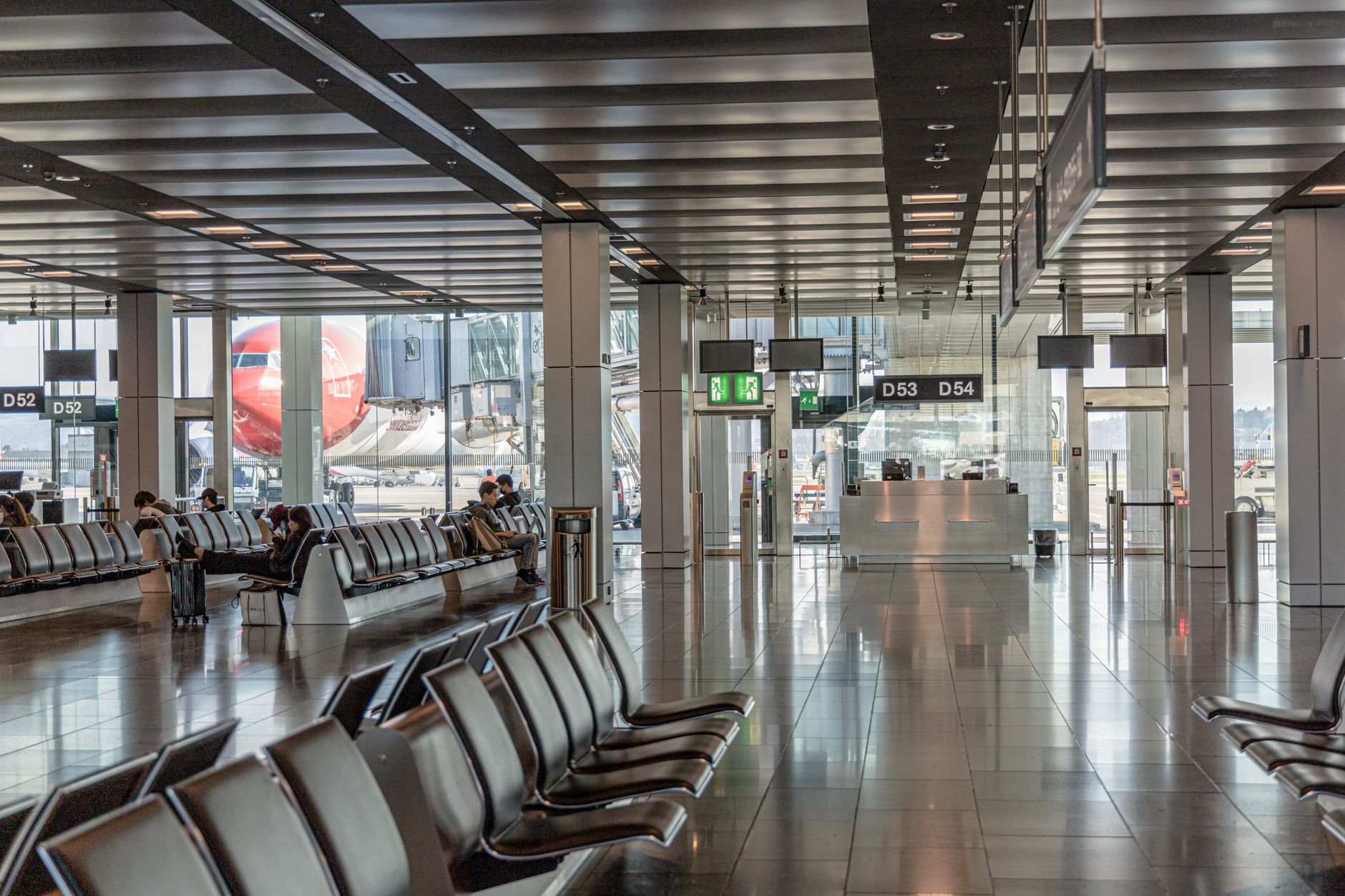
A gate is a burst environment. It sits half-empty, then fills fast with wheelie bags, strollers, mobility aids, gate checks, late passengers, and airline staff all converging on a narrow throat. A robot that looks fine in a broad terminal corridor can become awkward the moment a boarding lane forms.
The traffic volume behind those bursts is enormous. FAA preliminary CY2025 enplanement data show 51,459,786 boardings at Atlanta, 41,297,009 at Dallas-Fort Worth, and 40,680,735 at Chicago O'Hare. Even smaller gate errors repeat all day at that scale.
BTS also shows why a gate robot cannot steal minutes from the operation. In its 2026 on-time reporting directive, the agency lists gate congestion, slow boarding or seating, and stowing carry-on baggage among air-carrier delay causes. BTS data for June 2026 show 26.15 percent of reportable departures delayed nationally, with delayed flights averaging 73.59 minutes. Cleaning is there to reduce friction, not add one more source of it.
Where should the robot work, and where should it stay out?
The best holdroom routes are predictable strips of hard floor: around seating banks, along window lines, around queue stanchions once the line collapses, and in the open apron between podium and seating after passengers clear. These zones collect the same litter over and over and do not require the machine to guess its way through crowds.
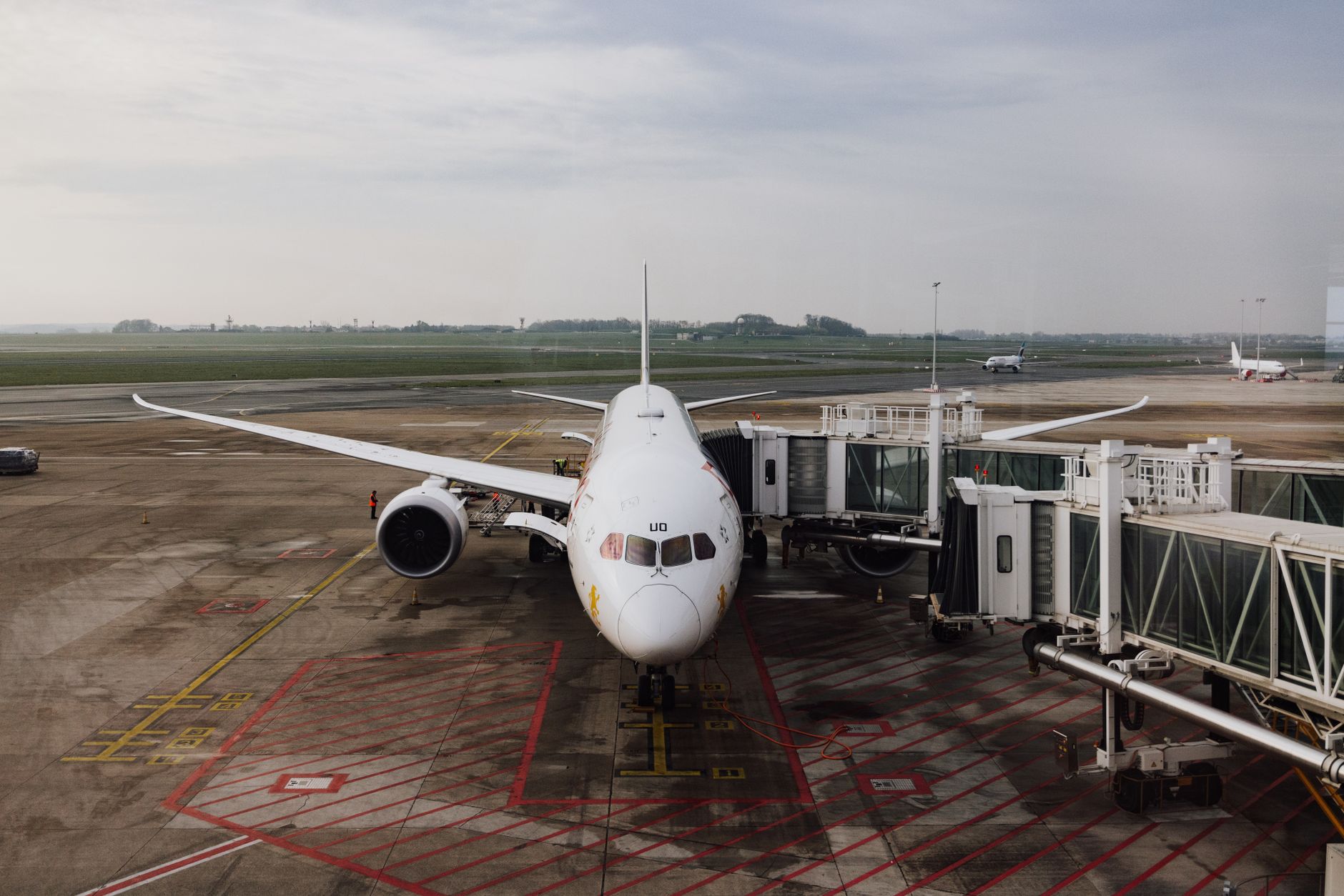
Jet bridges are different. The safe target is selected floor area, usually the terminal half of the bridge and only during an empty window. The aircraft threshold, the podium edge during active preboard, and any path occupied by wheelchairs, family boarding, or assist crews should stay human-controlled.
That is not just courtesy. The U.S. Department of Transportation says airlines must ensure an accessible route between the gate and the aircraft boarding location, and must provide prompt assistance for boarding and deplaning. If a robot cannot yield instantly and disappear to a pull-off point, it does not belong in that window.
What matters more than battery life? Clearance and recovery
Airport buyers usually start by asking about battery runtime. At the gate, geometry matters more. A useful machine needs a compact footprint, predictable turns, minimal side overhang, accurate docking, and sensors that do not panic when luggage briefly protrudes into the path.
Recovery matters just as much. If a stroller parks sideways, a wheelchair escort arrives early, or a catering cart blocks the bridge mouth, the robot needs a one-touch pause, an obvious manual release, and a short retreat path back to dock or wall. The failure mode cannot be a stranded machine parked across a boarding throat.
Floor mix matters too. Many holdrooms combine hard surface lanes with carpet islands, mats, bridge plates, and threshold lips. In those spaces, the winning program is often narrow and disciplined: let the robot own the repeatable hard-floor loop, and leave edge cases to people.
Why does FOD control matter at the gate edge?
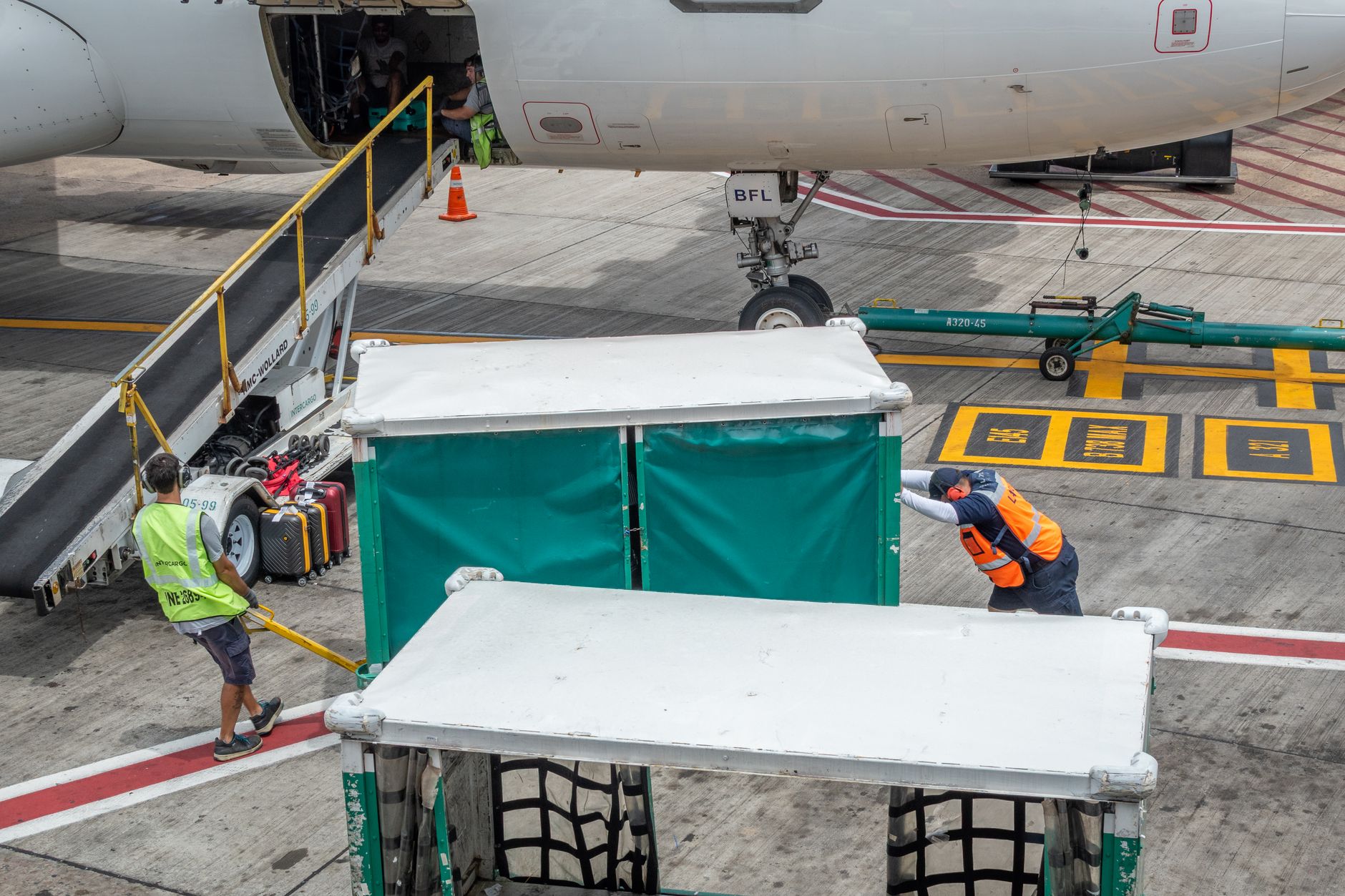
The closer cleaning gets to the airside end of the gate, the more the conversation shifts from appearance to discipline. FAA foreign object debris guidance frames the work in four parts: prevention, detection, removal, and evaluation. It also says debris and other contaminants in operating areas must be removed promptly and as completely as practicable.
A gate-area robot will not replace an airport FOD program, but it can become a useful sensor and first-pass collector inside it. Loose bag tags, plastic wrappers, paper, food debris, and stray fasteners all matter more when they migrate toward the bridge opening and the apron edge. According to FAA research, estimated annual global FOD costs can reach $22.7 billion.
That changes what good looks like. A shiny floor is nice. A clean threshold with repeatable debris reporting is better, because it feeds the same clean-as-you-go culture the FAA already expects around apron activity.
- Repeated metal fragments should trigger an operations review, not just another cleaning cycle.
- Debris logs should capture gate, time window, and object type so recurring sources show up.
- Jet bridge cleaning routes should bias toward debris pickup before gloss or finish.
How should the robot fit the airline turnaround?
The robot should be dispatched by a turn milestone, not by a janitorial clock. A typical release point is after the arriving passenger wave has cleared and any deplaning assistance has finished, with the machine recalled before preboarding begins. Through-flights and lightly used gates give the biggest margin. Hot turns with stacked wheelchairs may not.
Coordination needs one simple rule set shared by the gate lead, cleaning lead, and ramp side contacts. If boarding is called early, if a catering or maintenance event overruns, or if a mobility assist enters the bridge, the robot stays docked. No debate. The gate operation wins every time.
BTS defines gate departure time as the moment after passengers have loaded and doors are closed, and it notes that carriers must consider allotted turn time when assigning late-arriving-aircraft delay. That is the right mental model here. The cleaning slot has to live inside the turn clock, not alongside it.
What should an airport measure in a pilot?
Do not judge the program by square footage alone. Gate cleaning is a timing problem first. The better scorecard asks how often the robot completed its cycle before preboard, how often staff had to intervene, and how much debris was consistently removed from the same trouble spots.
Those numbers tell you more than a generic coverage percentage. A smaller robot that finishes almost every open window is worth more than a larger unit that cleans more square feet on paper but misses half the turns in practice.
- Completed cycles inside the scheduled window
- Manual assists or pull-offs per cycle
- Recurring debris locations, especially near bridge thresholds
- Minutes of manual follow-up after each run
- Any boarding interference, passenger complaints, or delayed-release incidents
How can Service Robot Co. structure the program?
Most airports do not need another one-brand pitch. They need a compact robot that fits the gate geometry, a dock that does not crowd egress, reporting that reaches supervisors, and a service plan that keeps the machine live. That is where Service Robot Co. fits. We are an OEM-neutral, full-service commercial robot integrator for U.S. businesses, and a vendor neutral robot integrator when a site needs the right fit rather than a house brand. We pick the right robot across manufacturers, then finance, deploy, integrate, train, and service it through a nationwide U.S. engineer network.
That gives operators room to stage the buy correctly. Some start with an airport cleaning robot lease, a commercial cleaning robot lease, or an autonomous floor scrubber lease during a commercial robot demo and robot pilot program. Others prefer purchase or lease once the route is proven. Service Robot Co. can support robot leasing monthly, robot leasing for business, monthly payment programs, and turnkey robot deployment with RoboCare™ service, so the buyer can test the operating fit before making a bigger fleet decision.
The real value is operational ownership. One partner. One number. One vendor for the whole lifecycle. A free site assessment can map gate families, jet bridge restrictions, dock placement, passenger surge timing, and service coverage before go-live. For airports that want no upfront capital or a month to month robot lease during evaluation, that full-lifecycle model keeps the pilot grounded in actual operations instead of hope.