
Key takeaways
- Schedule cleaning from live flight and lounge occupancy data, not a fixed nightly clock.
- Give robots small, releasable zones so attendants can reopen clean seating progressively.
- Attendants handle solids, unstable luggage and urgent spills before the robot performs routine floor care.
- Match brushes, moisture and chemistry to each premium finish before approving a route.
- Pilot during real departure banks and measure intervention, drying, coverage and guest disruption.
How can lounges clean between departure banks?
Airport lounges can run compact floor-care robots in the troughs between clustered departures instead of preserving every floor task for an overnight reset. The practical method is to divide the lounge into small operating zones, release each zone after its passengers leave, and finish before the next arrival wave occupies it.
That approach matters because airport demand is both heavy and uneven. The Transportation Security Administration reported that it screened nearly 10.4 million travelers over the four-day 2025 Labor Day weekend, 3.3 percent more than the comparable 2024 period. On August 29 alone, it screened 2,971,217 passengers. A lounge inside that traffic pattern rarely stays quiet for an entire shift, but it may offer several useful gaps.
A compact robot should therefore supplement continuous attendant work. It handles repeatable vacuuming, sweeping or damp scrubbing while attendants reset tables, remove service ware, address urgent spills and guide guests. The operating unit is not the whole lounge. It is the largest zone that can be cleaned, inspected and reopened before demand returns.
Build the schedule around passenger flow
Start with the departure board, historical lounge entries and local boarding behavior. A flight departure time is not the cleaning start time. Guests often leave in a surge when boarding begins, while delayed flights can hold a seating district well beyond the original plan.
The Port Authority of New York and New Jersey says in its 2025 airport customer-experience standards that cleaning should follow the passenger traffic mix and profile, avoid scheduled work during peak periods, and keep areas clean before, during and after peak activity. That principle produces a better robot schedule than a repeating timer.
Create a rolling zone-release board that the lounge lead can revise. A run begins only after an attendant confirms that the route, destination area and dock approach are usable. If a delay repopulates the zone, the attendant pauses or cancels it without derailing cleaning elsewhere.
- Track lounge entries, boarding calls, delays and buffet changeovers together.
- Separate predictable cleaning windows from conditional windows that require attendant approval.
- Prioritize visible traffic lanes and dining edges before low-use corners.
- Reserve a recovery window before the next bank instead of planning to the final possible minute.
How should a robot handle luggage and movable furniture?
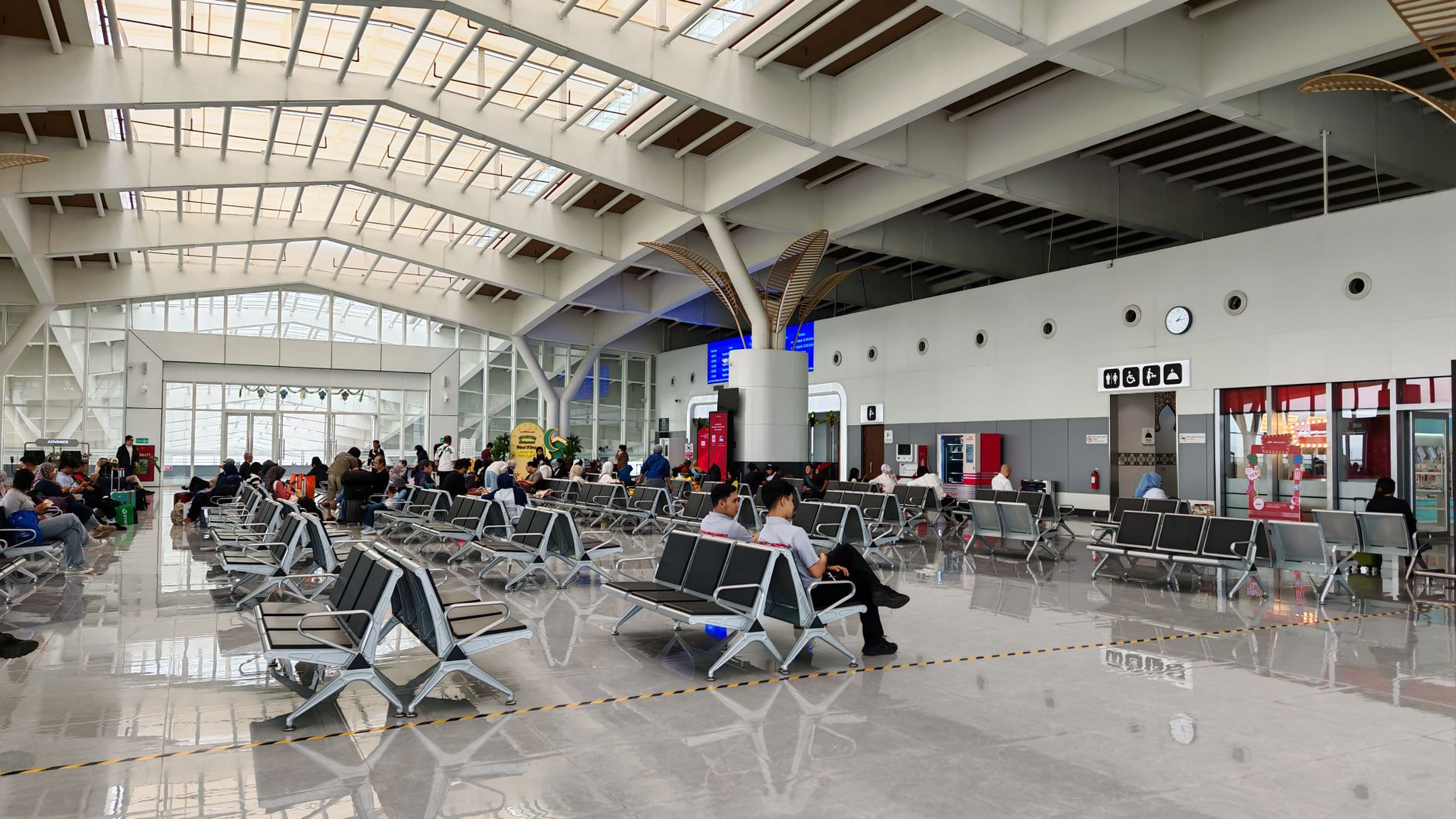
Luggage is the defining obstacle in a lounge. Roller bags change position constantly, straps trail into travel lanes, and charging cables can span the floor between seats. Chairs, children and service carts add motion that a static map cannot predict.
The route should favor broad circulation paths, perimeter passes and open dining zones. Dense seating pockets can remain attendant-cleaned until occupancy falls. During site assessment mapping, temporary no-go areas should cover queue lines, buffet approaches, family rooms and any seating cluster where bags routinely narrow the path.
Obstacle avoidance is not permission to squeeze through every available gap. The U.S. Access Board states that an accessible route generally needs 36 inches of continuous clear width, with only limited reductions to 32 inches. Treat that as a floor-plan constraint, not a robot target. A robot should never consume the clearance a passenger using a wheelchair, cane or walking aid needs.
Attendants should remove loose straps, cables, glassware and unstable bags before release. If the robot repeatedly meets the same luggage pattern, alter the route or furniture layout. Repeated intervention is operational evidence, not bad luck.
Food spills need a two-stage response
Buffets and beverage stations create soils that routine terminal floor scrubbing does not fully describe: coffee, milk, oil, fruit, crumbs, sauces and broken service ware. The first response belongs to a person. An attendant secures the area, removes solids and sharp objects, identifies the material and decides if a special sanitation procedure is required.
The robot can follow after the hazard has been reduced to compatible floor soil. This division prevents a scrub deck from spreading a thick spill or dragging debris through the lounge. It also keeps urgent cleanup immediate instead of waiting for the next scheduled route.
OSHA rule 1910.22 requires workplace walking surfaces to remain clean, orderly and, to the extent feasible, dry, and free from hazards including spills. The rule supports a clear handoff: attendants guard and contain the incident, then the floor-care process removes residue and leaves a verified dry route.
Do not use a routine robot cycle for vomit, blood, unidentified chemicals or an allergen event. Those incidents stay under the lounge operator's established safety and sanitation procedures. Automation earns trust by respecting those boundaries.
Protect premium finishes before automating them
Airport lounges often join stone, terrazzo, resilient flooring, carpet tile, wood-look surfaces and metal transitions within one route. The cleaning plan must specify the correct brush, pad, suction setting, liquid volume and approved chemistry for every zone. A single aggressive setting can turn a tidy run into dull stone, lifted carpet edges or visible swirl marks.
The Natural Stone Institute recommends neutral cleaner for natural stone and warns that acidic products can dull or etch calcareous material. Its guidance also notes that sand, dirt and grit are abrasive. That makes frequent dry-soil removal valuable, particularly near lounge entrances, while damp cleaning should follow the finish supplier's instructions.
For carpet spills, the Carpet and Rug Institute advises blotting instead of scrubbing, pretesting spot treatments in an inconspicuous area and removing cleaner residue thoroughly. A commercial carpet cleaning robot can cover routine lanes, but stain treatment remains a material-specific task.
The Environmental Protection Agency describes a pH range of 4 through 9.5 as closer to neutral when evaluating greener cleaning products. That is a purchasing screen, not blanket authorization. Flooring warranties, finish specifications and the robot's approved chemical list still govern the final choice.
What should lounge attendants control?
Attendants should own guest-facing judgment. They know when a boarding announcement has emptied a zone, when a delayed family is about to return, and when a beverage cart will cross the route. Give them a simple control for start, pause, resume, send to dock and request help.
The robot should own repetitive motion and run reporting. The attendant should not shadow it or repeatedly rescue it from known furniture traps. If that happens, the route design, operating window or machine choice is wrong.
Write the handoff into the shift routine. Before release, the attendant removes loose objects and confirms the zone. After completion, the attendant checks for moisture, missed spill residue and displaced furniture, then reopens the area. Remote triage can address technical alerts, while on-site dispatch handles faults that cannot be cleared safely by lounge staff.
Training should include delayed flights, fire alarms, blocked docks, abandoned bags and guest interference. The goal is calm coordination during irregular operations, not merely a successful demonstration in an empty lounge.
Pilot the operating model before choosing contract terms
A useful commercial robot pilot program runs during representative breakfast, midday and evening banks. Test hard-floor and carpet zones, realistic luggage density, buffet spills, furniture movement and the actual charging location. Try before you buy should mean testing the operating method, not watching a polished demo route.
Service Robot Co. acts as an OEM-neutral, full-service commercial robot integrator for U.S. businesses. The team can compare machines across manufacturers, conduct a free site assessment, handle site assessment mapping, arrange financing, lead robot deployment and integration, train lounge teams, and service units through a nationwide U.S. engineer network.
That one-vendor lifecycle is useful for an airport cleaning robot lease because machine selection, go-live support and robot maintenance service plans remain connected. Contract structures may include commercial cleaning robot leasing, a floor scrubber monthly lease, robot leasing for business or a leasing program. Confirm in writing if maintenance is included, how replacement is handled and what happens when flight disruptions erase a planned cleaning window.
Choose purchase or lease only after the pilot establishes route completion and staff workload. A Monthly lease or monthly payment program can reduce initial capital exposure, but contract flexibility does not rescue a poor site fit.
Measure cleanliness and disruption together
Square footage alone can flatter a weak deployment. Lounge operators need to know how much useful floor was cleaned between banks, how often attendants intervened, how long zones remained unavailable and if the finish passed inspection before guests returned.
Review results by zone and operating window. A route that performs well after the final departure may still fail during a midday trough filled with carry-ons. Likewise, a compact robot with lower theoretical large-facility coverage may produce more usable cleaning if it navigates the lounge with fewer pauses.
Use the pilot baseline to decide which work remains manual, which routes can run conditionally and which can become scheduled. Overnight floor care still has a place for restoration, extraction and detail work. The gain is that routine soil no longer accumulates all day while the lounge waits for that reset.
- Eligible floor area cleaned and accepted before the next bank.
- Interventions, pauses and route cancellations by cause.
- Spill response time and the share requiring manual specialty treatment.
- Dry-floor inspection failures and repeat passes.
- Attendant minutes spent preparing, rescuing and verifying each zone.
Frequently asked questions
Sources
- TSA 2025 Labor Day passenger record
- Port Authority airport customer experience standards
- U.S. Access Board accessible-route guidance
- U.S. Access Board floor-surface guidance
- OSHA walking-working surface requirements
- Natural Stone Institute care guidance
- Carpet and Rug Institute care guide
- EPA greener cleaning product guidance