
Key takeaways
- Use robots for repeatable floor cleaning, not food-contact sanitation.
- Run primary routes when food and clean service items are protected.
- Grease, tight edges, drains, mats, and active spills still require manual attention.
- Document routes, chemicals, wastewater, and corrective actions in the school food-safety program.
Where can a floor robot work safely?
An autonomous floor scrubber can clean school cafeteria dining floors and selected back-of-house lanes, provided its route never compromises food safety. The practical boundary is straightforward: the robot handles open floor area after loose debris is removed, while trained employees retain food-contact sanitation, spill response, detailed edge work, and any task near exposed food.
The FDA Food Code says primary cleaning should occur when the least amount of food is exposed, such as after closing. It also calls for dustless floor-cleaning methods. A controlled wet-scrubbing route can fit that framework, but it should not run beneath active preparation, beside uncovered serving pans, or through warewashing traffic carrying clean utensils.
The Food Code is a model adopted and sometimes modified by state and local authorities. A district should therefore treat local health-code requirements and its approved food-safety program as the controlling documents, with robotic floor care written into them as a physical-facility cleaning procedure.
Draw the food-safety boundary before mapping routes
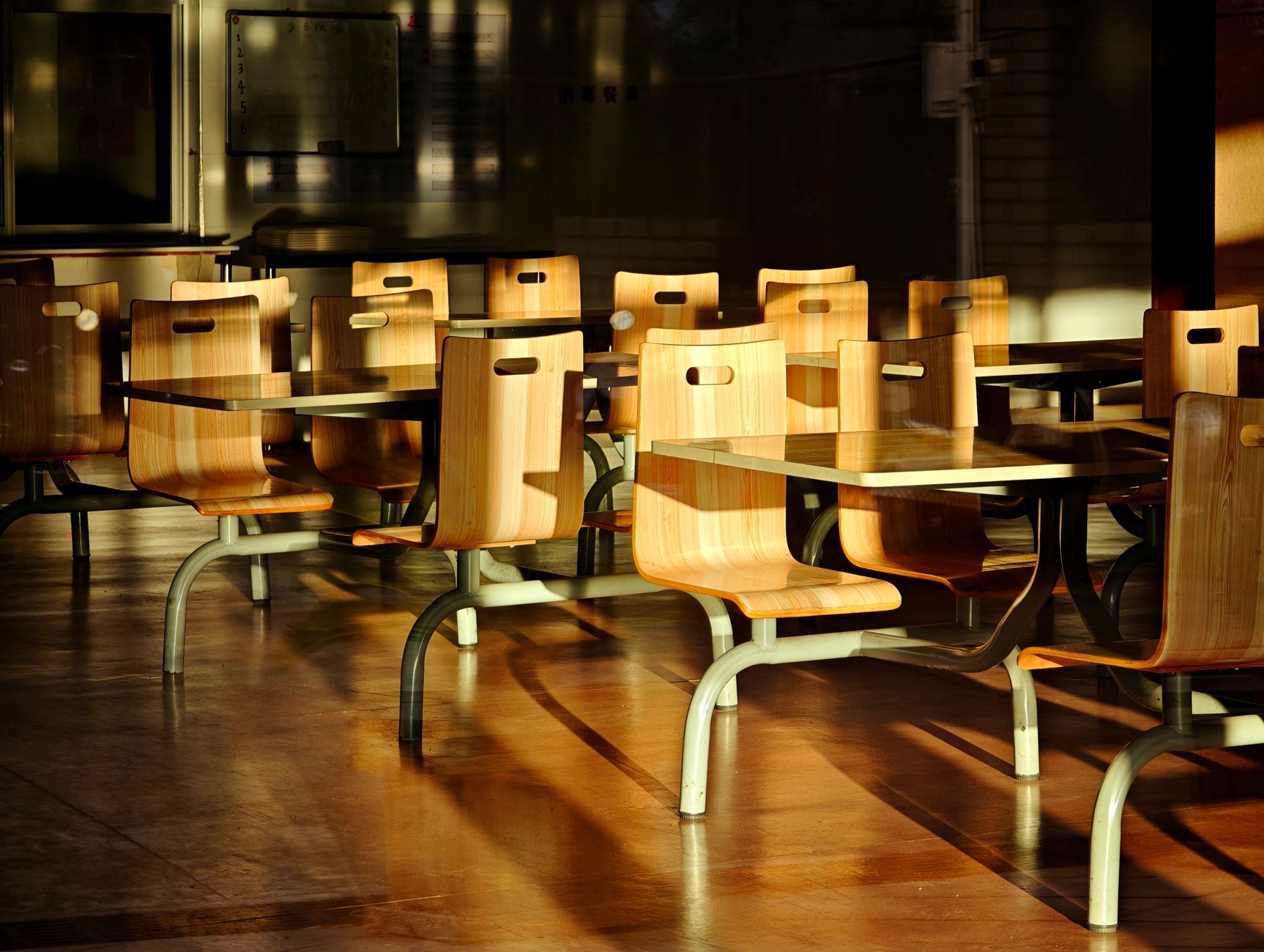
Divide the cafeteria into operational zones before site assessment mapping begins. The dining room is usually the easiest starting point because it offers broad floor area after tables are cleared. The serving line is more sensitive. Production, warewashing, dry storage, receiving, and waste routes each carry different contamination risks.
A back-of-house route should exclude the footprints around exposed ingredients, clean racks, handwashing sinks, food-preparation sinks, and sanitation stations. If a machine serves both dining and kitchen areas, the written procedure should specify route order, pad and squeegee changes, tank cleaning, and inspection between zones. Dedicated tools or separate units may be the cleaner choice where raw-food soil or heavy grease is present.
According to the USDA Food and Nutrition Service, a school food authority's HACCP-based program must cover every location where food is stored, prepared, or served. Participating schools also need at least two food-safety inspections each school year. Robot routes, chemical controls, wastewater disposal, verification, and corrective action belong in that documented program.
What does cafeteria grease demand from a robot?
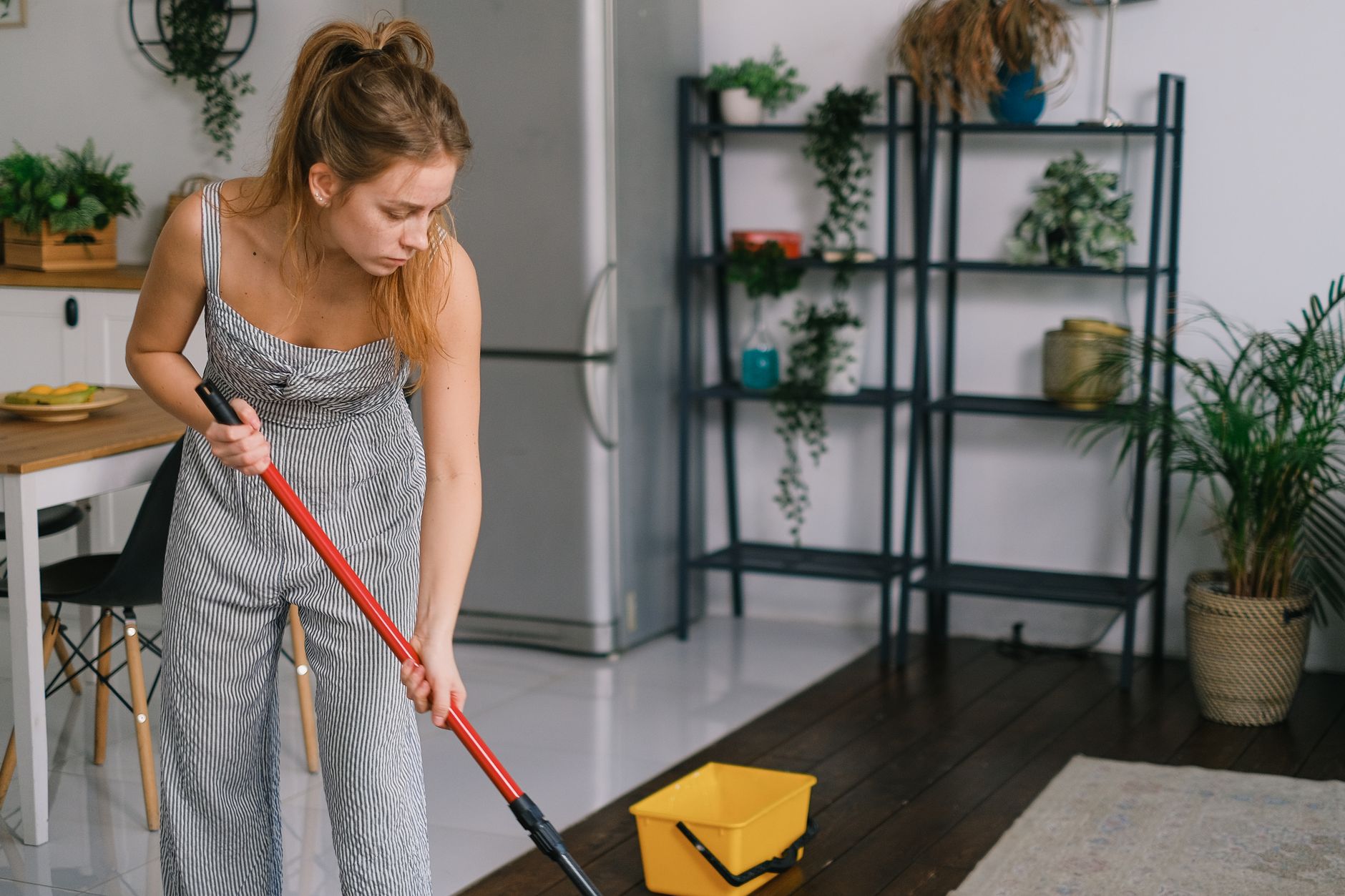
Grease is not ordinary tracked soil. It binds fine debris to tile, settles into grout, coats squeegees, and can leave a slick film when the cleaning mixture, brush pressure, pad, or recovery system is poorly matched to the floor. A successful autonomous floor scrubber lease trial must use the actual kitchen soil, not a polished demonstration lane.
Employees should remove food scraps, packaging, utensils, and other loose debris before the route. The robot can then apply an approved degreaser, agitate the surface, and recover the dirty liquid. Heavily loaded lanes may need pretreatment or a second pass, but only when the chemical label, flooring guidance, and equipment instructions permit it.
Manual staff still own fryer splashes, pooled oil, abrupt spills, floor-drain rims, grout defects, corners, wall junctions, and spaces beneath fixed equipment. Inspect the recovered path for residue and confirm that the squeegee is not redepositing grease. A completed route is not the same thing as a clean, slip-resistant floor.
Tables and chairs determine usable coverage
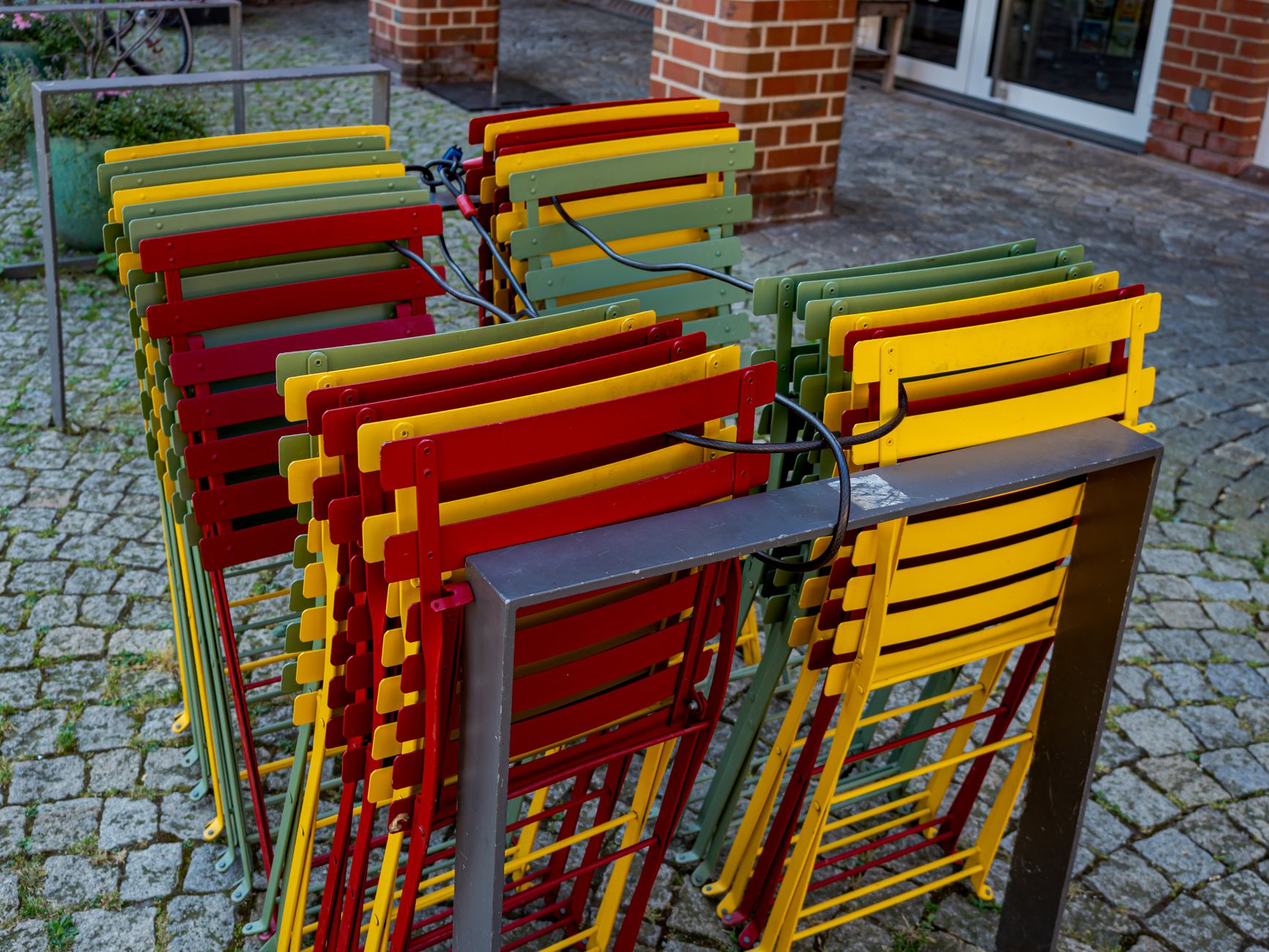
A dining room may look open until chair legs, folding tables, trash cans, tray-return stations, and backpacks fragment the route. Robots are most productive when staff create repeatable lanes. Clear trash first, wipe tables, consolidate movable furniture according to the fire and accessibility plan, and remove food debris that could clog the recovery system.
Avoid designing a route that chases every narrow pocket between chair legs. Give the robot the large central field and predictable perimeter passes, then assign employees the tight islands and table bases. This division preserves large facility coverage without pretending the machine reaches every square inch.
Sequence matters. Table cleaning should happen before the main floor pass so crumbs and drips do not land on a finished surface. After the robot runs, staff can restore furniture and inspect for wet patches, missed soil, or objects moved into the travel path.
How should routes fit breakfast and lunch service?
School kitchens work in compressed waves. Breakfast cleanup may overlap lunch preparation, and the last lunch group may be followed quickly by after-school meals. Treat each area as its own scheduling window instead of launching one route through the entire cafeteria.
The dining-room robot can work after students leave and tables are cleared, even while separated kitchen preparation continues. The serving line should wait until food is removed or fully protected, utensils are secured, and employees are no longer crossing the lane. Kitchen routes fit best after production cleanup and before the room is reset with clean equipment.
During service, active spills remain a human job. An employee can isolate the hazard, remove the spill, dry the walking surface, and reopen it promptly. Sending a robot across student traffic to address a fresh milk, oil, or food spill can expand the affected area and delay the immediate response OSHA expects for hazardous walking conditions.
Route calendars should also account for deliveries, waste removal, sports events, and summer meal programs. Overnight floor care is valuable only when charging, filling, draining, and inspection duties fit the custodial and nutrition teams' real handoff.
Chemical control is part of the deployment
A floor cleaner, food-contact sanitizer, and disinfectant are not interchangeable. EPA says antimicrobial claims such as sanitizing or disinfecting generally place a product under pesticide rules. If such a product is used, its label controls the approved surface, concentration, application method, contact time, rinse direction, and frequency.
EPA guidance for food-contact sanitizer labels calls for gross-soil removal, detergent washing, a potable-water rinse, stated dilution, complete wetting, and at least one minute of contact. That sequence demonstrates why a robotic floor pass cannot replace sanitation of tables, utensils, counters, or equipment.
For routine floor care, select a low-foam product compatible with the floor, seals, recovery system, and soil. EPA reports that nearly 2,000 products qualify for its Safer Choice label, including products intended for schools, floor care, and degreasing. Certification does not override machine instructions or local food-code requirements.
OSHA requires a written hazard-communication program when hazardous chemicals are present, along with labels, accessible Safety Data Sheets, and employee training. Staff may also need protective equipment while filling or draining tanks. Recovery water belongs in the approved service sink or curbed cleaning facility, never a food-preparation sink, hand sink, warewashing machine, toilet, or storm drain.
Sanitation work that must remain manual
Robotic floor care is physical-facility cleaning. It does not clean, rinse, and sanitize food-contact equipment. FDA's Food Code generally requires surfaces used with time and temperature controlled food to be cleaned at least every four hours, subject to stated exceptions. Floor-cleaning frequency instead follows soil conditions and the need to keep the facility clean.
The separation is operationally important. FDA specifies at least 30 seconds for manual hot-water sanitizing and a utensil-surface temperature of 160 degrees Fahrenheit for mechanical hot-water sanitization. Those controls require suitable warewashing equipment, verification, and trained employees, not a floor scrubber.
Bodily-fluid events, pest evidence, drain backups, and suspected contamination also trigger distinct procedures. The FDA's 2024 Food Code Supplement addresses disinfection when ordinary sanitizers do not control the pathogen of concern. Employees must isolate the area, use the approved incident protocol, follow the disinfectant label, and document corrective action.
- Tables, serving counters, utensils, and food-contact equipment
- Corners, grout lines, floor drains, mats, and spaces under fixed equipment
- Oil pools, dropped food, broken containers, and spills during service
- Bodily-fluid cleanup and other pathogen-specific disinfection
- Robot tanks, brushes, pads, squeegees, docks, and wastewater handling
Build the program around the floor, not a catalog
A credible commercial robot pilot program begins with soil tests, route timing, doorway and clearance checks, drainage review, chemical compatibility, and observation during real meal transitions. Track completed coverage, recovered liquid, residue, interventions, missed edges, wet-floor findings, and the labor still required before and after each run.
The procurement model should follow the district's risk tolerance. A commercial cleaning robot lease, floor scrubber monthly lease, purchase, or leasing structure can allocate capital and service obligations differently. Compare RoboCare™ service terms, consumables, loaner arrangements, remote triage, on-site dispatch, training, and end-of-term conditions alongside machine performance.
Service Robot Co. acts as an OEM-neutral, full-service commercial robot integrator for US organizations. The team selects the robot that fits the floor across manufacturers, then finances, deploys, integrates, trains, and services each unit through a nationwide US engineer network. For a district evaluating school cleaning robot leasing across several campuses, that provides one vendor for the full lifecycle and one accountable service path.
The right result is deliberately limited. Robots take the repetitive open-floor passes. Nutrition and custodial employees keep authority over food protection, sanitation, inspection, incident response, and every condition the machine cannot safely resolve.