
Key takeaways
- Robots make rooftop HVAC rounds more repeatable, but technicians still diagnose faults and perform repairs.
- Every image should be tied to an asset, viewpoint, timestamp, condition code, and maintenance threshold.
- Weather limits must cover both aircraft performance and the hazards facing people working on the roof.
- High-quality inspection data should create a reviewable work-order draft, not disappear into a folder of unlabeled images.
- A pilot should prove defect visibility, route completion, and work-order quality before a fleet is purchased.
What can a rooftop inspection robot actually find?
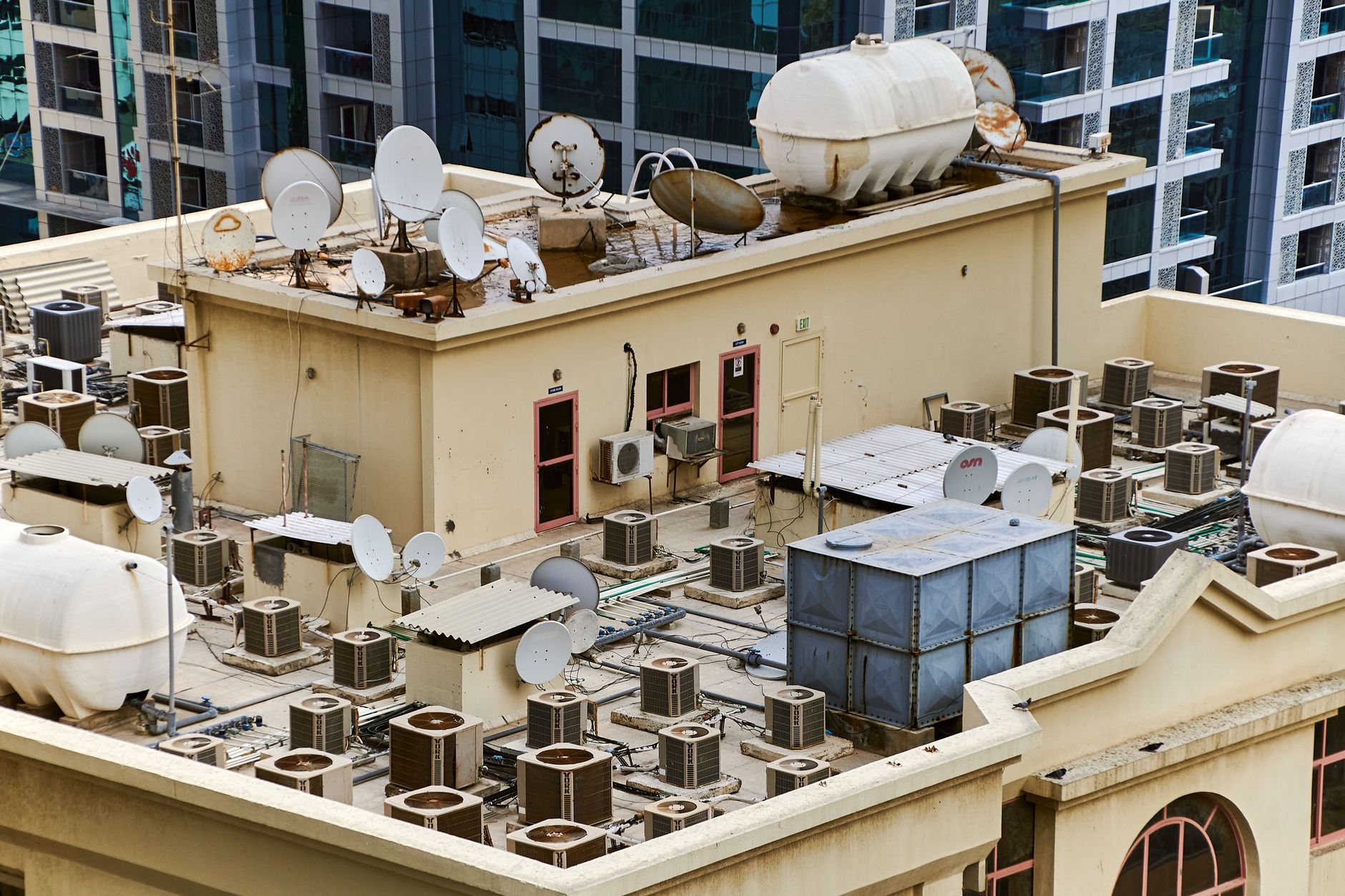
Inspection robots and drones can improve preventive HVAC rounds by collecting consistent visual evidence from every rooftop unit. A well-designed route can document visible standing water, obstructed drain outlets, overflow staining, pan corrosion, damaged coil fins, debris-loaded coil faces, cabinet deterioration, and vegetation or trash around condensate discharge points.
The central advantage is repeatability. Instead of relying on scattered phone photos and handwritten notes, the facility receives an asset-by-asset record that can be compared across visits. Emerging rust, recurring water, and progressive coil fouling become visible trends rather than isolated observations.
Robots do not replace qualified HVAC technicians. A drone cannot open a latched cabinet, clear a drain, test a float switch, measure refrigerant conditions, or determine why a pan is overflowing. It performs the observation layer, identifies exceptions, and sends technicians to the right unit with useful evidence.
- Standing water visible in an open pan, secondary pan, or cabinet opening
- Algae, sediment, leaves, roofing granules, or insect debris near a drain connection
- Rust bloom, pitting, failed coatings, seams, and water trails around the pan or cabinet
- Bent fins, matted dirt, impact damage, and vegetation against an exposed coil face
- Disconnected, sagging, crushed, or visibly obstructed condensate piping
- Recurring wet areas around the curb, roof membrane, or discharge point
Why make drain pans part of preventive rounds?
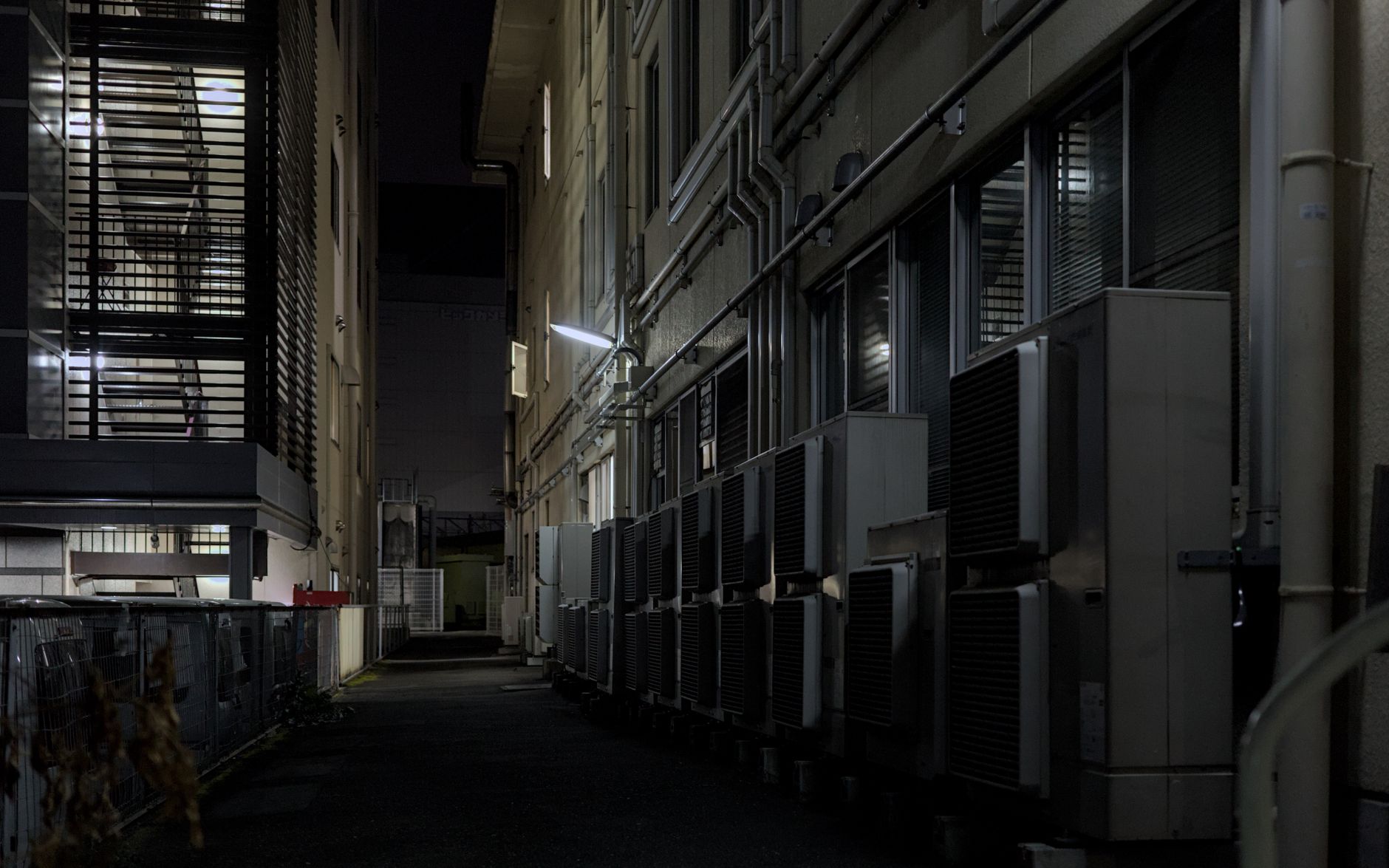
Condensate problems are quiet until they are expensive. The U.S. Environmental Protection Agency says substantial standing water or debris in a condensate pan requires immediate attention. Its moisture-control guidance also calls for regular inspection of coils, pans, and condensate lines for cleanliness and correct drainage.
Standing water is evidence, not a diagnosis. It can point to a blocked line, poor pan slope, a dry or incorrectly configured trap, biological buildup, a corroded pan, or operating conditions that exceed the drainage path. Images should preserve the clue while the work order assigns a technician to verify the cause.
The Pacific Northwest National Laboratory recommends inspecting coils and cleaning them as needed, plus checking the drain and pan and flushing or treating them when required. ENERGY STAR likewise warns that a plugged condensate drain can cause water damage and affect indoor humidity. These are ordinary maintenance tasks, but missed rounds allow small defects to mature unnoticed.
Drone, walking robot, or technician?
Drones cover broad, open roofs quickly and can look over parapets, pipe runs, and crowded mechanical zones without sending a person to every viewpoint. They are especially useful for exterior coil faces, cabinet panels, drain outlets, roof staining, and post-storm reconnaissance. Propeller wash, glare, shadows, and tight clearances can still obscure small defects.
A roof-capable walking or wheeled inspection robot can pause close to a drain, hold a camera at a controlled distance, and revisit the same route. It may also carry lighting, thermal sensing, or a zoom camera without hovering. Its limitations include curbs, loose ballast, cables, deep puddles, steep transitions, fragile membranes, and uncertain load-bearing surfaces.
Technicians remain essential whenever access panels must be opened, electrical isolation is required, or a finding needs touch, measurement, cleaning, or repair. The best operating model is layered: routine robotic observation, human review of exceptions, and targeted service by qualified personnel.
For a large roof, the choice should follow access geometry and evidence requirements. An inspection robot lease or commercial robot leasing can support a defined pilot before ownership. Service Robot Co. evaluates equipment across manufacturers, then handles financing, deployment, integration, training, and field service through a nationwide U.S. engineer network.
How should repeatable imaging be designed?
More photographs do not automatically create a better inspection. Each unit needs an asset ID and a prescribed image set. The robot should approach from the same direction, stop at approximately the same standoff distance, use the same camera orientation, and capture the same components on every round.
Start with a baseline after known maintenance. Record a context image of the entire unit, then closer views of the pan or access opening, drain connection, discharge point, exposed coil faces, cabinet seams, and surrounding membrane. Where safe and technically appropriate, a qualified person can open designated panels before the robot begins its route.
Control the variables that create false change. Fixed exposure settings may help under stable conditions, while harsh sunlight may require scheduled routes or supplemental lighting. Keep original files, timestamps, camera settings, route position, and inspection status. Do not rely only on compressed images pasted into a report.
The comparison process should separate persistent conditions from new ones. A rust patch that remains unchanged may stay under observation. A growing waterline, spreading corrosion, or newly blocked outlet should cross a defined maintenance threshold. Human reviewers need side-by-side images, not an unexplained risk score.
Weather is an operating limit, not a footnote
Rooftop weather can invalidate data before it grounds the robot. Rain may make every drain area appear active. Morning dew can resemble leakage. Low sun produces glare inside shallow pans, while deep shadows hide corrosion. Wind can disturb a hovering camera and lift debris into coils or propellers.
Set written limits for sustained wind, gusts, precipitation, lightning, visibility, surface temperature, and roof wetness using the selected equipment's operating manual and the site's safety program. A mission should be postponed when conditions exceed any limit. The flight crew also needs a defined landing response for rapid weather changes.
For commercial drone work, current Federal Aviation Administration Part 107 guidance covers aircraft weighing less than 55 pounds, requires at least 3 miles of visibility, and generally caps operations at 400 feet above ground, with a structure-related allowance. The aircraft must remain within unaided visual line of sight unless an applicable waiver permits another operation.
A low rooftop flight can still require controlled-airspace authorization. The FAA says pilots planning to fly below 400 feet in controlled airspace around airports must obtain authorization, often through its Low Altitude Authorization and Notification Capability. Operational planning must also account for temporary flight restrictions, nearby heliports, people, vehicles, and property boundaries.
How do robots reduce roof exposure safely?
Removing unnecessary walking reduces exposure, but it does not make the roof safe by itself. Someone may still need to transport the robot, open a hatch, install markers, prepare equipment panels, maintain visual contact, or recover a disabled unit. The robot route and the human route therefore need separate hazard reviews.
Under OSHA's general-industry rule for low-slope roofs, work less than 6 feet from an edge requires conventional fall protection. From 6 feet to less than 15 feet, specified protection is still required, although a designated area may be used for work that is both infrequent and temporary. At 15 feet or more, limited exceptions apply only under the rule's stated conditions and with an enforced work rule.
Map roof edges, skylights, hatches, unguarded openings, fragile surfaces, guy wires, piping, lightning protection, loose ballast, and areas where the membrane cannot accept concentrated loads. Create geofenced no-go zones for the robot and physical controls for people. Never treat a skylight as a safe walking surface simply because its glazing looks substantial.
Recovery planning deserves the same attention as the normal route. Define who may retrieve a stalled robot, how HVAC equipment will be shut down if needed, and when recovery waits for safer conditions. A robot should reduce roof entries, not create an improvised rescue task beside an edge.
From an image to a defensible work order

The inspection has operational value only when findings enter the maintenance system. Every exception should carry the rooftop unit ID, date and time, route point, defect category, severity, current image, comparison image, and a short factual observation. The record should distinguish observed evidence from suspected cause.
A useful severity model ties conditions to actions. Visible overflow or water approaching electrical components may require immediate review. Standing water without active overflow may trigger prompt drain and pan inspection. Light surface corrosion can enter a monitored repair queue, while a visibly perforated pan needs direct technician assessment.
Software can draft a computerized maintenance management system ticket, but a responsible person should validate the asset match and priority before dispatch. The completed work order should capture the confirmed cause, repair, parts used, and after-service image. That closes the loop and improves future classification.
Avoid vague tickets such as check rooftop unit. A stronger record states that standing water was observed at a named unit, identifies the visible drain condition, attaches comparable views, and specifies the required technical check. This gives the technician a starting point without pretending that imagery completed the diagnosis.
How should a commercial roof pilot be measured?
Begin with a bounded section of roof containing several unit types, access conditions, and known defects. Mark every required viewpoint, then run the same route repeatedly under acceptable conditions. Qualified HVAC personnel should inspect the same assets so the team can measure what the robot detected, missed, or classified incorrectly.
Score the pilot on route completion, usable-image rate, asset-identification accuracy, detection of known conditions, reviewer time, false alerts, mission interruptions, and the percentage of findings that become correctly routed work orders. Also test a lost connection, low battery, blocked path, sudden gust response, and recovery procedure.
Procurement should follow proven workflow fit. A robot pilot program can lead to a purchase, leasing arrangement, or monthly payment program, depending on roof count and inspection frequency. Service Robot Co. acts as one vendor across that lifecycle, including site assessment mapping, robot deployment and integration, training, remote triage, maintenance, and on-site dispatch.
OEM-neutral selection matters on roofs because no single platform fits every membrane, parapet, mechanical layout, and airspace constraint. The right result may be a drone at one property, a ground platform at another, and technician-led imaging at a third. Standardized records can still feed one maintenance process.
Frequently asked questions
Sources
- FAA Part 107 operating requirements
- FAA controlled-airspace authorization guidance
- FAA remote pilot certification requirements
- OSHA low-slope roof fall-protection standard
- EPA moisture-control guidance
- EPA HVAC cleanliness and condensate guidance
- PNNL unitary HVAC maintenance guidance
- ENERGY STAR HVAC maintenance checklist