Key takeaways
- Cannabis distribution security is less about lobby theater and more about documented control over inventory, access, and nighttime exceptions.
- Patrol robots fit best as a force multiplier for yard checks, fence-line sweeps, dock verification, and alarm follow-up between human rounds.
- State rules make video retention, traceability, and transfer records central buying criteria, so evidence quality matters as much as detection.
- The strongest deployments tie robot patrols to cameras, access control, and incident workflows instead of treating the robot as a standalone gadget.
Where do security robots actually fit in a cannabis distribution center?
They fit in the gaps between fixed cameras and human guards. In a cannabis distribution or storage site, the hard problem is not simply showing a visible security presence. It is maintaining documented control over inventory corridors, loading zones, limited-access rooms, and perimeter conditions during the hours when fewer people are on site and every unexplained movement needs a record.
That is why an autonomous patrol robot can make sense here even when it would be harder to justify in a standard office property. Cannabis facilities operate under a tighter chain of custody, heavier surveillance expectations, and more scrutiny around storage and transfer records. The robot’s job is to extend coverage, produce time-stamped evidence, and escalate anomalies fast enough for a human team to act.
Used well, patrol robots do not replace the licensed guard force or the site’s existing camera estate. They handle repeatable routes, verify that gates and dock doors are in the expected state, watch for after-hours activity, and create a searchable audit trail that is often more useful to compliance staff than a generic deterrence story.
- Perimeter patrols along fences, gates, and trailer lines
- After-hours dock and bay-door verification
- Yard sweeps during shift changes and low-staff periods
- Alarm follow-up before dispatching a human deeper into the site
- Documented patrol logs for compliance and investigation support
Why is this buy decision different from a normal warehouse security project?
Because regulated inventory changes the risk model. A conventional warehouse may care most about shrink, trespass, and general loss prevention. A cannabis distributor also has to prove control. According to the California Department of Cannabis Control, distributors are responsible for testing flow, quality assurance steps, and transport controls before goods move to retail. That makes security evidence part of operations, not just a background function.
The compliance burden is also more explicit. New York’s Office of Cannabis Management says every licensee must maintain security, tracking, record keeping, record retention, and surveillance systems across acquiring, possessing, selling, delivering, transporting, testing, and distributing cannabis. That language should shape the robot conversation immediately. Buyers are not only asking what the robot detects. They are asking what the deployment documents, how quickly footage can be retrieved, and how well patrol events line up with inventory and transfer records.
In practice, this means a cannabis site often values disciplined, repeatable coverage over flashy interactions. Public-facing deterrence still matters, especially around a fence line or employee parking area, but the heavier value is in visibility where inventory changes hands and where an incident later has to be reconstructed.
What do current regulations tell us about the evidence standard?

They tell us the standard is high. California guidance for cannabis premises says surveillance must cover areas where goods are weighed, packed, stored, loaded, unloaded, prepared, or moved within the licensed premises. The same guidance says entrances and exits must be recorded from indoor and outdoor vantage points that clearly capture activity within 20 feet. That is not casual security language. It is an instruction to maintain usable visual evidence around operational choke points.
California also requires recordings to run 24 hours a day at a minimum of 15 frames per second and to be kept for at least 90 days, according to the Department of Cannabis Control’s manufacturer self-inspection checklist. For distributor sampling, the department separately requires video retention for 90 calendar days. In Colorado, the current marijuana rules require surveillance recordings to be kept for a minimum of 30 days. The exact retention period varies by state, but the larger point does not. Recorded evidence is part of the operating model.
A patrol robot should therefore be evaluated like an evidence-producing mobile sensor, not a novelty asset. Buyers should ask how patrol footage is time-stamped, how quickly clips can be exported, how robot events sync with fixed-camera footage, and how long logs and media are retained. If those answers are weak, the robot may still move around the site, but it will not help much when compliance, operations, or law enforcement need a clean timeline.
Which use cases create the strongest fit?
The best fit is where routes are repetitive, visibility is uneven after hours, and a missed exception has outsized consequences. Outdoor perimeters are one example. A robot can patrol fence runs, gates, employee entrances, and trailer parking on a scheduled cadence, then flag a propped gate, a vehicle where none should be, or movement in a zone that should be empty after cutoff.
The second fit is the dock edge. Distribution centers live and die by what moves through dock doors. A patrol robot can verify door status, scan for lingering pallets or staged product in the wrong zone, and provide an independent time-stamped pass through the area between human patrols. That matters when the question is not only whether something happened, but exactly when a condition changed.
The third fit is alarm adjudication. If a sensor trips in a side yard at 2:17 a.m., sending a robot first can give the security team immediate visual context without pulling a human off another post. This is especially useful on larger footprints where response time inside the property matters almost as much as the initial alert.
Indoor use is possible too, but buyers should stay disciplined. Patrol robots are strongest in wide, repeatable circulation paths and semi-structured environments. Tight storage aisles, busy forklift lanes, and areas with constant obstruction are often better served by fixed coverage and human procedure.
- Fence-line verification during closed hours
- Gate-open and gate-tailgating checks
- Dock-door status patrols
- Trailer row and yard-lane sweeps
- Alarm verification before guard dispatch
- Exception logging around limited-access transitions
How does cargo-theft pressure change the case?
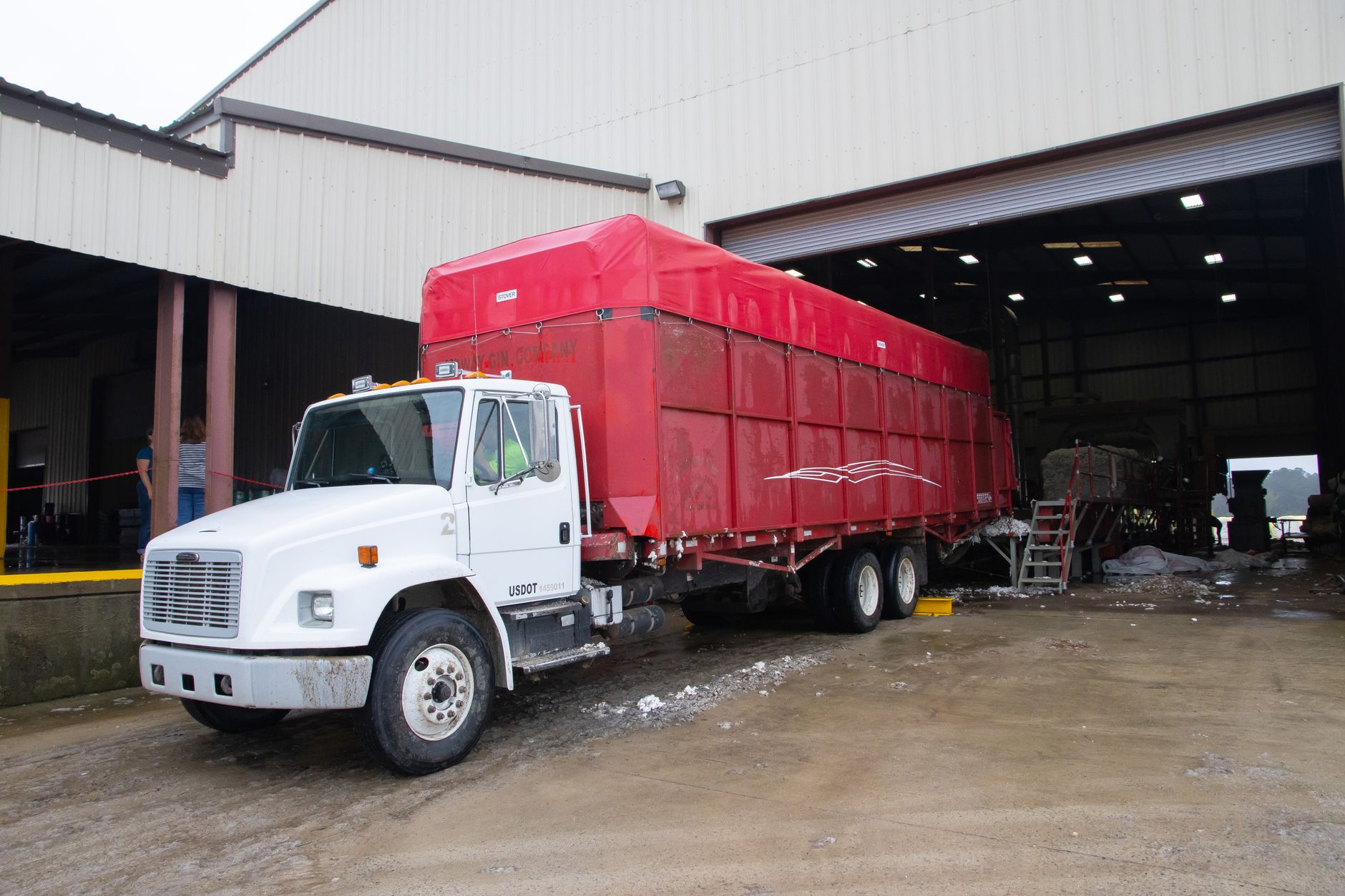
It raises the value of after-hours visibility. The FBI says cargo theft includes theft from warehouses, freight distribution facilities, and trailers, and its June 8, 2026 warning to the transportation and logistics sector reported estimated cargo-theft losses of nearly $725 million in the United States and Canada during 2025, up 60 percent from 2024, while confirmed incidents rose 18 percent. Cannabis distribution centers are not generic freight sites, but they do share the same exposure to yards, docks, staged loads, and deceptive pickup tactics.
California’s current rulemaking record adds another useful point. In its 2026 track-and-trace rulemaking materials, the Department of Cannabis Control described how incomplete transfers and fraudulent manifest practices can be used to divert cannabis into the illicit market under the appearance of compliance. That is exactly why security at a regulated logistics site cannot stop at camera coverage alone. The site needs cross-checks between physical movement, transfer records, and who was where when.
A robot does not solve manifest fraud by itself. What it can do is narrow blind time, create another timestamped layer of observation around transfer windows, and shorten the path from anomaly to review. That is operationally valuable in any cargo environment, and even more so where inventory is heavily regulated and diversion risk carries licensing consequences.
What should buyers demand from the deployment, not just the robot?
Start with integration discipline. A good patrol program ties robot events into the site’s camera system, access control, alerting rules, and incident response process. If the robot spots activity near a gate, the useful output is not a vague notice. It is a timestamp, a clip, the gate state, and a clean handoff to the person responsible for investigation.
Next, press on service coverage. Security patrol robots only help if they are available when the site is closed, the weather turns, or a sensor starts acting up on a Friday night. This is one reason many operators prefer a full-service model such as security patrol robot rental or robot as a service, especially when maintenance included, remote triage, and on-site dispatch matter more than owning hardware outright.
This is also where Service Robot Co. fits naturally. Cannabis distributors usually do not need one more vendor to coordinate. They need a vendor neutral robot integrator that can evaluate the site, pick the right platform across manufacturers, handle robot deployment and integration, train staff, and back the fleet with a nationwide U.S. engineer network. In a regulated site, one partner and one number is not a slogan. It is risk control.
Buying structure matters too. Some operators want commercial robot rental, robot leasing for business, or lease rental or sale options because they are expanding, relocating, or proving the workflow first. A commercial robot demo, pilot, or try before you buy approach is often the cleanest way to confirm route reliability, evidence quality, and guard-team adoption before scaling.
How should a site measure success after go-live?
Start with coverage and response, not novelty metrics. Measure how many patrol miles or route completions happen during the hours that previously had weaker human coverage. Measure how quickly the security team receives usable context after an alert. Measure how often patrol evidence reduces time spent reviewing multiple camera feeds after the fact.
Then look at exceptions and documentation. Did the site catch more propped doors, unsecured gates, yard obstructions, or out-of-place vehicles before they became reportable incidents? Are investigators getting cleaner incident timelines? Are compliance staff spending less time pulling together video and patrol records for audits or internal reviews? Those are the metrics that tell you the robot is doing real work.
The strongest programs usually improve in stages. Phase one establishes reliable patrols and alert routing. Phase two tightens integrations and patrol schedules around inventory windows, receiving peaks, and known weak spots. Phase three uses the accumulated patrol data to redesign post orders, camera priorities, and nighttime operating procedure.
When should a cannabis distributor pass on a robot, at least for now?
Pass if the site still has basic security gaps. If fence lines are broken, lighting is poor, dock procedures are sloppy, or camera retention is inadequate, a robot will not rescue the program. It will simply move through a weak environment and generate more noise.
Pass if the intended use case is too vague. A patrol robot should have named routes, named events, named owners, and clear escalation rules. If the buy case depends mostly on the robot looking impressive, the site is solving the wrong problem.
And pass if there is no operational owner. Regulated logistics deployments work when security, compliance, and operations all have a seat at the table. The best buyer is not asking, Can this robot patrol? The best buyer is asking, Which nighttime control failures are expensive for us, and how will this patrol data enter our audit and response workflow the next morning? That is the frame that produces a sensible deployment.
Frequently asked questions
Sources
- California DCC premises diagram guidance
- California DCC manufacturer self-inspection checklist
- California DCC distributor sampling checklist
- California DCC 2026 track-and-trace rulemaking ISOR
- New York OCM compliance reminders
- Colorado Secretary of State marijuana rules
- FBI cargo theft overview
- FBI June 8 2026 cargo theft warning