
Key takeaways
- Map off-season patrols around exposed assets, not the route used during the annual fair.
- Treat robots as mobile detection and documentation tools within a layered security plan.
- Test wireless coverage, charging access, and fail-safe behavior across the entire patrol area.
- Create separate operating modes for closed grounds, public leases, setup days, and major events.
- Choose deployment, financing, training, and service arrangements before judging equipment alone.
What can an autonomous patrol cover when staffing is thin?
An autonomous patrol robot can repeatedly monitor fairground gates, exhibition halls, barns, concession rows, maintenance buildings, parking areas, and stored equipment during quiet months. It follows scheduled routes, records observations, flags defined conditions, and gives the responsible employee or security provider a reason to investigate.
That makes the technology particularly useful when a large property has only a caretaker, maintenance crew, or contracted guard on duty. The robot supplies repeatable rounds between human visits. It does not detain people, replace emergency responders, or make judgment calls that belong to trained personnel.
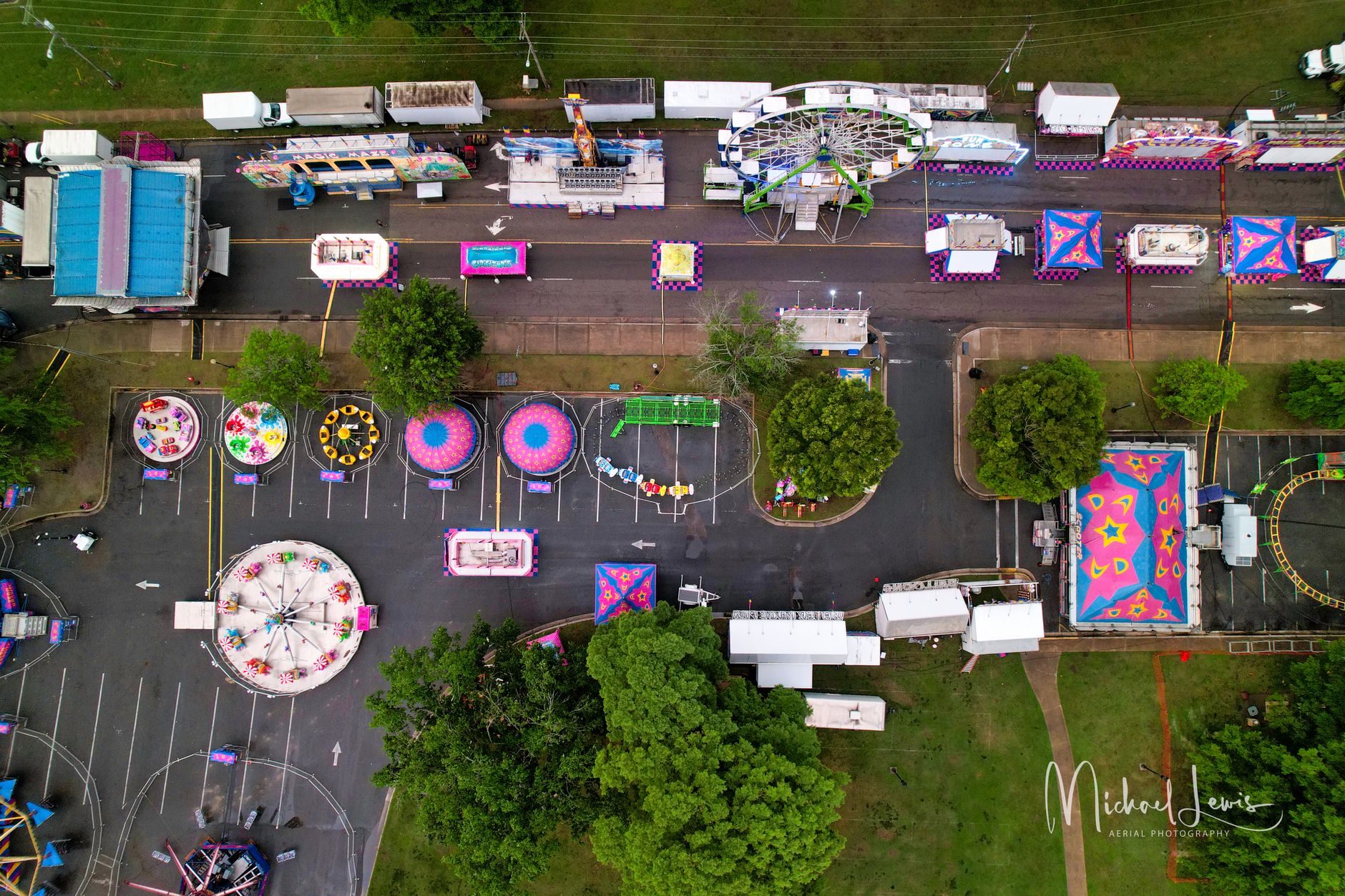
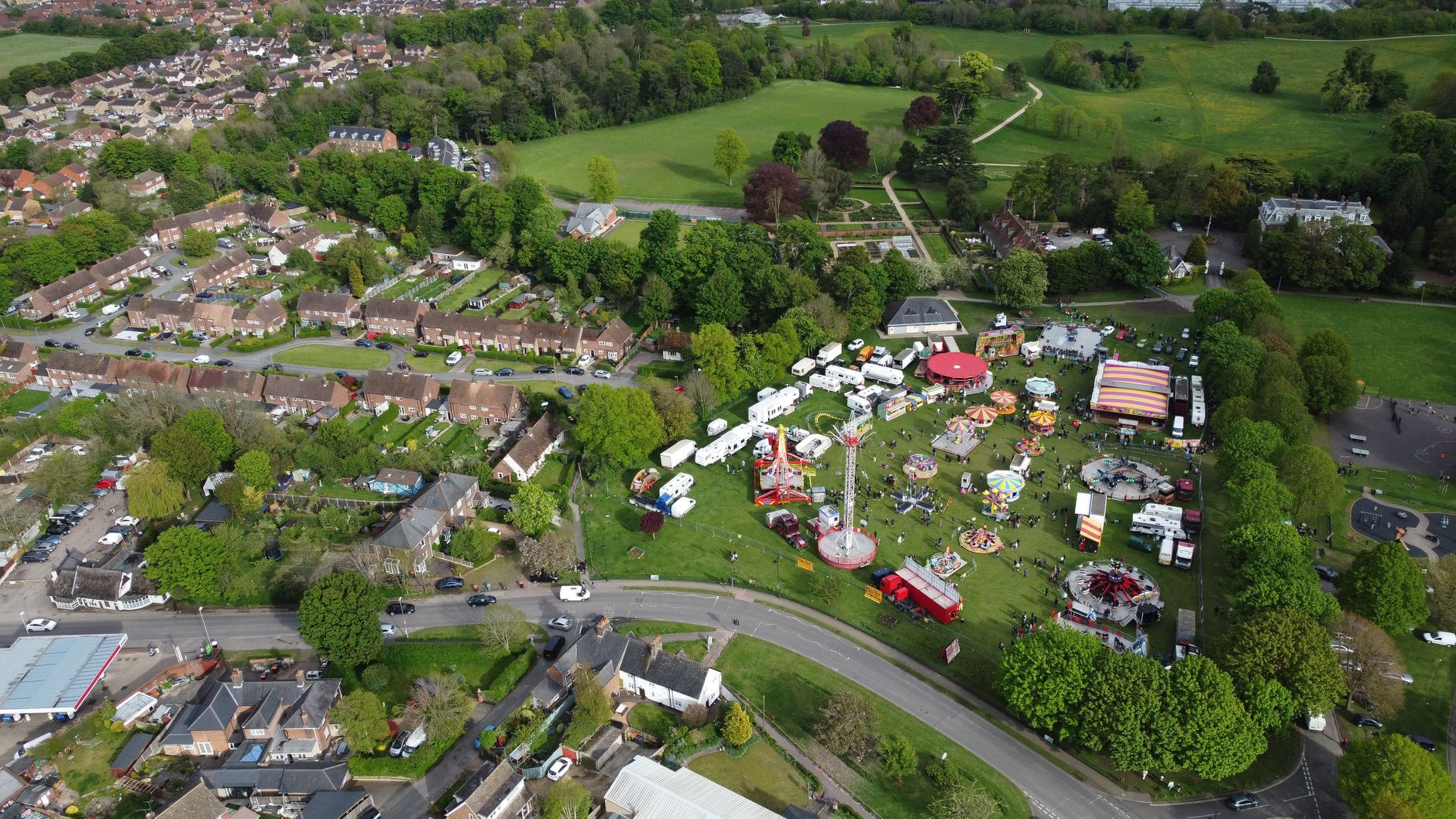
The scale problem is real. Greene County, Pennsylvania, describes a 40-acre fairground with 12 buildings, two outdoor arenas, a baseball field, and a half-mile track. Boulder County reports an 83-acre site that supported 1,037 events in 2018, including its 10-day fair. A single static camera view cannot represent that dispersed physical environment.
The practical goal is earlier awareness. A security robot can revisit a remote gate, compare the condition of a storage area, detect activity in a normally vacant lane, and deliver time-stamped evidence to someone authorized to act. Its value comes from disciplined coverage and escalation, not from pretending it is a robot security guard with human authority.
Why do fairgrounds require a distinct off-season plan?
Fairgrounds rarely become truly empty. Buildings may host auctions, livestock shows, private receptions, emergency operations, recreational programs, or winter storage long after the midway leaves. The New York State Fairgrounds, for example, says its 375-acre complex operates year-round and hosts approximately 300 non-fair events annually.
That mixed use creates an unusual security pattern. One hall may be leased while neighboring barns remain locked. A campground or public path may stay open while equipment compounds are restricted. Deliveries, snow removal, repairs, and temporary tenants can also invalidate a route that worked the previous week.
Start by dividing the property into operating zones. CISA's Security Planning Workbook describes outer, middle, and inner perimeters as part of layered security. At a fairground, those layers can correspond to boundary gates and parking lots, campus roads and building exteriors, then locked rooms or fenced storage areas.
Assign each zone a patrol purpose. Outer rounds look for open gates, stopped vehicles, fence disturbances, and after-hours movement. Middle rounds cover doors, loading aprons, utility areas, and stored trailers. Interior patrols, where the building and robot permit them, check corridors and predefined equipment rooms without wandering into tenant-controlled space.
How should seasonal patrol routes be built?
Build a route library instead of one enormous map. Useful profiles include deep off-season, leasing day, event setup, livestock occupancy, severe weather recovery, and full fair operations. Each profile should define permitted areas, blocked areas, patrol frequency, charging location, alert rules, and the person receiving each alert.
Site assessment mapping should occur under the conditions the robot will actually encounter. Walk the route after dark. Check gravel transitions, drainage channels, ramps, loose cables, temporary fencing, tree debris, snow storage, and the turning space around closed gates. A route that looks easy on an aerial plan may contain a curb, soft shoulder, or locked passage that ends a patrol.
Use short, purposeful loops around priority assets rather than a ceremonial circuit of the property. A gate loop, building-envelope loop, equipment-yard loop, and utility loop are easier to revise independently. If construction blocks one segment, the remaining patrols can continue.
Every material site change needs a route review. Maintenance staff should have a simple method for reporting a new dumpster, livestock pen, barricade, trench, or parked trailer. The operating team can then pause the affected segment, inspect it, and publish a revised route before autonomous travel resumes.
Which assets deserve the most frequent checks?
Patrol frequency should follow consequence and exposure. Portable stages, tractors, utility vehicles, copper-bearing equipment, generators, fuel areas, ticketing hardware, audiovisual gear, and vendor inventory often sit far from the administrative office. Gates and loading doors deserve attention because one unsecured opening can bypass several interior controls.
Rank locations by replacement difficulty, safety impact, attractiveness to intruders, and time since the last human visit. A remote maintenance shed containing tools may justify several passes overnight. An empty exhibit hall behind monitored access control may need fewer rounds unless a lease or repair crew is present.
Configure alerts narrowly enough to be actionable. The operating team might distinguish a person in a closed equipment yard from permitted pedestrians on a public path. Door-position data, fixed cameras, lighting, and access-control events can provide context, but integration should never cause the robot to open a secure boundary merely to finish its route.
A useful incident record includes time, location, route, sensor observation, short video or images when policy permits, acknowledgement, and final disposition. That record helps management find recurring weak points, such as a gate repeatedly left open after deliveries, without treating every alert as proof of a crime.
How can robots patrol around legitimate public access?
Public access changes the operating posture. A fairground may contain walking paths, offices, leasing halls, polling locations, markets, or recreation areas. The robot must remain predictable around visitors, yield appropriately, avoid crowding entrances, and use clearly approved notices or audio messages.
Separate public corridors from restricted patrol lanes wherever practical. During a small lease, the robot can remain on exterior roads and closed-building approaches. During an open community event, it may move to parking perimeters, service gates, or another zone with fewer pedestrian conflicts.
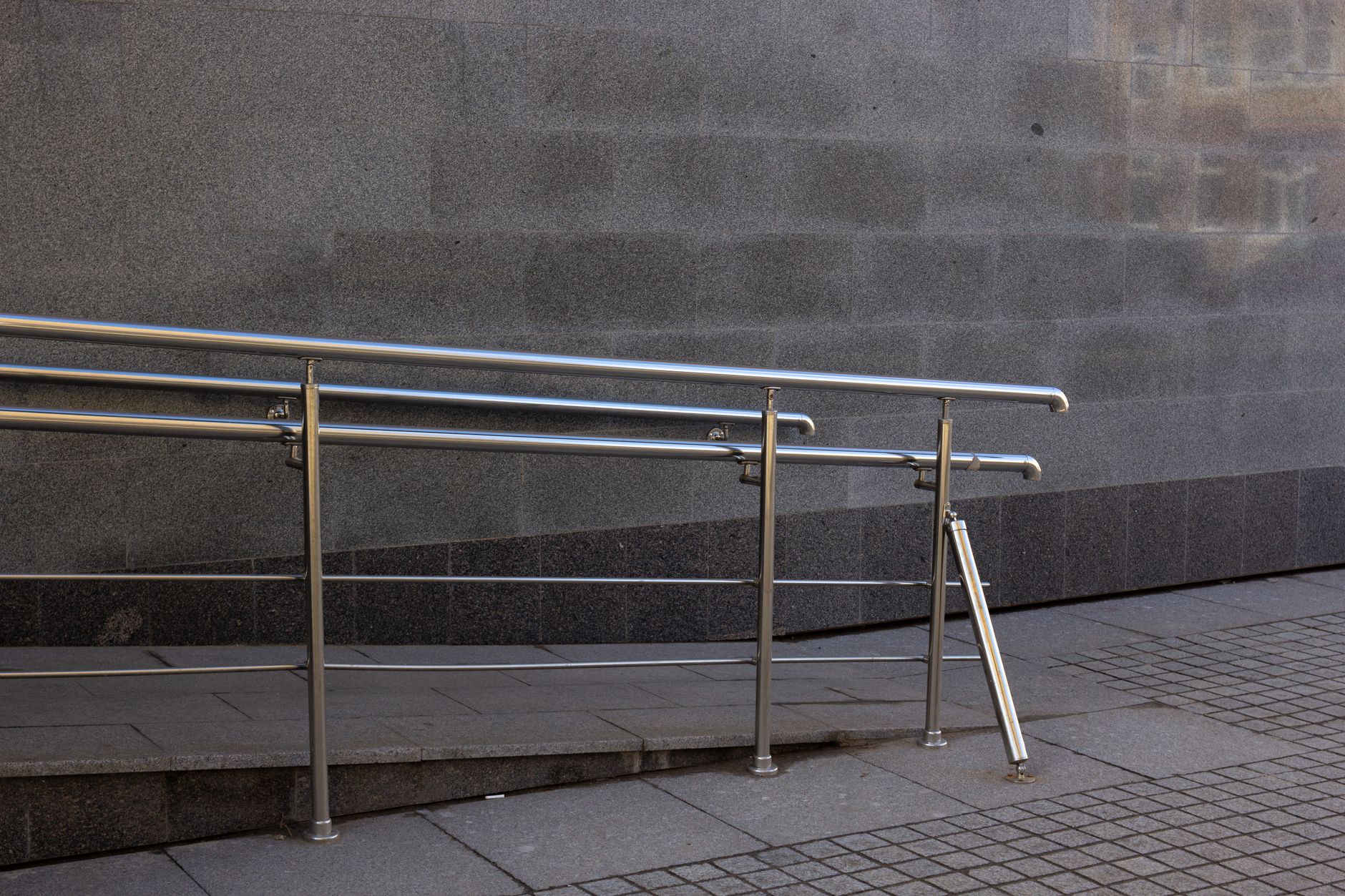
Accessibility belongs in route design. The U.S. Department of Justice states that accessible routes generally require at least 36 inches of clear width. Under the 2010 ADA Standards, a route narrower than 60 inches requires passing spaces at intervals no greater than 200 feet. A parked or charging robot must not obstruct those routes, entrances, ramps, evacuation paths, or wheelchair spaces.
Set written rules for recording, retention, access, and disclosure before deployment. Post notices where required, exclude sensitive interiors, restrict operator permissions, and document requests from law enforcement. The site should also decide which alerts permit remote observation and which require an employee to verify conditions in person.
What connectivity and power design does the site need?
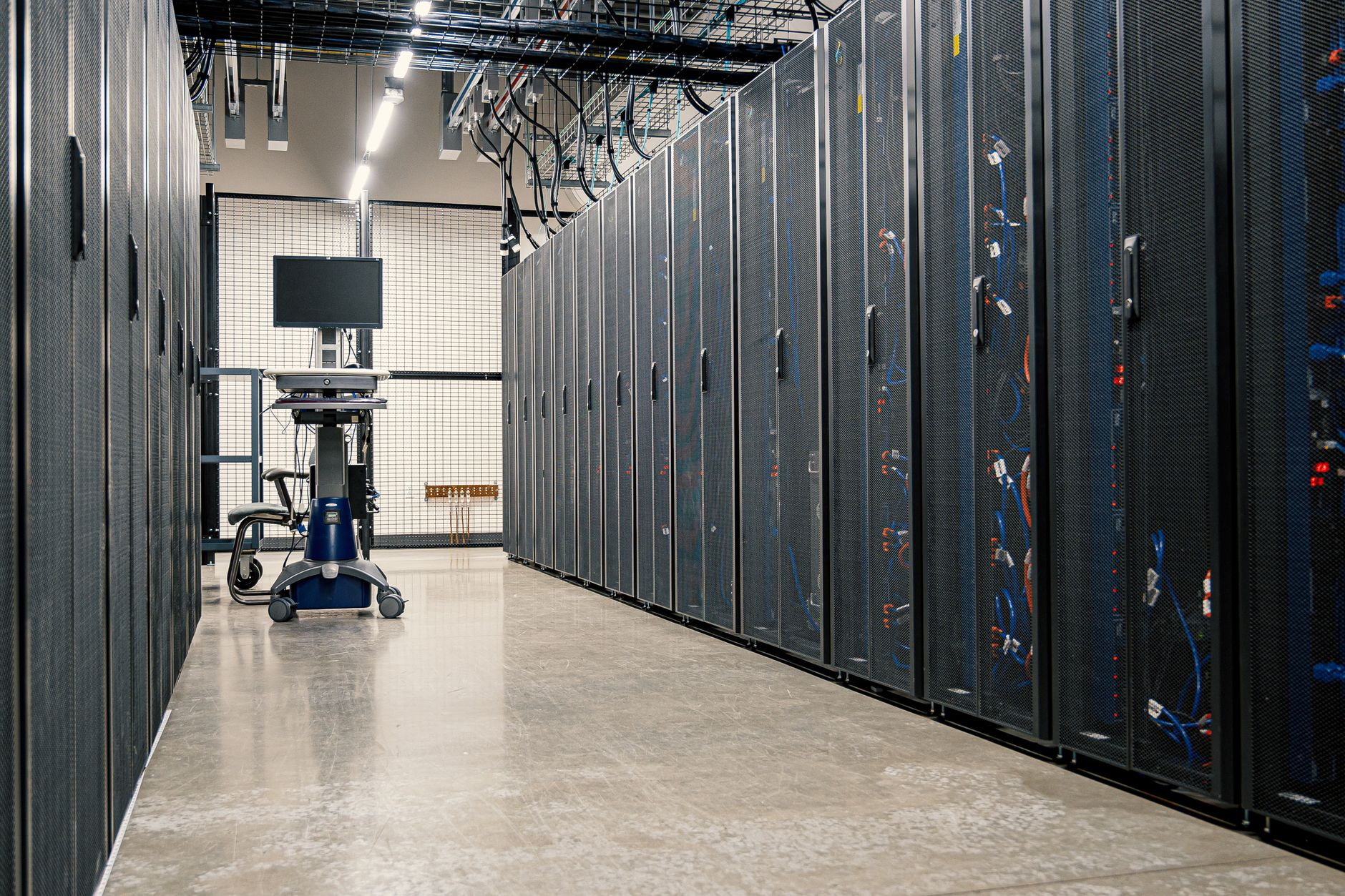
Never infer wireless coverage from the office signal. Test every planned route at the robot's antenna height, including metal barns, concrete corridors, distant gates, depressed service roads, and the far side of grandstands. Record handoff points, weak areas, latency, and the effect of closed fire doors or seasonal structures.
A safe deployment defines behavior during a communications loss. Depending on the site and selected equipment, the approved behavior may be to continue a limited local route, pause in a safe location, return to its dock, or request assistance. The robot should not enter a new restricted zone or improvise a network-dependent gate interaction while offline.
Use network segmentation, named user accounts, limited privileges, encrypted data paths, and controlled software updates. NIST's IoT cybersecurity baseline identifies six core technical capability areas: device identification, configuration, data protection, logical access to interfaces, software update, and cybersecurity state awareness. Those areas form a sound procurement checklist for a connected patrol device.
Power planning needs the same rigor. Confirm dock access during leases, generator testing, and winter shutdowns. Protect critical network equipment with appropriate backup power, then test what happens when the robot, dock, access-control system, or internet connection loses power independently. A battery specification alone does not prove route availability.
How does event-time redeployment work?
The annual fair changes the site from sparse occupancy to dense, fluid movement. Tents appear, gates change purpose, livestock lanes open, vendors occupy service roads, and crowds spill into areas that were quiet all winter. Do not release an off-season route into that environment with only minor edits.
Begin the event transition during move-in. Freeze affected routes before contractors place barriers and temporary utilities. Remap approved patrol zones, test them during representative traffic, and conduct a documented go-live check with security, facilities, event operations, and the robot operator.
The robot's assignment may shift rather than disappear. During public hours it can be redeployed to remote parking edges, closed service compounds, or low-traffic building exteriors. After closing, new routes can cover vendor gates and storage areas, provided cleanup vehicles, animal movements, and overnight crews are incorporated into the traffic plan.
After the event, resist the urge to restore the old map immediately. Temporary fencing, dumpsters, trailers, floor damage, and dismantling crews may remain for days. Use a post-event recovery profile, inspect the grounds, and restore deep off-season routes only after every segment passes a physical check.
What should a fairground require from an integration partner?
A commercial robot demo should test the hardest route, not circle a polished exhibition floor. Ask for a robot pilot program that includes weak-connectivity areas, night operation, public-path encounters, seasonal obstacles, alert escalation, docking, and recovery from a deliberately interrupted patrol.
Service Robot Co. operates as an OEM-neutral, vendor-neutral robot integrator for U.S. businesses. That lets the project begin with terrain, weather exposure, sensor needs, runtime, accessibility, and response workflow, then select equipment across manufacturers without naming a preferred machine before the site is understood.
The same partner can handle robot deployment and integration, staff training, financing, and continuing service through a nationwide U.S. engineer network. Remote triage should have a defined path to on-site dispatch, parts, and temporary operating changes. One partner and one number matters when the local fair office cannot coordinate several disconnected vendors during an alert or breakdown.
Commercial robot leasing, robot leasing for business, purchase, and leasing structures can support different ownership preferences. Evaluate RoboCare™ service terms, contract length, data charges, insurance, replacement provisions, and event-season flexibility together. A security patrol robot lease is only a try-before-you-buy program when the pilot has measurable acceptance criteria and a clear exit decision.