Key takeaways
- Autonomous patrol adds the most value in large outdoor yards, fueling areas, employee approaches, and blind corridors between fixed cameras.
- The right sensor stack for a bus depot usually starts with thermal, low-light video, audio, LiDAR, and clear event tagging, not flashy extras.
- A patrol robot should narrow alarm volume for guards and supervisors, not replace dispatch, fencing, access control, or incident command.
- Buyers should pilot against measurable outcomes such as verified trespass events, response time, coverage hours, and false-alarm rate.
When does an overnight patrol robot make sense at a bus depot?
For most bus depots, an autonomous patrol robot makes sense when the property is big enough, dark enough, or segmented enough that cameras alone leave too much uncertainty after hours. A robot earns its keep when supervisors need mobile visibility across parked buses, fueling aprons, maintenance-yard edges, employee entrances, and long fence lines where a fixed view cannot tell you what is happening right now.
The practical value is not that the robot somehow replaces every guard. It is that it shortens the time between a suspicious event and a verified decision. Instead of reviewing footage after a catalytic-converter theft, a gate breach, or a person moving between parked coaches, the security team gets a live look, a location, and a cleaner handoff to dispatch or law enforcement.
This matters in an operating environment that is still investing heavily in bus fleets and facilities. According to the Federal Transit Administration, the 2026 Grants for Buses and Bus Facilities program includes $662 million in formula funding and $412 million in competitive funding, while Low or No Emission grants add another $1.128 billion. When agencies are already upgrading depots, charging layouts, lighting, and yard circulation, overnight autonomy becomes easier to evaluate as part of the broader facility plan rather than as a one-off gadget.
Where do robots add value beyond cameras alone?
Fixed cameras are strong at documentation, perimeter coverage, and post-incident review. They are weaker at pursuit, angle changes, and checking the dead ground between poles, bus rows, storage containers, and maintenance structures. A patrol robot closes part of that gap by moving toward a trigger, changing viewpoint, and creating a visible presence in areas where trespassers assume no one is actively watching.
In depot terms, that usually means three things. First, the robot can revisit places that go visually cold after midnight, such as the back side of parked buses, fueling queues, and employee parking transitions. Second, it can verify conditions that cameras often misread, such as a person sheltering between vehicles, a service door left ajar, or a truck parked where it should not be. Third, it gives the overnight team a mobile sensor that can be tasked to inspect a concern instead of sending a person first into an uncertain scene.
That last point matters because labor is expensive and thin at night. The Bureau of Labor Statistics reports a May 2024 median annual wage of $38,370 for security guards, and notes that night shifts are common. Buyers should read that as a staffing reality check, not as an excuse to remove humans from the model. The stronger case is that a robot helps a smaller overnight team cover more ground with fewer blind walks and fewer low-value patrol miles.
Which depot zones usually justify autonomous patrol first?
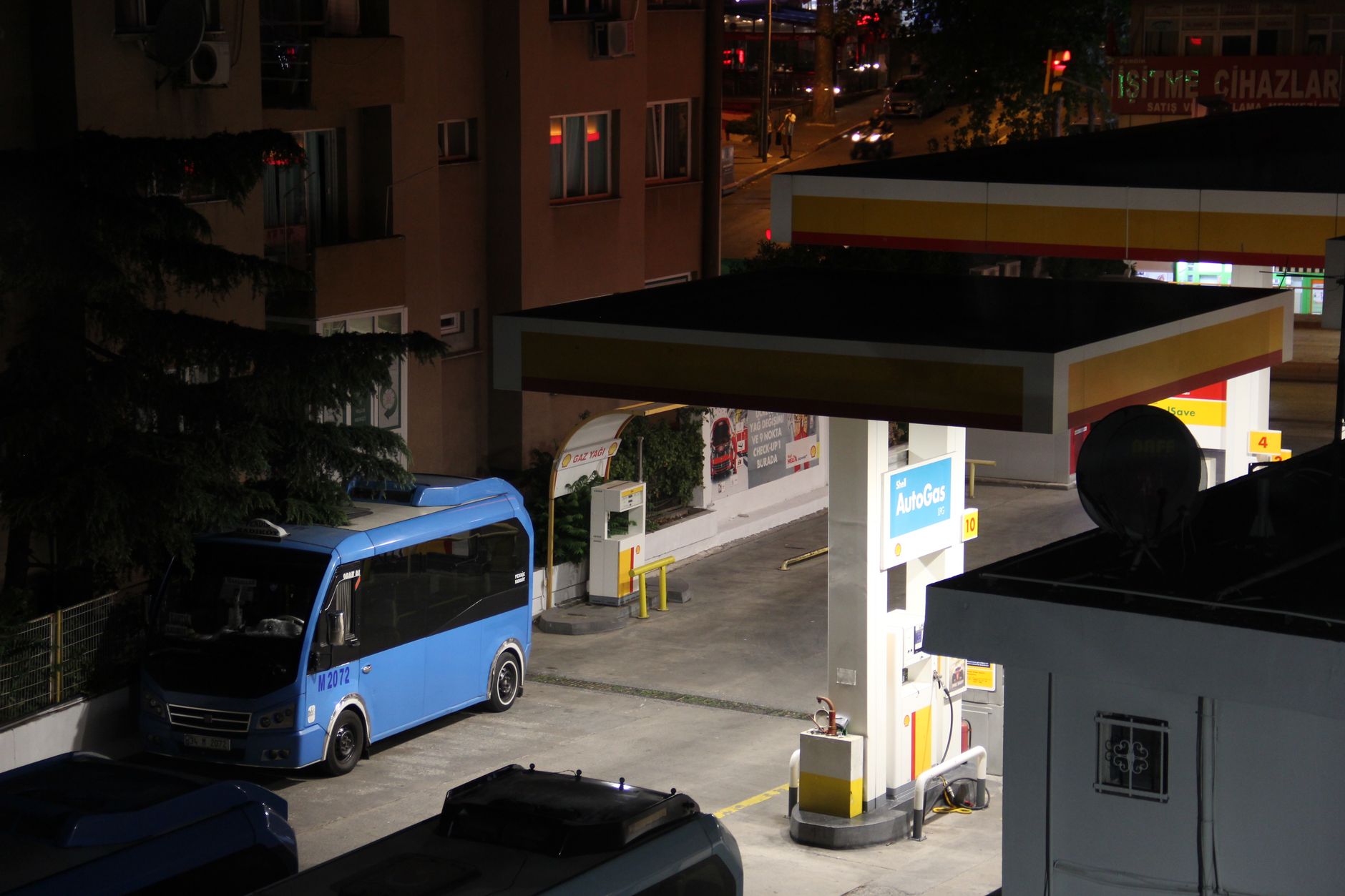
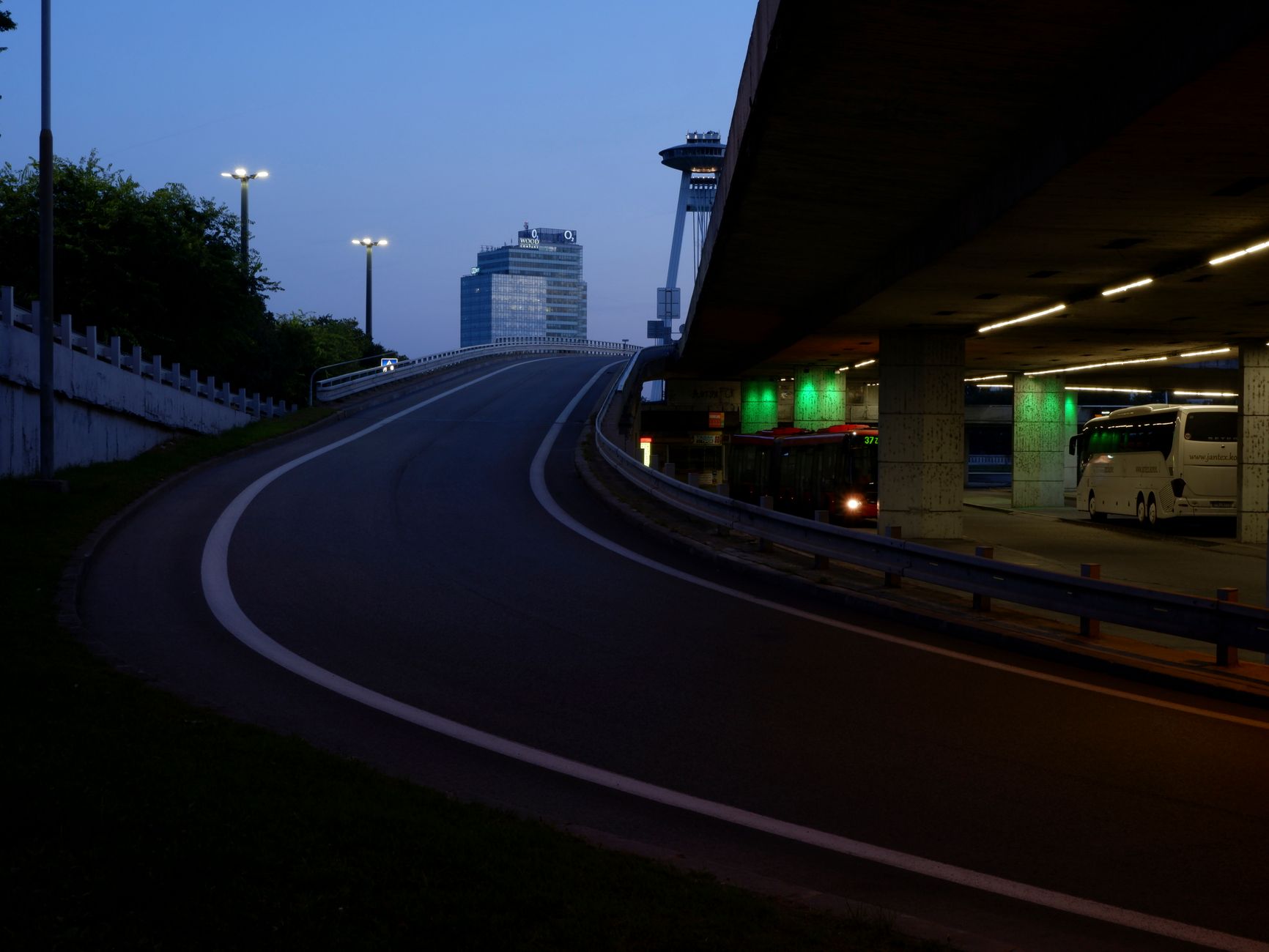
Start with the zones where incident cost is high and visual certainty is low. In many bus depots, that means the parked fleet rows, fueling islands, yard perimeters, employee entrances, and the paths between the maintenance building and the lot. These are the places where theft, trespass, vandalism, unauthorized occupancy, and after-hours confrontation create the most operational friction before the morning pull-out.
Fueling zones deserve special attention, but not careless deployment. OSHA requires a clearly identified and easily accessible emergency power cutoff remote from dispensing devices for flammable-liquid dispensing. That alone should push buyers to ask where the robot will patrol, where it will stop, and how it will behave near shutoff devices, hoses, spill kits, and active fueling work. In many sites, the best practice is for the robot to patrol the approaches, queue lanes, and perimeter of the fueling area, not crowd technicians or enter every hazardous spot.
Employee entrances are another strong first use case. According to the FTA, after General Directive 24-1 on assaults on transit workers, more than two-thirds of transit agencies that responded concluded that additional mitigations were necessary. Overnight arrival and departure periods are not the only assault risk in transit, but they are a credible place to use mobile visibility, escort awareness, and faster verification of loitering or tailgating.
- Parked bus rows where line-of-sight collapses between vehicles
- Fueling approaches and queue lanes where after-hours activity should be limited and easy to verify
- Fence lines, back gates, and low-traffic corners that receive little natural surveillance
- Employee entrances, staff parking transitions, and cashless but still vulnerable reporting points
- Maintenance-yard exteriors where open doors, staged parts, and service vehicles create temptation
What sensor package actually matters in depot conditions?
Depot buyers should be suspicious of long feature lists. The useful sensor package is the one that performs through glare, drizzle, diesel residue, patchy lighting, headlight wash, reflective bus sides, and intermittent pedestrian traffic. In most overnight patrol programs, the core stack is thermal imaging, low-light or infrared video, LiDAR for navigation and obstacle handling, audio for two-way talk or deterrent messaging, and software that stamps each event with time, location, and replayable evidence.
Thermal helps when a person is partially hidden by buses, behind bollards, or moving along a fence in low light. Low-light video helps the team identify what the thermal image found. LiDAR matters because depot environments are cluttered and change daily. Mirror swing, open bay doors, cones, wheel chocks, parked maintenance carts, and angled buses all punish weak navigation. Audio matters because some incidents are resolved by announcing presence and telling a person they are on a recorded, monitored property before a human responder ever arrives.
Ask harder questions about environmental tolerance than about headline AI claims. How does the robot handle wet pavement reflections, fogged lenses, steep curb cuts, chain-link fence aliasing, and GPS-poor corners near buildings? How are false positives labeled and retrained? Can supervisors search incidents by zone, schedule, and alert type? A buyer guide lives or dies on these details, because depot work is messy and repetitive, and only consistent sensing survives that environment.

How should a robot fit into guards and incident response?
The right operating model is guard plus robot, not guard versus robot. The robot handles repetitive patrol loops, scheduled route checks, and first-look verification. The human team keeps command authority, makes contact decisions, controls escalation, and coordinates police, fire, or maintenance when a situation crosses a threshold.
That means the handoff rules must be explicit before go-live. Define what happens on trespass, loitering, perimeter breach, open-door detection, smoke or spill observation, and welfare concerns involving a person on site after hours. Decide who gets the first alert, how many seconds the robot should observe before escalating, when audio warnings are allowed, and what evidence package is sent to the dispatcher or supervisor.
This is where Service Robot Co. can help in a way a box seller cannot. For agencies and private operators that want a security patrol robot rental, robot as a service, or a lease rental or sale model, the harder part is not dropping hardware on the pavement. It is matching the patrol logic to the site SOP, mapping the yard, integrating alerts, training supervisors, and supporting the robot when it needs service at 2 a.m. That is why an OEM-neutral, vendor neutral robot integrator matters. One partner can select the right platform, handle robot deployment and integration, and keep maintenance included through a nationwide U.S. field network.
What safety, cyber, and compliance checks belong in the buying process?
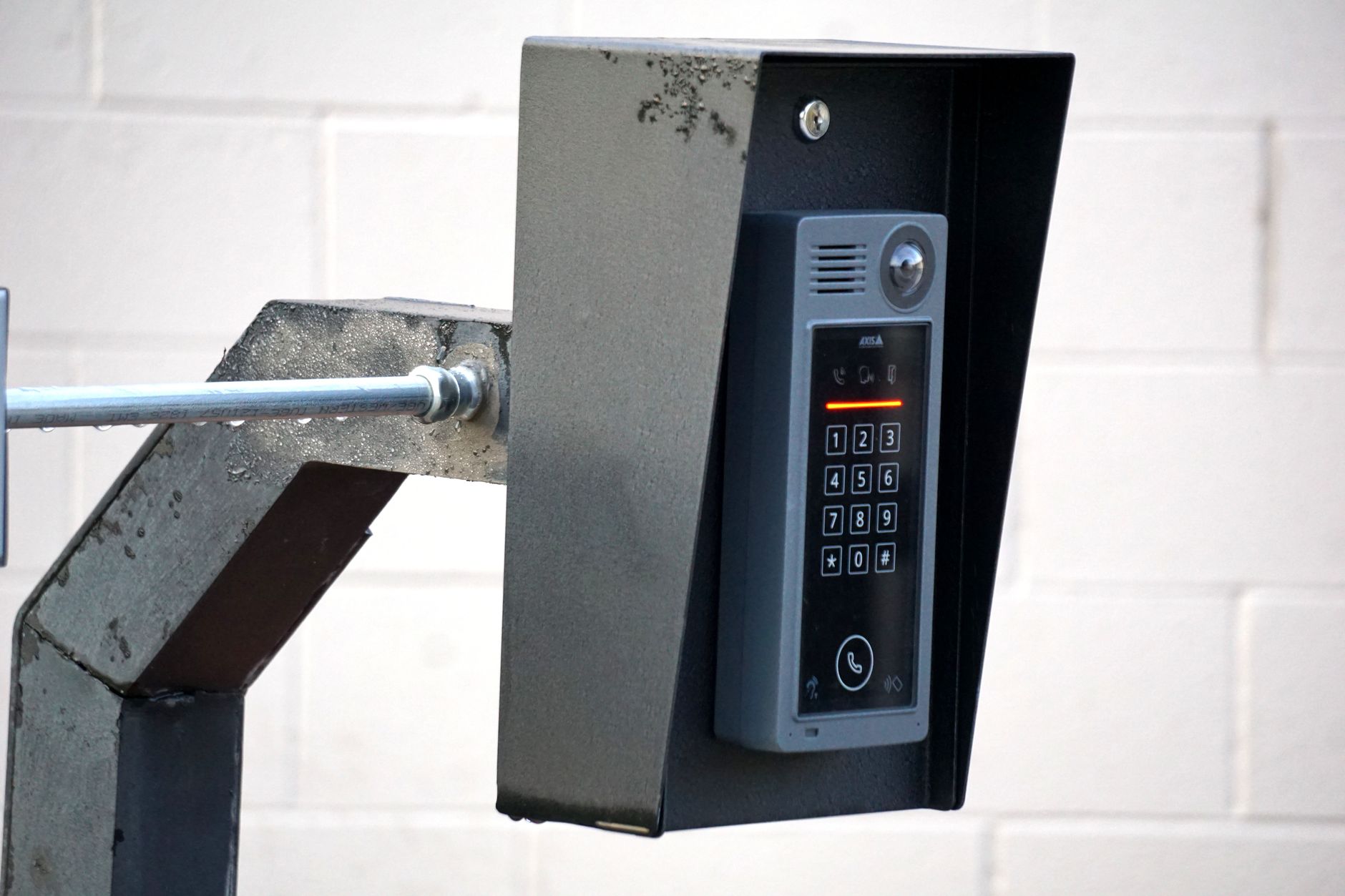
Buyers should treat the robot as part of the depot security system, not as a novelty appliance. That means reviewing physical safety, cyber controls, data retention, union and workforce communication, and the boundaries around fuel-handling and maintenance areas. If your depot already uses access control, video management, dispatch software, or after-hours supervisor procedures, the robot should fit those controls instead of creating a parallel process nobody owns.
Cyber questions are no longer optional in transit. The FTA says TSA renewed Security Directive 1582-21-01 on October 22, 2024 for covered passenger rail operators, and TSA separately proposed broader public transportation physical and cyber requirements in the Federal Register in November 2024, including designated physical security coordinators and cyber risk management requirements. Even where a specific bus operator is not directly covered by every requirement, the direction of travel is obvious. Buyers should ask where video is stored, how remote access is controlled, how credentials are rotated, and what happens if connectivity drops during an event.
On the physical side, verify route design around fueling, wash racks, charging equipment, maintenance doors, and emergency access. On the organizational side, confirm who owns the incident queue overnight. A patrol robot with no clear operator, no alert taxonomy, and no evidence retention policy will create noise faster than it creates security.
How should agencies evaluate payback and buy structure?
Use a pilot with a short scorecard, not a vague innovation trial. Good KPIs for a bus depot include verified intrusion events, false-alarm rate, average time from alert to human review, coverage hours per night, supervisor interventions prevented, and the number of incidents resolved by remote verification instead of physical dispatch. If the robot cannot improve those numbers, the site may not be a fit yet.
Funding context helps. According to FEMA, the FY 2025 Transit Security Grant Program provides $83.7 million to strengthen critical surface transportation security. Not every depot robot project will map cleanly to that program, but buyers should still evaluate whether overnight patrol supports broader security objectives such as deterrence, domain awareness, and faster incident verification.
Commercial terms matter too. Many operators prefer a security patrol robot rental, monthly payment programs, or robot leasing for business because they want maintenance included, predictable uptime support, and room to expand site by site. Service Robot Co. structures programs around lease rental or sale, robot as a service, and commercial robot demo or pilot motions so a buyer can test the actual yard, not just a showroom narrative. For multi-site fleets, that usually beats buying a unit in isolation and then discovering the service model is thin.
Why full-lifecycle integration matters more than the robot spec sheet
In a transit depot, the robot is only one layer. The real buying decision is about lifecycle ownership. Who maps the site after circulation changes? Who updates patrol routes when the fleet mix changes? Who trains overnight supervisors? Who dispatches service when a sensor goes down? Who keeps alerts consistent across depots in different states? Those questions decide whether the program becomes a durable operations tool or another stranded pilot.
Service Robot Co. approaches this as a full-service commercial robot integrator for U.S. businesses, not as a single-brand reseller. That lets the team choose the right robot across manufacturers, then finance, deploy, integrate, train, and service every unit through a nationwide U.S. engineer network. For a municipal transit agency or a private fleet operator, one vendor for the whole lifecycle is often the cleanest way to keep overnight patrol practical, auditable, and expandable.
The bottom line is simple. Autonomous overnight patrol fits bus depots when you need mobile verification in places cameras cannot fully cover, when your overnight team needs better reach instead of more walking, and when you are willing to manage the robot as part of the security operation. Buy on operational fit, sensor performance, and response design. Not theater.
Frequently asked questions
Sources
- FTA Buses and Bus Facilities Fact Sheet
- BLS Occupational Outlook for Security Guards
- OSHA Flammable Liquids Standard 1910.106
- FTA General Directive 24-1 Assaults on Transit Workers
- FTA Cybersecurity Resources for Transit Agencies
- Federal Register Surface Cyber Risk Management Rule
- FEMA FY 2025 Transit Security Grant Program
- FTA 2024 National Transit Database Vehicles