Key takeaways
- The best fit is usually a dedicated floor-care robot for clean support areas, not a single unit that crosses between live-fire and public zones.
- Dust control matters more than raw coverage. Wet cleaning, HEPA capture, and decontamination discipline beat flashy autonomy claims.
- CDC documented 2,056 workers with elevated blood lead levels tied to firearm use from 2002 through 2012, plus 2,673 likely target-shooting cases, so residue control is not a side issue.
- Route control, wheel and squeegee cleanability, and strict zone rules are core buying criteria for an indoor range.
- A vendor neutral robot integrator is valuable here because gun ranges need deployment, SOPs, training, and service to work as one operating system.
What should an indoor gun range buy?
For most indoor gun ranges, the best cleaning robot is not the biggest scrubber with the longest spec sheet. It is a commercial robot cleaner built for the support spaces around the range, with disciplined wet cleaning, strong debris capture, predictable routing, and a cleaning path that does not spread residue from controlled areas into the lobby, retail floor, classrooms, or back-of-house corridors.
That distinction matters. According to CDC, indoor firing ranges remain a documented source of hazardous lead exposure, and the agency specifically points to wet mopping or HEPA vacuuming instead of dry sweeping as part of exposure reduction. In practice, that means range operators should treat robotic floor care as part of their contamination-control program, not just a labor-saving add-on.
The short answer is this: buy a robot that can stay in the cleaner parts of the building, run inside your shutdown window, and be decontaminated fast. If a machine cannot respect zone boundaries, contain residue, and return the next night without becoming a housekeeping risk, it is the wrong robot for this facility type.
Why are indoor ranges a different cleaning problem?
An indoor range carries unusual debris and unusual consequences. The issue is not just visible soil at the entrance mat or brass tracked into the vestibule. It is fine contamination, migration from range-adjacent areas, and the operational reality that a public-facing business often has only a narrow overnight window to clean, dry, and reopen.
CDC reported that during 2002 through 2012, 2,056 people with work-related firearm exposure had blood lead levels of at least 10 micrograms per deciliter, and another 2,673 people with non-work-related exposure likely tied to target shooting also reached that threshold. In the same report, CDC described a firing-range renovation where 46 of 98 tested people, or 47 percent, had elevated blood lead levels, with one construction worker recorded at 153 micrograms per deciliter.
That is why an indoor range buyer should think like a contamination-control operator, not a generic retail janitorial buyer. A floor robot here has to fit the facility's safety protocol, traffic pattern, and housekeeping sequence. Simple floor coverage is not enough.
Which areas are the right fit for robotic floor care?
The strongest use case is usually outside the firing lanes themselves. Lobbies, reception zones, merchandise aisles, classrooms, member lounges, offices, and back-of-house corridors are the first places to automate because they need consistent appearance, but they also sit downstream from tracked-in residue.
A robot can do valuable overnight cleaning no operator work in these spaces if the site enforces clean and dirty boundaries. The machine should not roam freely between every room just because mapping software allows it. In an indoor range, smart deployment often means a narrower mission and better discipline.
Back corridors are especially attractive because they collect foot traffic from staff movement, deliveries, and maintenance. They also tend to be ignored until they look obviously dirty. A night shift autonomous scrubber assigned to those corridors can keep residue from building up and migrating forward into the customer-facing part of the building.
- Best first targets: lobby hard floors, retail hard floors, classrooms after closing, member corridors, office hallways, employee circulation paths
- Proceed carefully: vestibules that connect directly to range access points, transition thresholds, and spaces where PPE or dirty carts pass through
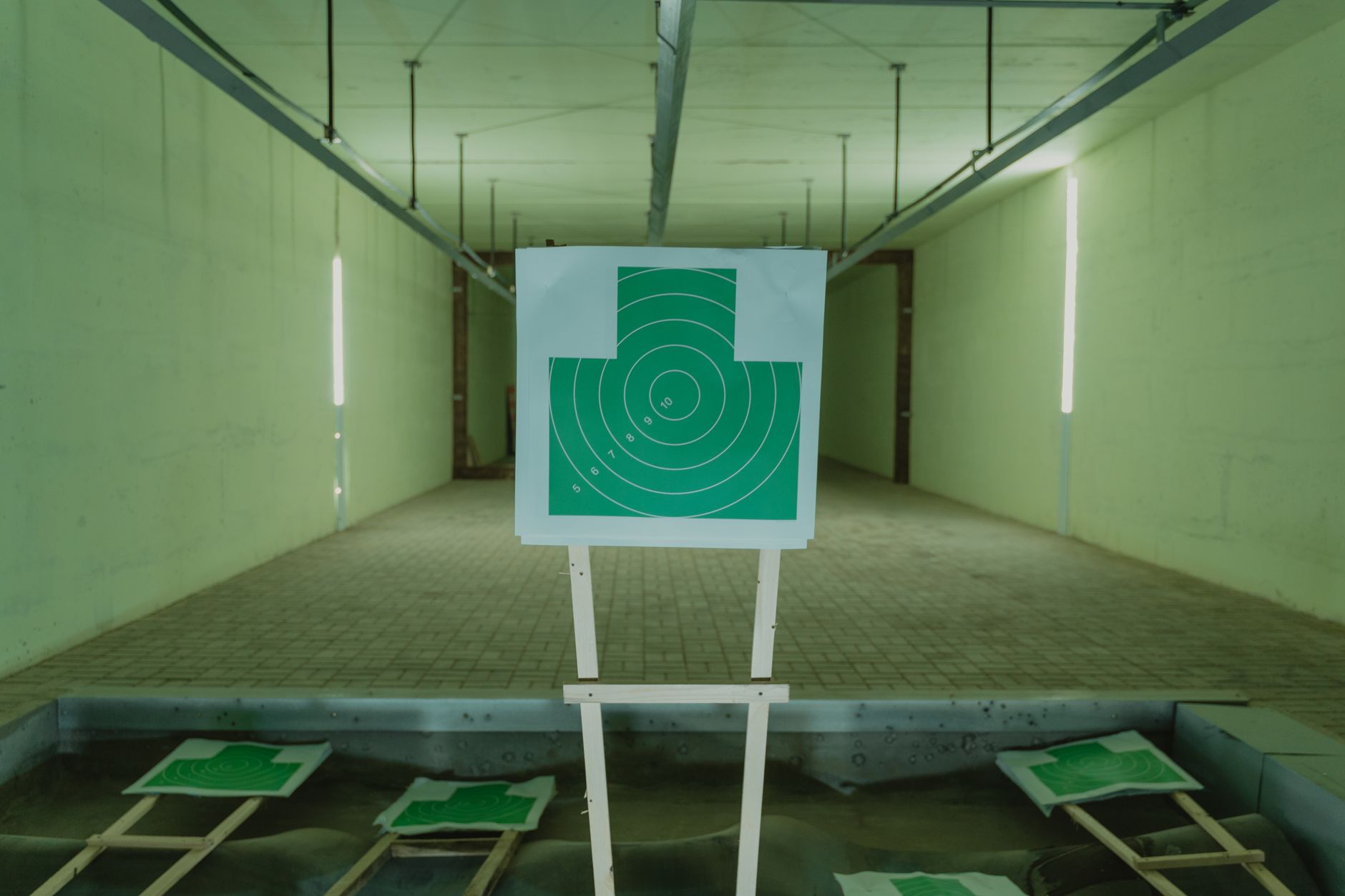
- Usually a separate housekeeping method: live-fire lanes, bullet trap service areas, and any area your safety officer classifies as contamination-intensive
What cleaning methods actually match the exposure guidance?
The core rule from the health agencies is straightforward. Dry sweeping is a bad idea. CDC and NIOSH repeatedly recommend wet mopping or HEPA vacuuming for indoor firing ranges, and OSHA's indoor firing range materials point operators to lead-safe work practices built around exposure control and housekeeping discipline.
That has direct buying implications. If you are evaluating a commercial cleaning robot rental or a robot leasing for business program, ask whether the machine can support a genuinely wet floor-care pass, controlled solution use, and recovery that does not just smear fine residue around. Ask the same about any vacuum function. The filtration and waste-handling design matters more here than it would in a plain office corridor.
A buyer should also examine every component that contacts the floor. Wheels, squeegees, brushes, pads, tanks, and recovery points all become part of the cleaning protocol. If those parts are awkward to remove, slow to rinse, or likely to hold residue, your staff will eventually work around the process, and the contamination risk comes right back.
What specs matter most when you compare robots?
Indoor gun ranges should put less weight on showroom autonomy tricks and more weight on housekeeping realism. The machine needs to finish inside a short shutdown window, navigate repeatably in dim after-hours conditions, and tolerate mats, thresholds, and tight retail turns without clipping displays or carrying debris into the wrong zone.
OSHA's lead standard for general industry sets a permissible exposure limit of 50 micrograms per cubic meter of air over an 8-hour day, with an action level of 30 micrograms per cubic meter. In a 2017 NIOSH firing-range evaluation, task-based air samples during nightly and weekly cleaning reached 54 and 64 micrograms per cubic meter even though full-shift samples stayed within the OSHA limit. That should make range buyers skeptical of any cleaning process that creates extra agitation without a clear containment plan.
In practical terms, the best industrial floor cleaner robot for this niche will be easy to zone, easy to clean, and easy to supervise. It should be boring in the best way. Repeatable routes. Clear access controls. Recovery tanks that can be emptied without drama. A machine your night crew will actually trust.
- True zone control and map locks so the robot stays out of restricted or contamination-intensive areas
- Fast changeout and washdown for pads, brushes, tanks, filters, and squeegees
- Compact turning behavior for retail fixtures, classroom furniture, and narrow back corridors
- Reliable obstacle handling after close, when carts, stools, and temporary signs may be out of place
- Service access and parts availability that support nightly use, not occasional demo runs
How do you keep a robot from spreading residue?
This is the make-or-break question. CDC documented indoor firing-range lead on carpets, desks, counters, eating surfaces, ventilation ducts, shoes, hands, and surfaces outside the range. In one NIOSH evaluation, lead was found on all tested surfaces in the range and in the showroom. The lesson is blunt: contamination migrates, and a robot can become part of that migration if the operating rules are sloppy.
The cleanest approach is a zone-based SOP. Dedicate a robot to support areas only, keep it on a defined charging and service point, and make decontamination part of the close routine. If your range insists on robotic cleaning near contamination transition points, treat that as a separate workflow with dedicated consumables and post-run wipe-downs.
This is also where Service Robot Co. fits naturally. A range does not just need a machine. It needs robot deployment and integration, site assessment mapping, staff training, maintenance included, and an operating playbook that holds up after week three, not just on launch day. Service Robot Co. is OEM-neutral and acts as one vendor for the whole lifecycle: selecting the right unit, financing, deployment, integration, training, and service through a nationwide U.S. engineer network.
Should a range rent, lease, or buy?
Indoor ranges are good candidates for commercial cleaning robot rental, robot rental monthly, or other monthly payment programs because the site often needs to prove the SOP before it commits to a fleet standard. A pilot lets the facility confirm route timing, residue control, janitorial fit, and manager workload inside the actual shutdown window.
That matters more here than in a simple office building because a range can fail for non-obvious reasons. The floor may clean well, but the tank-emptying routine may be awkward. The map may work, but the wheels may pick up residue at a threshold. A robot as a service structure or floor scrubber monthly lease can lower the cost of learning those lessons early.
Service Robot Co. is built for that kind of buyer. As a full-service commercial robot integrator, the company can stay OEM-neutral, compare the real operational fit across manufacturers, and support lease rental or sale based on the site's risk tolerance, staffing model, and rollout pace. For a niche environment like an indoor range, that neutrality is useful because the right answer is usually operational, not brand-driven.
What should a site walk uncover before go-live?

A proper site walk should map the contamination story of the building, not just measure square footage. Start at the range access points and follow traffic outward. Identify where shoes, carts, brass buckets, PPE, training props, and staff movement carry residue into cleaner spaces. Then map which floors truly need robotic cleaning and which ones should stay manual under your existing protocol.
Look closely at transitions. Threshold lips, floor drains, absorbent mats, carpet inserts, classroom chair stacks, and retail endcaps all affect route reliability. So do after-hours tasks like restocking, firearms classes ending late, and maintenance activity around ventilation or bullet-trap service. A robot that works in a perfectly staged demo can still be a poor facility fit.
Finally, test the support system as hard as the robot. Who cleans the machine after the run. Where are consumables stored. How quickly can a failed unit be recovered before opening. For this category, commercial robot repair service, on-site dispatch, and remote triage are not nice extras. They are part of the buying decision.
The real standard is operational discipline
The best cleaning robot for an indoor gun range is the one that helps the building stay cleaner without loosening the site's dust-control habits. That usually means a dedicated support-area robot, not a do-everything machine. It means wet cleaning or HEPA-based debris capture aligned with public-health guidance. And it means strict boundaries between the range environment and the rest of the building.
Facility buyers who keep that discipline usually get the benefit they actually want: cleaner public spaces, steadier overnight floor care, and less dependence on inconsistent manual rounds. Buyers who ignore it often end up with a machine that looks efficient on paper and awkward in the real building.
For indoor ranges, floor automation is not a gadget purchase. It is a housekeeping system inside a regulated environment. Buy it that way.
Frequently asked questions
Sources
- CDC MMWR indoor firing range blood lead report
- NIOSH alert on indoor firing range lead and noise
- NIOSH firing range exposure reduction guidance
- NIOSH 2017 indoor firing range lead evaluation
- OSHA lead overview and exposure thresholds
- OSHA lead standard 29 CFR 1910.1025
- OSHA lead substance data sheet appendix
- EPA shooting range lead BMP overview