Key takeaways
- Truck service plazas usually need a scrubber first, not a generic retail robot vacuum.
- Grease at entrances and food zones, plus rain, snow, and diesel residue, make traction control and recovery performance decisive.
- Restrooms, shower corridors, and retail aisles rarely belong on one map or one cleaning schedule.
- For most operators, the safer buy case is a vendor neutral robot integrator with maintenance included and overnight support.
What actually works in a truck service plaza?
The right cleaning robot for a truck service plaza is usually an industrial floor scrubbing robot with strong water recovery, dependable obstacle handling, and a cleaning plan built around your overnight rush, not around a quiet retail schedule. In this setting, glossy autonomy claims matter less than three blunt realities: how the machine behaves on greasy walk-off zones, how well it recovers dirty water from textured tile and concrete, and how quickly your team can get it back in service after a tough night.
A generic commercial robotic vacuum cleaner is rarely the first pick here. Most service plazas carry a punishing mix of polished concrete, quarry tile, restroom surfaces, vestibules that drink in road grit, and foodservice spill zones that can go from dry dust to oily slurry in one shift. According to the American Trucking Associations, trucks moved 72.7 percent of the nation’s freight by weight in 2024. According to NACS, the average convenience store logged 1,491 transactions per day in 2023. A truck plaza stacks heavy freight traffic on top of convenience-store volume, and the floor pays for it.
That is why the best fit is usually a night shift autonomous scrubber sized for long open runs, paired with manual detail cleaning for corners, shower rooms, and acute spill events. If you are evaluating commercial cleaning robot rental, robot leasing for business, or lease rental or sale options, judge the program on site fit and service depth first. The machine itself is only half the purchase.
- Prioritize scrub-and-recover performance over headline autonomy features
- Separate open retail and dining paths from restroom and shower routes
- Assume frequent mop-up support for body-fluid events and concentrated grease
- Require a plan for overnight cleaning with no operator on large floor spans
Why are truck plazas harder than ordinary retail?
Because the mess is layered. A truck service plaza deals with road salt, rainwater, diesel residue tracked from forecourts, food grease near hot cases and seating, and restroom abuse that spikes at unpredictable hours. OSHA advises employers to keep floors clean and dry, and where ice or water can make surfaces slippery, to maintain good drainage and use mats or similar protection. That guidance reads almost like a truck stop floor-care brief.
Truck parking also changes the cleaning rhythm. The Federal Highway Administration says demand for truck parking continues to outpace supply, and its 2019 parking inventory found about 313,000 truck parking spaces nationally, including 273,000 at private truck stops. More parked trucks mean more overnight foot traffic, more showers, more restroom use, and more drag-in after midnight. The floor is not resting while the robot works.
The facility mix matters too. A highway service plaza is part travel center, part convenience retail, part quick-service dining zone, part public restroom bank, and part locker-room corridor. One cleaning pattern will underperform somewhere. A robot that looks excellent in a grocery aisle can struggle when the same site includes entrance mat lines, squeegeed shower areas, and greasy transition zones between dining and diesel traffic.
Which floors and zones should drive the buying decision?
Start with the worst surfaces, not the easiest ones. If the robot can hold traction and recover water on your ugliest entrance lanes and food-adjacent hard floors, the main concourse is usually straightforward. If it only shines on the cleanest polished slab, it is the wrong machine for this facility type.
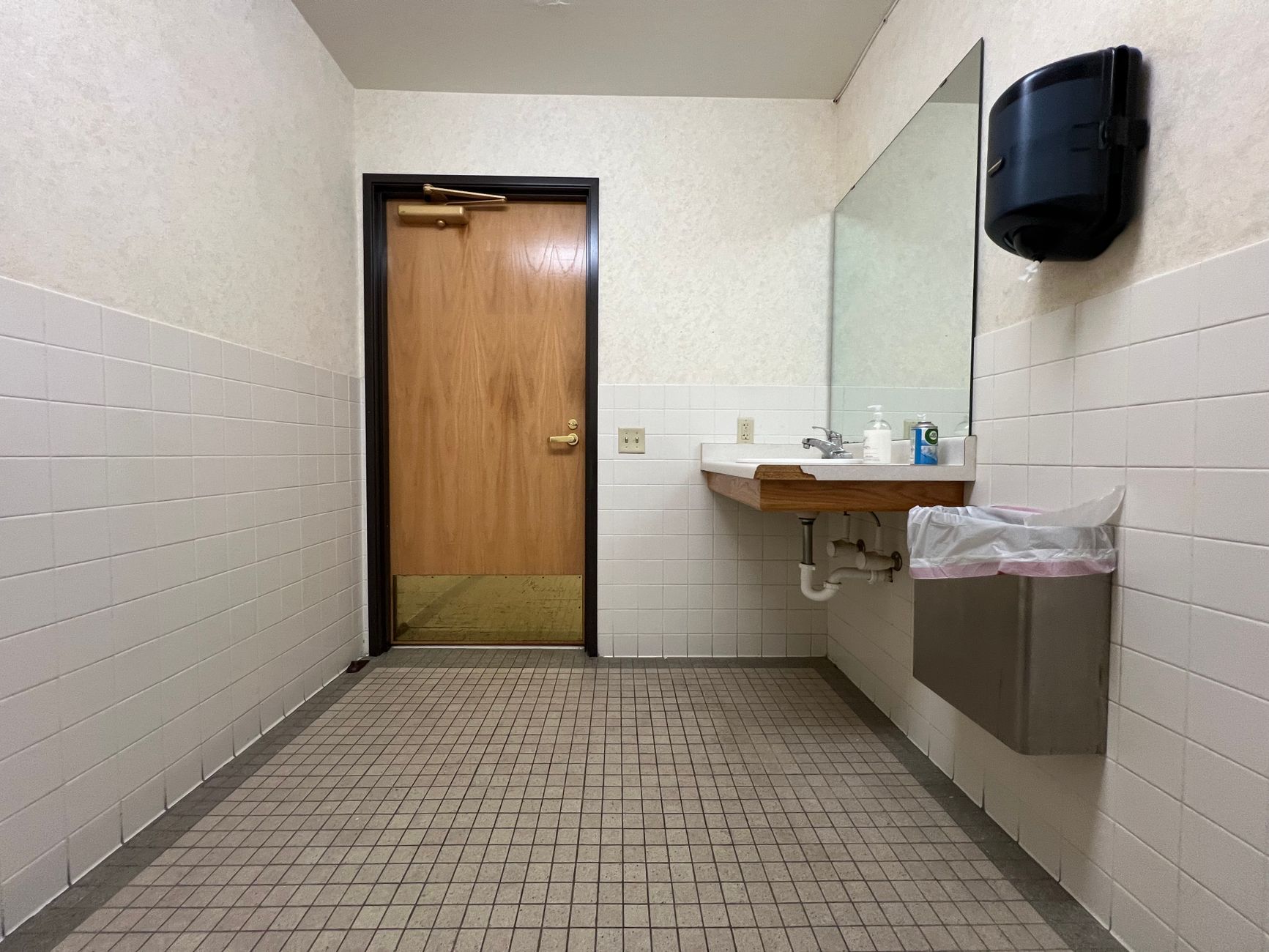
Most truck plazas should break the building into at least four cleaning zones: main retail and dining aisles, vestibules and weather drag-in lanes, restroom and shower approaches, and back-of-house corridors. Each zone has a different soil recipe, a different slip risk, and a different tolerance for leftover moisture. A robot floor cleaner rental that succeeds in the open store but leaves restroom approaches damp is not succeeding.
Carpet creates another decision point. Many service plazas use hard flooring through the main traffic path, but some still carry mats, runners, or small soft-surface pockets near seating or entries. CDC guidance for community facilities says hard floors should be cleaned with appropriate products and carpets should be vacuumed and cleaned with products intended for soft surfaces. In practice, that often means the primary buy case is still an autonomous floor scrubber rental or floor scrubber monthly lease, while carpet care stays manual or moves to a separate commercial carpet cleaning robot if the soft-surface square footage is truly material.
- Vestibules and entry lanes: water, salt, grit, and slip risk
- Foodservice edges: grease haze, sugary spills, tracked condiments
- Restroom and shower corridors: heavy moisture, paper debris, hygiene pressure
- Retail aisles: long runs where autonomous coverage earns its keep
What features matter more than brand hype?
Recovery performance is first. In a truck service plaza, a weak squeegee path or poor dirty-water pickup is not a nuisance. It becomes a safety problem. A machine that leaves film behind can turn weather drag-in into a slip hazard, especially where tile transitions meet smooth concrete.
Second is navigation under interruption. These buildings are rarely empty. You will see late-arriving drivers, carts, stock moves, and restroom traffic well into the night. The robot has to pause, reroute, and resume without losing its place or requiring constant babysitting. That is where many pilot programs look good in a demo and then fade in actual operation.
Third is serviceability. Brushes, pads, recovery components, and sensors take a beating in this environment. If your evaluation only covers mapping and user interface, you are skipping the real ownership question. Ask how the fleet is supported, what remote triage looks like, how fast on-site dispatch happens, and whether a backup robot program or loaner units are available when a machine goes down during peak travel periods.
- Strong water pickup on textured and contaminated hard floors
- Reliable obstacle handling during overnight but still active traffic
- Fast recovery after stops, reroutes, and manual interventions
- Maintenance included, remote triage, and emergency response nationwide
How should the cleaning schedule be built around overnight traffic?
Do not schedule a truck plaza like a suburban big-box store. The quietest window may still have steady restroom use and driver arrivals tied to hours-of-service breaks. FMCSA rules allow up to 11 hours of driving within a 14-hour window for property-carrying drivers after 10 consecutive hours off duty. That creates overnight clustering in exactly the places a service plaza operator needs the floor safest and the restrooms most presentable.
The better pattern is a staggered program. Use the robot for large-format scrubbing in open retail, dining perimeters, and long corridors during the lowest-conflict hours. Then hand off restroom interiors, shower stalls, and acute spill response to people. That split is not a failure of automation. It is proper task design.
For operators exploring robot as a service, commercial robot rental, or month to month robot lease structures, this scheduling reality matters financially too. You want a pilot that proves unattended coverage where it counts most, not a demo that forces the robot into cramped spaces just to show versatility. Coverage hours, recovery quality, and restart reliability are the metrics that matter here.
When does financing make more sense than buying outright?
Truck plazas tend to discover the value of flexible procurement quickly. Floor care is mission critical, but operating conditions are brutal enough that many teams want proof before they commit across multiple sites. That makes service robot rental, commercial cleaning robot rental, and floor scrubber monthly lease programs practical starting points, especially for regional chains testing different building layouts.
The important distinction is not rent versus buy in the abstract. It is whether the program includes maintenance, training, deployment, and an escalation path when the robot hits a bad week. A low monthly number can become expensive if the site manager is the real field technician. A stronger robot leasing for business package may cost more on paper and still win because it carries remote triage, on-site dispatch, and faster uptime recovery.
This is where Service Robot Co. fits naturally. The company operates as a full-service, OEM-neutral commercial robot integrator for U.S. businesses. That matters in truck plazas because the right robot depends on the floor, traffic, staffing pattern, and service footprint. Service Robot Co. can structure lease rental or sale programs, finance deployment, train the team, integrate the fleet, and service every unit through a nationwide U.S. engineer network. One partner, one number, and one lifecycle owner is unusually valuable when the facility never really closes.
What should a pilot prove before a multi-site rollout?
A serious pilot in this facility type should prove five things. First, the robot can complete planned square footage without leaving unsafe residual moisture. Second, it can handle your worst transition zones, especially wet entries and food-adjacent lanes. Third, overnight staff can recover from routine exceptions without calling a manager every hour. Fourth, the service model actually responds at the speed promised. Fifth, the data shows repeatable labor reallocation, not just novelty.
Ask for a pilot during bad conditions if possible. Rain, winter drag-in, and peak travel weekends expose the truth faster than a calm Tuesday walkthrough. The Federal Highway Administration notes that truck parking shortages are a national safety concern and that truck drivers may park in unsafe places when official capacity is unavailable. In operational terms, that means your site can surge at awkward times. The cleaning plan has to survive the ugly nights.
If you work with Service Robot Co., this is also where an OEM-neutral approach pays off. A vendor neutral robot integrator can compare machines against your actual floor and traffic profile, not force the site to fit one catalog. For a truck service plaza, that is the difference between a commercial robot demo and a deployment you can scale.
The practical shortlist for this facility type
For most truck service plazas, the shortlist is tighter than buyers think. Start with an industrial floor scrubbing robot for open hard floors. Add manual cleaning for shower interiors, toilet fixtures, and concentrated grease incidents. Consider a second automation layer only if the site has enough soft surface or enough square footage to justify it.
Do not overbuy versatility you will not use. A plaza does not need a machine that claims to do every floor in every room. It needs a robot that reliably cleans the hardest high-volume paths night after night, protects traction, and comes with a service model built for a 24-hour building. That is the standard.
If you are comparing commercial cleaning robot rental, robot rental monthly, or no long term contract programs, keep the decision grounded. Ask what floor the robot is truly built for, what happens when it goes down on a holiday weekend, and how quickly your staff can get help. In truck plazas, cleaning performance is operations performance. There is no softer way to say it.
Frequently asked questions
Sources
- American Trucking Associations economics data
- NACS convenience store industry metrics
- FHWA truck parking overview
- FHWA National Coalition on Truck Parking 2020 inventory
- OSHA warehousing floor hazards guidance
- CDC facility cleaning and disinfection guidance
- FMCSA hours of service overview
- FHWA Jason's Law truck parking survey chapter 2