Key takeaways
- Most buyers should favor a new turnkey deployment when uptime, safety, and launch dates matter more than the lowest acquisition cost.
- A used cobot cell can pencil out for a stable task, but only if documentation, backups, spare parts, and support history are intact.
- The biggest hidden costs are usually integration labor, software cleanup, safety validation, and downtime during rework.
- Risk-adjusted total cost beats sticker price. Compare the full five-year operating picture, not the day-one invoice.
What should most buyers choose right now?
If the cell will touch a live production target, a committed launch date, or a process with safety exposure, a new turnkey system is usually the smarter buy. The price gap between used and new often narrows fast once you add guarding updates, controls cleanup, commissioning, training, and the first unplanned outage. What looked cheap on paper can turn into a long retrofit with uncertain accountability.
A used cobot cell makes sense in a tighter band of cases. The application is well understood, the duty cycle is forgiving, internal maintenance has strong controls talent, and the seller can prove the cell’s history with complete files. In most other cases, a warrantied turnkey deployment buys predictability, cleaner handoff, and a much lower chance that your team spends months rebuilding somebody else’s shortcuts.
When does a used cell actually make sense?
Used equipment is strongest when the work is repetitive and not especially exotic. Simple machine tending, straightforward pick and place, and a mature end-of-line step can all be candidates if the cell architecture is familiar to your plant and the tool chain still has support. A refurbished asset can also fit a pilot where you want to learn the workflow before standardizing broadly.
The key is discipline. Buyers should assume nothing and verify everything. If the cell arrives with current backups, clear I/O maps, electrical drawings, documented safety logic, and a believable maintenance trail, the used path can be rational. If any of those pieces are fuzzy, the discount is probably paying you to inherit risk.
- Best fit: stable process, known part mix, modest uptime pressure
- Best fit: internal team already supports similar controls and field devices
- Best fit: seller provides manuals, backups, change logs, and service records
- Poor fit: custom tooling, complex safety zoning, or a hard customer deadline

What is usually missing from the low-price listing?
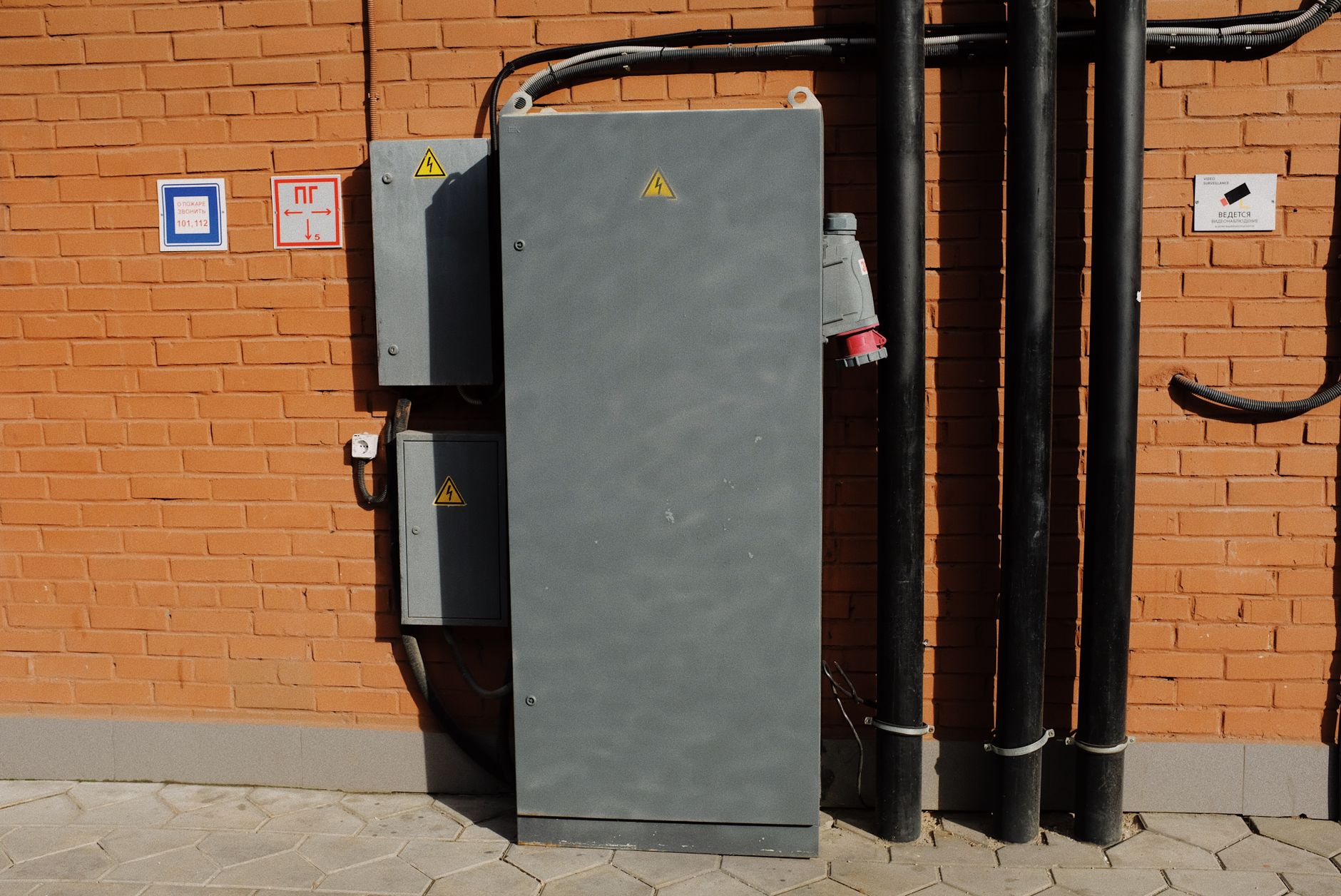
This is where many used deals go sideways. In the United States, machine safeguarding is not optional. OSHA’s machine guarding rule, 29 CFR 1910.212, requires protection against hazards created by moving parts and points of operation. OSHA’s lockout and tagout rule, 29 CFR 1910.147, requires an energy-control program with procedures, training, and periodic inspections. If a used cell shows up without current guarding details, clear energy-isolation points, or validated safety functions, the buyer now owns that gap.
The missing items are rarely glamorous, but they drive real cost. Risk assessments, electrical schematics, pneumatic diagrams, controller backups, spare-part lists, tool-center-point data, HMI recipes, restart instructions, and training records are what make a cell maintainable. Rebuilding that packet takes time from expensive people, and it usually happens while production waits.
- Risk assessment and safeguarding validation
- Lockout and tagout procedures tied to the actual installation
- Electrical and pneumatic drawings that match the machine as built
- Controller, HMI, and vision backups with tested restore steps
- Operator and maintenance training records
- Site acceptance test results and punch-list closure
Why does integration labor erase the discount so often?
A used cell is never just hardware. It has to fit your floor, your parts, your utilities, your network, and your operators. Mounting patterns change. Feeders and end effectors need adaptation. Safety perimeters move. Interfaces to conveyors, machine tools, scanners, and plant software often need fresh engineering. Even small mismatches cascade into hours of electrical work, debug time, and retesting.
That labor is not cheap, and it is not sitting idle. According to the U.S. Bureau of Labor Statistics, industrial machinery mechanics, machinery maintenance workers, and millwrights had median pay of 63,510 dollars in May 2024, and the occupation is projected to grow 13 percent from 2024 to 2034, with about 54,200 openings each year. In plain terms, the people who can rescue an awkward retrofit are valuable and busy. A turnkey buy packages that effort up front instead of forcing your plant to assemble it piece by piece.
How fast can controls and software become a problem?
Obsolescence is one of the least visible hazards in a used automation purchase. Microsoft states that Windows 10 reached end of support on October 14, 2025. If a used cell depends on an older industrial PC or HMI built around that stack, the machine may still run, but it is now sitting on a dead-end support path. CISA also warns that unsupported operating systems and outdated firmware pose a significant security risk because vulnerabilities are no longer patched.
That matters beyond cybersecurity. Unsupported PCs are harder to replace in a hurry. Old drivers break when you swap hardware. License dongles disappear. Activation rights can be unclear when ownership changes. Even if the robot mechanics are sound, the controls layer may force a partial rebuild. A new turnkey system starts on a current software baseline, with known license status and a cleaner update path.
How do spare parts and warranty change the real cost?
A used cell often comes with no meaningful warranty and no structured parts plan. That is manageable for a noncritical process with slack in the schedule. It is painful for a cell that gates shipments. Once older drives, safety components, industrial PCs, or custom brackets fail, your team can end up chasing secondary-market parts or redesigning around what is still available. The savings from the purchase can vanish in one outage.
A new turnkey deployment usually gives you a current bill of materials, manufacturer-backed support paths, and a deliberate spare-parts strategy from day one. For many buyers, that is the real product, not just the machine. Predictable recovery matters more than the bragging rights of a low auction price.
How should you compare risk-adjusted total cost?
Start with the obvious numbers, then force the hidden ones onto the page. Purchase price is only line one. Add freight, rigging, site prep, utilities, new guarding, tooling adaptation, controller cleanup, software relicensing, commissioning, training, and a reserve for spare parts. Then add the cost of delayed launch and the cost of one serious breakdown during the first year. This is the comparison that tells the truth.
Safety exposure belongs in that model too. OSHA’s 2026 civil penalty schedule allows up to 16,550 dollars for a serious violation and up to 165,514 dollars for a repeat or willful violation. That does not mean every documentation gap becomes a citation, but it is a useful reminder that incomplete safeguarding and energy-control work carry real business risk. A cheap cell with fuzzy safety provenance is not low cost. It is just underpriced risk.
- Acquisition: used purchase price versus new turnkey price
- Recovery work: engineering, retrofits, validation, and training
- Supportability: spare parts, warranty, software status, and backups
- Operational risk: downtime, launch delay, safety exposure, and ownership clarity
- Five-year view: total output, service burden, and resale or redeployment value
Where does Service Robot Co. fit in this decision?
For many U.S. operators, the hard part is not choosing between used and new in the abstract. It is getting a credible side-by-side analysis from someone who is not married to a single manufacturer. Service Robot Co. works as an OEM-neutral commercial robot integrator, so the recommendation can start with the task, the floor, and the business case instead of a preset catalog. If a refurbished cell is truly the right move, that should survive scrutiny. If a new turnkey robot deployment carries the lower risk-adjusted total cost, that should be visible too.
That model also matters after the PO. Service Robot Co. can finance, deploy, integrate, train, and service the system through a nationwide U.S. engineer network. One partner, one number, and one accountable handoff across purchase or lease, robot financing for small business, deployment, and commercial robot repair service. For buyers comparing robot leasing vs buying, or scanning used commercial robots for sale against a fresh build, that single-owner lifecycle support can be the difference between a cell that runs and a cell that keeps running.