
Key takeaways
- Robots do not make a hotel autonomous. Orchestration does.
- Elevators, not hallway navigation, usually decide multi floor hotel throughput.
- Unowned exceptions turn impressive demos into guest service failures.
- Hotels need shared state across front desk, housekeeping, food service, and fleet control.
- One lifecycle owner matters more as the property mixes robot types and brands.
The hard part is not the robots
A fully robotic hotel only works if the property behaves like one coordinated operating system, not a stack of isolated machines. Reception, luggage, room service, cleaning, food delivery, and guest support all touch the same corridors, elevators, rooms, and service promises. If those robots cannot share state and pass work cleanly between each other, staff end up doing the real orchestration by phone, radio, and apology.
That is why the June 1, 2026 announcement from Shenzhen CTID and a robotics manufacturer matters. Shenzhen Government Online said the project is planned as a 44 room hotel spanning seven core service scenarios, with phased trial operations planned for the end of 2026 and first guests expected in early 2027. The project is interesting not because it adds more machines, but because it forces one property to coordinate them.
The lesson for hotel operators is simple. A collection of robots is not automatically a working system. The working system is the layer that decides who takes the next job, who gets the elevator, when a cleaned room is really guest ready, and who owns the exception when something goes sideways.
Why does a hotel make orchestration harder than a single robot demo?
Hotels are unusually dense operational environments. The front desk promises a check in time, housekeeping releases rooms, food service sends orders on peaks, luggage surges cluster around arrival windows, and guest support requests arrive at random. All of that lands in a building that runs around the clock and shares narrow vertical infrastructure.
The timing pressure is real. According to AHLA's February 2025 staffing survey, 71 percent of surveyed hotels had openings they could not fill, and the most cited shortage was housekeeping at 38 percent. AHLA said again in March 2026 that more than half of hotel respondents were somewhat or severely understaffed, while 65 percent named labor costs as a top financial pressure.
At the same time, the building is not empty. CoStar and Tourism Economics upgraded their August 6, 2026 U.S. hotel forecast to 63.1 percent occupancy after the industry sold 11.4 million more room nights in the first half of 2026 than in the same period of 2025. In other words, hotels are being asked to add automation inside live, revenue producing traffic, not on a quiet lab floor.
Where do the handoffs actually happen?
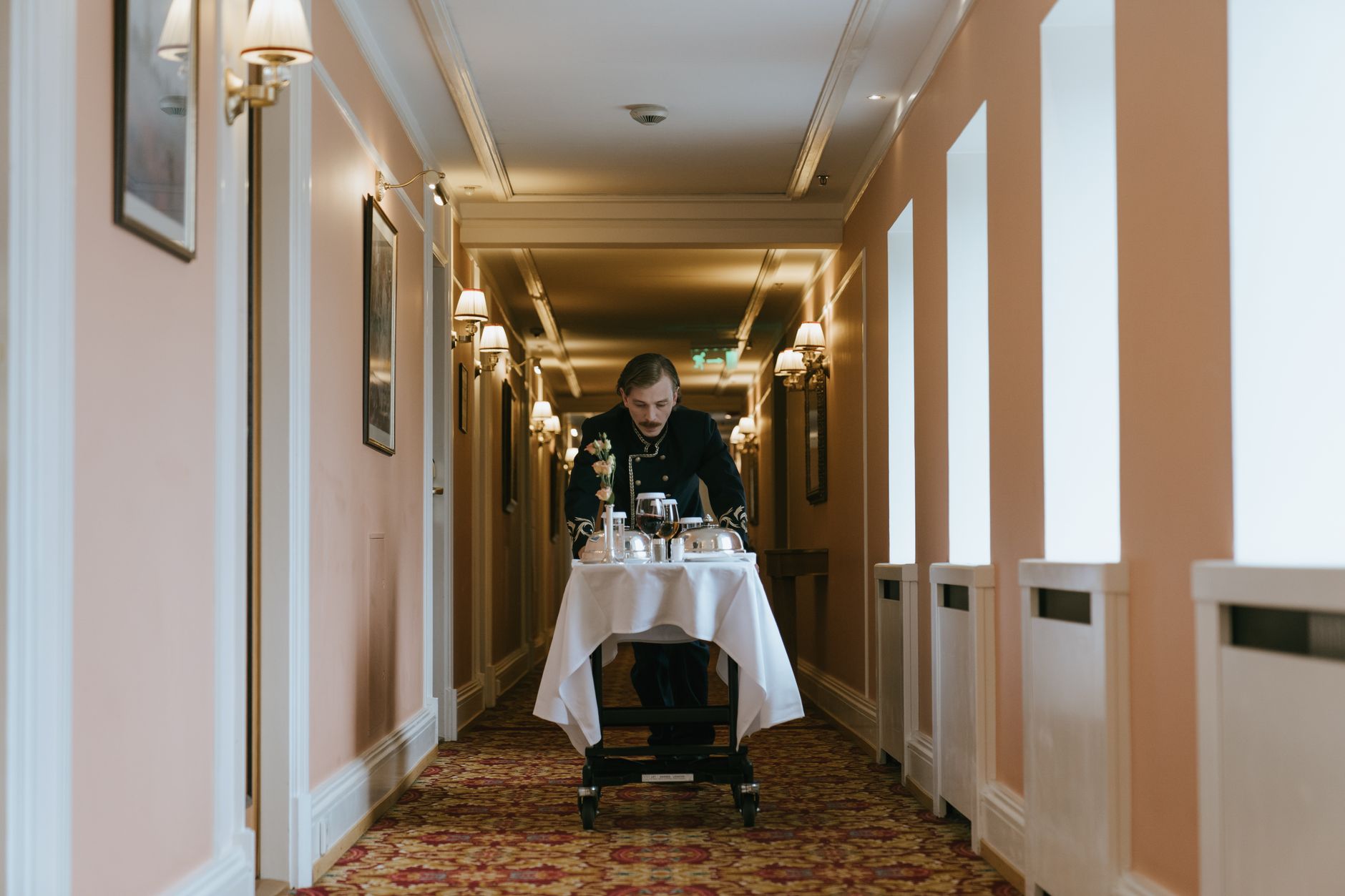
Handoffs are where robotic hotel programs succeed or fray. A lobby unit might complete check in, but that does not mean the room is releasable. A luggage mover may reach the bank of elevators, but that does not mean a guest room corridor is clear or a door is accessible. A room service robot may arrive at the right floor, yet the order still fails if the guest is not present, the tray is incomplete, or the room was changed at the desk two minutes earlier.
The operational layer has to treat every service promise as a chain of state transitions, not one trip. That means the job is only complete when the next owner accepts it and the system records that acceptance. Without that discipline, delays get mislabeled as robot failures when the real break happened at the handoff.
- Front desk to housekeeping, room assigned versus room actually released
- Kitchen to delivery, order prepared versus order loaded and temperature safe
- Luggage intake to elevator dispatch, bag tagged versus bag routed
- Cleaning completion to guest support, room cleaned versus room inspected and sellable
- Guest request to proof of delivery, request accepted versus guest actually served
Elevators are the hotel's shared choke point
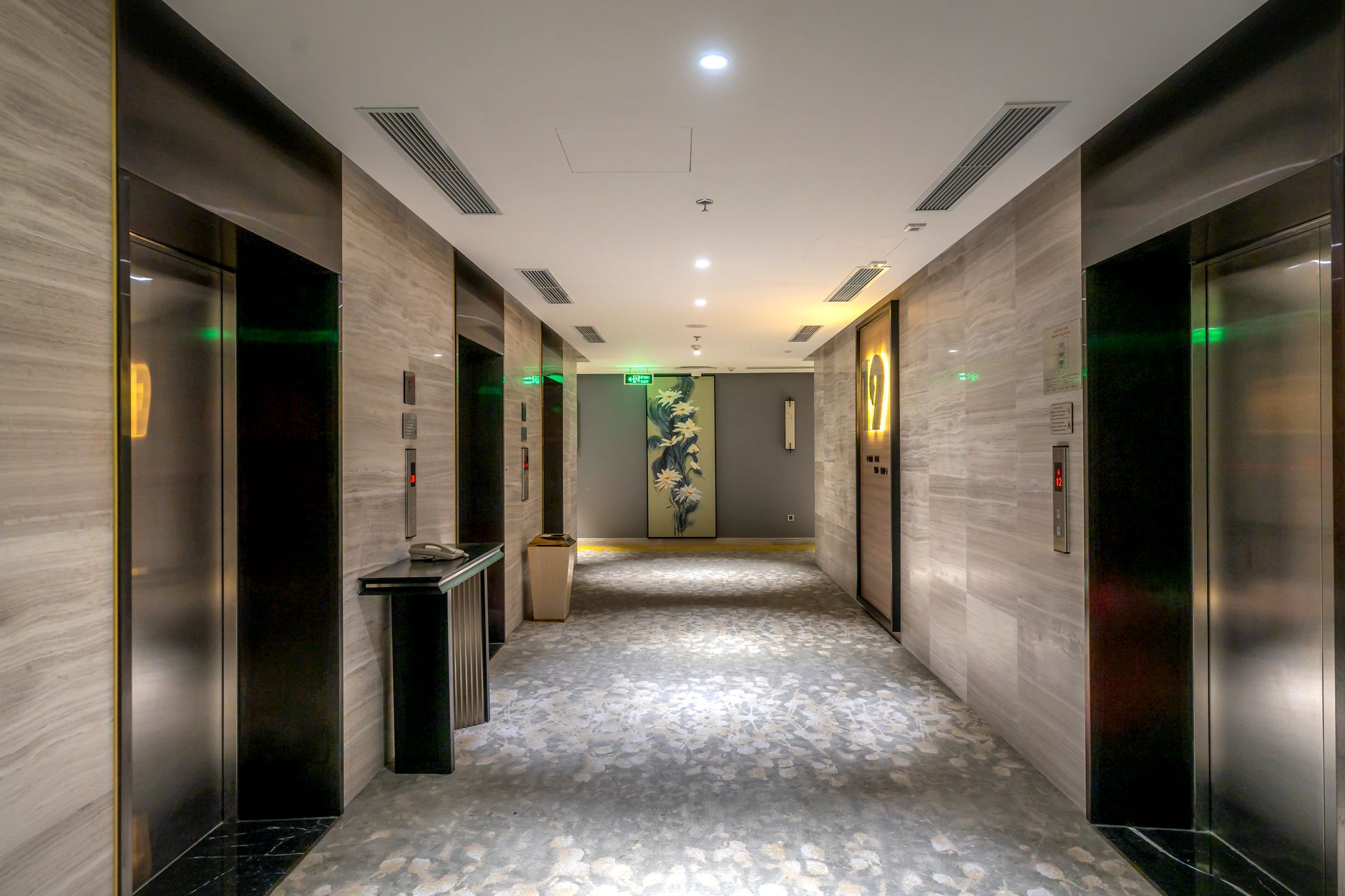
Multi floor hospitality looks glamorous in a demo and brutally ordinary in live operations. Elevators are not just a transport link. They are a shared scarce resource used by guests, staff, luggage, room service, housekeeping carts, and every delivery robot for elevators at the same time.
A 2025 multi floor hotel routing study published in Sensors put numbers on that bottleneck. In a 60 customer node scenario, increasing elevator operation time from 40 seconds to 100 seconds nearly doubled total travel time from 225 seconds to 500 seconds. The same study also showed diminishing returns from simply adding more robots, because vertical movement became the limiting factor.
That is why a multi floor delivery robot needs elevator rules, not just elevator access. The property needs queue priorities, time of day policies, retry logic, and fallback behavior when an elevator is taken out of service. If those rules live only inside one vendor app, the rest of the hotel still has no idea what the fleet is doing.
Who owns the exception when the route breaks?

The fastest way to make a hotel robot feel useless is to leave exceptions unowned. Guest not in room. Wrong room number. Door latched. Spill in corridor. Elevator offline. Battery low in the middle of a rush. The machinery may be autonomous, but the operation still needs a named owner for every failure class.
Good orchestration separates motion autonomy from exception ownership. Some failures belong to the property, such as a room change not pushed through or a blocked corridor. Some belong to the fleet layer, such as rerouting, reassignment, or remote recovery. Some belong to a department lead, such as kitchen remake, housekeeping rework, or front desk guest compensation.
That ownership map matters more than marketing copy. A room service robot or amenity delivery robot can save real labor only when everyone knows whose clock starts at the moment the run fails.
- Front desk owns identity, room changes, and guest facing recovery
- Housekeeping owns room release status, blocked rooms, and post clean validation
- Food service owns order accuracy, remake rules, and pickup timing
- Fleet control owns dispatch, rerouting, battery policy, and remote intervention
- Engineering owns elevator downtime, door interfaces, docks, and network faults
What does the operating layer actually need?
At minimum, the orchestration layer has to sit between the hotel's service promises and the robot behaviors that execute them. It should ingest jobs from the front desk, housekeeping, food service, and guest messaging, then translate those requests into sequenced tasks with clear acceptance criteria.
It also needs observability. A property should be able to see what is waiting, what is in motion, what is blocked, what is late, and what has failed back to people. Without that view, managers cannot tell the difference between a bad route, a bad policy, a bad elevator, and a bad staffing assumption.
That sounds less glamorous than a demo video, but it is the difference between a novelty property and a usable one. The hotel is not buying motion. It is buying dependable service completion.
- Task broker that can assign work across reception, delivery, cleaning, and luggage flows
- Shared room and corridor state, including occupied, released, blocked, and service pending
- Elevator scheduler with priority rules, timeout logic, and offline fallbacks
- Exception console that routes failures to the right department with timestamps
- Audit trail for proof of pickup, proof of delivery, and proof of room release
- Battery and dock policy so peak demand does not collide with charging windows
Why US operators usually need one lifecycle owner
This is also where the buying model changes. For a U.S. hotel comparing hotel delivery robot leasing, service robot leasing, robot leasing for business, or a purchase or lease structure, the hard part is rarely procuring a machine. The hard part is robot deployment and integration, staff training, elevator coordination, ongoing service, and one place to call when the property has a bad night.
Service Robot Co. is built around that operating reality. The company is OEM neutral, works across manufacturers, and handles selection, financing, deployment, integration, training, and service as one lifecycle owner. According to its official site, it supports all 50 U.S. states, covers 85 plus metros, and backs deployments with 10 minute remote triage and 24 by 7 emergency response.
That matters even more in a mixed fleet. A hotel may need a room service robot, an amenity delivery robot, cleaning units, and luggage movers that do not come from the same catalog. A vendor neutral robot integrator gives the operator one partner, one number, and one operating standard instead of asking the hotel to coordinate four support queues during live service.
What should a hotel pilot prove before it scales?
A serious pilot should not stop at navigation success. It should prove handoff success, elevator success, exception recovery, and department ownership under real traffic. If the pilot only shows that robots can move, it has answered the easiest question on the property.
That is the real takeaway from the Shenzhen project. The headline is a fully robotic hotel. The operating lesson is orchestration. When reception, delivery, cleaning, luggage, and guest support share one building, the property wins only if one layer keeps the handoffs tight and the exceptions owned.
- What starts the task, and what exact event marks it complete
- Who owns the run if the guest is missing, the room changes, or the elevator is offline
- How cleaned rooms are released into front desk inventory
- How robot charging windows are protected during breakfast, check in, and late night peaks
- What service level applies after go live, including spare unit coverage or emergency response
Frequently asked questions
Sources
Service Robot Co. is not affiliated with, sponsored by, or endorsed by the companies mentioned in this article.