
Key takeaways
- Receiving automation pays best when unloading, identification, sorting, and palletizing are designed as one flow.
- SKU variability and exception handling matter more than headline cycle-time claims.
- One accountable support owner usually beats three strong but disconnected cell vendors.
- A staged deployment with hard go or no-go gates lowers integration risk and protects uptime.
The lesson is the flow, not the cell
U.S. warehouses should treat goods receiving as one controlled flow, not as three purchases that happen to touch the same cartons. When unloading, sorting, and palletizing are bought as separate cells, the missing piece is usually the handoff logic. That is where queues, manual rescue work, and missed payback hide.
That choice matters more in 2026 than it did a few years ago. According to the U.S. Census Bureau, second quarter 2026 retail e-commerce sales reached $340.2 billion, up 12.2 percent from a year earlier, and 17.1 percent of total retail sales. BLS still counted 1.8346 million warehousing and storage employees in July 2026 and 23,757 private warehousing establishments in the fourth quarter of 2025.
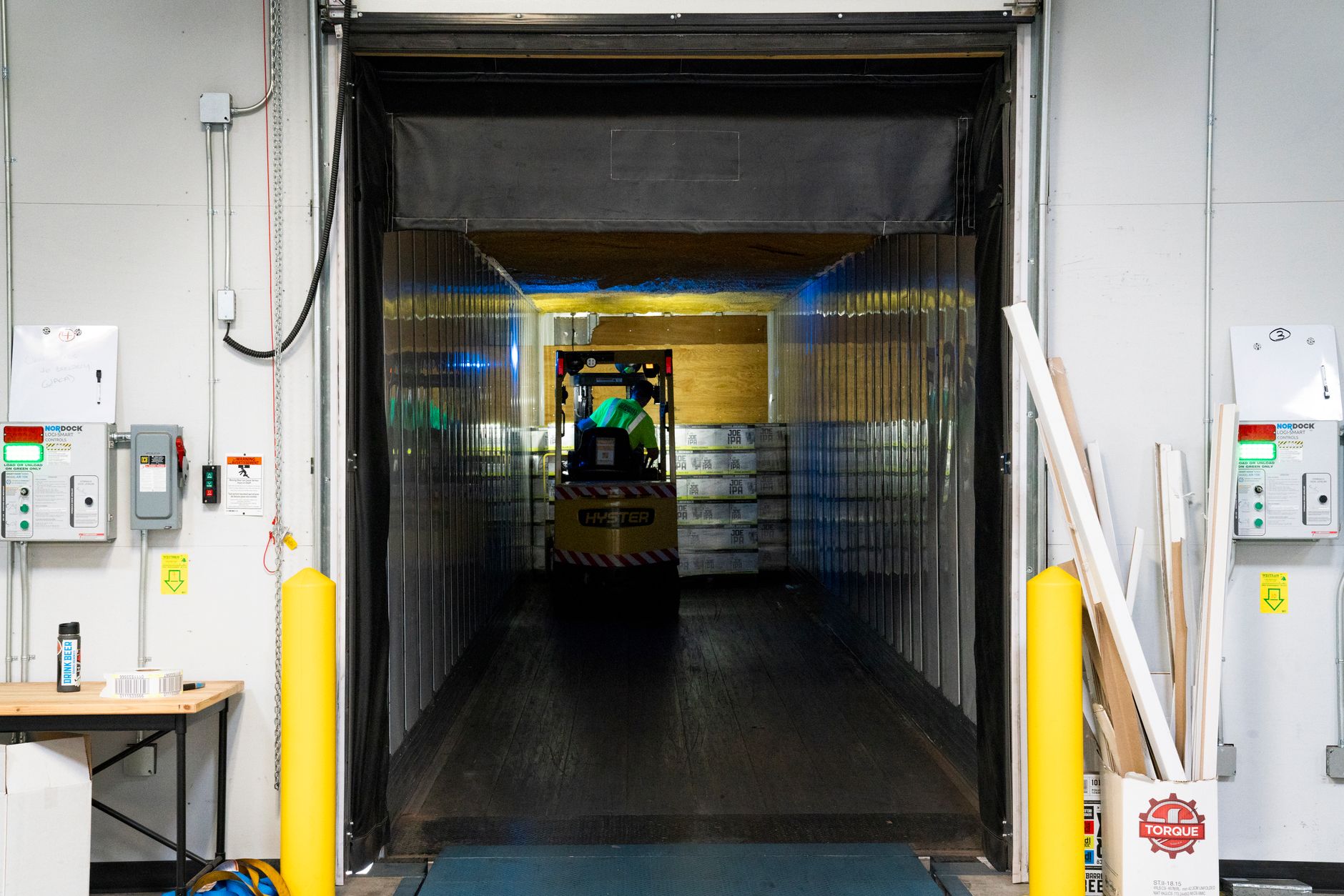
The BAUHAUS project in Krefeld is useful because it attacks receiving as one path from container to pallet, not as a pile of disconnected machines. For a U.S. operator, the real question is simple. Can the flow absorb variability and exceptions without pushing the mess back onto people?
What happened in Krefeld, and why does it matter?
On July 27, 2026, BAUHAUS announced an automated goods-receiving project at its central warehouse in Krefeld, Germany. According to BAUHAUS, the setup ties container unloading, barcode capture, sorting, and palletizing into one continuous workflow.
BAUHAUS said the Krefeld import and central warehouse handles thousands of inbound receipts a day across more than 10,000 items. That detail matters. A receiving line that only works on tidy, repeatable cartons is not much use in a live import operation.
BAUHAUS also framed the project as a labor and safety play. OSHA's warehousing overview points to the same pressure in the U.S.: the most common warehouse injuries are musculoskeletal disorders tied to overexertion in lifting and lowering, along with struck-by incidents involving material-handling equipment.
Why one connected receiving flow usually beats three good cells
Separate cells are easy to buy because each one has a neat demo and a narrow spec. The trouble starts between stations. If the unload area outruns label capture, cartons pool. If sortation outruns pallet build, you get unfinished pallets, double touches, and supervisors doing live traffic control.
A connected receiving flow forces those dependencies into one control plan. You define one queue structure, one exception route, one data handshake into the WMS or ERP, and one recovery plan after faults. Integration work does not disappear, but it happens in design instead of on the dock at 5 a.m.
There is a safety angle too. BLS reported a 2024 total recordable injury and illness rate of 4.9 cases per 100 full-time workers in general warehousing and storage, versus 2.3 across private industry overall. When injury rates are that high, the wrong handoff architecture is not a minor nuisance. It is a real operating risk.
Variability is where receiving programs win or lose
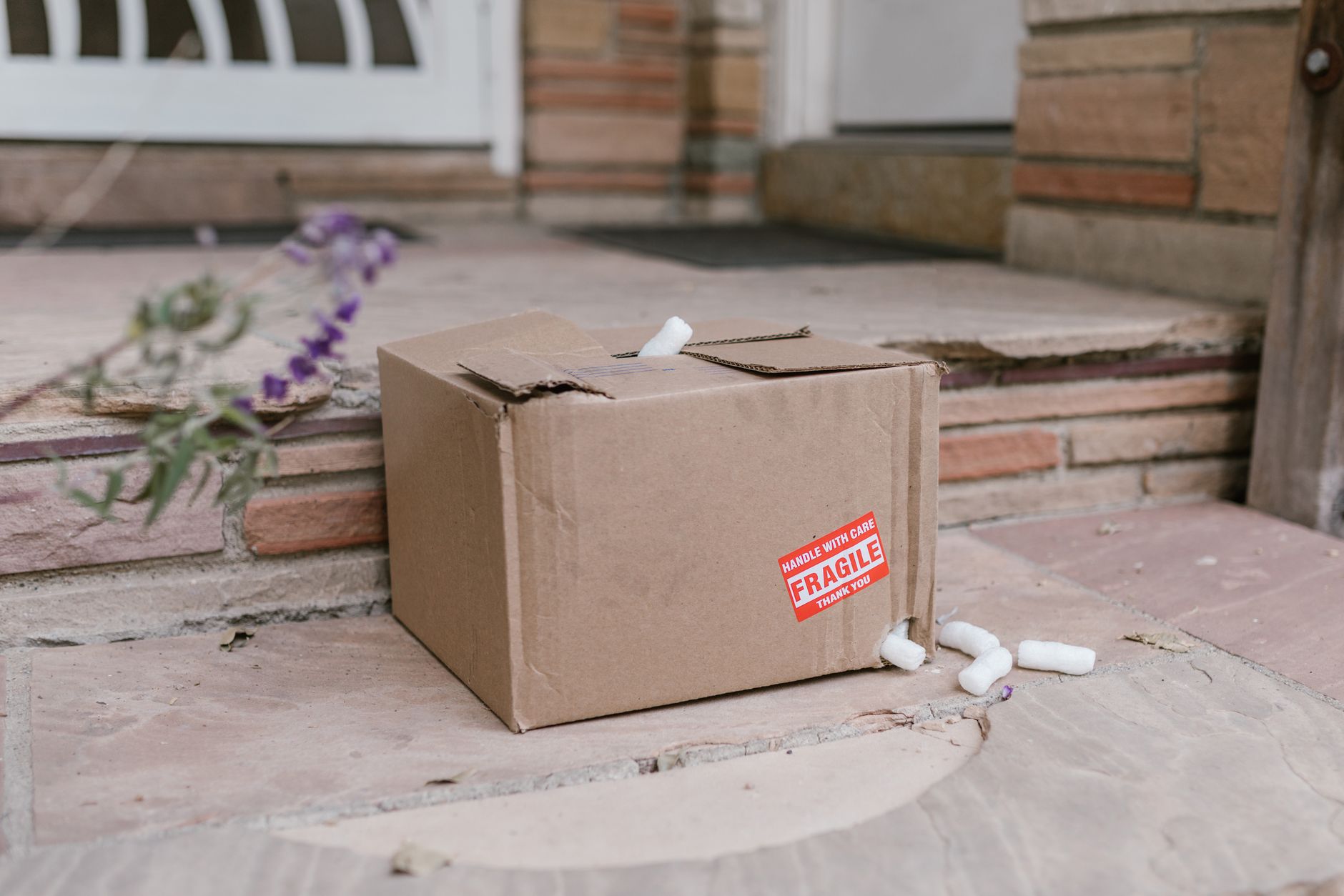
The hard part is not the average carton. It is the ugly edge case: crushed corners, mixed inner packs, poor labels, shifted loads, partial layers, changed pallet recipes, and cases that do not present a clean pick.
BAUHAUS called out variability directly, saying packages differ strongly in shape, weight, and palletizing pattern. That is exactly the right buyer lens. Do not ask whether automation works on your best supplier. Ask what it does when inbound discipline falls apart.
OSHA warns that automated tools can create struck-by and caught-between hazards when they are not properly integrated into the workplace. In receiving, exception handling is part of the safety case. It is not a footnote for the controls team.
- What share of inbound volume arrives floor-loaded, and how concentrated is that volume by vendor, lane, or country of origin?
- How many carton size and weight bands cover most receipts, and what falls outside them?
- What happens when a barcode is missing, wrinkled, duplicated, or unreadable?
- Can the line divert damaged or unstable cartons without stopping upstream work?
- How are pallet recipe changes approved, tested, and rolled into production without creating night-shift confusion?
The buyer questions that belong in every site walk
According to BLS, warehousing includes 89,090 shipping, receiving, and traffic clerks and 433,060 laborers and freight, stock, and material movers. BLS also puts median annual pay in the sector at $46,640 for shipping, receiving, and traffic clerks and $45,880 for hand material movers. Those are large labor lines, which means moved labor is not the same as removed labor.
Any U.S. team evaluating receiving automation, a warehouse robot lease pilot, or a material handling robot lease program should press on the labor-shadow questions before signing. The goal is not to replace touches in one zone with hidden touches in three new zones.
If a vendor or integrator cannot answer the questions below during the site walk, the deployment is not ready for a real budget.
- Where exactly do people step in, and how many manual touches are expected per exception?
- Which WMS or ERP transactions fire automatically, and which still need human confirmation?
- What is the recovery path after a jam, scan failure, or dropped case, and how long does that recovery take?
- Can supervisors re-sequence work when priorities change, or does the whole line need engineering support?
- What spare-parts kit, local stocking plan, and remote support method back the first year of operation?
Accountability after go-live is the real moat
The first month of a receiving line is rarely the hardest month. Month six is harder. Carton mix drifts, supervisors change routing rules, one supplier's labels degrade, and the quick fix that saved a Tuesday night turns into permanent process debt.
This is why many U.S. buyers prefer one accountable partner over a stack of cell vendors. Service Robot Co. is a full-service commercial robot integrator for U.S. businesses. We stay OEM-neutral, pick the right robots across manufacturers, then finance, deploy, integrate, train, and service every unit through a nationwide U.S. engineer network.
That model matters whether you buy, lease, or start with a distribution center robot lease pilot. A receiving line needs remote triage, spare-parts planning, software support, operator retraining, and one owner for the handoff between mechanics, vision, controls, and warehouse systems. One vendor for the whole lifecycle is often the cleanest way to contain integration risk.
A staged rollout beats a heroic cutover
The safer path is staged. Start with the inbound lane that has the cleanest appointment discipline, the most stable carton mix, and the smallest set of pallet rules that still matters to the business. Prove the bypass and rework path before chasing peak rate.
That discipline matters even more now that OSHA says inspections under its updated National Emphasis Program on Warehousing and Distribution Center Operations began on July 31, 2026. Training, clearances, guarding, lockout, and human-robot interaction rules need to be part of commissioning, not post-go-live cleanup.
Advance only when miss reads, manual touches, upstream wait time, and fault recovery sit inside agreed limits. A phased deployment no shutdown beats a fast rollout that leaves a permanent manual shadow crew.
- Phase 1: automate unloading and identification on one inbound profile with a visible manual bypass.
- Phase 2: add destination sorting, then measure queue stability across normal and bad inbound days.
- Phase 3: add pallet build for a limited recipe set, then stress the line with controlled exceptions.
- Phase 4: expand to more vendors, lanes, and SKU families only after uptime and exception rates stabilize.
What U.S. warehouse teams should do next
The BAUHAUS lesson is not that every American DC should copy one European build. It is that receiving automation pays off when it is bought as a flow, measured as a flow, and serviced as a flow.
For any RFP, pilot, or robot deployment and integration discussion, ask who owns variability, who owns the queue between stations, who owns the 2 a.m. exception call, and how the rollout expands from one lane to the rest of the dock. If the answers live in three different contracts, the risk is already visible.
Service Robot Co. sits in that gap as a vendor neutral robot integrator for U.S. businesses. We help operators evaluate the right architecture, then finance, deploy, integrate, train, and service the line. One partner, one number, and one lifecycle owner is often the difference between a neat demo and a receiving program that actually stays up.
Frequently asked questions
Sources
Service Robot Co. is not affiliated with, sponsored by, or endorsed by the companies mentioned in this article.