
Key takeaways
- An outdoor pilot shows buyer interest, not universal site fit.
- Parking lots, grounds, and pool decks need different machine specs and acceptance tests.
- Weather tolerance has to be proven on site, not inferred from a regional forecast.
- Scale decisions should hinge on cleaning evidence, safety rules, and field service coverage.
What does this pilot really tell buyers?
An August 6, 2026 SEC-filed announcement reported that a robotics provider had run an outdoor cleaning pilot with a major U.S. gaming and hospitality operator and had secured exclusive U.S. distribution rights for gaming and large hospitality properties in Nevada, Arizona, New Jersey, Pennsylvania, California, and Connecticut. That is a real market signal. Big hospitality operators are now asking outdoor automation to do more than lobby floors and back corridors.
But it is not broad proof yet. Outdoor hospitality cleaning is a different operating problem from indoor floor care. The machine has to cope with sunlight, wind, puddling, debris variety, slopes, curbs, drainage patterns, and guest traffic that does not move like traffic inside a building. A pilot can show that one workflow is possible. It does not, by itself, prove repeatable performance across parking lots, grounds, or pool decks.
So buyers should read this news as an invitation to verify harder. The right questions are not just about autonomy. They are about what surfaces were tested, what weather the pilot survived, how cleaning was measured, what safety rules governed operation, and how the fleet will be serviced after the ribbon-cutting.
What the August 6 filing actually established
The August 6 filing mattered for two reasons. First, it described a live outdoor deployment with a major operator, not a lab video or a closed commercial robot demo. Second, it tied that pilot to a six-state commercial channel and to outdoor tasks that extend past basic sweeping, including parking-lot cleaning, grounds work, and pool-deck maintenance. The same filing said nearly all of the provider's existing clients already have outdoor areas to maintain, which explains why the announcement drew attention.
Still, the deeper SEC record argues for caution. In a July 24, 2026 registration statement, the company said it had cumulatively provided cleaning service for approximately 600 million square feet in hospitality, yet it also said substantially all revenue came from two enterprise customers. Scale indoors does not erase concentration risk outdoors. It simply means the company has a serious base from which to test expansion.
Why outdoor cleaning breaks the indoor playbook
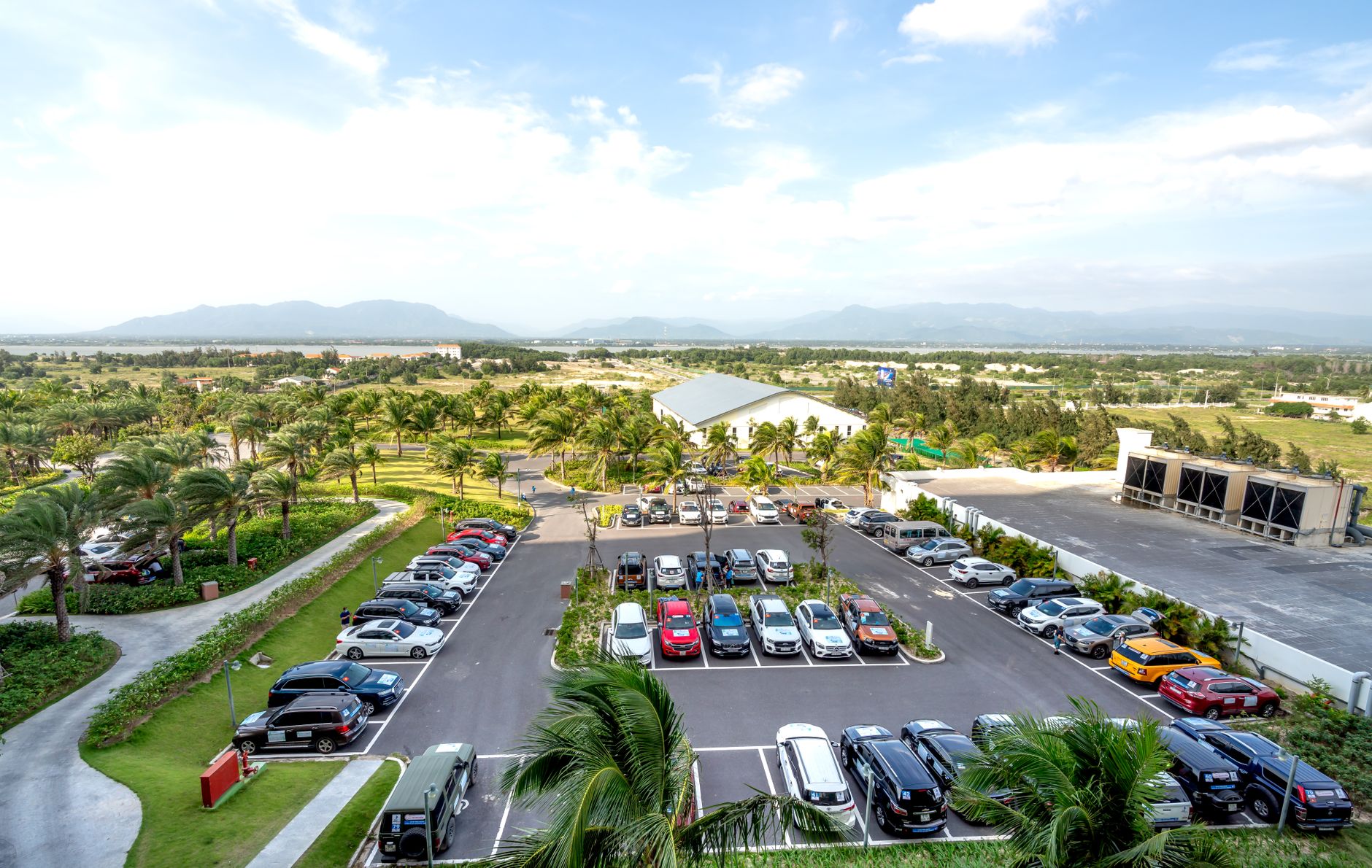
Outdoor cleaning is not one job. Parking lots deal with grit, leaves, sand, oil residue, tire dust, and storm debris on asphalt or textured concrete. Grounds routes add edges, cambers, bollards, curbs, and uneven transitions. Pool decks bring standing water, splash patterns, sunscreen residue, and tighter guest-safety expectations. A machine that works on one of those surfaces may stumble on the next.
EPA makes the distinction sharper. According to EPA, runoff from paved streets, parking lots, and rooftops can carry trash, chemicals, and dirt or sediment into streams, lakes, and groundwater. EPA also lists sweeping parking lots and streets and cleaning storm drains as standard pollution-prevention practices. That means outdoor cleaning is not just a presentation task. On many sites, it is tied to environmental housekeeping, debris capture, and disposal discipline.

Why sensors and weather tolerance become make-or-break

Weather turns a spec sheet into a field test. According to OSHA, wet bulb globe temperature is preferred because it captures temperature, humidity, radiant heat, and wind. OSHA also notes that direct sunlight can increase heat index by up to 13.5 degrees Fahrenheit, and that weather-station readings may miss site conditions. For outdoor automation, that matters. Runtime, traction, sensor clarity, and crew supervision plans have to be checked at the property itself, not inferred from a regional forecast.
This is where buyers should push past vague claims that a unit is outdoor rated. UL lists water ingress protection, dust, salt fog, ultraviolet exposure, humidity, and thermal shock among common environmental simulations. Ask for the exact test matrix, the pass-fail thresholds, and the configuration that was tested. A sealed sensor housing, a protected charging interface, and a brush deck that survives fine grit are more important outdoors than glossy footage from one dry night.
Pool decks and runoff rules add a second layer of due diligence
Pool-adjacent work deserves its own filter. CDC says the current Model Aquatic Health Code, the 5th edition, was posted on December 16, 2024. CDC guidance for public pools and hot tubs calls for water pH at 7.0 to 7.8 and disinfectant checks at least twice per day, or hourly in heavy use. CDC also says pool chemical injuries lead to about 4,500 U.S. emergency department visits each year. A pilot on a dry valet apron does not tell you much about operation next to chlorinated water and early-morning deck prep.
That does not mean outdoor robots should stay away from pool decks. It means buyers need separate proof. Ask how the machine handles splash, rinse-down residue, textured anti-slip surfaces, and guest reentry deadlines before opening. If the pilot did not include those conditions, treat pool-deck claims as future potential, not established evidence.
What buyers should verify before treating a pilot as proof
The news release itself offered a sober reminder. In its forward-looking risk language, the SEC-filed announcement warned that the pilot may not expand, outdoor revenue may underperform expectations, distribution-right scope and duration matter, and technical integration across brands may not land on the hoped-for timeline. That is normal for an early market. It is also why buyers should turn a headline robot pilot program into a structured site-acceptance review.
- Which outdoor job was actually piloted: parking lot sweeping, sidewalk cleaning, grounds routes, or pool-deck work.
- What surfaces were included: asphalt, broom-finished concrete, pavers, coated deck, slopes, curb cuts, and drainage channels.
- What debris the machine removed consistently: fines, leaves, cigarette butts, cups, mud, splash residue, and after-storm litter.
- What weather envelope was proven on site: direct sun, wind, morning dew, light-rain recovery, and post-rain restarts.
- How safety was measured: pedestrian detection after dark, glare handling, emergency-stop access, and crew supervision rules.
- How cleaning success was verified: before-and-after inspections, route logs, exception reports, and repeat passes per zone.
- How the service plan works: spare-parts stock, remote triage, on-site dispatch times, and loaner or backup equipment.
- How commercial terms change at scale: mapping changes, RoboCare™ service scope, consumables, and pilot-to-rollout acceptance criteria.
Where a full-service integrator fits
This is where a full-service integrator earns its keep. Outdoor buyers rarely need one machine. They need a program that can match parking lots, grounds, and guest-facing hardscape to the right equipment, then keep it running across shifts and seasons. Service Robot Co. is built around that model as a vendor neutral robot integrator for U.S. businesses. We pick the right robots across manufacturers, then finance, deploy, integrate, train, and service every unit through a nationwide engineer network.
For operators comparing commercial cleaning robot leasing, robot leasing for business, or purchase or lease structures, that matters more outdoors than indoors. A strong robot pilot program needs robot deployment and integration, staff training, remote triage, on-site dispatch, and RoboCare™ service terms that hold up after storms, map changes, and seasonal traffic swings. One vendor for the whole lifecycle is often the difference between a pilot that photographs well and a fleet that survives winter, peak weekends, and real guest exposure.
Frequently asked questions
Sources
Service Robot Co. is not affiliated with, sponsored by, or endorsed by the companies mentioned in this article.