
a French factory producing more than 600,000 office chairs annually
Office Chair Factory Cuts Adhesive Use 50% With Cobots
See how a French office chair factory cut adhesive use 50%, glued 250,000 seats yearly, and made high-temperature application safer with two cobots.
- 50%
- less adhesive used
- 250,000
- seats glued yearly
- 2
- cobots dispensing
- <18 months
- reported payback
Based on a documented real-world deployment. Figures are from public reporting; the organization is not named.
A taxing manual process around hot adhesive
At a French factory producing more than 600,000 office chairs annually, seat construction demanded careful layering and gluing across a broad mix of product references. Two operators moved among five separate tables, stacking the seat layers and applying adhesive by hand.
The work combined repetitive motion, frequent travel, workstation tilting, and the weight of a glue gun. Adhesive heated above 165 degrees Celsius and delivered under pressure also created a serious burn hazard.
Accuracy mattered just as much as ergonomics. The factory needed consistent glue diffusion, the correct quantity for each seat reference and thickness, and a process that preserved the judgment operators brought to material placement and quality.
- Reduce exposure to high-temperature, high-pressure adhesive.
- Control adhesive quantity across varied seat references and foam thicknesses.
- Cut unnecessary movement without removing operators from the workcell.
- Improve repeatability, finish quality, and production capacity.
The workcell was rebuilt around people and process
The deployment was a workstation redesign, not a robot dropped beside the old layout. Five tables became two height-adjustable workstations, one for each operator, and each station received a cobot fitted with a glue gun, camera, laser, and sensors.
Interchangeable fixtures accommodated the different parts. After an operator positioned the seat layers and started the cycle, the system identified the reference and foam thickness, determined the gluing stage, and applied the corresponding adhesive quantity and motion.
Presence sensing and light barriers guarded the shared workspace. If an operator entered the cobot's operating area, the glue gun closed immediately, and work resumed after the person moved clear. An operator interface provided process visibility and a means to intervene.
Development, assembly, installation, and delivery were completed in four months. The source does not describe a phased rollout, a formal training program, or the post-deployment service arrangement, so those details should not be inferred.
- Consolidate five manual tables into two adjustable-height stations.
- Pair each station with automated dispensing and reference recognition.
- Program adhesive quantity and path around seat reference and thickness.
- Protect the collaborative area with presence sensing and light barriers.
- Keep operators responsible for layer placement, supervision, and quality control.
Less adhesive, steadier output, safer work
The clearest material result was a 50% reduction in adhesive used. Precision and repeatability also improved product quality and finish, while the factory reported an increase in the quantity of chairs produced without publishing a percentage.
Together, the two cobots now glue 250,000 seats per year. The original five-table arrangement was condensed into two workstations, reducing the repeated travel that had burdened operators.
People moved away from the tedious dispensing task and into supervision, quality control, and correct seat-layer placement. The source reports a virtual elimination of accidents at the station and says the simplified post can be assigned even to beginners.
The reported return on investment was under 18 months. That figure belongs to this documented factory and should be treated as a site-specific result, not a forecast for every adhesive-dispensing application.
A practical path for US manufacturers
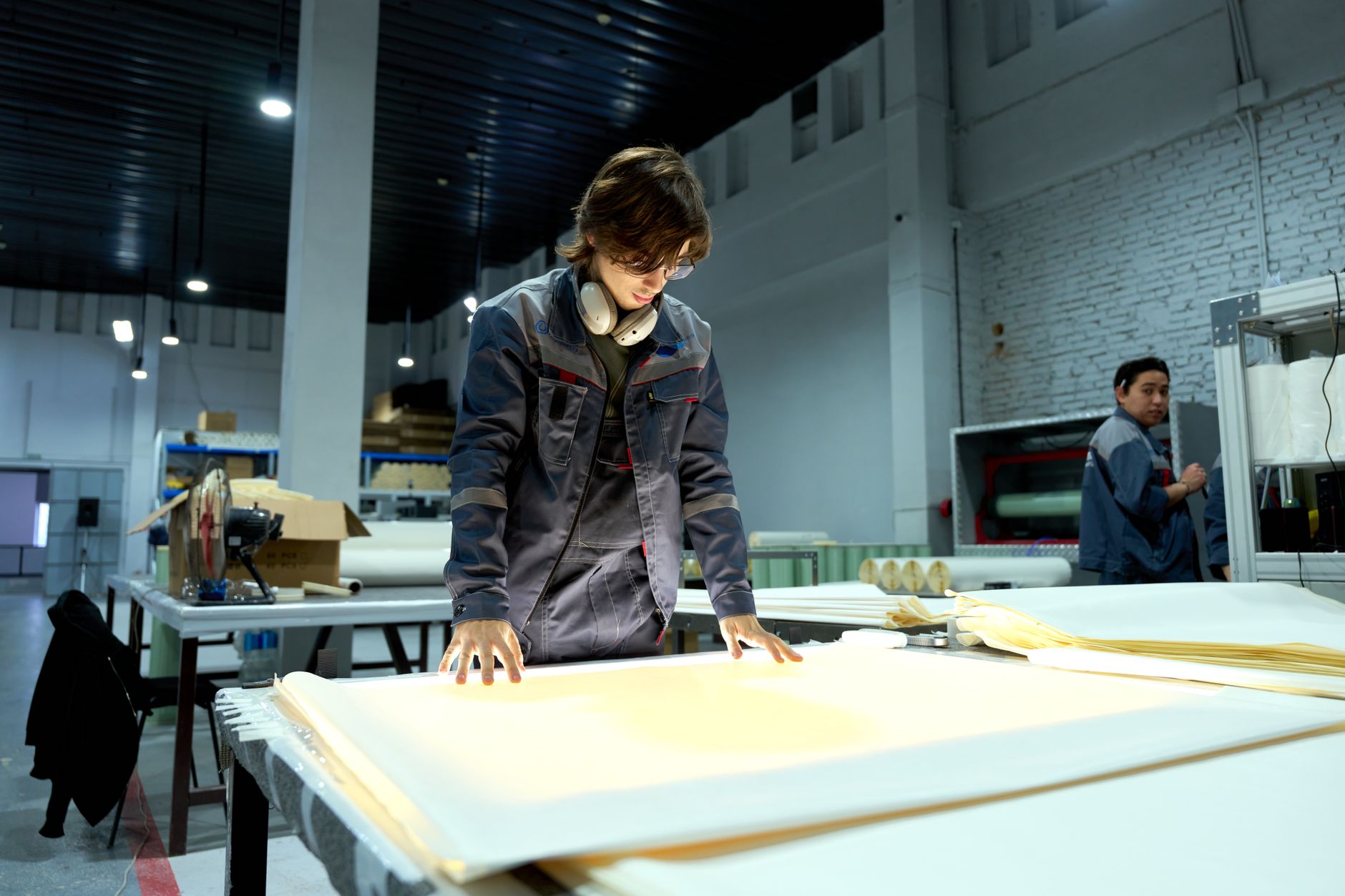
This case shows why adhesive dispensing is a strong candidate for a collaborative workcell. The cobot takes the hazardous, repeat-sensitive pass, while people retain the tactile placement and quality decisions that suit human judgment.
Service Robot Co. helps US businesses apply that pattern without being tied to one manufacturer. As a vendor neutral robot integrator, we select equipment across manufacturers, arrange financing, manage robot deployment and integration, train the team, and service every unit through a nationwide US engineer network.
For plants comparing cobot leasing for manufacturing, collaborative robot arm leasing, robot leasing for business, or a purchase, the starting point is the application itself. A free site assessment and commercial robot demo can establish part variation, adhesive behavior, guarding, operator handoffs, and acceptance criteria before a robot pilot program or turnkey robot deployment.
Commercial robot leasing and monthly payment programs can align the acquisition path with operating priorities. RoboCare™ service, remote triage, and on-site dispatch then keep accountability clear: one partner, one number, across the equipment lifecycle.