a 15-person commercial printing company handling plate changes and repetitive machine waiting time
Printing Cobot Case Study: 150 Labor Hours Freed in Four Months
A 15-person commercial printing company freed 150 labor hours in four months by automating plate changes and repetitive machine waiting time.
- 150 hrs
- freed in 4 months
- 2 hrs/day
- capacity returned
- 4 min
- print cycle wait
- 4,500
- plates handled
Based on a documented real-world deployment. Figures are from public reporting; the organization is not named.
Where the lost time sat
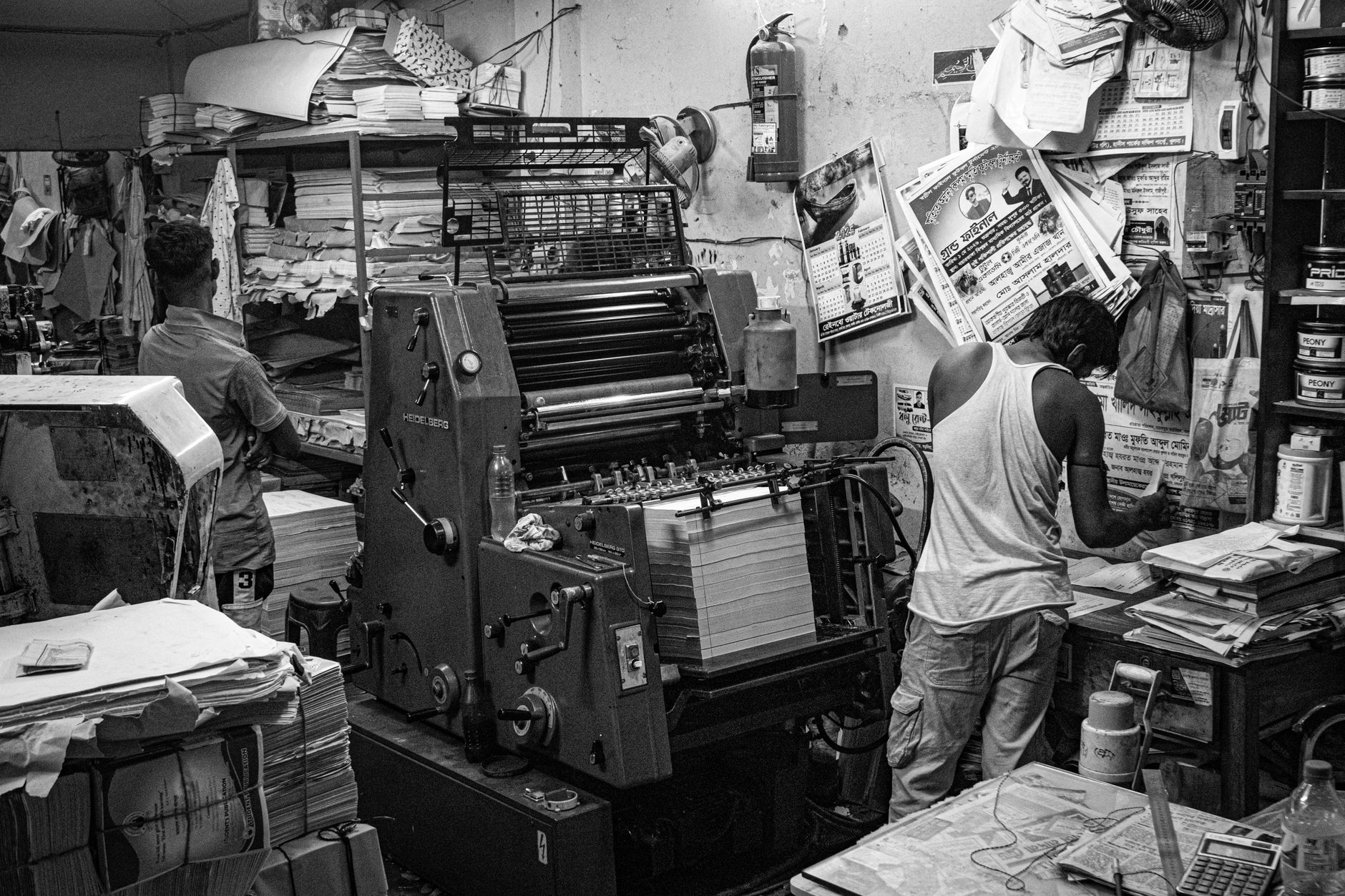
This operation was not wrestling with a dramatic bottleneck. It was bleeding minutes in a quieter, more familiar way. A machine ran a plate for four minutes, sounded a beep, and then needed a worker to step in for a brief plate change before the next cycle started.
That pattern left a person pinned to a machine for long stretches of dead time. The physical move was short. The waiting was not. In a 15-person commercial printing company, that kind of stop-and-start duty ties up scarce labor that could be spent on work with more judgment, pace, and value.
- An operator had to wait through a four-minute print cycle for each machine beep
- The manual action itself was only the plate swap at the end of each cycle
- Production also involved heavy lifting and operator down time while machines were printing
How the plate handling was automated

The automation target was narrow and practical. A pick-and-place cobot was assigned to handle the repetitive plate movement so the machine could keep cycling without an operator standing by for the next beep.
The deployment focused on an existing production task where the wasted time was easy to see and easy to measure. Once the cobot was in place, the repetitive handoff shifted to the robot and the former waiting time became usable production capacity for other work on the floor.
- Identify the print task with the clearest repeatable wait pattern
- Assign the cobot to pick and place print plates at the machine
- Integrate the robot with the existing hardware so the plate handoff happens in sequence
- Move the former machine-waiting labor back into other production tasks
What changed on the floor
The documented outcome was concrete. After producing 4,500 plates on one machine, the robot handled plates at an average speed of two minutes and freed a total capacity of 150 labor hours over four months. The source also summarizes the gain as 2 hours of labor capacity per day.
The improvement was not limited to cycle math. The report says the waiting time dropped, production became more efficient, overtime hours fell, and the work environment improved significantly. Just as important, the company could pursue work that had previously sat beyond its practical capacity because one employee was no longer absorbed by repetitive waiting and plate changes.
What this means for manufacturers evaluating cobot rental
This is the sort of machine tending robot story that lands with smaller manufacturers because the waste is ordinary, not exotic. A cobot rental or robot leasing for business can make sense when one person is trapped in a loop of waiting, touching a part for a few seconds, and waiting again. The labor is already there. The hidden cost is that it is stranded.
Service Robot Co. applies that same discipline as a vendor neutral robot integrator for US operations. We help companies assess the task, choose the right collaborative robot arm rental or lease rental or sale path, deploy around live production, train the team, and keep service attached after go live. For a shop that needs cobot rental for manufacturing without building an in-house robotics department, that one partner one number model matters.