
a community hospital campus on the Gulf Coast
Hospital Nurse-Support Robots Complete 9,900+ Lab Deliveries
See how a community hospital campus shifted repetitive specimen transport to nurse-support robots, completing 9,900+ lab deliveries while returning staff time.
- 9,900+
- lab deliveries
- 27,500+
- total deliveries
- 5,400+
- staff hours returned
- 10,500+
- lab-linked trips
Based on a documented real-world deployment. Figures are from public reporting; the organization is not named.

Clinical expertise was spending too much time in transit
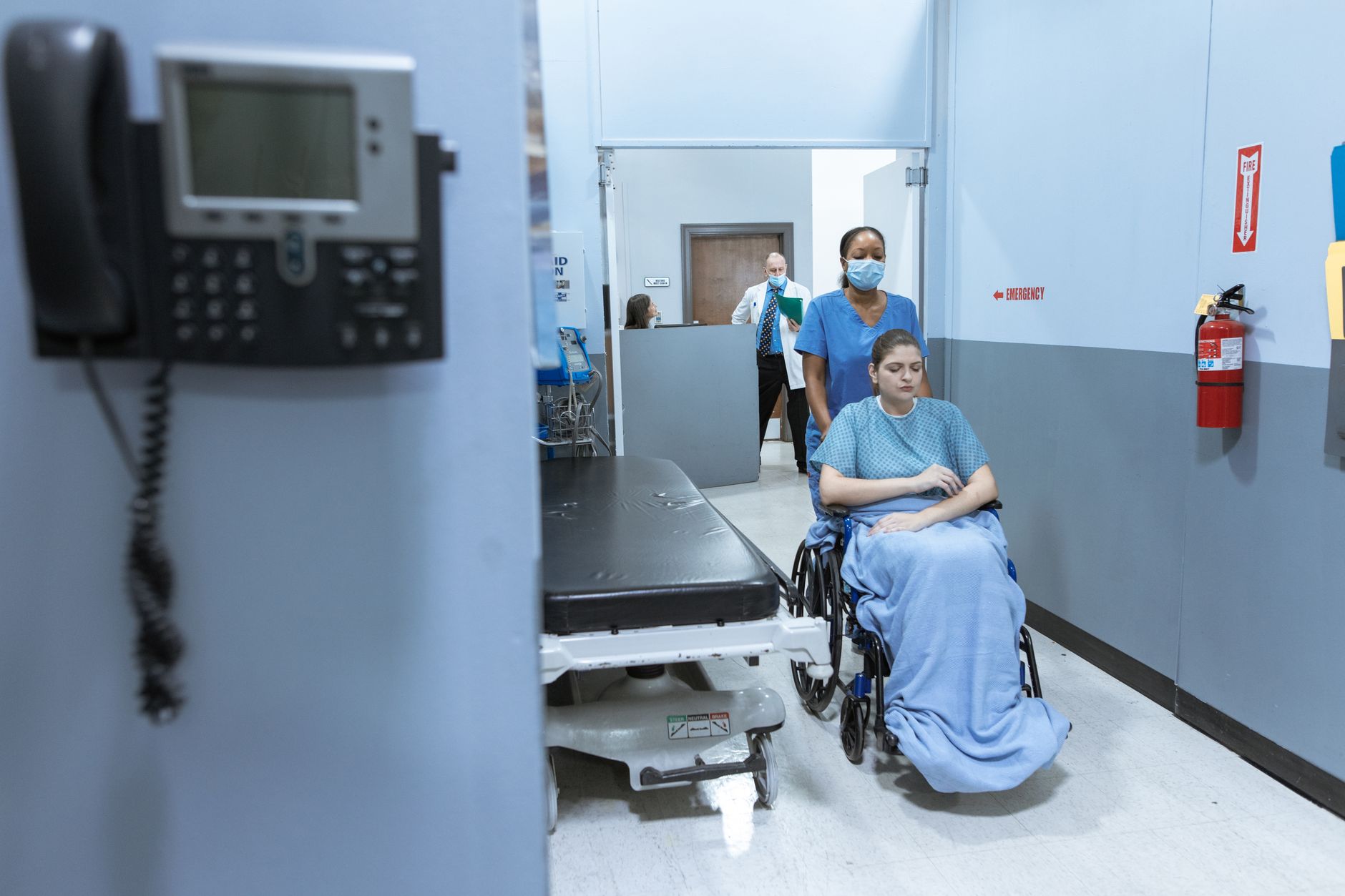
At a community hospital campus on the Gulf Coast, specimen transport depended on clinical employees because the building lacked a pneumatic tube system. Nurses, patient care technicians, and phlebotomy technicians carried lab samples and supplies by hand, often between floors.
Facility and workflow mapping found more than 300 interdepartmental item movements per day. Each errand pulled scarce clinical capacity toward courier work, adding physical travel and interrupting time that could be spent near patients.
The pressure was structural. A chronic staffing constraint met a transport workload that still had to run reliably, yet the hospital did not want to alter its core care model or assign clinical judgment to machines.
- Manual specimen and supply movement across departments and floors
- No pneumatic tube system for routine lab traffic
- Frequent non-patient-facing trips performed by clinical staff
- A need to preserve dependable handoffs without displacing bedside care
A focused transport workflow took shape around the lab
Campus leadership selected mobile nurse-support robots instead of installing a traditional tube system, citing the facility's age and growth potential. The rollout began with 2 robots in March 2023, and the emergency department became the highest-volume origin for lab work.
The operating change was precise. Emergency department nurses scanned specimen-label barcodes before loading the samples into locked compartments. At the destination, lab technicians retrieved already-scanned specimens and moved them directly toward processing.
The robots also served medical-surgical care, intensive care, labor and delivery, central supply, and food and nutrition workflows. Public sources do not describe a formal training curriculum or service interval, so this study makes no site-specific claim about either. They do report that local maintenance personnel were hired.
- Map the facility and quantify delivery and retrieval demand before go-live
- Assign 2 nurse-support robots to repeat interdepartmental routes
- Scan specimen labels at origin before loading secured compartments
- Use operating evidence to guide departmental expansion and future fleet planning
Delivery volume moved from experiment to operating scale
From March 2023 through September 2023, the supplier's case study reported more than 27,500 completed deliveries and more than 5,400 staff hours returned. Of those deliveries, 9,900 were sent to the lab, while more than 10,500 traveled to or from the lab. The supplier's current homepage summarizes the result as 9,900+ lab deliveries.
That distinction is worth preserving. The 9,900 figure covers lab-bound deliveries, while the larger lab-linked total includes traffic in both directions. Neither figure should be stretched into a turnaround-time claim.
Operationally, the handoff became cleaner. Specimens reached the lab already scanned, allowing lab personnel to move them toward processing without asking emergency department nurses to complete the scan at the destination. The published account reports an improved delivery timeline but provides no percentage or elapsed-time measure.
A repeatable deployment model, with clear attribution
This is a documented industry example analyzed by Service Robot Co. It is not a Service Robot Co. client deployment, and the reported outcomes come from the robot supplier's published customer materials.
The case shows why repetitive transport automation deserves its own operating design. Route density, secured handoffs, elevator and door access, origin scanning, staff adoption, and field service all matter alongside the robot itself.
Service Robot Co. is a full-service, OEM-neutral commercial robot integrator for US businesses. As a vendor neutral robot integrator, we select across manufacturers, then finance, deploy, integrate, train, and service every unit through a nationwide US engineer network. One vendor covers the whole lifecycle.
For a hospital delivery robot lease or autonomous mobile robot leasing, that lifecycle can include site assessment mapping, robot deployment and integration, go live support, RoboCare™ service, and continuing robot fleet management. Service Robot Co. can also structure purchase or lease and monthly payment programs around the chosen equipment, while keeping this published example separate from any commercial proposal.