
a small German manufacturer of laboratory glass apparatus
Glass Lathe Cobots Raise Effectiveness 25% With Fast Payback
See how glass lathe tending cobots raised effectiveness 25%, stabilized fragile tube handling, freed skilled labor, and paid back in under 12 months.
- 25%
- higher effectiveness
- <12 months
- payback per cobot
- 8 cobots
- documented fleet
- 1 + 7
- phased expansion
Based on a documented real-world deployment. Figures are from public reporting; the organization is not named.
Precision Work Was Tied Up in Repetition
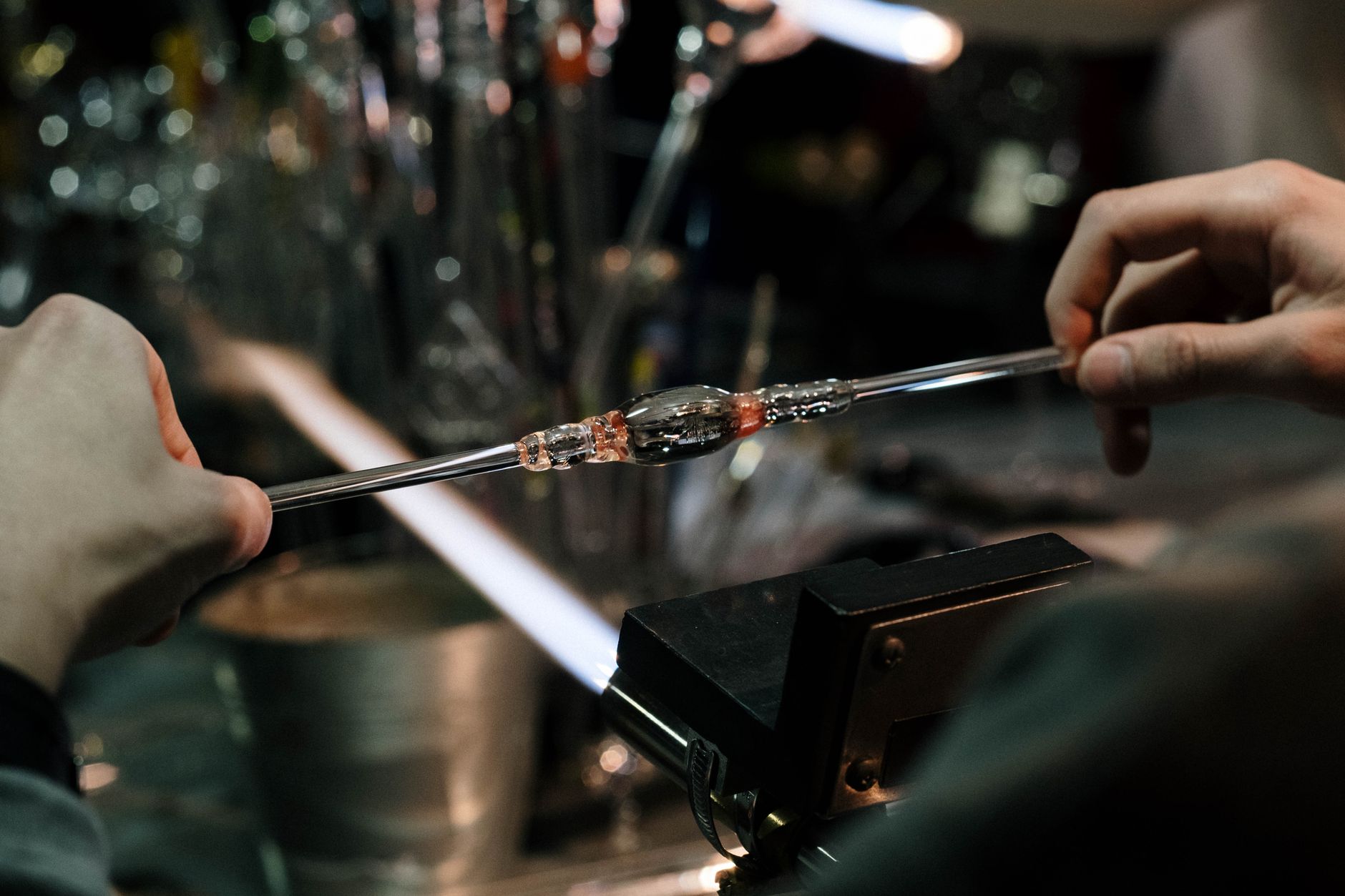
A small German manufacturer of laboratory glass apparatus relied on skilled employees to load sensitive glass tubes into several PLC-controlled glass lathes. The work demanded care, yet much of it was repetitive machine tending rather than the intricate glasscraft those employees were trained to perform.
Production also had to accommodate small batches, larger runs, and complex customer-specific pieces. Consistency at the lathe affected machine utilization, work quality, product quality, order capacity, and dependable delivery.
- Handle delicate tubes without compromising the workpiece
- Keep glass lathes supplied and operating consistently
- Separate repetitive tending from complex custom craftsmanship
- Support high-mix, low-volume work as well as larger production runs
A Narrow First Cell Proved the Case
The manufacturer began with a single cobot assigned to load and unload one glass lathe. That bounded machine tending robot application created a practical proving ground: the machine ran more consistently and for longer periods, orders could be served more effectively, and skilled employees were released for higher-value work.
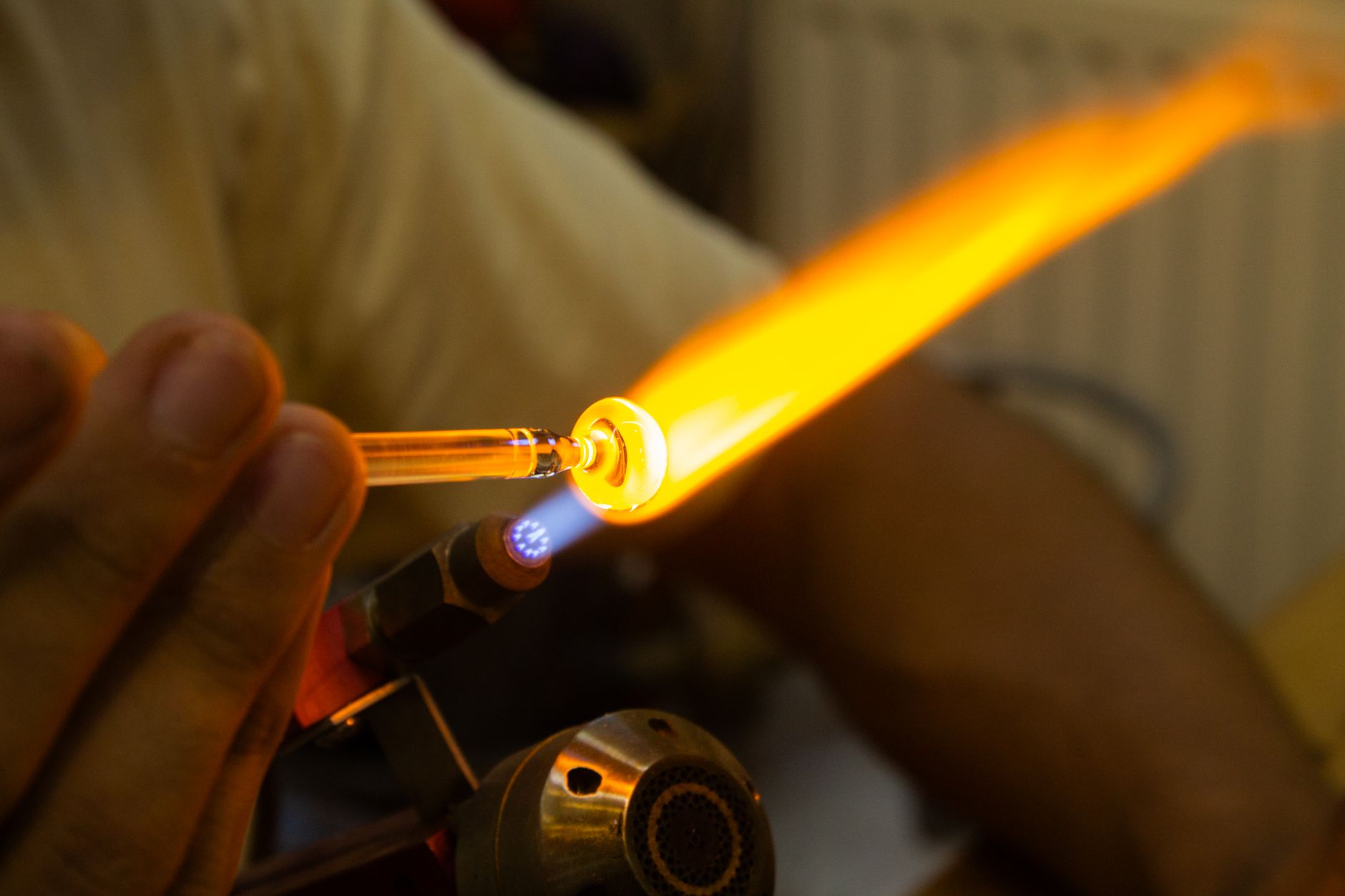
Seven additional cobots followed. Their duties grew beyond loading and unloading to include process-supporting glass forming, holding and guiding a forming tool, directing a gas burner at a workpiece, and placing a workpiece with a small glass plate into a lathe.
The documented program credits intuitive programming and application development with in-house resources. It does not describe a formal training curriculum or an external service arrangement, so neither is attributed to this deployment.
- Start with a contained glass-lathe loading and unloading task
- Confirm steadier, longer machine operation before expanding
- Add cobots as new forming applications become technically credible
- Keep complex customer-specific products in skilled hands
Utilization Converted Into Measured Effectiveness

Greater machine utilization produced a documented 25% increase in effectiveness. The cobots also stabilized production, supported better product and work quality, and strengthened the manufacturer's ability to deliver reliably.
Payback was achieved in under 12 months per cobot. The fleet ultimately reached eight cobots, while skilled employees shifted away from repetitive tending and toward complex products requiring their judgment and craft.
The Integrator Must Own More Than the Arm
This was not a Service Robot Co. deployment. It is a documented real-world example showing why glass-lathe automation should begin with the process: part presentation, delicate handling, tooling, heat exposure, machine signals, operator roles, and the economics of greater utilization.
For US businesses, Service Robot Co. serves as a vendor neutral robot integrator across the full commercial lifecycle. We select equipment across manufacturers, structure collaborative robot arm leasing or robot financing for small business when appropriate, manage robot deployment and integration, train the operating team, and service each unit through a nationwide US engineer network. One vendor remains accountable from assessment through field support.