
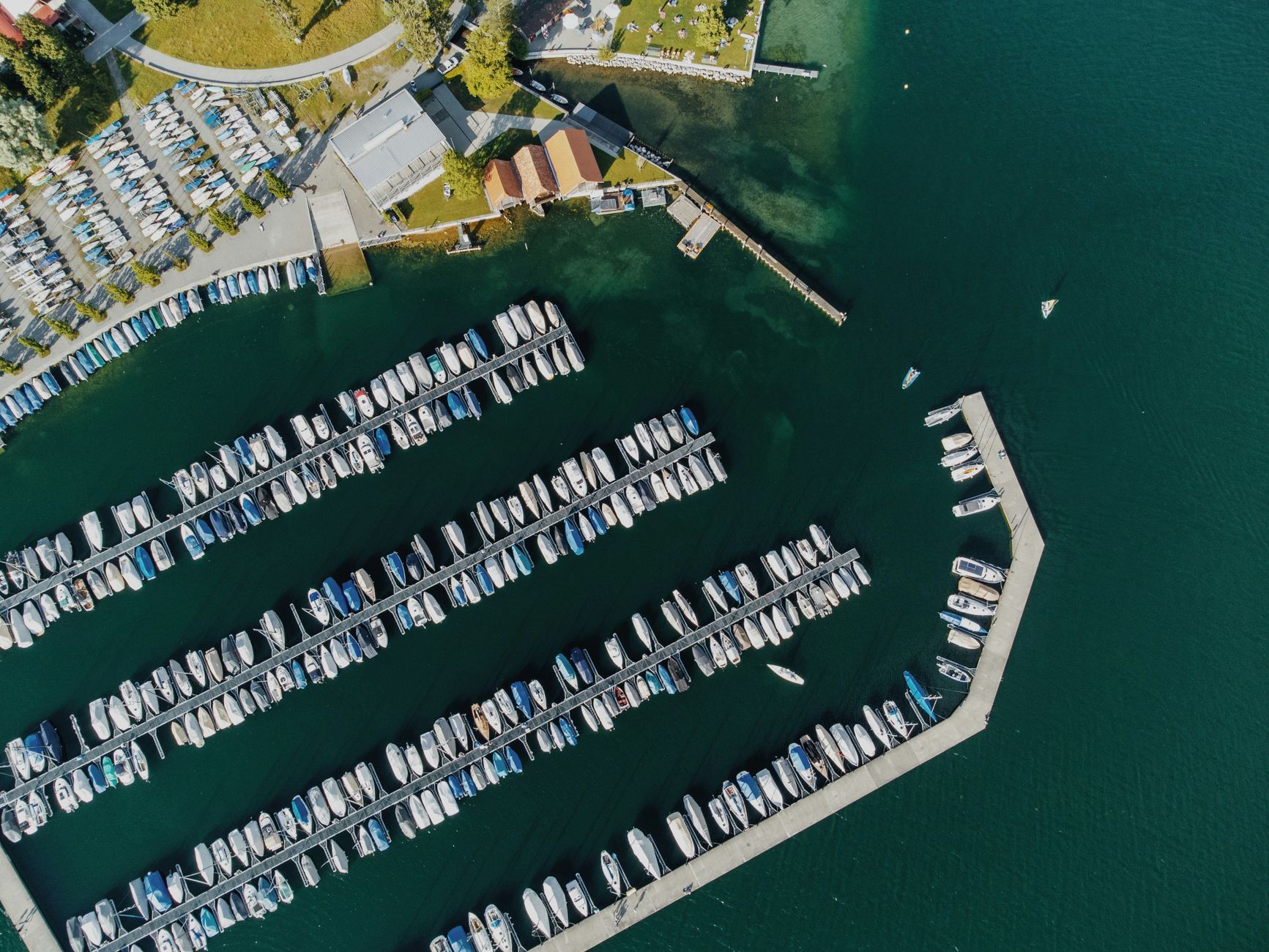
a busy Southern California recreational harbor
Harbor Trash Skimmers Collect Nearly 45,000 Pounds Annually
See how six automated skimmers moved a Southern California recreational harbor from intermittent cleanup to nearly 45,000 pounds collected annually.
- ~45,000 lb
- debris collected annually
- 6
- automated skimmers
- 24/7
- continuous collection
- 2009
- initial pilot
Based on a documented real-world deployment. Figures are from public reporting; the organization is not named.
Debris kept arriving after crews went home
Floating plastics, organic matter, and oil sheen were persistent concerns for a busy Southern California recreational harbor. Beyond marring the waterfront, the accumulating material degraded water quality and demanded repeated attention from maintenance personnel.
Manual skimming was labor intensive and tied to inconsistent crew schedules. Nights, weekends, and holidays created predictable gaps, allowing waste to gather between cleanup rounds while employees balanced other harbor duties.
The operating need was clear: capture debris as it arrived, including during unattended hours, without making constant manual intervention the backbone of the program.
- Debris accumulated continuously while manual collection remained intermittent.
- Off-hours, weekends, and holidays left recurring coverage gaps.
- Cleanup competed with other maintenance priorities.
- The debris stream included plastics, organic matter, and oil sheen.
A pilot established fit before the fleet expanded
A busy Southern California recreational harbor tested a single automated skimmer in 2009. That live pilot served as the selection process, proving the equipment under actual harbor conditions before management committed to broader deployment.
In 2011, a verified $100,000 water quality improvement grant funded five additional units. The measured expansion brought the fleet to six skimmers positioned throughout the harbor and shifted collection from scheduled intervention to 24/7 operation.
The published account does not describe a formal training curriculum or service agreement, so neither should be treated as a documented feature of this deployment. It does establish that the equipment was incorporated into existing maintenance operations, used minimal electricity, and freed staff to concentrate on other priorities.
- Test one unit in the working harbor before expanding.
- Use pilot performance to support the fleet decision.
- Add five units after the initial deployment proves effective.
- Integrate continuous collection with established maintenance work.
Continuous collection produced a substantial annual yield
The six automated skimmers now collect nearly 45,000 pounds of debris annually. That figure represents the combined fleet total, not the output of each unit, and includes the floating material captured across the harbor program.
The operating pattern changed just as materially. Instead of relying on crews to reach every accumulation during scheduled rounds, the skimmers run 24/7 and keep collecting through the periods that previously created gaps.
Staff still retain responsibility for the water quality program, but automated collection carries the repetitive intake burden. The documented account describes the equipment as a reliable, labor-saving contributor that lets personnel direct attention to other harbor priorities.
The deployment offers a practical procurement lesson

This documented example was not a Service Robot Co. deployment. Its value is the operating pattern it reveals: a real pilot can establish site fit, a phased rollout can contain early risk, and persistent automation can outperform an intermittent task schedule when the workload never stops arriving.
Service Robot Co. is a full-service, OEM-neutral commercial robot integrator for US businesses. We assess the site, select equipment across manufacturers, arrange financing, deploy and integrate each unit, train the operating team, and support the fleet through a nationwide US engineer network.
For buyers comparing commercial robot leasing, robot leasing for business, a leasing structure, or direct purchase, that means a single accountable vendor across the equipment lifecycle. A commercial robot demo or robot pilot program can validate performance first, while site assessment mapping and planned robot deployment and integration align the equipment with real operating conditions.