
a large acute-care hospital in England
A Hospital Pharmacy in England Adds a Robot to Its Discharge Dispensing Workflow
How a large English acute care hospital pharmacy added a robotic dispensing system to storage and picking, and what discharge timing means for buyers.
Deployment at a glance
- 1
- large acute care hospital pharmacy in England
- 1
- robotic dispensing system added to the workflow
- 2
- stages changed: storage and picking
Based on a documented real-world deployment. Figures are from public reporting; the organization is not named.
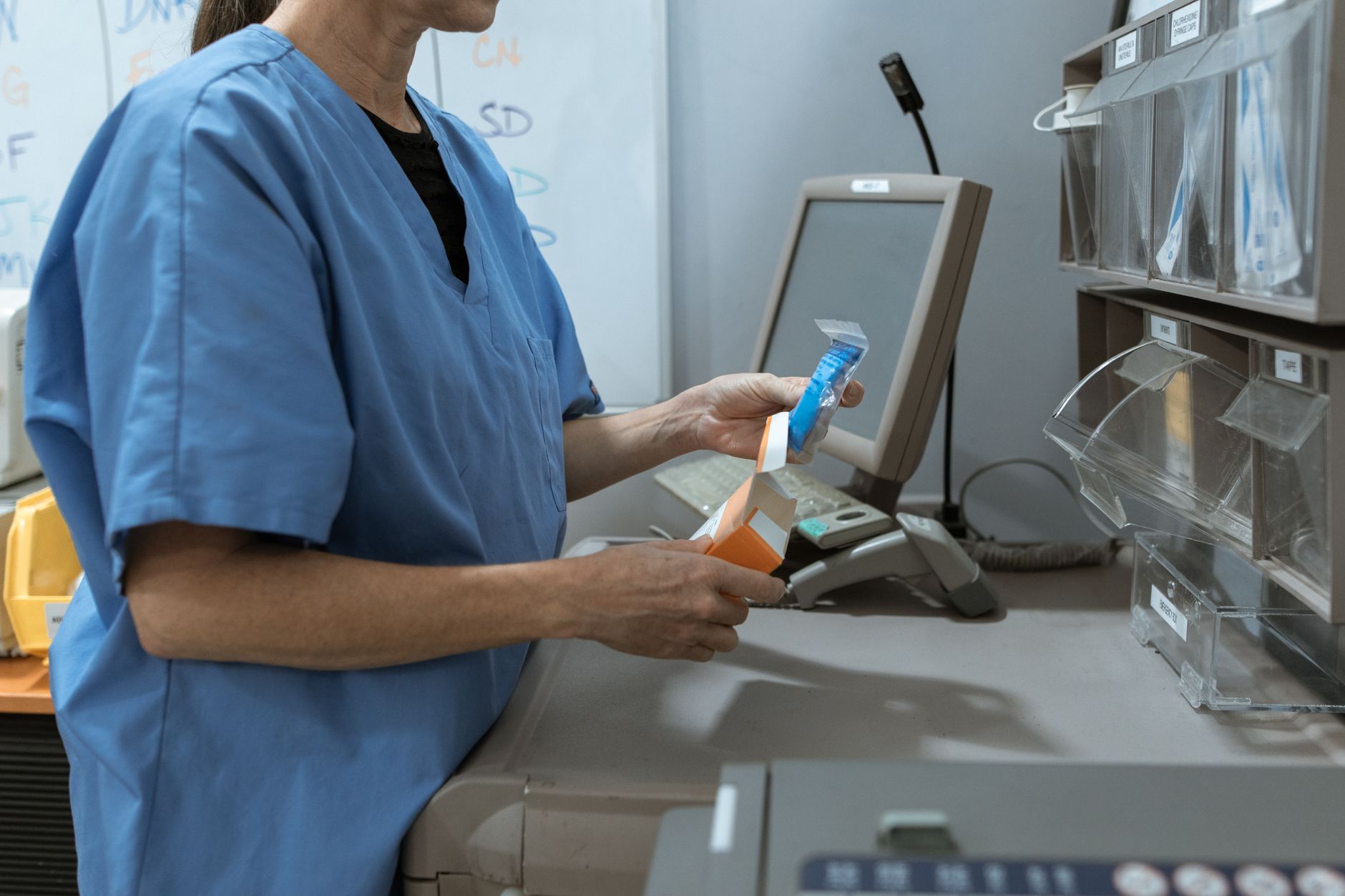
Discharge prescriptions hold patients in beds
A patient ready to go home still waits on the medicines written on the discharge prescription. In a large acute care hospital, that wait sits in the pharmacy, out of sight from the ward, until a bed stays occupied longer than anyone planned.
Discharge orders rarely arrive at an even pace. They come in bursts through the morning, and they must be picked, checked and bagged quickly without pulling staff away from inpatient supply. A storage and picking workflow built for steady demand has little slack for that.
- Discharge orders arrive in bursts that do not match a steady picking rhythm.
- Staff walk the shelves to find stock, and time lost in search adds up across a shift.
- Storage space limits how much stock can sit close to the dispensing point.
Adding dispensing to the storage and picking workflow
The hospital did not rebuild its pharmacy around a new process. It added a robotic dispensing system to the storage and picking workflow it already ran, so existing stock lists, staff roles and clinical checks stayed in place.
Work of this kind usually starts with a review of the pharmacy floor, the storage layout and the flow of discharge orders. Stock is then loaded and identified before staff are trained on picking, exception handling and the checks that remain with pharmacists. Rollouts like this typically keep the manual route available during go live, so the ward is never left without supply.
- Review of pharmacy floor space, storage layout and discharge order flow
- Stock loading and product identification set up in the robot
- Staff training on picking, exceptions and clinical checks
- Go live with the manual route kept available as a fallback
- Routine service and fault response after go live
What to measure on the ward

The measure that matters most for a discharge pharmacy is the elapsed time from a signed discharge prescription to a checked and bagged pack ready for collection. The hospital's own pharmacy and ward timestamps are the right place to test whether a change holds.
Capacity is the second measure. Storage held inside the robot frees floor space and keeps more lines within reach, but the size of any gain depends on the order mix, the pharmacy layout and how discharge orders reach the robot. Judge any timing change against those conditions before drawing conclusions.
What a lease based dispensing project involves
Service Robot Co. is an OEM neutral integrator, so the work starts with fit, not brand. We assess the site, select the right robot across manufacturers, and quote one fixed figure after the assessment on a three year lease.
After that we deploy and integrate the robot with the pharmacy systems, train the team, and service the unit through our nationwide engineer network. A dispensing system touches controlled stock and clinical safety, so validation and training come before go live, and one partner holds the whole lifecycle.
Frequently asked questions
Want a robot working for you?
Tell us the job and the site. We will recommend the robot, quote the lease, and keep it serviced.