
a large hospital pharmacy in Wales
Hospital Pharmacy Case Study: Part-Pack Returns Cut in Half
A documented Wales hospital pharmacy case shows how a dispensing robot cut part-pack return time 50%, reduced splitting waste, and saved £7,171.25 a year.
- 50%
- less return time
- 30 min
- to return 40 packs
- £7,171.25
- annual staff savings
- Up to 100%
- less splitting waste
Based on a documented real-world deployment. Figures are from public reporting; the organization is not named.
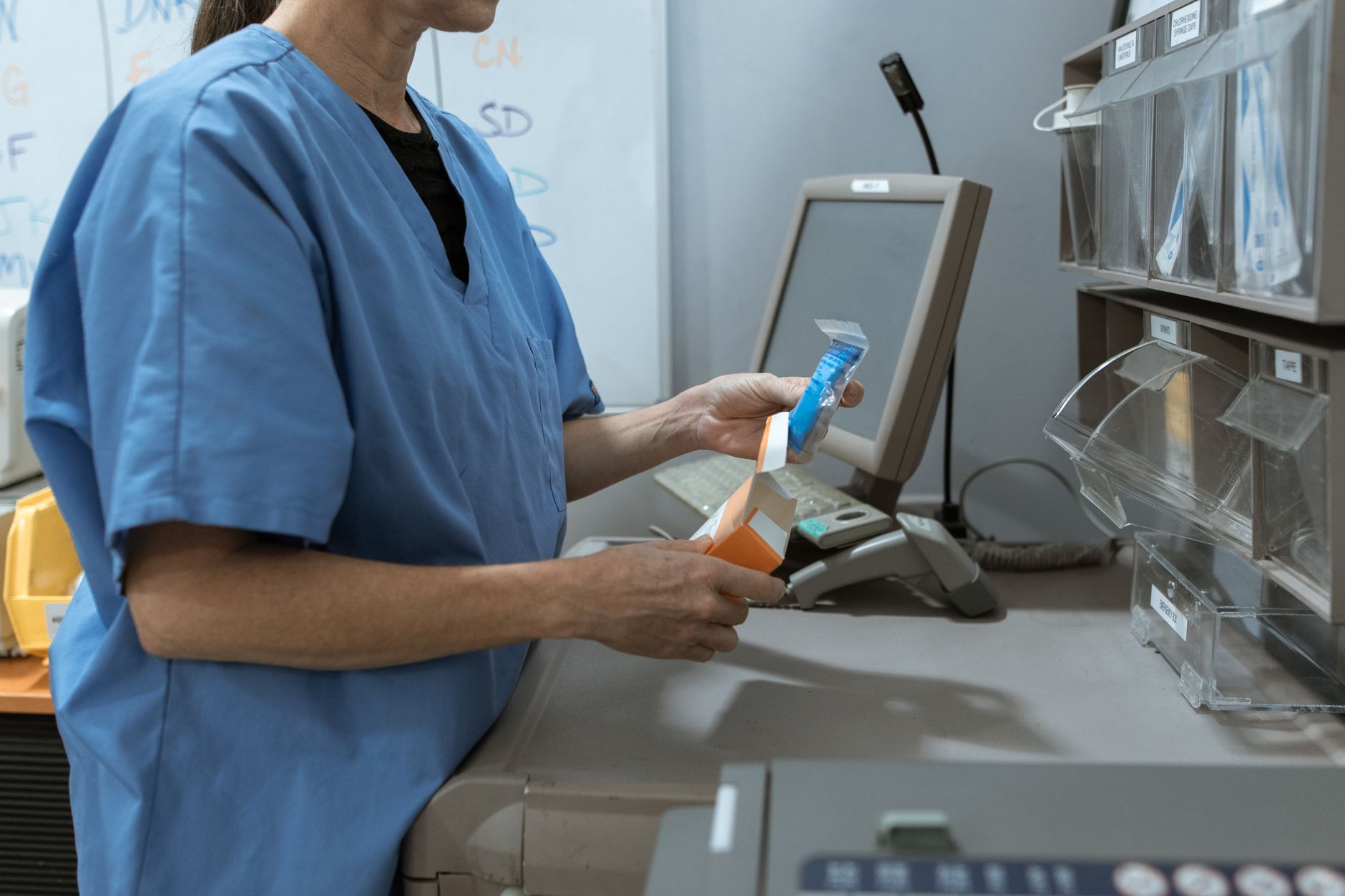
A small task that kept stealing real time
The published case begins with a narrow but stubborn pharmacy chore. Returning part-packs to the dispensing robot took 1 hour for 40 packs, and the source describes the task as time consuming and error prone. In a central pharmacy already moving toward a technician-led organisation, that kind of drag quietly drains attention from more valuable work.
Waste sat beside the labor issue. If staff could not quickly see that a medication pack had already been opened, another pack might be split unnecessarily. The friction was built into the daily dispensing rhythm, which made it costly precisely because it was ordinary.
- Returning part packs was time consuming and error prone
- Technician time was being spent on operational and repetitive work
- Poor visibility into opened packs could lead to unnecessary new pack opening and extra splitting waste
The workflow changed, not just the equipment
The documented change built on a pharmacy that had already been moving toward a technician-led model. The source says automation and two robotic storage systems had helped smooth workflow and improve turnaround, so the next gain came from tightening a specific handling step inside that environment.
The key change was the part-pack workflow inside the dispensing robot process. Staff could return part packs into the robot faster and see if a medication pack had already been opened before opening another. The public case does not publish detailed rollout, training, or service notes, so the clearest implementation fact is the workflow itself and the measured result it produced.
- Build on a technician-led central pharmacy workflow
- Use two robotic storage systems already in place
- Handle part-pack returns through the robot workflow
- Give staff visibility into whether a medication pack has already been opened

Measured gains in time, labor, and waste
The headline result is exact. Time to return 40 packs fell from 1 hour to 30 minutes after the robot workflow was in place. That is a 50% time saving on a clearly defined pharmacy task, not a vague claim spread across the whole department.
The source also states an effective daily saving of 1.5 hours for returning part packs, using a Band 3 midpoint of £13.10. It rolls that up to £7,171.25 in annual staff savings and says ROI came in less than 3 years.
Waste improved with the same workflow change. The public case reports up to 100% reduction in increased splitting waste because teams could check if a pack had already been opened before splitting a fresh one.
What this means for US pharmacy buyers

This is not a Service Robot Co. deployment. It is a documented market example, and its value is practical. A dispensing robot does not need to remake the whole pharmacy to earn its keep. Sometimes the real win is removing a repetitive handling task that keeps pulling technicians back into low-value motion.
That is where Service Robot Co. fits. As a vendor neutral robot integrator for US businesses, we help buyers compare purchase or lease paths, robot leasing for business, leasing options, and monthly payment programs, then carry the robot deployment and integration, training, and RoboCare™ service support through the full lifecycle. A free site assessment is where that work starts.