
a North Carolina lawn service with a roadside contract for interstate grass
Robotic Mowers on Interstate Medians: Labor Cost Halved, as Reported
A North Carolina lawn service with a roadside contract reported 25% more efficiency and roughly half the labor cost after adding robotic mowers.
Deployment at a glance
- 25%
- Efficiency gain reported after robotic mowers were added
- 50%
- Labor cost roughly halved, as reported
- 70%
- Of direct landscape labor tied to mowing, per trade press
- 2 states
- North Carolina and South Carolina DOT interstate contracts
Based on a documented real-world deployment. Figures are from public reporting; the organization is not named.

Interstate grass is a crew-hours problem
A North Carolina lawn service with a roadside contract for interstate grass maintained medians under state highway detail work. Those contracts reach interstate corridors in both North Carolina and South Carolina, and the grass along them grows on a timetable set by the weather, not by the crew.
Every pass draws on a crew. Trade press associates about 70 percent of a landscape contractor's direct labor cost with mowing, so the hours spent on the mower decide much of the margin. Long, repetitive runs along a roadway make that arithmetic hard to ignore.
Seasonal hiring adds strain too. Each new group of hands has to learn the work, and turnover can eat into the hours a contract was built around.
- Long, repetitive mowing passes along interstate medians
- Direct labor tied to mowing, per trade press
- Seasonal crew members who take time to train
Robotic mowers take the median passes
The operation brought remote-controlled robotic mowers onto its interstate median work. Operators controlled the machines from a distance, and the mowers carried the cutting on the median passes.
Adoption was not even across the crew. Reported experience was that younger workers adapted to the robots faster than seasonal crew members did, so training effort had to account for that gap rather than assume one pace for everyone.
The work ran under highway detail contracts with both the North Carolina and South Carolina departments of transportation, which meant the robots had to fit more than one state's contract terms.
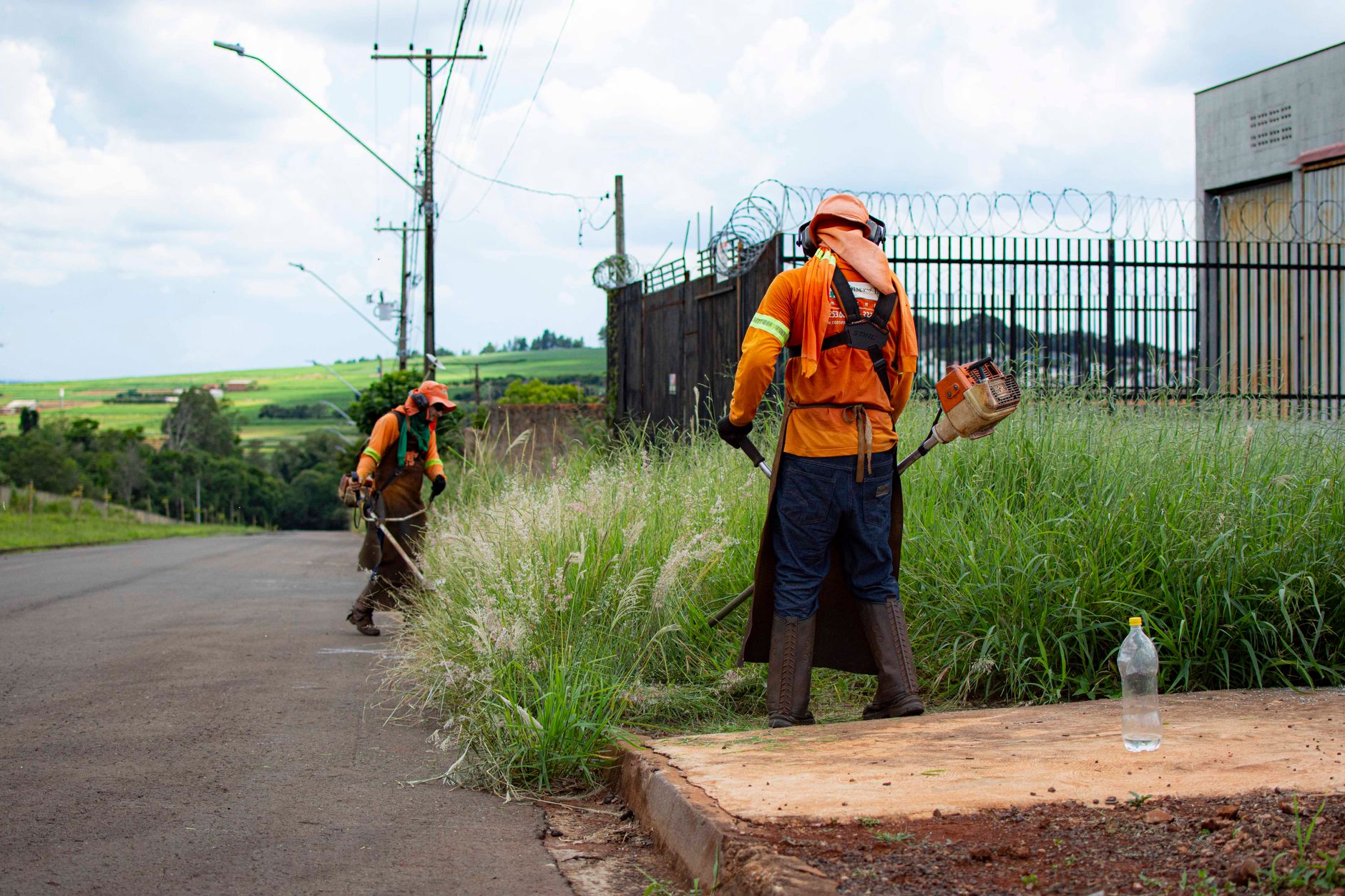
Efficiency up 25 percent, labor cost roughly halved
Reported results put efficiency up 25 percent and labor cost roughly halved. Both are reported figures, and they are the headline measures of this case. A planner should treat them as a direction to test, not a promise.
Context sizes the stakes. Trade press puts about 70 percent of direct labor tied to mowing. One operator quoted in a January 2025 trade piece put labor at roughly 45 percent of P&L, with most of it direct. A mower maker's own material puts 70 to 90 percent of grass-cutting cost as labor, a vendor-reported figure.
Where those shares hold, a sharp cut in mowing labor reaches the center of the cost base rather than its edges.
What this means for crew-hour planning

A contractor weighing a change like this is really weighing crew hours, and that is the planning problem Service Robot Co. works on. We are a full-service, OEM-neutral commercial robot integrator for US businesses. We select the right robots across manufacturers, then lease, deploy, integrate, train and service every unit through a nationwide US engineer network, so one vendor carries the whole lifecycle.
Our robots are offered on a 3-year lease through financing, with one fixed payment quoted after a site assessment. That gives a team a way to test a single unit on a representative route before committing to more, and it lets the lease be weighed line by line against the crew cost it touches. Robot lease financing is easiest to judge when the baseline hours are measured first.
Frequently asked questions
Want a robot working for you?
Tell us the job and the site. We will recommend the robot, quote the lease, and keep it serviced.