
a quartz-products factory in Vietnam
Quartz Heat Treatment Cycle Time Falls 80% With Robots
How a quartz-products factory in Vietnam cut heat-treatment cycle time 80%, reached a five-minute cycle, and quadrupled output with two robots.
- 80%
- shorter cycle time
- 5 min
- robotic cycle time
- 4x
- production output
- 100/day
- average output
Based on a documented real-world deployment. Figures are from public reporting; the organization is not named.
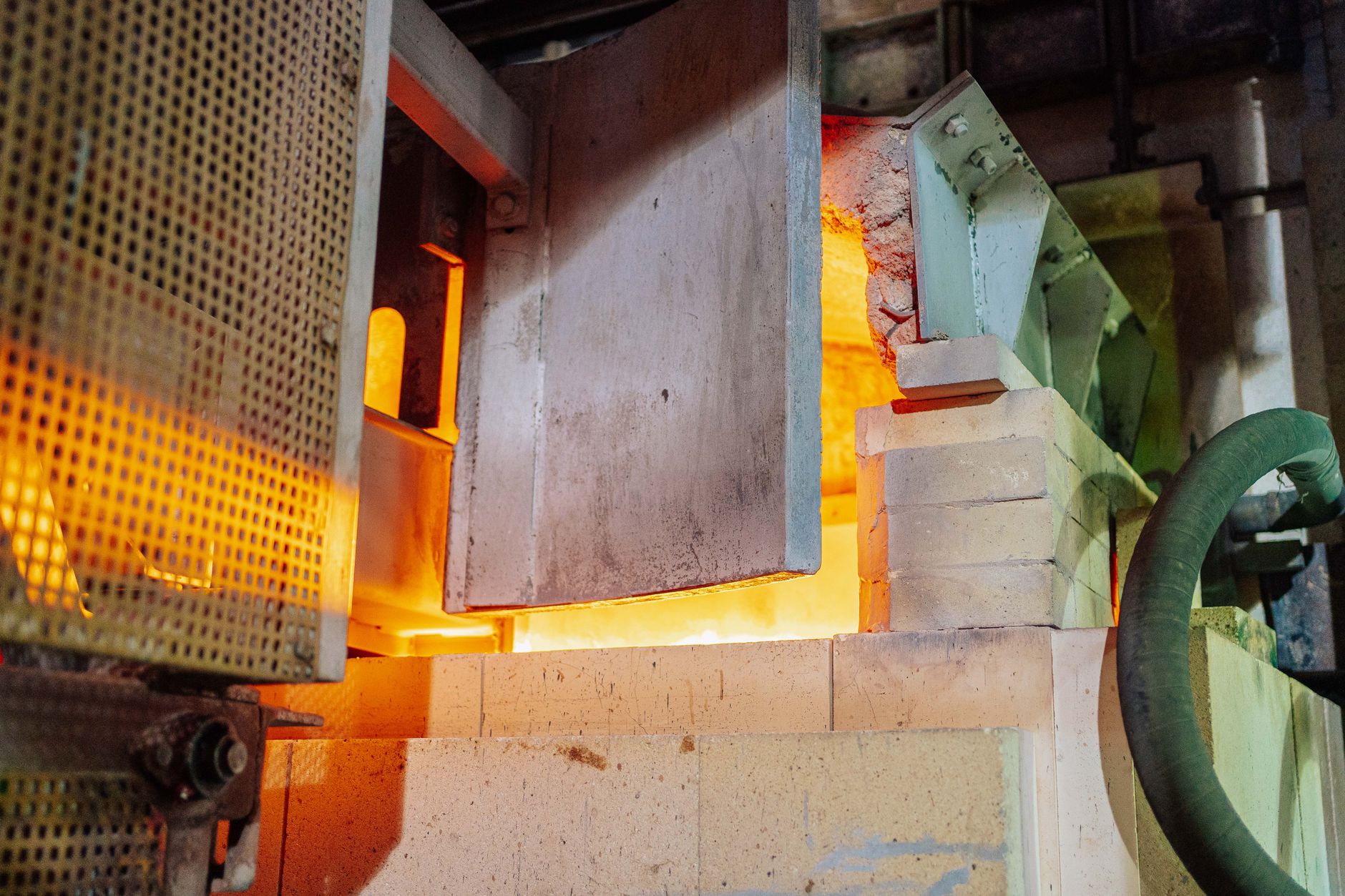
Heat, Variability, and a Fragile Manual Process
Workers manually performed the high-temperature treatment used to finish formed quartz components. The work was dangerous and repetitive, with elevated accident risk and high staff turnover.
Manual handling also introduced production errors that could become serious losses. For products serving electronics and semiconductor applications, uneven treatment and inconsistent finishing threatened the meticulous quality the operation required.
- Move workers away from direct high-temperature processing.
- Apply heat evenly before moulding.
- Reduce error-driven defects without sacrificing finish quality.
- Relieve a repetitive operation affected by labor shortages and turnover.
A Coordinated Heat-Treatment Cell
The factory introduced a cell built around two industrial robots and its moulding process. One robot positioned each quartz workpiece for treatment. The other heated the material evenly before the forming stage.
Once shaped, the handling robot removed the finished component and loaded the next workpiece. The resulting sequence gave the factory a repeatable transfer, heating, moulding, and unloading process with less manual intervention.
The published account does not document a phased rollout, workforce training program, or long-term service arrangement. Those details should not be inferred from the reported performance.
- Assign handling and heat treatment to separate robotic roles.
- Coordinate both robots with the moulding equipment.
- Standardize workpiece positioning and heat application.
- Repeat the programmed sequence for each subsequent component.

Faster Production With Tighter Process Control
The measured change was substantial. Production time fell from 25 minutes to five, an 80% reduction. Average production reached 100 pieces per day, four times the output of the previous manual process.
Quality improved alongside speed. The factory reported five times fewer defective products caused by production errors, while the robots assumed the dangerous and repetitive work previously performed by employees.
This was not merely a faster motion sequence. Even heating, repeatable placement, and controlled transfers gave the moulding stage a more consistent incoming workpiece and reduced opportunities for manual variation.
How a U.S. Manufacturer Can Apply the Lesson
This documented example was not a Service Robot Co. client deployment. Its value is practical: heat-treatment automation works when robot selection, process choreography, guarding, moulding equipment, training, and ongoing support are treated as one operating system.
Service Robot Co. is a full-service, OEM-neutral commercial robot integrator for U.S. businesses. We select hardware across manufacturers, then finance, deploy, integrate, train, and service every unit through a nationwide U.S. engineer network. One partner owns the whole lifecycle.
For a plant comparing commercial robot leasing, robot leasing for business, leasing, or direct ownership, that model keeps the commercial structure tied to the actual production duty. Robot deployment and integration, go-live support, and a robot maintenance service plan are scoped around the floor rather than handed across disconnected vendors.