
a US contract repackaging operation handling multiple case sizes
Case-Packing Cobot Raises Daily Throughput 48%
See how a compact case-packing cobot helped a US contract repackaging operation lift daily throughput 48%, from about 2,500 to 3,700 cases daily.
- 48%
- daily throughput increase
- ~2,500
- cases on prior best day
- ~3,700
- reported daily average
- 1 in 12 mo
- reported employee departures
Based on a documented real-world deployment. Figures are from public reporting; the organization is not named.

Manual Packing Had Reached Its Practical Limit
A US contract repackaging operation handling multiple case sizes depended on a dedicated team of five to six employees. They packed thousands of cases each day, repeatedly moving boxes that weighed about 10 pounds.
The work was physically demanding and difficult to sustain. Conventional fenced automation was also a poor fit because the available production footprint was tight, leaving the operation caught between rising volume and limited room for equipment.
This was the operation’s first automation deployment. Any new cell had to fit the existing floor, support employees working nearby, and accommodate product changes without turning every case-size transition into a tooling project.
- Repetitive handling imposed persistent physical strain.
- Manual output limited the operation’s ability to scale.
- Restricted floor space made a conventional fenced cell less practical.
- Multiple case sizes demanded flexible tooling and efficient changeovers.
Start With the Work, Then Specify the Cell
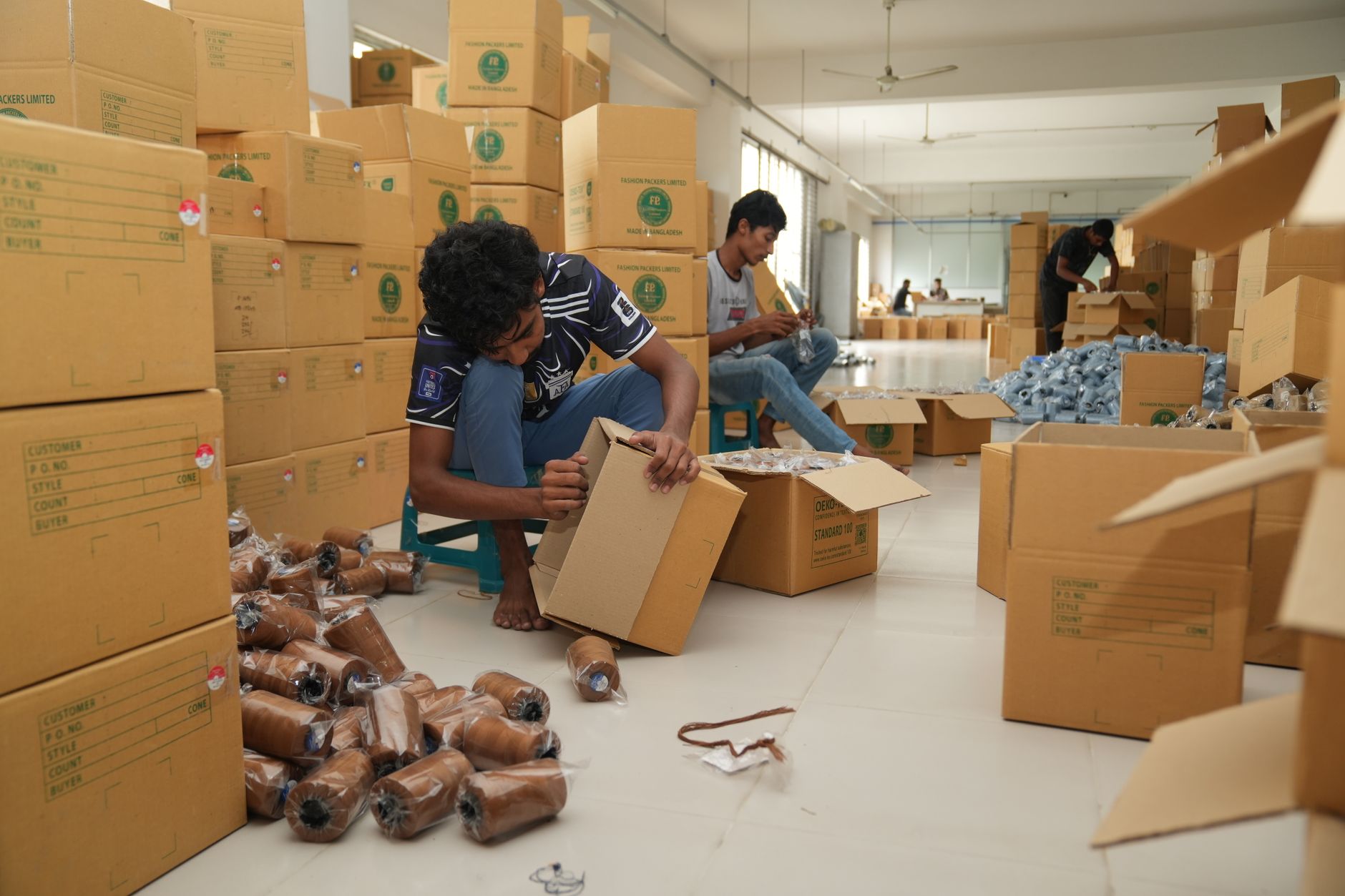
The project began by defining operating goals and identifying a suitable first application. A compact collaborative arm was selected for its fit, safety emphasis, and ability to work near employees within the available footprint.
Custom end-of-arm tooling gave the cell the flexibility to handle multiple case sizes. Programming changes could be made at the master board, which reduced the need for frequent tooling swaps and curtailed downtime during line changeovers.
The initial cell served as a measured first phase, with discussion of a second phase beginning after results emerged. The published account describes planning for employees to work alongside the equipment, but it does not document a formal training program or the post-deployment service arrangement.
- Define the production and ergonomic goals before selecting equipment.
- Choose a compact collaborative configuration suited to the existing floor.
- Engineer tooling around the actual mix of case sizes.
- Keep product changes accessible at the master control point.
- Use measured performance from the first cell to guide later phases.
A Former Best Day Became the Lower Benchmark
Daily throughput increased 48%. Before the cobot, about 2,500 cases represented the operation’s best day. After deployment, reported output averaged roughly 3,700 cases per day with greater consistency from repeatable cycle times.
The operation also reported less physical strain from repetitive packing and lower employee turnover. Only one employee departure occurred during the reported 12-month period, compared with turnover occurring quarterly before the deployment.
The benefits extended beyond raw case count. The published account credits the cell with supporting more consistent production, quality control, warehouse organization, and shipment priorities, while flexible tooling kept a varied packaging mix moving.
What This Evidence Means for a New Deployment
Service Robot Co. did not perform this deployment. It is a documented real-world example showing that end of line automation succeeds when the arm, tooling, changeover method, available footprint, and employee workflow are specified as one operating system.
Service Robot Co. is a full-service, OEM-neutral commercial robot integrator for US businesses. As a vendor neutral robot integrator, we select the right equipment across manufacturers, then finance, deploy, integrate, train, and service every unit through a nationwide US engineer network.
For teams considering cobot leasing for manufacturing, that lifecycle can include monthly payment programs, robot deployment and integration, and RoboCare™ service under one accountable vendor. The objective is not simply to place hardware. It is to commission a working cell, prepare the people who will operate around it, and keep it productive after go-live.
Frequently asked questions
Want a robot working for you?
Tell us the job and the site. We will recommend the robot, quote the lease, and keep it serviced.