a lakeside resort hotel's buffet restaurant
Resort Buffet Case Study: 73% More Staff Time Through Delivery
A lakeside resort hotel's buffet restaurant used delivery robots to shift food transport off staff and create about 73% more time per person.
- 73%+
- More time per staff member
- 78%
- Of food transport handled
- <50%
- Peak-period walking volume
- 3 staff
- Kitchen run with one fewer person
Based on a documented real-world deployment. Figures are from public reporting; the organization is not named.
The Operating Strain
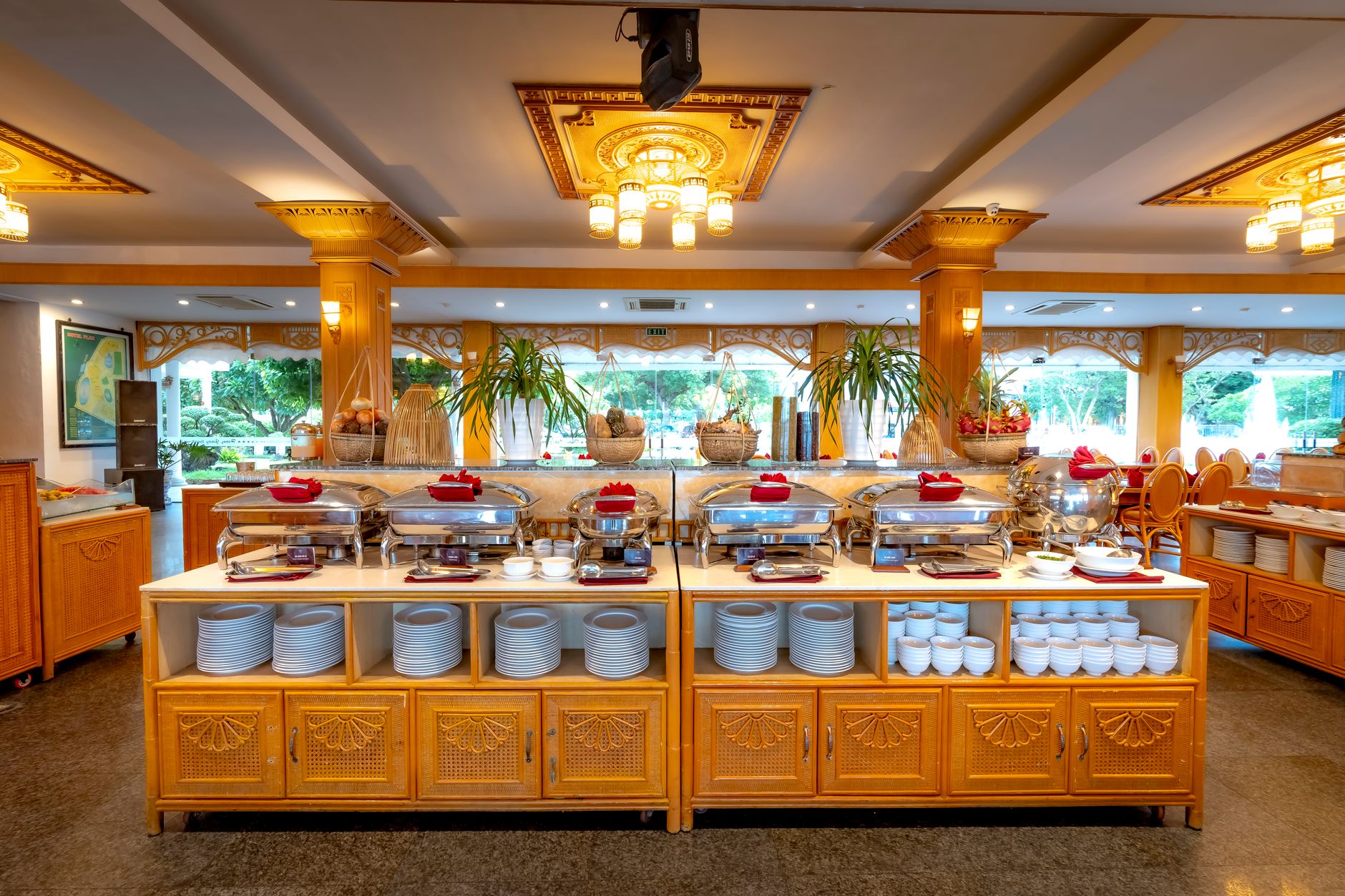
At a lakeside resort hotel's buffet restaurant, the kitchen and restaurant floor were physically separated. That distance turned every replenishment run into a small but costly interruption, especially when fresh items had to be replaced quickly and guests were already lining up.
One trip from kitchen to floor took about 30 steps each way and roughly 30 seconds round trip just to move between spaces. Once food handling was included, a single run took 1 to 2 minutes or more, and staff could carry only two dishes at a time by hand.
That friction hit hardest during busy service. Replacing all dishes at the sushi station could take more than 10 minutes, and the operation still had to keep food fresh, keep lines moving, and keep enough people available for guest-facing work.
- Kitchen and buffet floor were far apart
- A single staff trip handled only two dishes at a time
- Peak service reached about 150 guests per seating
- Holiday service covered about 400 guests across three 90-minute seatings
How The Operation Introduced Robot Transport
The restaurant first tested the robot in November, then moved to full use after seeing the burden on staff ease during the trial. The fit mattered. The route between kitchen and floor had few obstacles, minimal level changes, and an automatic door at the kitchen entrance, which supported reliable transport runs.
The operation also defined simple route rules and location names on the touchscreen so staff could dispatch the robot without confusion. During after-hours setup, the team installed ceiling markers and configured destinations, then started full operation the next morning.
Training was deliberately practical. The main staff members learned operation during the one-week test period, and the interface was simple enough that the broader team could adopt it quickly once the routes were established.
- Trial run first, full deployment after results were observed
- Routing points and on-screen destinations were set to match the team's normal work language
- Setup was completed after hours, then live service began the following morning
- Main operators were prepared during a one-week test period
Measured Outcomes
The documented result was substantial. The robot handled about 78% of food transport, and the site reported that this created about 73% more time per staff member. In practical terms, transport work moved off the kitchen team and back into a repeatable automated loop.
That time showed up where the restaurant needed it most. During a holiday stretch with about 150 guests at the busiest seating and roughly 400 guests across the day, the kitchen side of the operation ran with 3 staff instead of the 4 normally required, allowing one person to shift toward guest support.
Staff movement dropped sharply during peak periods. Before deployment, workers logged about 30,000 to 40,000 steps in a day during the year-end rush. After deployment, walking volume fell to less than half, and the site also reported that fatigue felt dramatically lower.
What This Means For Service Robot Co.
This case is useful because it is not about novelty and it is not about room service. It is about buffet replenishment, back-and-forth transport, and the hidden labor drain that builds up when kitchens and service floors are poorly connected. That is exactly the kind of repetitive transport workflow where a food runner robot or restaurant delivery robot rental program can earn attention from operators.
For U.S. resorts, the lesson is not to copy one machine or one layout. It is to match the robot to the route, payload, guest traffic, and staffing pattern. Service Robot Co. does that as a vendor neutral robot integrator, selecting across manufacturers, then handling robot deployment and integration, training, financing, and service through one partner and one number.
That matters for buyers weighing robot leasing for business, a service robot rental, or lease rental or sale. A full-service integrator can assess whether a buffet route is suited to a food service robot rental, how a phased deployment avoids disrupting service, and how maintenance included, remote triage, on-site dispatch, and emergency response nationwide reduce the operational risk after go live.