
a tier-1 international airport with three terminals
Airport Wayfinding Case Study: Robots Handled 70% of Common Questions
A tier-1 international airport with three terminals phased wayfinding, cleaning, and patrol robots, reaching 70% question handling and 11-month ROI.
- 70%
- common questions
- 35%
- janitorial OT down
- 8%
- revenue lift
- 11 months
- reported ROI
Based on a documented real-world deployment. Figures are from public reporting; the organization is not named.
Three Terminal Pressures, One Public-Facing Operation
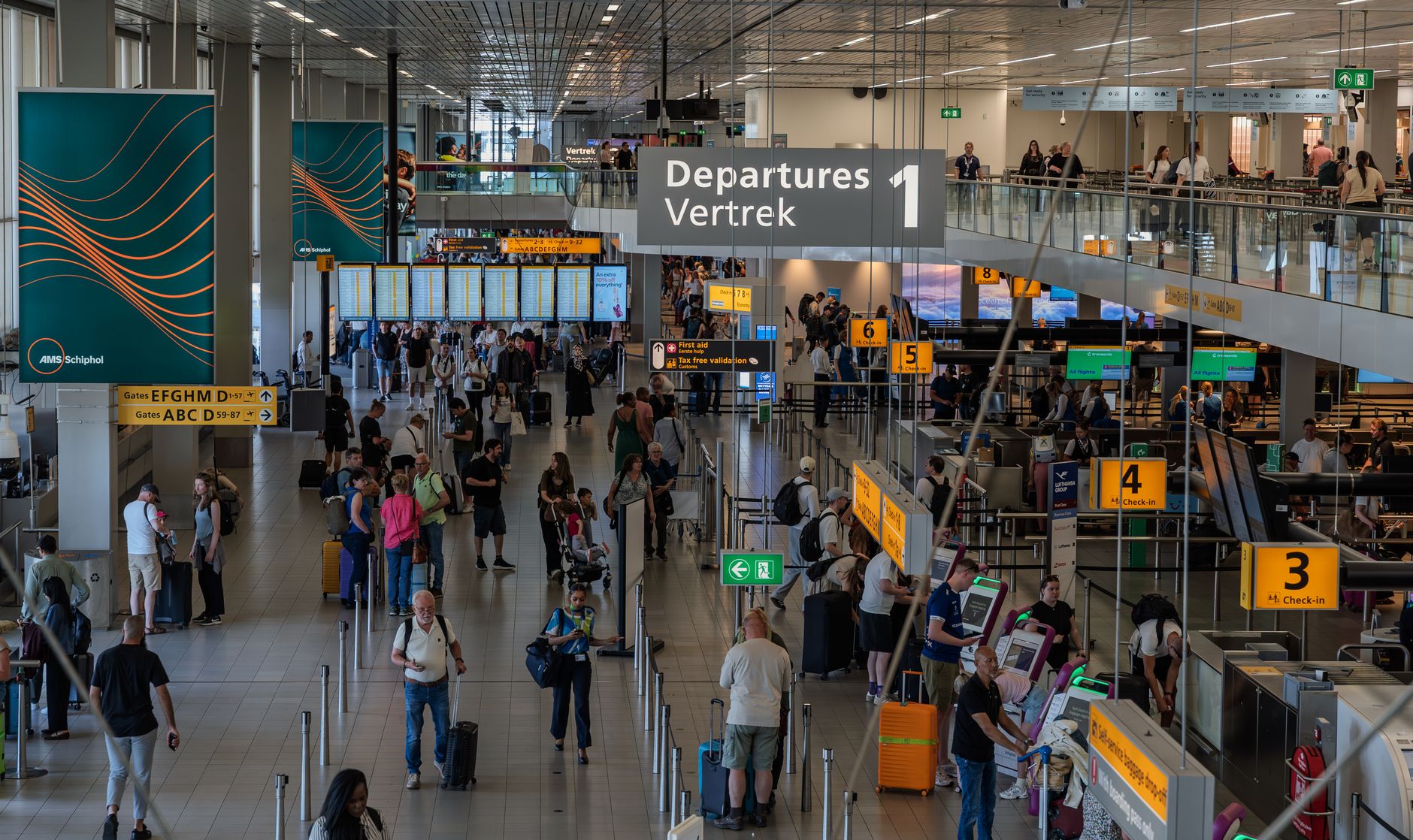
In the documented source, a tier-1 international airport with three terminals was dealing with friction in full public view. Tight connections, gate changes, and heavy passenger flow kept basic wayfinding questions stacking up while concourses still had to stay clean and landside areas had to remain visibly monitored.
The strain cut across several teams at once. Customer-service staff were answering the same routine questions over and over, janitorial crews were trying to hold a 24/7 standard without letting overtime swell, and commercial teams still needed to capture spend from passengers who preferred to stay near the gate.
- Information-desk traffic was driven by repetitive passenger questions during time-sensitive journeys
- Cleaning expectations stayed high even as overtime pressure built
- Retail and food sales were vulnerable when passengers stayed put near the gate
Zone The Robot Jobs, Then Phase The Rollout
The documented rollout did not treat the airport as one undifferentiated site. It divided work by zone and by task. Wayfinding robots were placed in Concourse A, scrubbers were introduced in Concourse B, and security patrol robots were assigned across landside areas.
That matters because each robot category was matched to a different kind of repetition. Passenger questions clustered in one area, floor care was concentrated in another, and patrol work needed broad visibility outside the concourse flow. The published summary also ties the program to gate-side delivery, which is where the revenue story enters the picture.
The public source does not publish a formal training syllabus or service plan for this airport. What it does show clearly is a phased rollout across three terminals, which is the practical pattern for robot deployment and integration in a live terminal without forcing a full reset in one move.
- Match the robot type to the zone instead of forcing one machine into every task
- Phase deployment across three terminals so staff can absorb the operating change
- Use gate-side delivery as a commercial layer alongside wayfinding, cleaning, and patrol work
A Passenger-Service Story And An Ops Story At Once
The clearest passenger-service result is the one that belongs in the headline. According to the published quote, the wayfinding robots handled 70% of common questions. The same quote says that freed the customer-service team to focus on the cases that actually needed a person, and it reports an immediate uplift in passenger satisfaction scores.
The operational gains were just as concrete. The published summary says janitorial overtime fell 35%, a meaningful sign that repetitive floor work had been taken off the manual critical path instead of merely rearranged on paper. In an airport environment, that is a serious labor-management result because the floor never really goes quiet.
The commercial signal was positive too. The published case summary says non-aeronautical revenue increased 8% from gate-side delivery, and the same summary labels the rollout as an 11-month ROI case. Read together, those outcomes explain why this example is stronger than a single-use pilot. It linked passenger help, floor operations, patrol visibility, and airport commerce inside one phased program.
What This Means For Service Robot Co. Buyers
This is a documented market example, not a claimed Service Robot Co. deployment. Its value is that it shows how an airport can get more than one return from automation when the rollout is planned by zone. A wayfinding robot can relieve front-line question volume, an airport cleaning robot lease or autonomous floor scrubber leasing can support terminal floor scrubbing, and a security patrol robot lease can add visible patrol coverage without collapsing those jobs into one vague brief.
For U.S. operators, that is where Service Robot Co. fits. We are a full-service, OEM-neutral, vendor neutral robot integrator for businesses that want one partner for selection across manufacturers, purchase or lease, robot leasing for business, robot deployment and integration, staff training, and ongoing service through a nationwide US engineer network.
The practical buying decision is usually larger than the machine itself. Teams often compare commercial robot leasing, service robot leasing, and monthly payment programs, then ask who will handle phased deployment no shutdown, free site assessment, RoboCare™ service support, on-site dispatch, remote triage, and one partner one number accountability after go-live. That lifecycle view is the part Service Robot Co. is built to own.