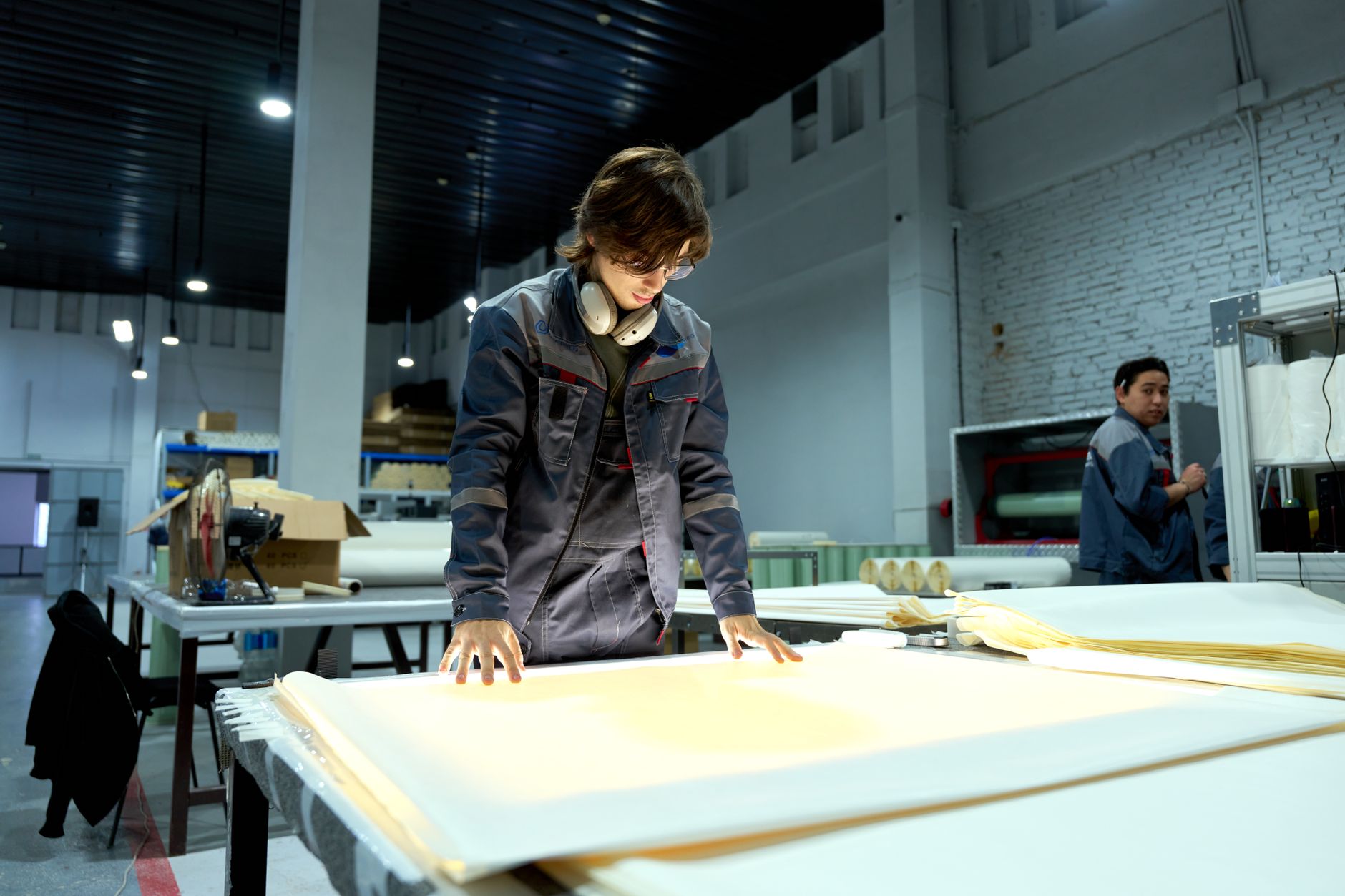
a contract metal stamper serving the heavy-duty truck market
Machine-Tending Cobot Lifts Stamping Efficiency 40%
A contract metal stamper serving the heavy-duty truck market used a machine-tending cobot in resistive welding, gaining 40% efficiency and sub-four-month payback.
- 40%
- Efficiency gain
- <4 months
- Payback period
- 3 roles
- Operator functions freed
- 30% less
- Cell cost vs fixtures
Based on a documented real-world deployment. Figures are from public reporting; the organization is not named.
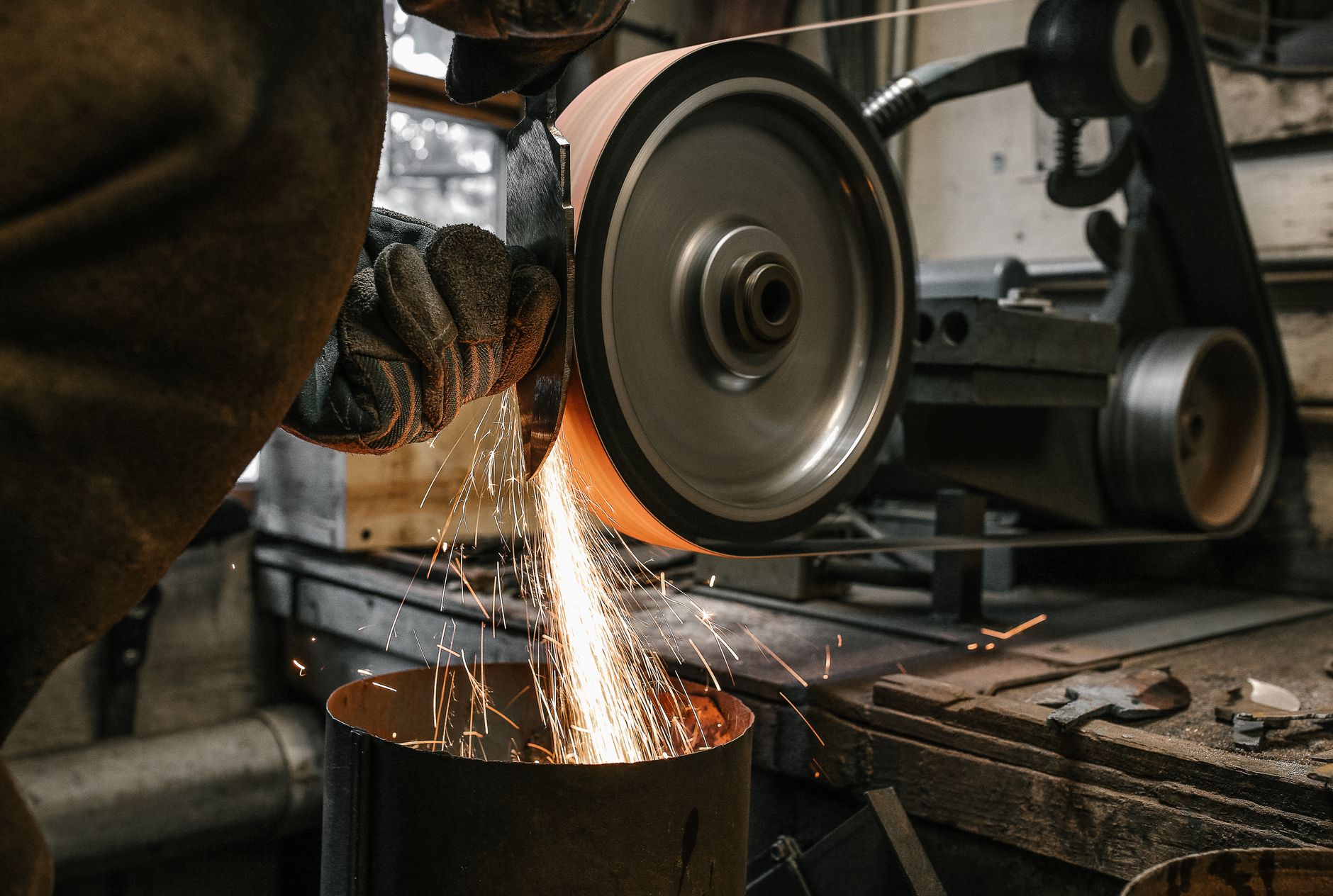
Why this cell was hard to automate
The work was repetitive, weld-heavy, and awkward to staff. The part volume was about 40,000 pieces per year, and each bracket carried eight weld nuts, which pushed the job to 320,000 welds that otherwise had to be done manually.
The harder problem was technical. The process depended on resistive welders, and the welding pulse could blank out robot servo electronics in the work envelope, making a compact machine tending robot unusually difficult to apply inside an existing cell.
- About 40,000 parts per year on the bracket program
- Eight weld nuts per part, or 320,000 welds annually
- Electro-magnetic pulse from the welder could disrupt nearby robot electronics
- The manufacturer wanted to keep the existing layout instead of building a larger fenced cell
How the cobot was introduced

The documented deployment used a machine-tending cobot as the front end of the weld process, not as the welder itself. Vision guidance let the robot pick each bracket on its datum point, present it to the first welder for the first four welds, rotate it, and feed the second welder for the final four.
To survive the resistive-welding environment, the team grounded the robot and introduced non-metallic end-of-arm tooling that increased stand-off from the strike point. The cell stayed in the existing layout, and an operator with no prior robotics experience took a three-day course before owning inspection and daily cobot operation.
- Use vision-guided pickup for repeatable part location
- Ground the robot and add non-metallic tooling to manage the welding pulse
- Keep the current layout and hand the finished cell to a trained operator
What changed on the floor
The measurable gains were substantial. The manufacturer reported being in the neighborhood of 40% more efficient than normal, and it calculated payback at less than four months.
Economics improved before labor savings were even fully counted. The entire cell was implemented for 30% less than the cost of eight separate fixtures, while three operator functions were freed for more value-added work.
The operating model also simplified. A job that would have required four operators in the cell was reduced to one operator tending the process, and the source reports 100% product quality with no production issues or downtime over more than two years of operation.
What this means for manufacturers
This is a useful manufacturing case because the win did not come from automating an easy station. It came from fitting a cobot into a hostile legacy process, keeping the existing layout, and turning a stubborn weld-tending job into a repeatable flow. That is the kind of machine tending robot project where deployment detail matters as much as the arm itself.
For manufacturers weighing a commercial robot lease, a collaborative robot arm lease, or a cobot lease for manufacturing, the broader lesson is vendor selection and follow-through. Service Robot Co. is a vendor neutral robot integrator for US businesses that selects the right robot across manufacturers and then handles robot deployment and integration, financing, training, and commercial robot repair service through a nationwide engineer network.
That matters when a plant wants phased deployment no shutdown, monthly payment programs, or no upfront capital through a leasing model with RoboCare™ service. Instead of juggling separate sellers, installers, and support vendors, the buyer gets a full lifecycle partner from assessment through long-term support.