a government-operated replenishment vessel undergoing tank surveys
How a Warship Tank Inspection Fell From 800 Hours to 50
A government-operated replenishment vessel cut cargo tank survey labor from a projected 800 hours to about 50 with a confined-space inspection drone.
- 800 hrs
- Projected manual
- ~50 hrs
- Drone survey
- 90%+
- Time cut
- 100%
- Visual coverage
Based on a documented real-world deployment. Figures are from public reporting; the organization is not named.
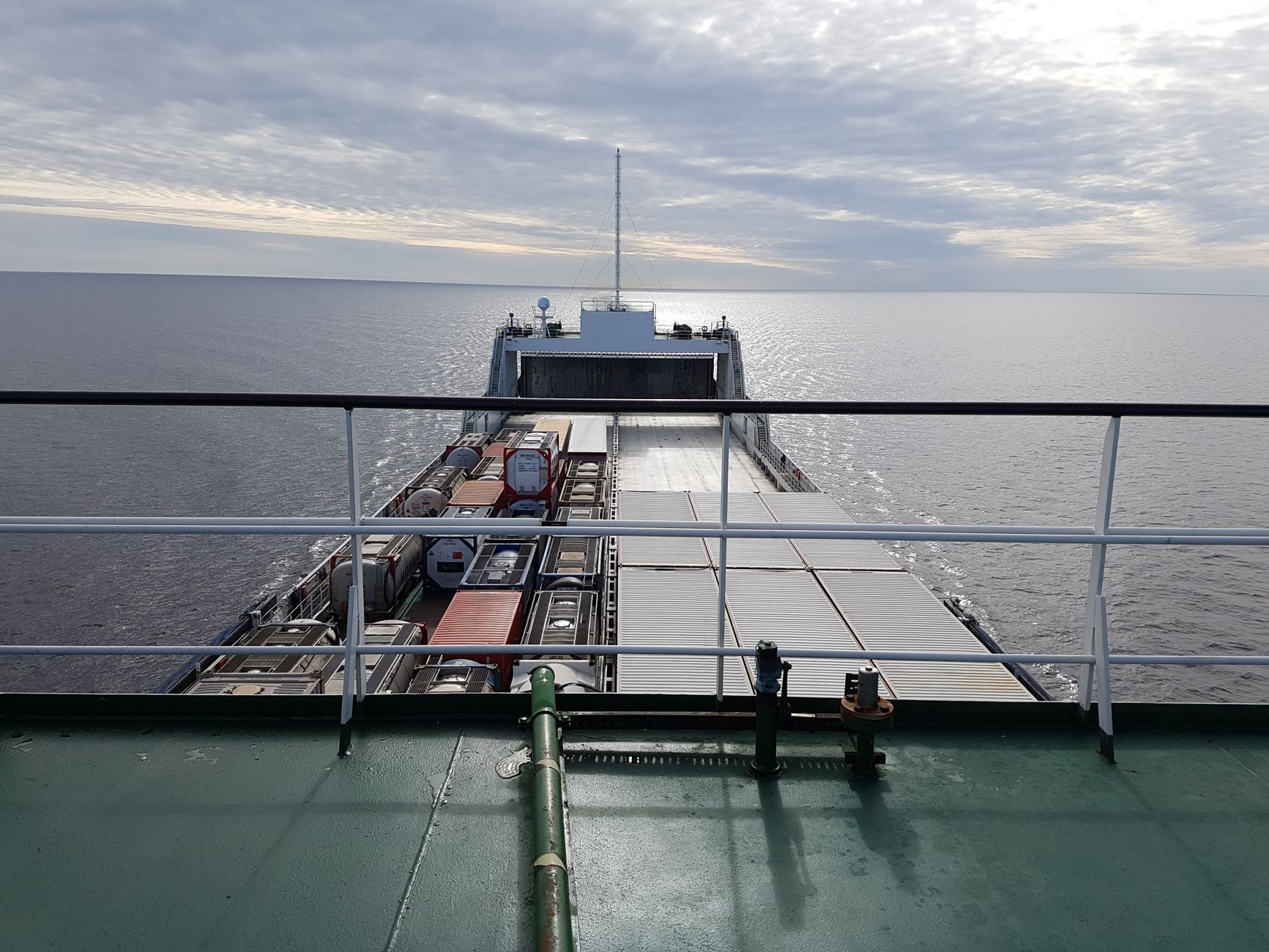
Rafts, confined entry, and incomplete views
Periodic hull surveys on this replenishment class vessel include deep visual checks of ballast and cargo tanks. The legacy method scoped about eight hundred man-hours: fill tanks with water, enter on inflatable rafts, inspect reachable surfaces at each water level, then drain and repeat.
Inspectors had to stay within arm's reach of a surface for it to count as examined, so overhead and tight zones often went unseen. Confined-space entry and flotation inside tanks added safety risk and support labor on every pass.
- Multi-stage fill and drain cycles per tank
- Two-person raft teams plus rope handlers outside
- Surfaces beyond arm's reach left unverified
Indoor drone flights for full visual coverage
The inspection team bid an alternative using a collision-tolerant indoor drone built for enclosed metallic volumes. Pilots flew repeatable paths while engineers watched a live feed to confirm class-society visual detail without anyone entering the tank on a raft.
The approach targeted one hundred percent visual coverage by flying close to walls and structures that rafts could not reach. The program compared drone results directly against the traditional scoped hours in the same survey cycle.
- Train certified pilots on confined tank routes
- Stream live video to survey leads and port engineers
- Document coverage to meet classification society visual standards
Hours and cost collapsed with safer data
Actual survey time landed near fifty hours instead of the eight hundred hours projected for the manual raft method, a reduction above ninety percent and more than seven hundred hours saved on the scoped work.
Reported direct costs for the tank inspection fell by about half versus the traditional approach. No confined-space entry or in-tank flotation was required for visual collection, and the drone achieved full visual coverage where raft methods could not.
What maritime and industrial operators can expect
This story is a documented real-world example, not a Service Robot Co. deployment. It still shows why operators with tank, silo, or hull void surveys look for vendor-neutral help when confined entry drives cost and risk.
Service Robot Co. selects confined-space inspection drones across manufacturers, then finances, deploys, integrates, trains, and services units through a nationwide engineer network. One partner covers pilot workflows, classification-ready data handoff, and maintenance.
A phased robot rental or pilot can prove a fifty-hour drone loop on one tank before you scale flights across the rest of the vessel or plant.