
a Wisconsin precision shop producing mission-critical aerospace parts
Zero Customer Rejects in Aerospace Grinding and Inspection
A Wisconsin aerospace shop hit zero customer rejects while producing precision parts every 2 to 5 minutes in a lights-out grinding and inspection cell.
- 0%
- customer reject rate
- 2-5 min
- cycle per part
- 0.0001 in
- cylindricity target
- 24/7
- lights-out operation
Based on a documented real-world deployment. Figures are from public reporting; the organization is not named.

Extreme Tolerance, Little Room for Error
A Wisconsin precision shop producing mission-critical aerospace parts had to sustain high-volume output while holding components within 0.0001 inch of cylindricity. Achieving that geometry once was difficult. Repeating it without drift, across unattended production, raised the stakes considerably.
The shop also had limited floor space and wanted minimal operator involvement. A manual, labor-intensive process could not provide the continuous measurement, correction and repeatability the application demanded.
- Maintain 0.0001-inch cylindricity at high volume
- Measure and correct the process continuously
- Fit grinding, gauging and handling into a constrained footprint
- Support lights-out production without constant oversight
Grinding, Gauging and Handling as One Cell
The deployment treated grinding, in-process gauging and robotic machine tending as parts of the same manufacturing system. Measurements fed real-time auto-correction, allowing the grinder to adjust without waiting for an operator to catch dimensional drift.
The shop participated closely in development, contributing feedback that shaped the cell. Extensive feasibility work and upfront testing established that the process could meet the aerospace requirement before production began, an essential discipline for any commercial robot pilot program in precision manufacturing.
The compact cell was then configured for unattended operation. Its robot handled machine tending while the integrated process measured, corrected and continued producing parts through lights-out runs.
- Prove the grinding and inspection process through feasibility testing
- Integrate in-process gauging with automatic compensation
- Add robotic loading and unloading within the available footprint
- Validate repeatability before releasing the cell to production
- Prepare the cell for lights-out operation
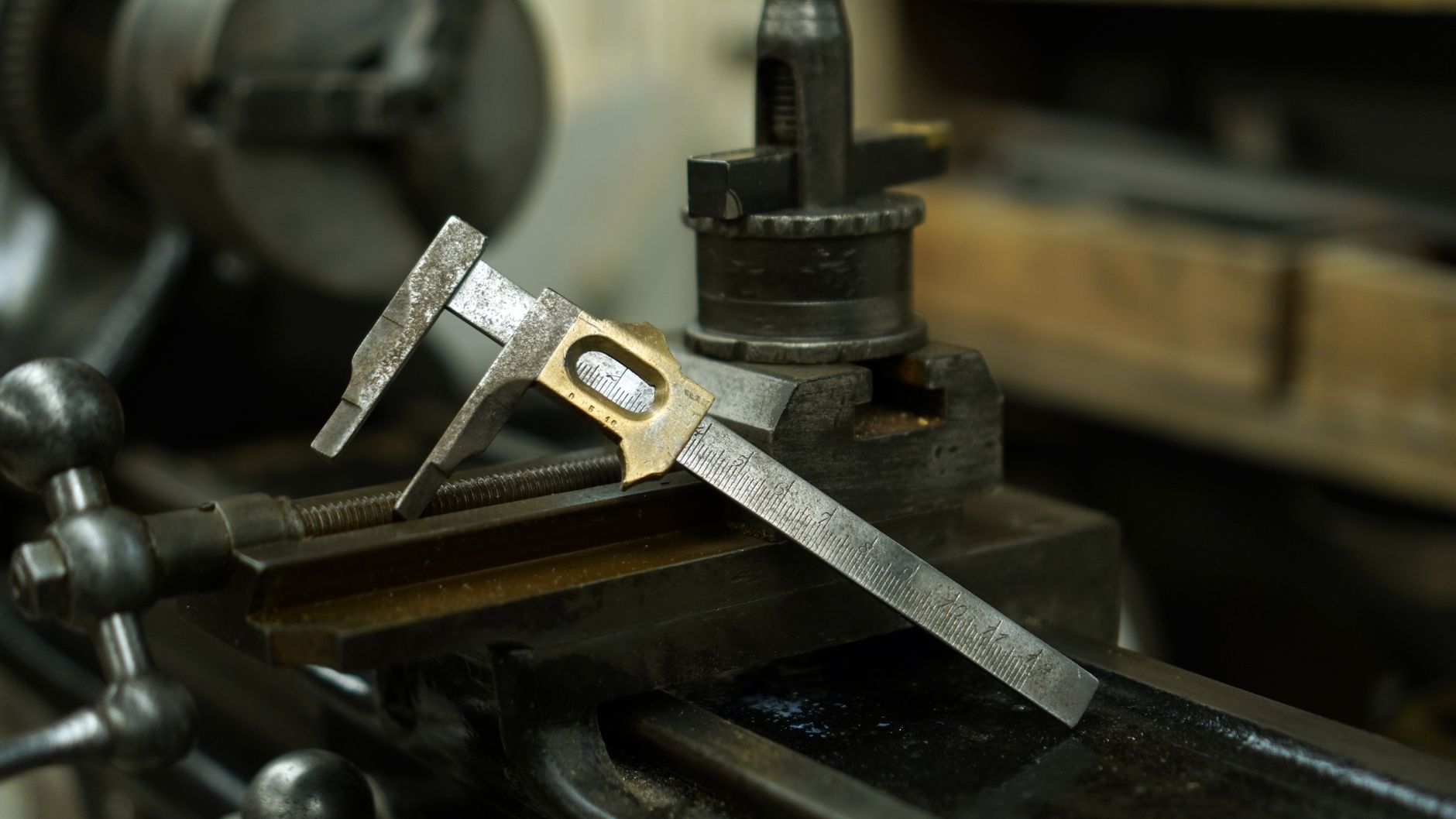
Zero Customer Rejects at Production Pace
The automated cell produces a finished part every 2 to 5 minutes and has recorded a 0% customer reject rate. Those results pair production cadence with the quality evidence that matters most in aerospace machining.
Automation also removed the need for constant operator oversight and enabled 24/7 lights-out operation. The shop gained capacity to pursue more complex aerospace work while preserving a repeatable process for demanding geometry.
A Practical Model for Precision Automation
This is a documented industry example that Service Robot Co. analyzes. Service Robot Co. did not perform this deployment. Its value lies in the operating pattern: connect machine tending, measurement and automatic correction so quality control becomes part of the cycle rather than a downstream sorting exercise.
Service Robot Co. is a full-service, OEM-neutral commercial robot integrator for US businesses. We select equipment across manufacturers, then finance, deploy, integrate, train and service it through a nationwide US engineer network, giving manufacturers a single vendor across the robot lifecycle.
For shops evaluating an inspection robot lease, a machine tending robot or robot leasing for business, the first task is process qualification. Service Robot Co. can structure a commercial robot pilot program, robot deployment and integration, monthly payment programs and an ongoing robot maintenance service plan around the application, footprint and production requirements.
Frequently asked questions
Want a robot working for you?
Tell us the job and the site. We will recommend the robot, quote the lease, and keep it serviced.