
a major international airport in southeastern France
Robotic Valet Serves More Than 2,000 Airport Customers Monthly
See how an airport uses autonomous valet robots around the clock to simplify vehicle handoff, optimize storage, and schedule retrieval with precision.
- 2,000+
- customers served monthly
- 24/7
- robotic valet operation
- 1
- outdoor robotic valet worldwide
Based on a documented real-world deployment. Figures are from public reporting; the organization is not named.
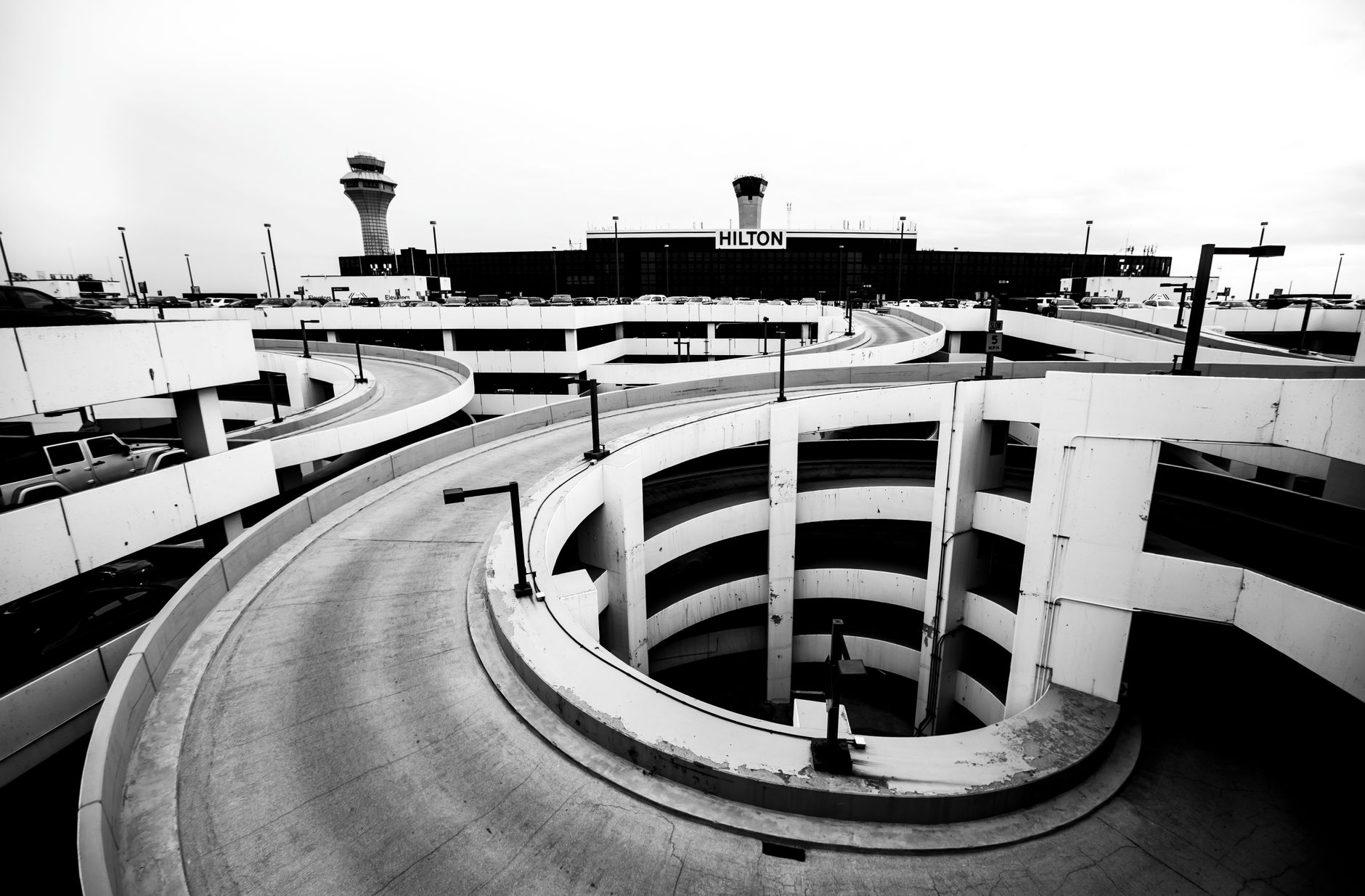
The Parking Problem Before the Flight
Airport parking compresses a messy sequence into a time-sensitive customer promise. Travelers arrive with luggage and limited slack, yet conventional self-parking asks them to circulate, locate a space, remember it, and retrace the route after their trip.
For the operator, the difficulty extends far beyond traffic flow. Each vehicle must be identified, accepted, staged, stored, protected from public movement, and ready when its owner returns. Dense placement only pays off when the retrieval sequence remains disciplined.
- Create a clear vehicle handoff without sending travelers into the parking field
- Separate passenger circulation from automated vehicle movement
- Store vehicles densely while preserving an orderly retrieval sequence
- Coordinate each stored car with its expected return window
A Controlled Handoff, Then Autonomous Storage
The deployment moved the customer handoff to transfer bays at the edge of the parking operation. Travelers leave their vehicles there and continue toward their flights. From that point, the robotic system assumes responsibility for storage and later retrieval.
Storage software assigns each move. An autonomous robot approaches the vehicle, lifts it, and carries it to the allocated position while the management layer optimizes available space in real time. Flight and reservation information informs when the vehicle should be brought back for collection.
The public deployment update explains this live operating model, but it does not publish the selection process, rollout phases, training curriculum, fleet size, or service protocol. Those details remain procurement questions rather than facts that should be invented after the event.
- Accept the vehicle in a defined transfer bay
- Confirm its identity and expected return
- Assign storage through the management software
- Lift and move the vehicle without a driver
- Schedule retrieval so the car returns at the appropriate time
Live Scale Without Inflated Claims
A June 2026 deployment update reported more than 2,000 customers served per month through the robotic valet. It also confirmed that the operation runs 24/7, turning the transfer-bay concept into an around-the-clock airport service rather than a limited demonstration.
The same update characterized the deployment as the only outdoor robotic valet parking service worldwide at that time. Its practical result is a repeatable handoff: the customer leaves the car, autonomous equipment manages storage, and the vehicle is retrieved in step with the planned return.
No verified figures were published for storage-capacity gain, customer wait time, labor reduction, incident reduction, uptime, or financial return. The evidence supports live adoption and substantial monthly use, not claims beyond those reported measures.
The Integration Lesson for U.S. Operators

This is an independent analysis of a documented deployment. Service Robot Co. did not claim to supply, install, or operate this airport system. The lesson lies in the operating design around the machine: customer handoff, software orchestration, exception handling, retrieval timing, and field support must behave as one service.
Service Robot Co. brings that discipline to U.S. businesses as a full-service, OEM-neutral commercial robot integrator. The company selects equipment across manufacturers, arranges financing, manages robot deployment and integration, trains the operating team, and services each unit through a nationwide U.S. engineer network. A single accountable vendor owns the lifecycle.
An engagement can begin with a free site assessment and site assessment mapping, followed by a commercial robot demo or robot pilot program. Buyers can then compare commercial robot leasing, robot leasing for business, and leasing structures with monthly payment programs and RoboCare™ service. The objective is dependable go live support, not merely placing hardware on site.