a large insurance provider office campus in the United States
How an Insurance Campus Cut Carpet Vacuuming Time 50% With Collaborative Vacuums
A documented insurance office campus used a collaborative autonomous vacuum to finish carpet care in half the time and return about 40 weekly labor hours to detail work.
- 50%
- faster vacuum
- 40 hrs/wk
- labor returned
- 150K sf
- per floor
- $0 capex
- sub model
Based on a documented real-world deployment. Figures are from public reporting; the organization is not named.
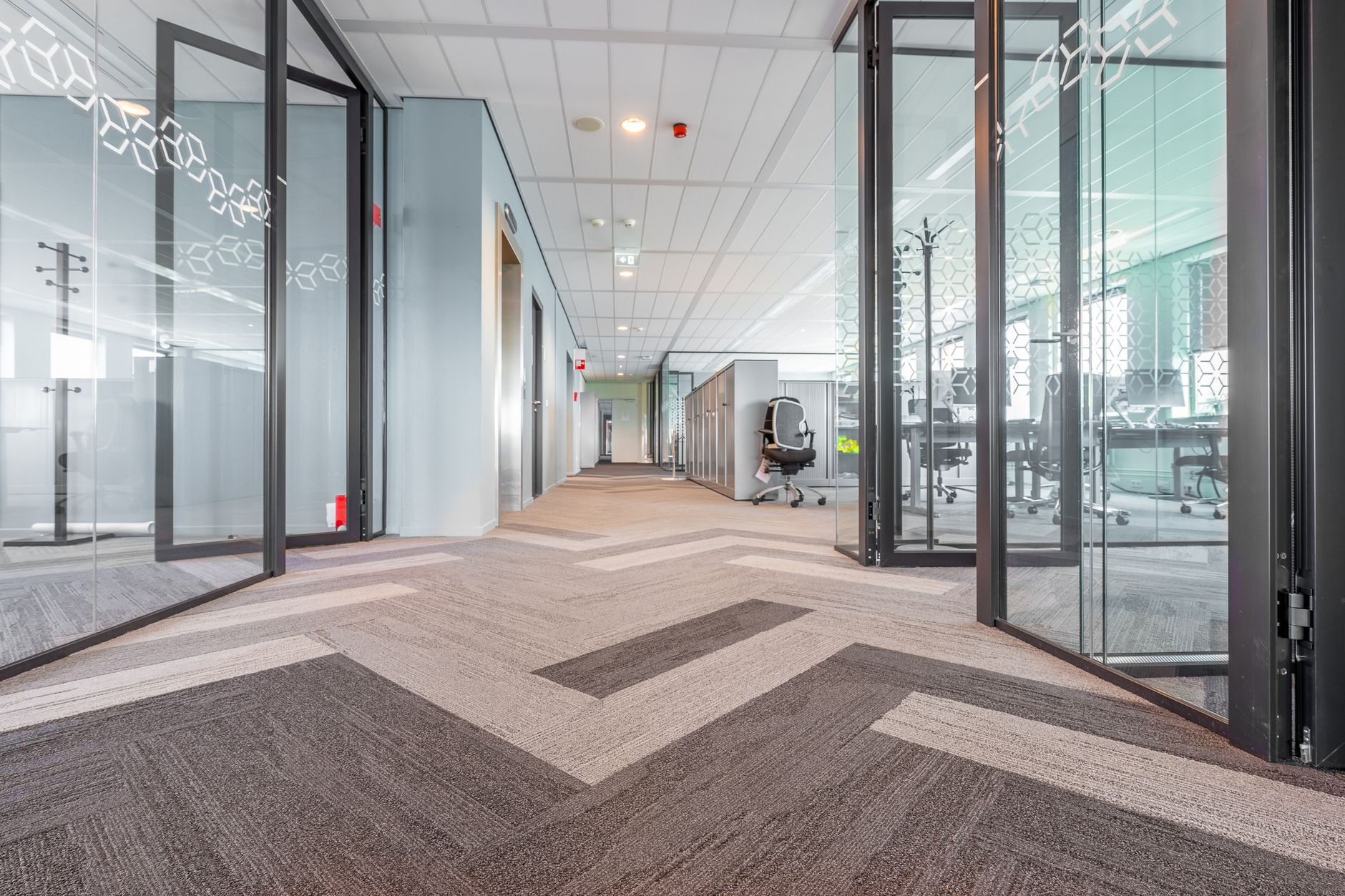
Open-plan carpet that ate the whole week
A large insurance provider office campus in the United States spans multiple floors of roughly 150,000 square feet each, mostly open carpet and cubicle fields. The contract cleaning partner faced upward of 40 labor hours every week just pushing manual vacuums, with constant stops to reposition cords and wands.
That repetitive loop left little capacity for detail work when return-to-office expectations rose. Sanitizing high-touch surfaces and working under desks competed with the need to keep broad carpet zones presentable for visiting clients and auditors.
As a mid-sized cleaning contractor, the team also needed a visible differentiator against larger national janitorial firms without adding headcount on every bid.
- 40+ weekly hours on wide-area vacuuming
- Frequent equipment repositioning on every floor
- Detail cleaning and disinfection squeezed by carpet routes
Collaborative vacuuming on a subscription model
Leadership evaluated autonomous vacuum sweepers built for commercial carpet, then chose a collaborative unit that runs mapped routes while staff handle edges and obstacles. A subscription-style commercial robot rental avoided upfront capital while keeping maintenance predictable for a smaller contractor.
Technicians mapped primary open areas on each floor and set overnight or off-peak runs so day teams could focus on desks, glass, and restrooms. Training emphasized treating the unit as a teammate that handles the long straightaways while humans finish corners and conference rooms.
The integrator path mirrored what many facility directors want: short pilot on one floor, route tuning after a week of traffic patterns, then expansion once dust loads and battery cycles stabilized.
- Route mapping for open-plan floors first
- Subscription pricing with no upfront capital charge cited in the case
- Staff retained for detail cleaning and client-facing tasks
Half the runtime, forty hours back every week
After go-live, the campus completed full-building carpet vacuuming in about half the time previously required. The published case attributes roughly 40 hours per week of manual vacuum labor returned to the cleaning team.
Crews redirected that time to detailed work such as under-desk vacuuming, spot cleaning, and the heavier sanitation tasks clients requested after buildings reopened. Managers reported higher perceived carpet quality because robots handled the repetitive passes consistently.
Morale improved as well. Staff described the autonomous unit as a helpful assistant rather than a replacement, and the visible technology became a talking point with tenant leadership about modern facility care.
Why office operators compare vacuum robots before the next RFP
Insurance and professional services campuses are carpet-heavy, badge-controlled, and sensitive to how common areas look on short notice. Autonomous vacuum robot rental fits when you need predictable wide-area coverage without hiring another overnight team.
Service Robot Co. stays vendor neutral across autonomous vacuum and scrubber categories, then handles financing, deployment mapping, training, and nationwide service through regional engineers. One partner can pilot month to month on a single floor, prove the hour recovery, and scale routes across a multi-building portfolio.