
an oil bottling plant that moved palletizing to collaborative robots
An Oil Bottling Plant Moves Palletizing to Cobots and Reallocates Three Staff
How an oil bottling plant put two cobot palletizers on three production lines, reallocated three staff, and reports a one year payback, per the vendor.
Deployment at a glance
- 8 weeks
- Lead time reported by the vendor
- 2 days
- Deployment covering commissioning and training
- 3 staff
- Existing employees moved to higher value work
- 1 year
- Payback period reported by the vendor
Based on a documented real-world deployment. Figures are from public reporting; the organization is not named.
Palletizing a bottling line without adding headcount
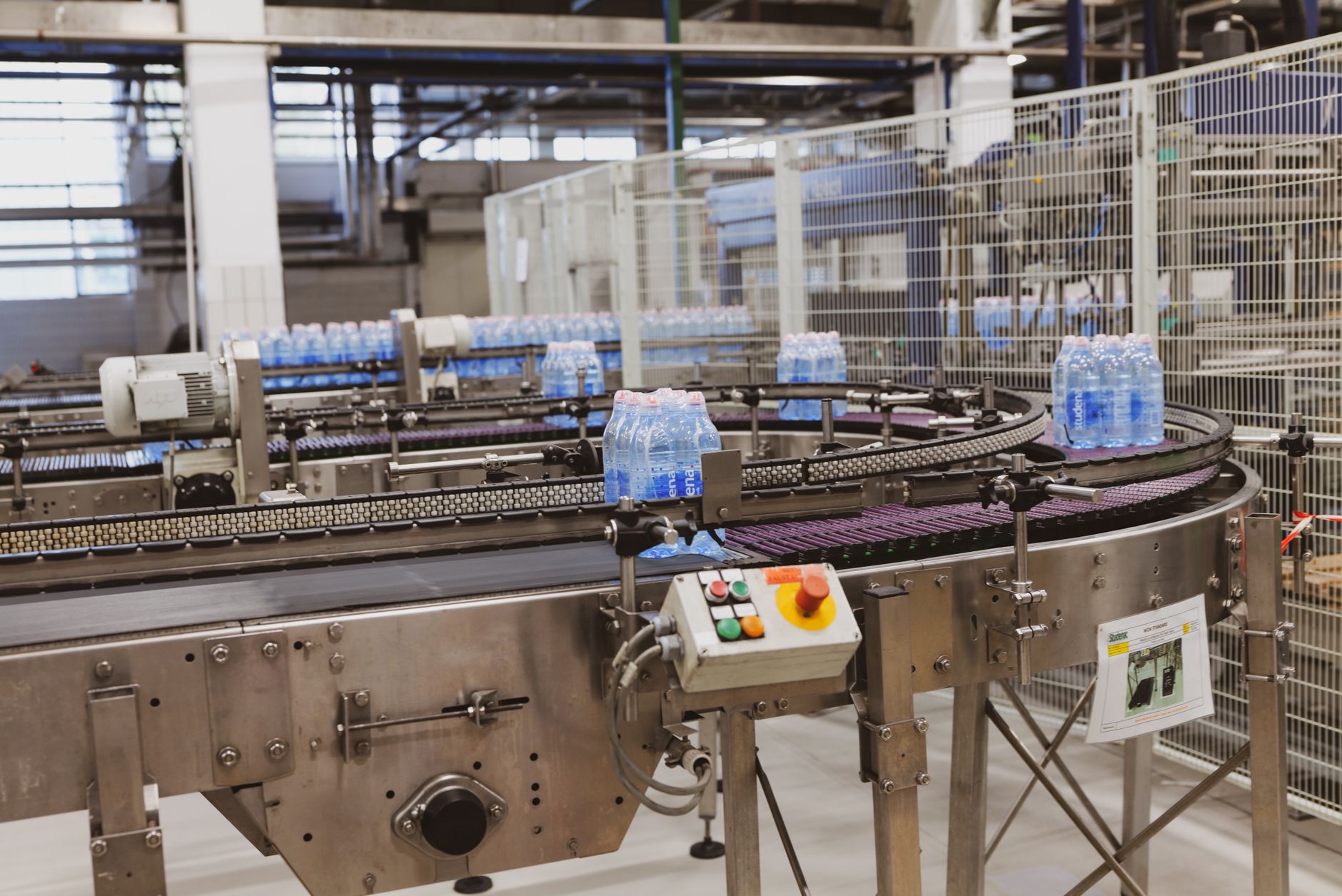
Palletizing sits at the far end of a bottling line, where the work is repetitive and where a slowdown shows up in the day's totals long before anyone traces it to the stacking. For a plant running several production lines, the real question is seldom whether the stacking can be automated. It is how to automate it without tearing the line apart and without asking for more people to cover the gap.
The operator in this case set out to raise output from the same floor. Its aim was to move existing employees toward higher value work, not to shrink the team, and that meant the change had to arrive quickly and fit the lines already running.
Two cobot palletizers, installed on a short schedule
The plant set up two cobot palletizers to serve three production lines. Covering three lines with two robots meant the palletizing load was shared across the group, rather than tied to a machine for each line.
Lead time from order to delivery was eight weeks. The on-site deployment then took two days, covering commissioning and training, after which the palletizers ran fully on the line.
- Select two cobot palletizers to serve three production lines
- Accept a lead time of eight weeks
- Run a deployment of two days for commissioning and training
- Bring the palletizers fully onto the line and reassign staff to higher value work
Three people moved to higher value work, with a one year payback
The headline outcome is that three staff were reallocated to higher value work. According to the vendor, output rose without adding headcount, and the reported payback period is one year.
These figures are vendor reported. They were not independently measured, so a plant weighing a similar move should test the one year payback against its own labor, output and changeover numbers before treating it as a given.
The eight week lead time and the two day deployment describe the schedule, not a promise about production. The two days covered commissioning and training, and only after that did the palletizers run fully on the lines.
What a palletizing robot lease looks like from our side
We did not run this deployment. The plant is an anonymized example we analyze, not a client of ours, and we study it because the pattern suits any operator weighing collaborative palletizing for its lines.
Service Robot Co. is an OEM neutral robot integrator for US businesses. We select the right robots across manufacturers, then finance, deploy, integrate, train, and service each unit through a nationwide US engineer network, so one vendor covers the whole lifecycle. For a cobot leasing for manufacturing project, the first step is a site assessment that maps the lines, and the lease is quoted after that assessment.
Our lease runs three years, financed, with one fixed quote. Taken together, the lessons in this example are about planning: a quick install that is scheduled rather than improvised, training that happens before full running, and a single partner for the equipment and its service.
Frequently asked questions
Want a robot working for you?
Tell us the job and the site. We will recommend the robot, quote the lease, and keep it serviced.