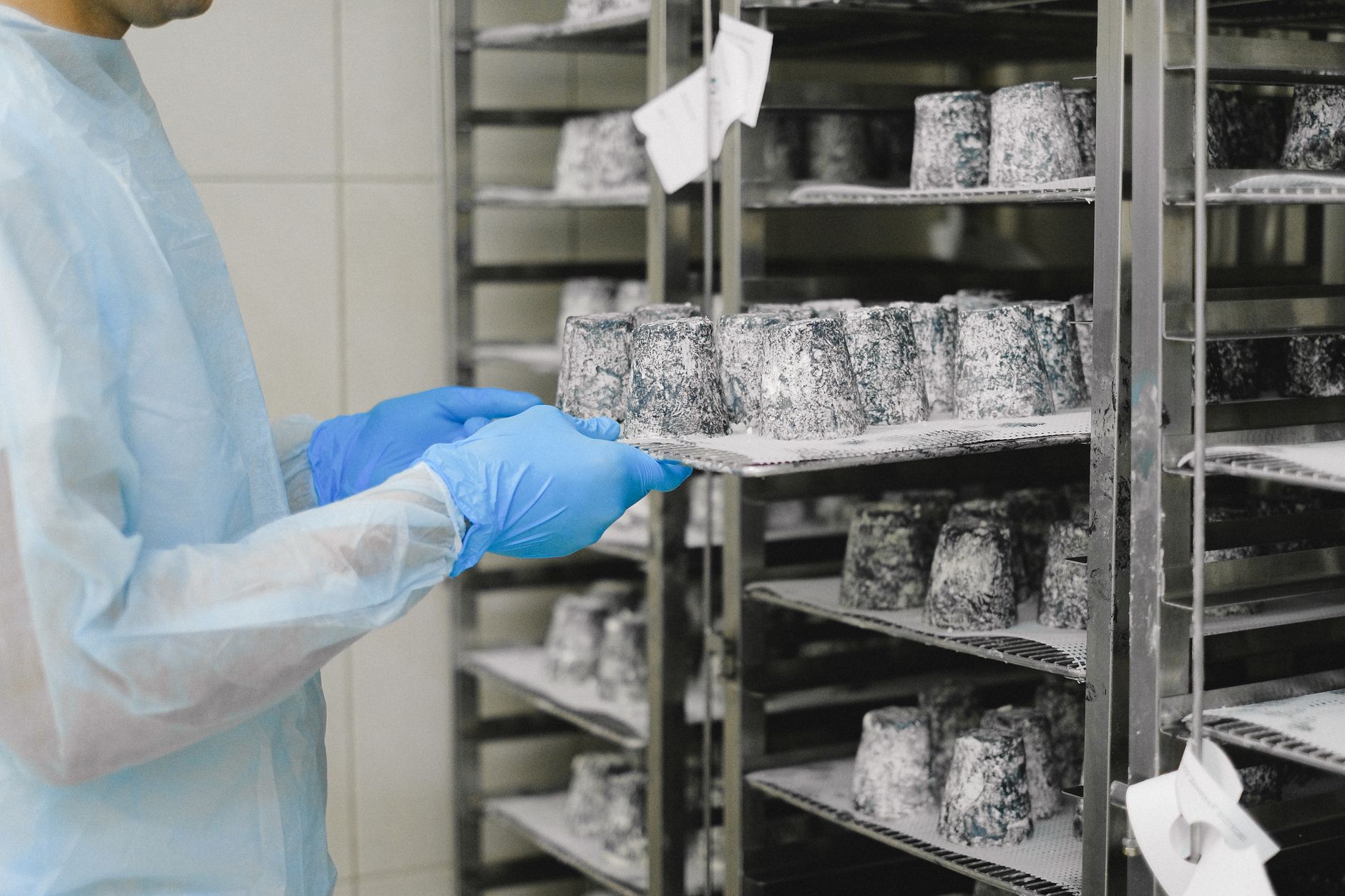
an organic cheese dairy with a 650-ton aging cave in Austria
How an Austrian Cheese Cave Cut Derinding From 10 Minutes to 2 Per Block
A washdown-rated robot with 3D path tracking derinds irregular organic cheese blocks in about two minutes versus ten minutes by hand at a 650-ton Austrian aging cave.
- 5×
- Faster cycle
- 2 min
- Per block
- 650 t
- Cave capacity
- 600 kg/hr
- Coat rate
Based on a documented real-world deployment. Figures are from public reporting; the organization is not named.
Manual rind work at scale
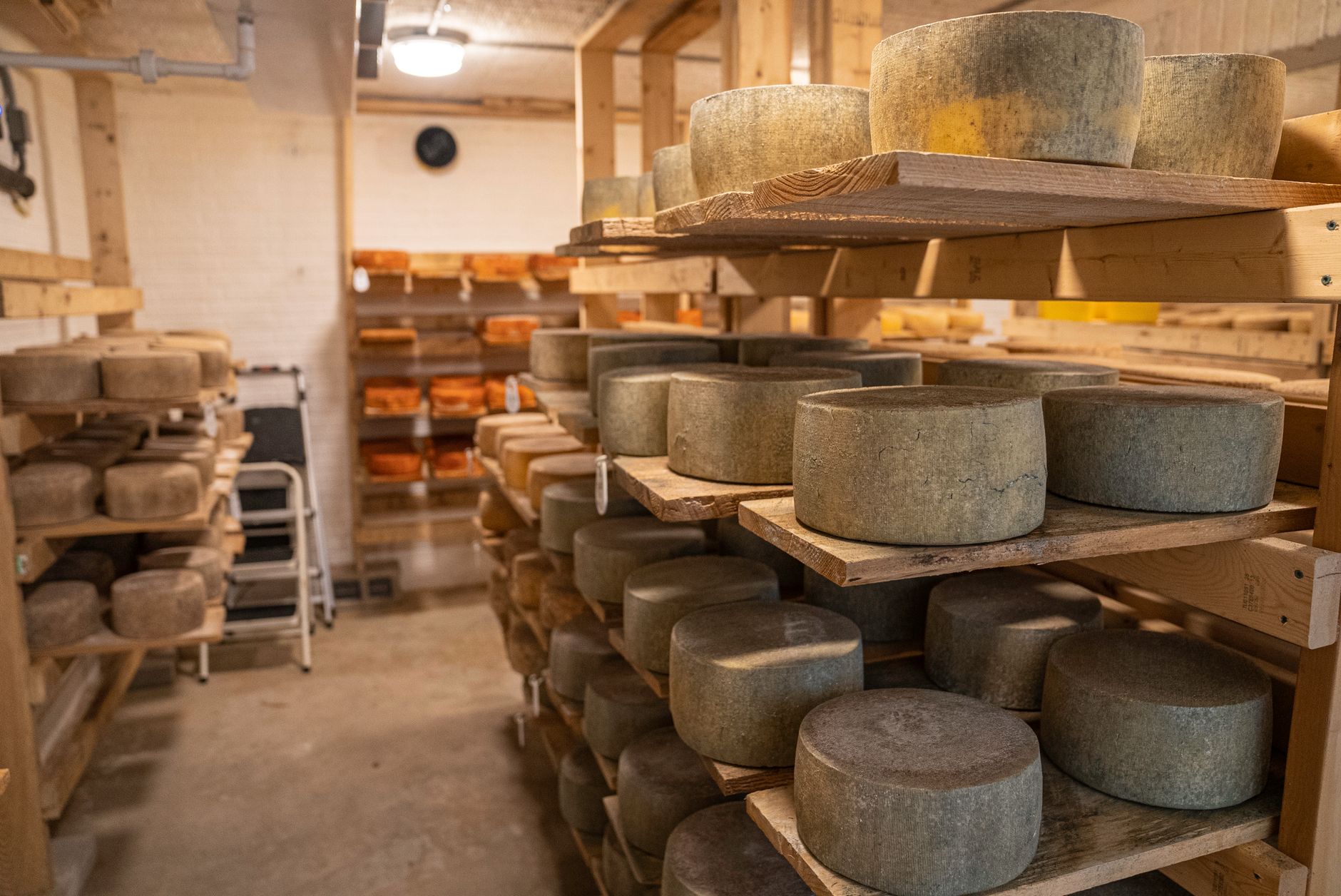
An organic cheese dairy with a 650-ton aging cave in Austria matures hay-milk wheels in a long rock tunnel where temperature and humidity stay stable year round. Bulk buyers wanted hard wheels without rind, so staff scraped each irregular block with a scraping iron.
That manual pass took about ten minutes per six-hundred-millimeter block and demanded heavy physical effort on every piece. Shape variation made consistent depth hard to hold, which raised waste risk when workers rushed to keep pace.
- Irregular block geometry
- Ten-minute manual cycles
- Straining repetitive scraping
Washdown cell with 3D tracking
The dairy added a ceiling-mounted six-axis robot rated for humid food environments, paired with laser measurement and three-dimensional path tracking so the tool shaves rind at constant depth on uneven rounds. The same cell switches tooling to coat smaller wheels when production calls for it.
Integrators built the hygienic enclosure to survive aggressive detergents and high-pressure washdown several times weekly. Operators change grippers and vacuum plates for smaller diameters in roughly ten minutes while the cutting head stays on the arm.
- 3D surface tracking
- Humid-environment robot
- Tool change for coating
Cycle time and quality
Derinding now runs in about two minutes per block, roughly five times faster than the prior manual scraping step on the same size wheels. The automated pass tracks the surface more evenly, which the dairy cites as more accurate and economical than hand work.
Coating smaller wheels runs near twenty seconds per piece, about six hundred kilograms per hour in published throughput figures. The cell has handled both tasks since early 2020 while the cave continues to hold up to six hundred fifty tons of maturing cheese.
What US food plants can take from it
Dairy, bakery, and prepared-food lines with harsh washdown and irregular product shapes face the same mix of ergonomics, yield, and cycle time. A hygienic processing robot with vision or laser mapping is how you hold depth on variable geometry without burning out staff on the worst jobs.
Service Robot Co. did not build this Austrian cell. We are a vendor neutral integrator for US food and beverage plants that need cobot rental for manufacturing, palletizing robot rental, or end of line automation with site assessment, training, and nationwide service on one contract.